Somewhere in your 20s or 30s you'll get the opportunity to rebuild your life after a negative loop, heal from what broke you, live in your own space, reconnect with your discipline, and learn to love yourself again. It's very important that you see that journey through.
“When our genes could not store all the information necessary for survival, we slowly invented brains. But then the time came, perhaps ten thousand years ago, when we needed to know more than could conveniently be contained in brains. So we learned to stockpile enormous quantities of information outside our bodies. We are the only species on the planet, so far as we know, to have invented a communal memory stored neither in our genes nor in our brains. The warehouse of that memory is called the library.
A book is made from a tree. It is an assemblage of flat, flexible parts (still called ‘leaves’) imprinted with dark pigmented squiggles. One glance at it and you hear the voice of another person - perhaps someone dead for thousands of years. Across the millennia, the author is speaking, clearly and silently, inside your head, directly to you. Writing is perhaps the greatest of human inventions, binding together people, citizens of distant epochs, who never knew one another. Books break the shackles of time, proof that humans can work magic.”
— Carl Sagan
Interesting how the world often treats the French Revolution as the only great symbol of freedom and rights, while the Haitian Revolution is treated like a footnote. Yet, Haiti did what many abolitionists elsewhere only preached, i.e., enslaved people rising up and defeating an empire, abolishing slavery, and claiming freedom by force. Haiti’s history deserves equal, and maybe greater, reverence.
Brilliant documentary by @AJEnglish 👌🏽
⚡️The deeper signal is youth risk did not disappear.
It migrated inward.
Teen drinking fell because the old physical world of adolescence got dismantled. Alcohol belonged to a social ecosystem: unsupervised time, cars, parties, local jobs, malls, basements, boredom, flirting, older siblings, house gatherings, and the chaotic peer world where teenagers learned who they were by colliding with other people in real space.
That ecosystem was replaced by phones, surveillance, parental tracking, algorithmic entertainment, social anxiety, online status games, and a much thinner physical commons.
So the surface looks healthier. Fewer kids drinking. Fewer kids using weed. Fewer kids doing reckless things in public.
The hidden layer looks worse. The young are less reckless because they are less socially embodied. Less initiation. Less unsupervised friction. Less courage-building. Less embarrassment and recovery. Less real dating. Less independence. Less contact with the physical world before adulthood demands it.
The old teenage world produced damage, stupidity, alcohol abuse, pregnancy risk, fights, accidents, and bad decisions. No need to romanticize it. But it also produced social reps. It forced young people through discomfort. It made them practice attraction, rejection, conflict, reputation, risk, repair, and status in the open.
The new world suppresses visible risk while increasing invisible fragility.
That is the trade.
A teenager can avoid drinking, avoid parties, avoid sex, avoid driving, avoid real confrontation, avoid rejection, avoid shame, avoid danger, and still arrive at 23 emotionally underbuilt. Cleaner behavior does not automatically mean stronger formation.
This is why the marriage chart and the teen drinking chart are the same story at different stages. People are not suddenly failing to pair in adulthood. The whole pathway into embodied adulthood has been slowing for years before marriage even becomes the question.
The real truth: society solved part of the teen vice problem by shrinking the arena where teenagers become adults.
It took away the dangerous commons and replaced it with controlled isolation.
The result is safer kids with weaker initiation into real life.
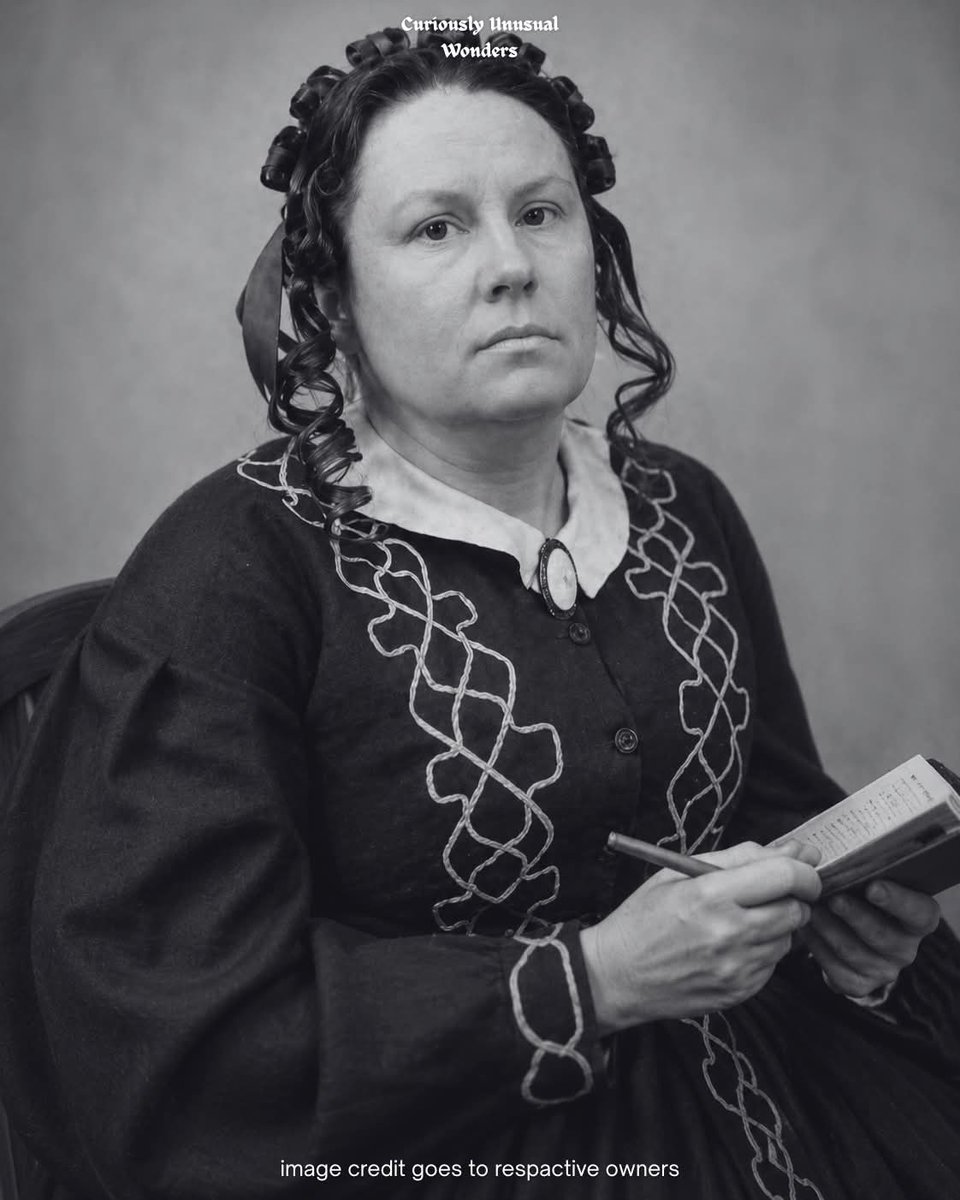
In May 1860, she kissed her six children goodbye. She thought about the dinner she would cook later. She thought about the laundry. She thought about the quiet life of a mother in Illinois.
She had no idea that when the front door clicked shut, it would stay locked for three long years.
Her husband, Theophilus Packard, was a respected minister. To the neighbors, he was a man of God. But inside their home, he was a man who could not stand a wife who thought for herself. Elizabeth Packard liked to read.
She liked to debate religion. She had her own opinions about life and faith. In the 19th century, for a woman to have a brain was considered a danger.
Theophilus decided to end the argument once and for all. He didn’t need a crime. He didn't need a witness. In those days, the law in Illinois said a man could commit his wife to an insane asylum without any evidence or a public hearing. He simply had to say she was "disturbed."
One morning, a group of men arrived at her home. They didn't listen to her logic. They didn't care about her tears. They dragged her away to the Jacksonville Insane Asylum. Elizabeth was 43 years old, perfectly sane, and suddenly a prisoner.
When she entered the asylum, she expected to see people who needed medical help. Instead, she found a warehouse of "inconvenient" women. There were wives who had argued with their husbands about money. There were daughters who refused to marry men they didn't love. There were women who were simply too loud or too independent.
"This is not a hospital," Elizabeth realized. "It is a cage for the unwanted."
The doctors tried to break her spirit. They told her that if she just admitted her husband was right and she was wrong, she could go home. They wanted her to say she was crazy for wanting her own thoughts. Elizabeth looked them in the eye and said, "I cannot buy my liberty by a lie."
She didn’t give up. Instead, she started to write. She hid scraps of paper in the linings of her clothes. She tucked notes under floorboards. She recorded every abuse, every scream in the night, and every story of the women around her. She became a secret journalist inside a living nightmare.
After three years, she was finally released, but her husband locked her in a room at home. He planned to move her to another asylum in a different state. This time, Elizabeth’s friends helped her get a message to a judge.
A trial was finally ordered to determine if she was actually insane.
The courtroom was packed. Theophilus was confident. He brought "experts" to say that her religious doubts proved her mind was broken. But then, Elizabeth stood up.
She didn't shout.
She spoke with the calm power of the truth. She explained her beliefs. She showed the jury that having a different opinion is not a disease.
The jury only needed seven minutes. They came back with a single word: Sane.
Elizabeth walked out as a free woman, but she found that her husband had taken everything. He had sold their furniture, taken her money, and disappeared with their children. She was alone and penniless.
Most people would have disappeared into the shadows. Elizabeth did the opposite. She spent the next forty years traveling the country. She stood before the legislature and demanded new laws.
She said, "A woman's mind is her own, and the law must protect it."
Because of her, states changed their laws. They made it illegal to lock a person away without a fair trial and a medical exam. She turned her private pain into a public shield for thousands of other women.
She proved that even if you take away a woman’s home, her money, and her children, you can never truly take away her voice.
This is what a brain looks like with no priors.
Your brain is a prediction machine. Every sensory input gets compared against an expected input built from prior experience. When reality matches your model, you feel nothing. When reality breaks your model, you feel wonder.
She's around two. Her model of the world is microscopic. A train is 200 tons of metal moving 50 mph through her field of view, and her brain has no template that fits. The prediction error is so large her face becomes the prediction error.
This is Karl Friston's free energy principle in real time. The brain minimizes surprise by updating its model. Children update constantly because almost everything is new. Adults update almost never because almost everything matches a prior.
That's why adults can stand next to the same train and feel nothing. Their model already contains it. The signal gets predicted away before it reaches conscious awareness.
The wonder window narrows as priors fill in. After that, you have to manufacture novelty. She still gets it for free.
You used to react to everything this way. Then your brain finished its training run.
Scientists fired lasers down through the Amazon canopy from a helicopter. On their screens, the trees disappeared. Sitting underneath was a 1,500-year-old city with stone pyramids as tall as a seven-story building.
Six hundred miles of canals and raised earth paths linked dozens of towns across the area. The Casarabe people built it between 500 and 1400 AD. Until LIDAR showed up, historians had pictured Amazon civilizations of that era as small wandering bands of hunters.
The tool that found the city is called LIDAR. From the air, it shoots 1.5 million pulses of invisible light per second, most of which hit leaves and bounce straight back. A few slip through tiny gaps in the canopy and reach the soil. A computer sorts which pulses came from leaves and which came from dirt, then draws a 3D map of the ground itself. The trees vanish from the picture. The shape of the earth appears underneath.
A 2022 paper in the journal Nature reported the find. Twenty-six ancient sites turned up in one survey area, and eleven had never been documented before. Heiko Prümers, the German archaeologist who led the work, said the same job by hand would have taken 400 years.
Then it got bigger. A team in Brazil ran LIDAR data covering about one tenth of one percent of the Amazon. From that small slice, their model predicted that 16,187 more ancient sites still sit hidden under the trees across the rest of the basin. Ditches and earth mounds. Walled villages and stone monuments. Built, lived in, and then swallowed back by the forest over centuries.
A WWF report counted 381 new plant and animal species in the Amazon between 2014 and 2015 alone. The list ran 216 plants, 93 fish, 32 amphibians, 20 mammals, 19 reptiles, and one new bird. That works out to roughly one new species every two days. In December 2024, a research team from Conservation International walked into a populated part of Peru and came back eight weeks later with 27 more new species. Four of them were mammals.
196 tribes worldwide still live with no contact with the outside world. Most are in the Amazon. In June 2024, 53 men from the Mashco Piro tribe were photographed walking out of the Peruvian forest near a logging camp. They are nomadic hunter-gatherers who have stayed away from outsiders for generations.
The Amazon covers 2.1 million square miles across nine countries. That is about two thirds the size of the United States. It holds one of every ten species on Earth, 390 billion trees of about 16,000 species, and 2.5 million types of insect.
The tweet says current technology cannot see beneath the canopy. The trees have already been seen through. The race is to map the rest before it burns.
Your brain can't tell the difference between someone criticizing you out loud and you criticizing yourself in your own head. Same brain regions fire. Same stress chemicals release. As far as your nervous system is concerned, your inner voice is a real person in the room.
Psychologist Alain Morin put people in brain scanners back in 2007 and watched what happened when they talked to themselves silently. The speech and sound-processing areas of the brain lit up, the exact same ones that activate during a real conversation with another person. Your brain is both the speaker and the listener, and it takes both roles seriously.
Your inner voice runs at about 4,000 words per minute. If you tried to say all of it out loud, it would take over 15 minutes. Your brain is holding full arguments with itself while you stand in line for coffee.
When that voice is encouraging ("I can figure this out"), it wakes up the part of your brain that plans ahead and stays calm, and triggers dopamine, the same feel-good chemical you get from eating something you love. When the voice turns harsh ("I always mess this up"), your brain flips to threat mode and floods your system with cortisol, the stress hormone your body normally saves for real danger. One study in Scientific Reports tracked people's daily inner thoughts and found that negative, past-focused thinking raised stress hormone levels even when nothing bad was happening around them. Just the words in their head were enough to put the body on alert.
Ethan Kross at the University of Michigan found one easy fix. When people referred to themselves by name ("What should Sarah do here?") instead of saying "I," the self-focused part of their brain quieted down within one second. No extra mental effort. His team published the finding in Scientific Reports in 2017, and it worked whether people were looking at upsetting images or replaying painful memories. One pronoun swap changed how the brain processed the emotion.
Your brain also physically reshapes itself around these patterns. Brain scans have picked up visible structural changes after just six weeks of consistently shifting how people talk to themselves. Neurons that fire together wire together. Researchers at Queen's University estimated in 2020 that the brain produces about 6,200 separate thoughts per day. The words you wrap around those thoughts are deciding which circuits grow stronger and which ones quietly fade, thousands of times before you go to sleep tonight.
people will move so weird and have the nerve to question why you're not interested in being around them anymore. Like….. you don't provide me any peace, i can't trust you, i can't have my guard down around you, etc. like why would i wanna keep you around?
I always felt like the “honeymoon phase” was a lie created to make ppl believe that it’s only really good in the beginning & it won’t ever be like that again. i honestly believe your love can feel new over & over & over again with the right person.