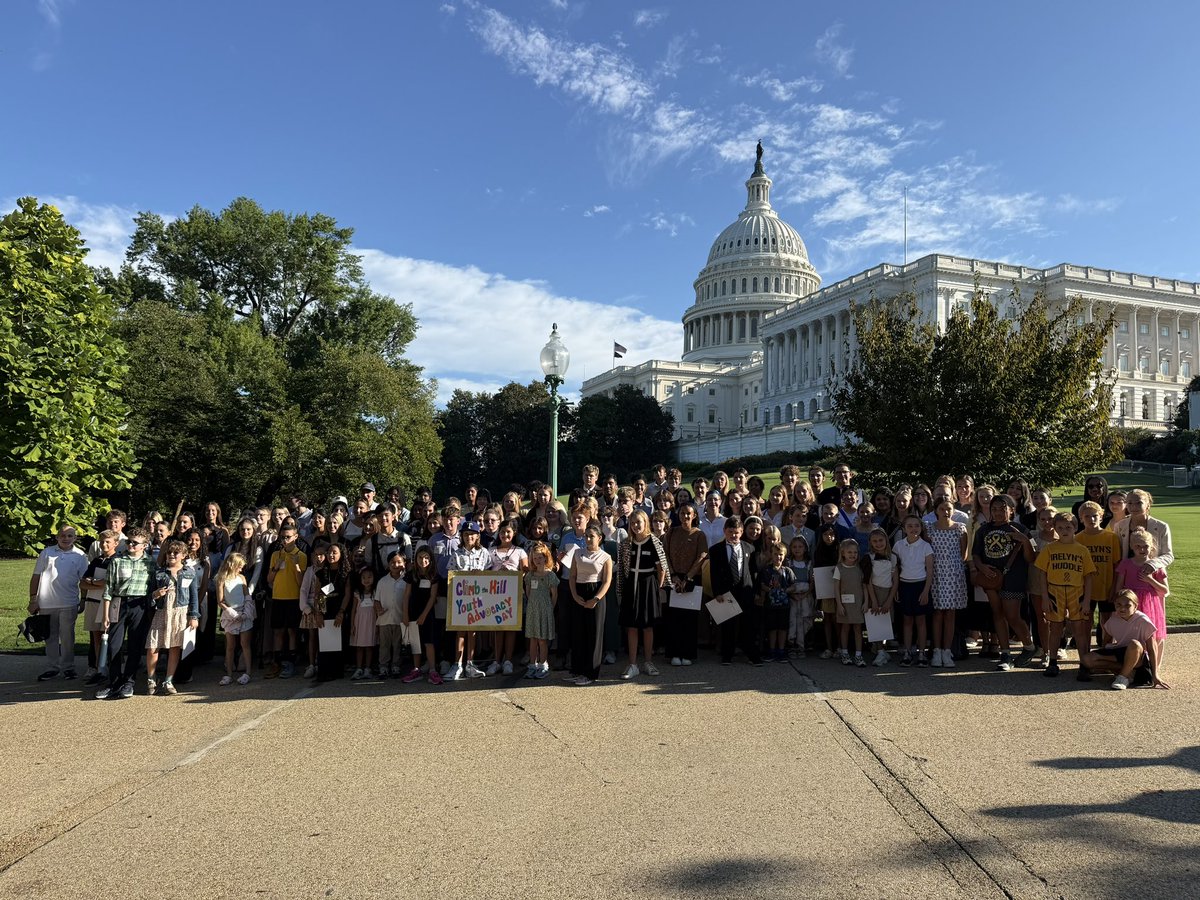
ATTENTION YOUTH ADVOCATES: If you have joined us to Climb the Hill in the past or are a new youth advocate, we would love to have you join us on September 18th in DC on Capitol Hill.
First, please fill out the google document below and follow up to schedule a phone call with [email protected] to discuss the details of the day and to see if it is a match.
Let’s keep changing the landscape of pediatric cancer together!
https://t.co/4j8UKEAG7O
Since I founded the Childhood Cancer Caucus 17 years ago, advancements in technology have radically expanded the frontiers of healthcare. Today, I introduced the AI for Kids Act, which codifies and builds on @Potus’ EO to leverage cutting-edge tech to unlock cures for pediatric cancer patients. By empowering AI to continuously drive research forward, we move one step closer to eliminating cancer as a threat to children’s lives.
https://t.co/KIVeuuQnqV
A baby was born with one genetic typo that would kill him. Doctors had six months. They read every letter of his DNA, found the typo, and wrote a drug to fix only that letter. He got the first dose last year. He's the first person ever treated with a medicine made just for him.
That's what happens when DNA reading gets cheap. Four big shifts are already underway.
Starting this year, England is rolling out a £650 million program to read the full DNA of every newborn baby. It's an NHS plan, announced last June. From the pilot data so far: 1 in every 200 babies has a treatable genetic disease the standard newborn blood test never catches. The full program scans for over 200 conditions, including muscle-wasting diseases, severe immune disorders, heart abnormalities, neurological conditions, and several childhood cancers. Catching it at birth means treating it before symptoms ever appear.
For adults, the bigger near-term change is how doctors prescribe drugs. Take a 2023 trial published in The Lancet that ran across seven European countries; they gave 6,944 patients a small 12-gene test before prescribing common medications. The result: 30 percent fewer serious side effects. A UK study separately found 89 percent of people over 70 have been given at least one drug where their own genes decide whether it works, fails, or hurts them. Almost none of them got tested first. The math flips when reading your DNA costs less than a routine blood draw.
The bigger problem comes after the reading. Humans carry about 4 million tiny DNA differences from each other that can change how the body builds a protein. Doctors have only figured out which 2 percent are harmful or harmless. The other 98 percent sit in a folder labeled "we don't know yet." In 2023, Google's AI lab DeepMind released a tool called AlphaMissense, built on the same engine they used to solve protein folding back in 2020. AlphaMissense made confident calls on 89 percent of those mystery variants. Reading DNA got cheap by the mid-2010s. Translating those reads into medical answers is where AI is finally making the second leap.
Now the harder part. Going from this one baby to the next million patients is hard. Casgevy, the first approved gene-editing drug, lists at $2.2 million per patient and needs heavy chemotherapy first. Bluebird Bio, an early pioneer in the field, had only treated 57 patients across three approved therapies by late 2024. The biology has been figured out. Manufacturing, delivery, treatment-center capacity, and insurance are what nobody has cracked yet.
But this February, the U.S. FDA released new guidance that lets dozens of one-patient gene-editing drugs count as a single drug for approval. That one rule change is what stands between treating one baby in Philadelphia and treating thousands of others like him.
A related angle here:
President Trump's proposed FY26 budget for federal R&D was $181.4 billion, most of which was for DOW and NIH.
China's total R&D investment last year was $569 billion.
We can talk FDA reforms til the cows come home but that's not the whole story.
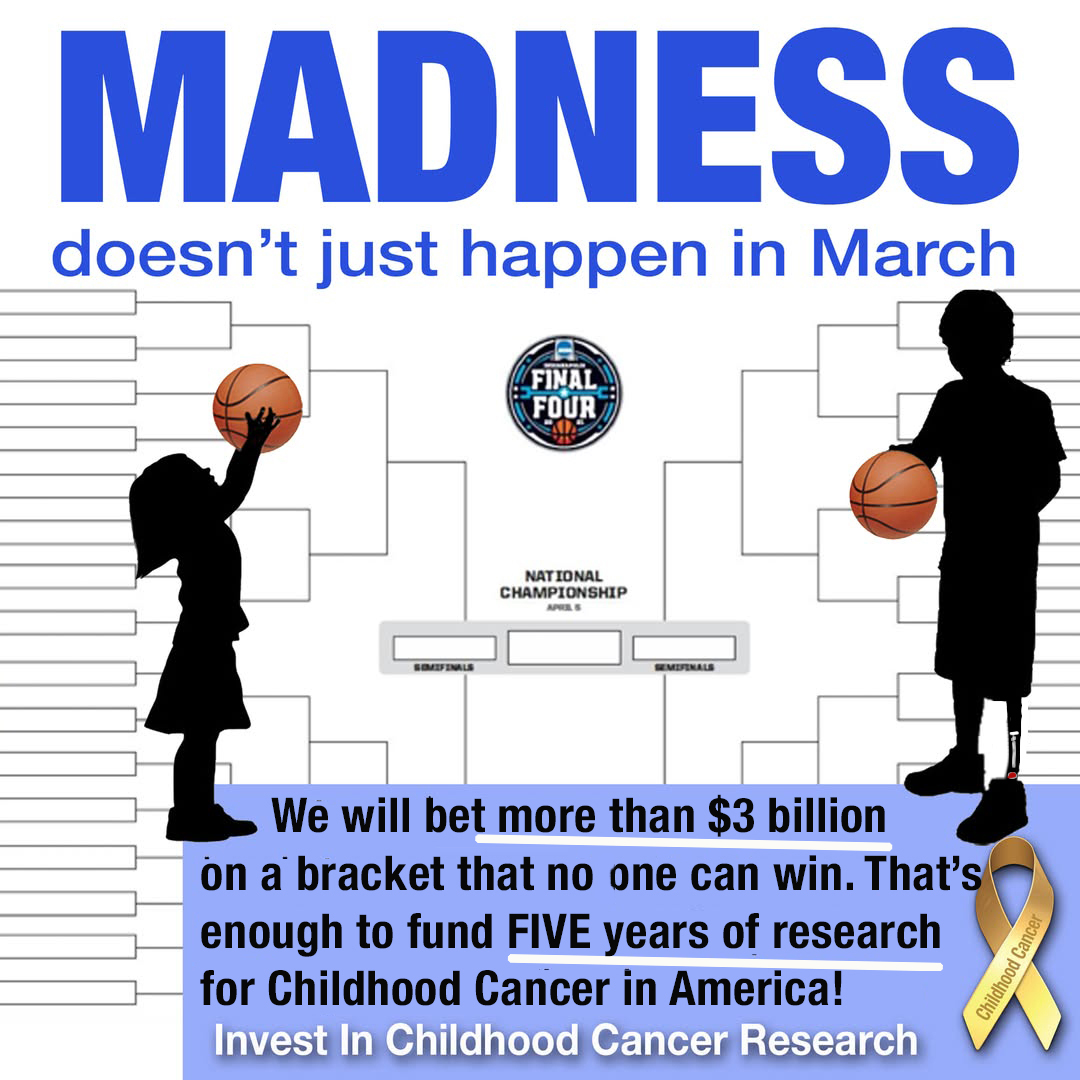
We think it's madness for us to consider #ChildhoodCancer as a "rare" disease and then not invest in research for it even though DIPG, Ewing Sarcoma and other kids' cancers kill more children than all other diseases combined. Even survivors are likely to have serious health issues due the very treatment they received to try and save their lives. Stop the madness and support good legislation that will provide more research dollars to childhood cancer. https://t.co/N4cOKDi4XI
Here's a brilliant article by my friend @ProfBShaffer, who notes, among other insights: "The International Energy Agency’s “Net Zero by 2050” report in 2021 called for no new investments in fossil fuels. The same year the Group of Seven countries committed to end public financing for overseas fossil-fuel projects. The message was clear: Investment in oil, gas and coal was no longer welcome.
"These policies have inflicted devastating consequences particularly in Africa, where large volumes of oil and gas in multiple fields were discovered in the 2010s. Had investments continued, Africa could have become a critical energy supplier, and the increased supply outside the Middle East could have softened the effect of current energy disruptions."
On the morning of my law school graduation, I said to Michael, “I’d really like to get a PhD.” He laughed.
35 years later, Baylor College of Medicine will actually award me an (honorary) doctorate.
I am truly honored, though I’d rather have Jacob back. https://t.co/PDmRM7KWqm
Grateful @NewsNation & @JoeKhalilTV are sharing Logan's story & honoring Mikaela's legacy. Kids like them are the reason I fought so hard to pass the Mikaela Naylon Give Kids A Chance Act, which will spur cutting-edge pediatric drug development for years to come. Watch this important story:
@ChrisCuomo We appreciate you having this discussion last night. Great job Camille explaining the #MaikalaNaylonGiveKidsAChanceAct and what the process looked liked up until it’s passing. World, let’s keep this conversation going.
https://t.co/Zzc8ticWYc