@Its_jayant_here@riteshmjn Not really, AI may survive but if the investments made don't reap rewards and their IRR in a timely fashion - that's equivalent to a falter.
AI as a technology will continue - already so many open source models
India's top 5 IT firms spend close to 0.7-0.8% (HCL and TCS close to 1.2%) on R&D/Revenue on average.
But India's largest ATM and Cash company spends just shy of 2% as of last FY, and they expect it to rise.
Can someone please reconfirm what is the "new and old" economy again?
@FalakKalyani My neighbor's kid is special🧿. In 4th grade, he's already learning 9th-grade content. But his parents make sure he doesn't think he's special, they'll change schools for more opportunities. I think going to school is also a lot about learning to behave with peers in society!
Pls don’t taunt me as a billionaire. I am speaking on behalf of citizens who don’t have a voice n asked me to raise these issues. I do not use Anekal roads frequently but I live in Huskur n can tell you that the road between Huskur n Sarjapur Road is unmotorable.
At 27, he is attempting what almost no aerospace company outside SpaceX has dared: a fully reusable, medium-lift rocket that competes directly with the Falcon 9. From India.
His name is Manu J. Nair (@Manu_J_Nair). In 2022, NASA's Project PoSSUM trained and certified him as one of only 12 scientist-astronauts in the world. That same year, he co-founded EtherealX. The qualified astronaut decided his mission was not to ride a rocket, but to build a better one.
EtherealX was born from a dinner conversation, when Manu sat down with co-founders Shubhayu Sardar, a former ISRO scientist, and Prashant Sharma, an aerospace engineer, and asked one question: "Why is access to space still a luxury?" That question became the company.
Their rocket is called Razor Crest Mk-1. Seventy-one metres tall, designed to carry up to 8 tonnes to low Earth orbit in fully reusable configuration, at a target cost of $500 to $1,000 per kilogram. SpaceX charges approximately $2,700. First launch is targeted for early 2027.
In three and a half years, the team has manufactured two rocket engines from scratch, established Base 001: India's largest private rocket engine test facility, acquired 16 acres of land in Tamil Nadu for launch operations, and signed $130 million in launch contracts from six customers before a single rocket has flown.
The Series A of $20.5 million was led by TDK Ventures, the investment arm of Japan's TDK Corporation, alongside Accel. Total funding has crossed $28 million.
"What we have today is not market dominance," Manu said. "It is market dependence. That is not how we envision the future of space."
His father served in the Indian Air Force.
His son is building the rocket that will go beyond it.
@theguildworld
@ActusDei@livemint@amrendra_86@JoseyJohn@deeptibhaskaran Still appreciate how you support the Mint! The only reason I still subscribe to physical newspaper. Definitely the only escape from social media in the morning and high quality business news.
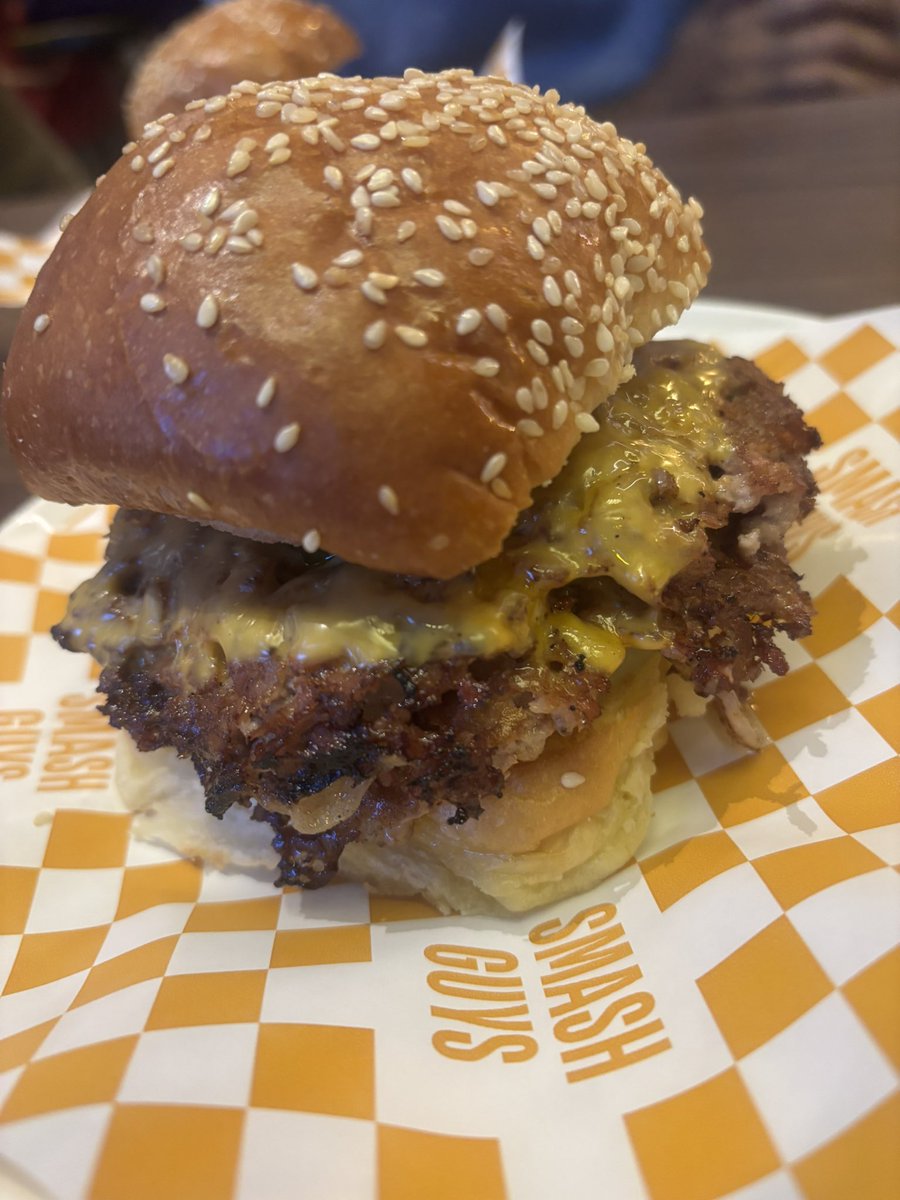
Bangalore Burger Tier Rankings:
S Tier: BeyondBurg, Fat Smash, The Burgery
A Tier: Sanky’s Burger House, Guerilla Diner, Burgernama, Jethros
B Tier: Smash Guys, Burger Seigneur, Kried, Nashville Fried Chicken
C Tier: The Only Place, Good Flippin Burgers
D Tier: Truffles
F Tier: KFC, Burger King, Leon’s
@LarissaFernand Yup, and with GIFT city, RBI wouldn't increase those limits either.
You do have certain funds with partial foreign exposure, but most aren't adding more, unless it's dividend received abroad and invested abroad. Ex: SBI Focused fund, PPFAS Flexicap.
GIFT city is the way ahead
Was digging through some old tweets from Ashish Kacholia @LuckyInvest_ARK.
He once mentioned losing ₹1 crore trading and eventually quitting because trading was simply too much strain on his brain.
Sounds like the end of the story.
But there’s a catch
@FalakKalyani Appreciate this. Interesting point of view. Hope you have made decent capital - worth protecting in these 2 decades. I guess when you are in capital building stage like me - 10x is actually the dream!
Railroads were once 63% of the entire US stock market.
Not 63% of transport stocks. 63% of everything listed.
The history of concentration, in order:
– Tulips, 1637. A single bulb traded for the price of an Amsterdam canal house.
– South Sea Company, 1720. Shares went from about £128 in January to above £1,000 by summer, then back near £150 by December.
– US railroads, 1840s. 63% of US market cap.
– Utilities, telecom and industrials, 1929. 36%.
– Nifty Fifty, 1972. 40%.
– Japan, 1989. 44% of global equity.
– Dot com, 2000. 41%.
– AI Big 10, today. About 40%.
Every one of them was built on something real. Railroads did compress a continent. The internet did rewire commerce. Being right about the technology was never the thing that protected you.
The tulip story is also less clean than the legend. Modern research found the economic damage was modest and the ruin was mostly literary.
The bubble was never in the idea. It was in how many people decided to own the same idea at the same time.
@SahilKapoor how can it be a bubble when the only domestic source of whey is through Amul and Parag Milk Foods. Nobody else makes cheese at this scale, and as a result no one else makes whey in the country! Whey prices are elevated due to whey shortage. GLPs are one cause amongst others.