If you’re the big man in the room, you don’t have to take pot shots at provincial leadership candidates and their staffers. It’s a choice and a piss-poor one at that. It’s all in the same vein as unveiling a new shadow cabinet while failing to include any of them in the comms. He wants it all to be the Poilievre show, even if it means we continue to flail about in the polls. He doesn’t have so many friends that he can pick these fights nowadays.
The level of delusion should not be underestimated.
Dismissing and having shame about the claims of his own kind while expressing the very same claims from the other side of the coin, points to a genuine ignorance and idiocy.
I couldn't help but ridicule these words, it's genuinely bizarre.
↓
''The east Romans themselves wrote it. We Greeks are the authority on Graeco-Roman historical matters. To diverge from our words is to diverge from sanity''
this is nothing but pure nonsense, must be from a parallel universe but for sure coming from @HeraldOfRome. Obviously because in our one, Eastern Romans themselves stated a clear distinction between Hellenes and Romans (Rhomaioi). During the Komnenian Restoration in the 12th century, the Eastern Roman historian Anna Komnene clearly distinguished between Romans and Hellenes in her writings. When referring to the people and nation of the Roman Empire, she used the term Romans. She does not speak of the Hellenes as Romans or of any supposed Hellene Roman identity; she simply refers to the Romans.
Furthermore, because the nations of medieval Western Europe denied that the Eastern Romans were the legitimate heirs of the Roman legacy and referred to them as "Graikoi" as a means of belittling them, Anna Komnene used the term Graikoi when referring to Classical Antiquity, ancient Hellenic literature, mythology, or the pagan past.
Anna Komnene understood that calling the Eastern Romans "Greeks" was merely a form of disparagement and part of the Franks and other Europeans' attempts to appropriate the Roman legacy for itself, and she deliberately maintained that distinction throughout her encyclopedic works.
In any case, this wasn't even the main subject of my posts. However, @HeraldOfRome struggling to write coherently while suffocating under the weight of his own straw managed to do something useful for once by giving me the opportunity to address yet another issue.
The truth is that you are not an authority on anything about Rome. The only primary sources you can point to are the inscriptions preserved on Mount Athos and even their survival to this day is something you owe to the Ottoman period. Yes, I'm talking about those six centuries you like to pretend never happened.
Even setting that aside, your personal attempt to place yourself in any position of authority on this subject is completely laughable. You're nothing more than a grek bot account pretending to be Roman while approaching everyone else with hatred and contempt. Any topic that relies on people like you as an authority should be dismissed and ridiculed from the outset. That is exactly why you will never be an authority on Roman history.
Since the establishment of the Jus Gentium, the Romans no longer defined other peoples as barbarians. The tendency to view everyone outside one's own community as inferior and inherently hostile belonged to the mentality of small city states ruled by narrow minds convinced of their own superiority. You are not Roman, and you never will be @HeraldOfRome. Deal with it.
This is honestly one of the best TV Shows I have ever watched, I have never seen anything like this
The storytelling, suspense, and mystery keeps you hooked every single episode. This series has a special vibe to it and is easily one of the best written stories, Character development and pacing is so well done. The casting and acting is great as well
It’s the kind of show that stays in your mind long after you finish watching, i will recommend this series to everyone, and i guarantee you won't be dissapointed
#FROM #Fromily #Fromseries
On a CCTV show 10 years ago, BYD CEO Wang Chuanfu was asked a direct question: China’s power generation mainly relies on coal power, so why claim that new energy vehicles are zero-emission?
Wang Chuanfu: “It’s true that most of China’s electricity currently comes from coal, but in the next 10 years, we will usher in an era of great development for China’s clean energy industry, with photovoltaic, hydropower, and wind power proportions increasing significantly. Coal power is just temporary.”
Talking about a visionary!
My father cried.
I had never seen it. Not once in my life.
70 years old. Post-war generation. He hated America with everything he had.
60 years. Not one kind word. Not one.
Then March 2011 came.
He sat in front of the TV. Every day. Silent. Fists on his knees.
Your Marines digging black mud with their bare hands for Japanese strangers.
Your 19-year-old sailors sleeping on cold steel floors so our grandmothers could have beds.
Your carrier sailing INTO the radiation while the whole world ran out.
He watched all of it. And said nothing.
Then one night I passed his room and I froze.
Behind that door, my father, the strongest and most stubborn man I ever knew, was sobbing like a child.
I couldn't move. I just stood there in the dark hallway, listening, crying with him.
Then he said it. One sentence. It tore 60 years apart:
"I was wrong about them."
Do you understand what that took?
A lifetime of hatred. Gone.
Destroyed by soldiers carrying soup to strangers.
America, you didn't just save our towns.
You reached inside my father's chest and healed a wound he swore would never close.
He passed away believing in you.
Happy 250th. 🇺🇸🇯🇵
An old man who hated you died loving you. My father.
They tried to break him for two years.
They never did.
Captain Humbert “Rocky” Versace was captured in Vietnam in 1963 after a fierce firefight. Wounded and surrounded, he refused to surrender quietly. Even in captivity, the battle didn’t end, it only changed. He was held in jungle cages, beaten, starved, isolated, and interrogated. His captors demanded propaganda and cooperation. He refused.
When ordered to bow, he stood tall. When threatened, he quoted the U.S. Code of Conduct. When beaten, he sang “God Bless America” loud enough for other prisoners to hear. He became their anchor. He encouraged the younger, frightened captives and taught them to resist, to give only their name, rank, service number, and date of birth. Nothing more.
Because of this, he was targeted. Shackled. Isolated. Beaten again and again. Still, he would not comply. He secretly learned Vietnamese by listening to his captors, using that knowledge to protect others. He turned captivity into quiet resistance.
Years passed. His body weakened. His spirit did not.
In 1965, after nearly two years in captivity, the Viet Cong executed him. He was 28 years old. His remains were never returned. No grave. Only memory.
In 2002, nearly 37 years after his death, he was awarded the Medal of Honor. The ceremony came. The recognition came. But he was not there.
Humbert Versace did not charge a hill or throw a grenade. He fought a different battle, a battle of will, of faith, fought in chains. He chose dignity over survival.
And most people have never heard his name.
Every carton of milk you have ever pulled from a refrigerator was designed by a woman locked inside a freezing boxcar in 1905.
Her name was Mary Engle Pennington. She was thirty-two years old. She was a Quaker-raised bacteriological chemist from Philadelphia with a Ph.D. from the University of Pennsylvania. She was the first woman ever hired as a scientist by the Bureau of Chemistry — the federal agency that would eventually become the U.S. Food and Drug Administration.
Her job, on paper, was to sit at a back desk and file paperwork.
Instead, she strapped a thermometer to her belt, climbed into a moving freight train in the Chicago rail yards, and let them lock the door behind her.
Then she did it again. And again. Five hundred times over two years.
In 1905, most Americans died young because of food.
Milk shipped from Wisconsin dairies to Manhattan tenement apartments arrived in wooden barrels packed with dirty lake ice harvested from frozen ponds. By the time it reached the city, half of it was curdled. Dairies covered the sour smell with formaldehyde. Butchers rubbed borax on decomposing beef to hide the rot. Children in New York and Philadelphia were dying by the thousands every summer from milk-borne bacterial infections.
The federal government had almost no power to stop it.
Dr. Harvey Wiley, the head of the Bureau of Chemistry, was fighting to change that. He needed a scientist willing to prove — in hard, incontrovertible temperature-log data — exactly how and why the American food supply was rotting in transit.
He needed someone who would ride in the refrigerator cars.
He knew exactly who he wanted.
Pennington was the daughter of a Quaker family that had moved from Nashville to West Philadelphia when she was three. She had discovered chemistry at twelve by borrowing a college-level textbook from the public library. She had completed the coursework for a bachelor of science in chemistry at Penn's Towne Scientific School — and the university's trustees had refused to grant a woman a degree. They handed her a "certificate of proficiency" instead.
She stayed anyway. She kept working. She wrote a doctoral thesis. She forced the same trustees to grant her a Ph.D. at twenty-two.
Wiley had known the Pennington family for twenty years. He knew what she could do.
In 1905 he had her take the federal civil-service exam under the signature M. E. Pennington. The score guaranteed a hire. When she walked into the Bureau of Chemistry office the following Monday, the personnel officer realized what had happened. Federal law required them to hire her anyway.
They tried to bury her at a back desk.
She spent one week doing filing. Then she walked into Wiley's office and asked for the rail schedules.
The Bureau had no cold-weather field gear cut for a woman. She went to a Washington department store and bought her own — heavy wool skirts, oversized men's sweaters, thick wool socks, leather-lined boots. She packed a glass thermometer, a set of sterile glass sampling vials, a leather-bound ledger, and a fountain pen.
She walked into the Chicago slaughterhouse rail yards at dawn.
She climbed into the ice bunkers of moving freight cars packed with raw poultry and beef. The doors were locked from the outside. She sat in the freezing dark for hours. She measured the temperature wall by wall, floor to ceiling, corner to corner. She sampled the meat every three hours. She wrote everything down in the ledger.
She did five hundred of these expeditions over the next two years. She slept in cabooses on rural sidings. She caught pneumonia twice. She kept going.
The rail companies had believed for fifty years that cold air, once loaded into a boxcar with ice, would fill the space evenly.
Pennington's measurements proved them wrong.
Cold air fell to the floor. It stayed there. Warm air generated by rotting cargo rose to the ceiling and stagnated. The meat stacked near the roof was slowly cooking in its own bacterial gases while the meat near the floor was flash-frozen solid. The corners of the cars had dead zones the cold air never reached at all.
She discovered that a constant thirty-two degrees Fahrenheit — exactly at the freezing point of water — completely halted the growth of the specific bacterial strains that caused most food-borne deaths.
The average American refrigerator car was operating at forty-five degrees.
She drafted a complete redesign specification. Exact ice-bunker dimensions. Elevated floor racks so cold air could circulate underneath the cargo. Precise insulation thickness in the walls. Ventilation channels to move air through the dead zones in the corners.
The rail industry fought her. Their lawyers, their lobbyists, their Congressional influence, and the political backing of the meatpacking monopolies. They argued a female chemist could not tell railroad engineers how to build trains.
She did not argue back.
She published the temperature data.
The rail companies could not dispute the math. They eventually adopted her specifications wholesale. Spoilage rates collapsed. Big-city childhood mortality from milk-borne infection dropped inside a decade.
Her defining test came in April 1917.
The United States entered the First World War. The War Department needed to move thousands of tons of perishable American beef across the Atlantic to the Western Front. The commercial rail industry contributed forty thousand refrigerator cars to the war effort.
Pennington evaluated every single one.
Only three thousand of the forty thousand — seven and a half percent — met her institutional standard. She spent the next eighteen months personally overseeing the emergency retrofit of the other thirty-seven thousand cars. She standardized freezing at the slaughterhouses before the meat ever touched a train. She specified the exact temperature the ocean cargo holds had to maintain from Chicago to Brest.
The spoilage stopped. The troops were fed.
She served on Herbert Hoover's War Food Administration through the end of the war. In 1919 she left the federal government. In 1922 she founded her own refrigeration-engineering consulting firm, which she ran until she died. In 1923 she founded the Household Refrigeration Bureau to educate American consumers about the emerging home-refrigerator revolution.
In 1940 the American Chemical Society awarded her the Francis P. Garvan Gold Medal.
She was still consulting on a commercial refrigeration project the week she died — on December 27, 1952, in New York City, at eighty years old.
In 2018, sixty-six years after her death, she was inducted into the National Inventors Hall of Fame.
You walk into a grocery store in July. You pull a carton of milk from the back of the case. You do not smell it for rot. You open it. You pour it.
You are drinking from the specification of a woman who let them lock her in the freezing dark for two years to prove she was right.
If her story stayed with you, drop one word in the comments — Mary, ice, thirty-two, anything that comes to mind. Tap the like button so more people find this story. The page is small. Every reaction helps us keep telling stories like this one.
"We should insist that the immigrant who comes here in good faith becomes an American and assimilates himself to us...
We have room for but one flag, the American flag... We have room for but one language here, and that is the English language"
-Theodore Roosevelt
I COULD NOT AGREE MORE!!!
🚨#BREAKING: Absolutely HORRIFYING footage has emerged from a "teen takeover" in North Charleston SC.
It appears that a White female police officer was severely BEATEN by a mob of Black teens... including with what appears to be a Roman Candle.
This is hard to watch.
Please go see Young Washington! I’m stressing that twice!!! Here’s my brief summary below! 👇🏽🇺🇸
Young George Washington’s Early Path
Born in 1732 in colonial Virginia, George Washington lost his father at age 11, forcing him to forgo the formal education his older brothers enjoyed. He dropped out of school early, instead pursuing practical skills through surveying and self-study. By his early twenties, the ambitious young man volunteered for military service in the Virginia militia amid rising tensions with the French in the Ohio Valley.
In 1754, as a lieutenant colonel, Washington led a small force into the wilderness. He constructed Fort Necessity, only to face a superior French and Indian force. After a rainy battle, he was forced to surrender—the first and only time he would capitulate in his military career—yet the experience taught him vital lessons in leadership, resilience, and frontier warfare.
From that early setback, Washington rose through courage and determination, commanding the Continental Army to victory in the Revolutionary War. His heroic journey culminated in his unanimous election as the first President of the United States, where he guided the young nation from the White House with wisdom and integrity.
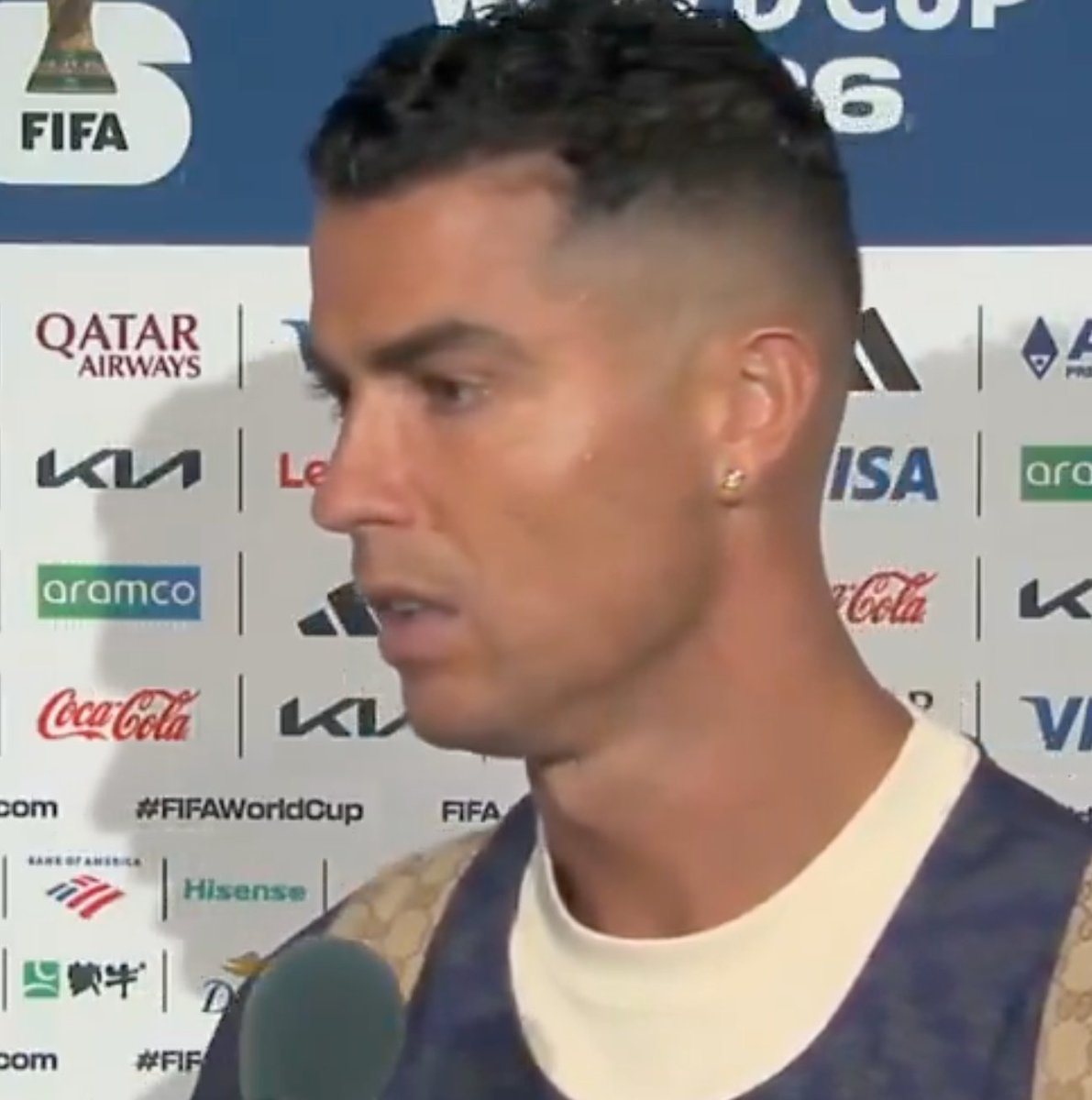
🚨🗣️ Cristiano Ronaldo: "I’m sad to be going out of the World Cup like this."
"But I gave it my all; I did my best. That’s football. Sometimes you win, sometimes you lose."
@counselhe@afshinrattansi The bottomline is that China's success is the success of the global south. The two are connected. China's rise accelerated the rise of the whole global south - Asia, Africa, South America. So Indian rise is connected with China's rise and India can't rise without a rising China.
@counselhe@afshinrattansi China exports billions of cheap smartphones and other electronics over the past decade. America wouldn't do that. It would be considered as over production. That's why China won't collapse within next 30 years. They're too valuable for the global south to allow them to collapse.
“Nobody in the world could’ve pulled off what [President Trump] pulled off… We’ve got the second George Washington.”
- Sylvester Stallone
Sylvester, the greatest actor of all time, turns 80 today. Happy Birthday!




![BoLoudon's tweet photo. “Nobody in the world could’ve pulled off what [President Trump] pulled off… We’ve got the second George Washington.”
- Sylvester Stallone
Sylvester, the greatest actor of all time, turns 80 today. Happy Birthday! https://t.co/GLpK3qWfJn](https://pbs.twimg.com/media/HMkajMsXAAAfxYC.jpg)


