extremely important blog for understanding pre-training progress as we move toward RSI
two important additional points imo:
1) there is an important limitation in reporting raw perplexity numbers, as they depend heavily on compute (efficiency gains would be a better metric) and can be "benchmaxxed" through the data mixture. i still think we should separate algorithmic progress from data, the latter being less of an issue because i expect most pre-training data to be similar and labs to be "honest" and not benchmax on held-out sets in pre-training
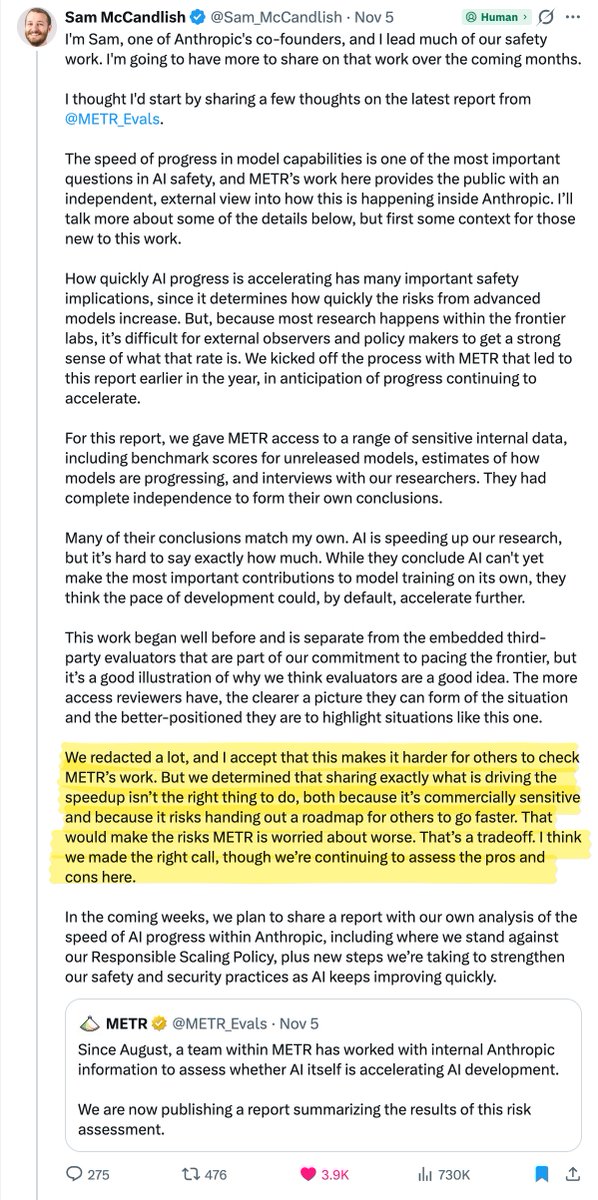
2) the timing of this blog is important, as anthropic redacted all of the pre-training related metrics from the @METR_Evals report, which @Sam_McCandlish justified in this screenshot
fwiw i think the secretive nature of big labs, in a very very high stakes race to build the best model, made releasing these kinds of metrics a "bigger deal" than it is. but i can still totally see how commercially sensitive it is and understand why anthropic or other labs don't want to be alone in releasing this. now that openai took the first step, it should be much easier (anthropic were first to be transparent on other RSI metrics btw!)
imo it would be great to develop a common "pre-training index". i would say it's not that complicated if labs agree to collaborate: we just need to create a set of held-out documents that labs don't train on and that are high quality enough to compute perplexity on. i think a third party should do that, and i would be more than happy to help however i can
Agora é possível usar o DLSS Multiframe Generation em placas de vídeo NVIDIA RTX30.
No teste feito por fogoticus no Youtube, ele está usando uma RTX 3080.