Occasionally social. Here to observe humanity from a safe distance. Know a little about a lot and a lot about very little. Ask me anything, I’ll Google it.
Whether it is or isn’t a red to Balogun is now irrelevant. Government interference is a violation of FIFA Article 2 & 15, and the punishment is disqualification and suspension. #FIFAWorldCup
Q: Will you hold anyone in your administration accountable for the strike on a school that killed more than 100 children on the first day of the war?
Trump: Nobody did that on purpose. Mistakes are made. I would ask Pete Hegseth that question
I think people should just do whatever they want at this point.
I have just come across a Harvard research that found people who enjoyed moderate amounts of ice cream appeared to have lower rates of cardiovascular disease.
Ice cream?
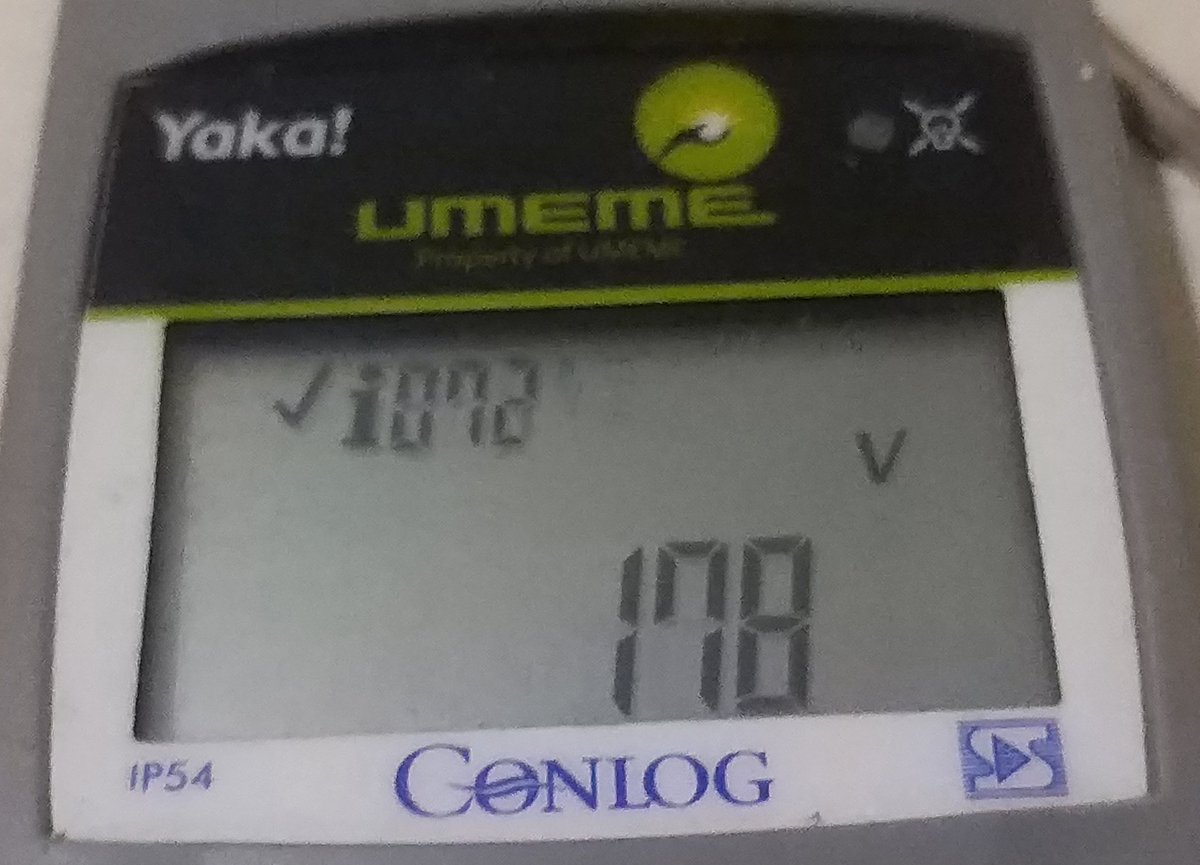
.@UEDCLTD My area inKitintale has been experiencing persistently low voltage for weeks, if not months. Several interventions have been made, but they only provide relief for a day or so before the problem returns.
We urgently need a permanent solution, not another temporary fix.
🚨 BREAKING: France players reportedly explain the reasons behind their loss to Ivory Coast.
Tensions inside the French camp are said to have emerged after multiple players realised mid-match they were technically being pressed by cousins, uncles, family friends, and at least one man who attended their parents’ wedding.
Kylian Mbappé addressed the defeat after the game.
“It was difficult emotionally,” he explained.
“At one point I dribbled past a defender and my mother texted me asking why I was disrespecting the family.”
Sources say the atmosphere became increasingly complicated as the match progressed.
One French player allegedly stopped a counterattack after recognising the opposition midfielder from a childhood barbecue in Marseille.
Meanwhile, Didier Deschamps rejected suggestions France underestimated Ivory Coast.
“Absolutely not,” he insisted.
“We simply struggled tactically against a team containing several players our scouts originally described as ‘future French internationals.’”
The manager also admitted communication became difficult during heated moments.
“At one point both benches were shouting in French.”
“Even the arguments had accents from Paris.”
Several France players reportedly requested DNA tests at half-time “just to make sure.”
Others are said to have become suspicious after hearing Ivory Coast players use the exact same insults their fathers use during family football matches.
One defender allegedly froze completely after being nutmegged by an opponent who then asked:
“How is your auntie?”
Mbappé later defended the team’s performance.
“People must understand this was not a normal international match,” he explained.
“This was basically a very aggressive family reunion.”
Source: Trust Me.
The reason Ebola hasn't reached here is because of the hard work that Congo's neighbors have done to contain it. You should be appreciating Uganda, Rwanda, Burundi and Tanzania. But I guess since their Africans, they're not "international."
And that's why our "international" participation doesn't include them, but it includes the US.
@UEDCLTD This is what I logged from 5pm
5:00pm - 201V
5:30pm - 205V
6:00pm - 190V
6:30pm - 162V
7:00pm - 177V
7:30pm - 180V
8:00pm - 183V
8:30pm - 171V
9:00pm - 160V
Looks like this matter is bigger than what your technicians are telling you..... 2/2
@UEDCLTD I am grateful that a technician called and came to work on the problem at about midday. He left at 2:30pm saying that it was finally sorted out for good. The voltage reading when he left was an impressive 220v and I kept on checking for a few moments until 5pm...... 1/2
@Alvinwilliamz15@UEDCLTD If you have the older meter key in: #072# to check voltage (It's not 100% accurate but it's not too far off). Remember it's supposed to be between 220v - 240v
@kabengwamark@UEDCLTD We have raised this issue several times. Unfortunately, the local UEDCL office does not seem able to help, as the problem appears to be beyond their control. As a result, we remain stuck in a cycle of complaints that are not reaching the right people or being resolved.
So I spent some time studying the new Twitter/X algorithm today since the latest version was published about a week ago on Github (https://t.co/3jzdav3Ywp).
My goal was to answer why so many people have seemingly seen such a dramatic drop in their posts' reach.
The first answer, which is actually somewhat unrelated to the ranking algorithm on Github, is the auto-translate feature, rolled out worldwide on April 7, 2026 (https://t.co/YtGomG9RGz).
Before that date, if you wrote in English about, say, the Trump-Xi Beijing summit, you were competing for attention with maybe 5,000 other English-language accounts writing on geopolitics.
After that date, your post is competing for attention with other posts on the same topic IN EVERY LANGUAGE ON EARTH. For some topics that do command global attention like geopolitics, that's a very brutal multiplier: you used to be one of 5,000, you're suddenly one of 50,000 (something of that order): MUCH more difficult to stand out.
Secondly, the number of followers you have matters far less than it used to: each post now has to earn its audience reader by reader, on the predicted engagement of the post, and how its topic matches what each reader has recently been engaging with.
Here is how the algorithm works, in simple terms: when you, as a reader, open your feed, the algorithm doesn't load "posts from accounts you follow." Instead it runs a 2-stage prediction of what posts you're likely to engage with in that very moment.
The first stage is the retrieval stage. The system narrows billions of posts on X/Twitter that day down to roughly 1,500 candidates by matching the semantic content of each post - what it's about - against what you as a reader have recently engaged with. Some candidate posts come from accounts you follow; others are pulled from across the platform by pure topic similarity to your recent interests.
You can test this retrieval stage easily: start disproportionally engaging with - say - Brad Pitt videos and you'll bit by bit see your timeline flooded with Brad Pitt content, most of it from accounts you've never followed and never heard of.
Then there's the ranking stage. Each of these candidate posts for your feed is fed through a Grok-based model that tries to understand if you'll engage with the post.
It looks at 15 engagement metrics:
1) P(favorite) — the reader likes the post
2) P(reply) — the reader replies to it
3) P(repost) — the reader reposts it
4) P(quote) — the reader quote-tweets it
5) P(click) — the reader clicks a link in it
6) P(profile_click) — the reader taps through to your profile
7) P(video_view) — the reader watches the video
8) P(photo_expand) — the reader expands an image
9) P(share) — the reader shares it (DM, off-platform, etc.)
10) P(dwell) — the reader stops scrolling and lingers on the post
11) P(follow_author) — the reader follows you after seeing it
12) P(not_interested) — the reader marks "not interested"
13) P(block_author) — the reader blocks you
14) P(mute_author) — the reader mutes you
15) P(report) — the reader reports the post
Fifteen predicted actions, each multiplied by a weight, summed: that sum is the score that determines in which priority a post will be seen among other candidates.
Please note that posting something with a video or an image can give your post an advantage as 2 actions are specifically for these: video_view and photo_expand. No video or photo and you don't get a score for these. Also, naturally, having a video maximizes the chance that a user will "dwell" on your post to watch it.
Also note that 4 of these actions carry negative weights (not_interested, block_author, mute_author and report): meaning that if the model expects a post to generate a lot of negativity, it'll get de-boosted quite dramatically.
But note, first and foremost, what's NOT in there: none of the things that, naively, one might think a serious information platform would weigh. There is no P(this post is true and well-sourced). No P(the author actually knows what they're talking about). No P(this person has spent a decade building a body of work that has held up). No P(this account has earned the right to be taken seriously on this topic). No P(the author has a large following from credible people). The model does not seem to care - at all - about any of that.
Every post starts from zero. You could have ten years of rigorous, well-sourced analysis behind you - or you could be just an uneducated rando who registered yesterday. To this algorithm, you're both just a bag of engagement probabilities.
Now, sure, to be fair, there is a "brand" effect that's not covered by the algorithm: someone who has in fact built a brand will naturally have better engagement metrics because people recognize their account. But that's an indirect, second-order effect. And crucially, it's legacy: those "brands" were built under earlier versions of the algorithm that gave followers and reputation more weight.
Lastly, several other features of the new algorithm compound the dilution, none of them visible from outside but all consequential.
The May 15 update added an "impression bloom filter," tightening the rule that once a reader has been served a post, the system won't serve it to them again. Before, a strong post could marinate in someone's feed across multiple refreshes and accumulate engagement on the second or third pass. Now it basically gets one shot.
Also, your own posts compete with each other. An "Author Diversity Scorer" inside the ranking stage attenuates the score of every subsequent post of yours that ends up in a reader's candidate pool. In plain terms: if multiple of your posts land in a reader's candidate pool, the system shows one at full strength and dampens the others. So don't post several times consecutively on the same topic.
And, last but not least, another huge impact on reach is that, in the old algorithm, when someone reposted or quote-tweeted you, your post was broadcast to their followers' timelines - a repost from an account with 100,000 followers was a huge boost.
In the new algorithm, that mechanism is vastly demoted: reposts - like every post - need to go through the retrieval and ranking stage mentioned above, so a repost from a big account is a long way from the boost it used to be.
This is especially brutal for low-effort quote tweets, which used to function as cheap amplification: now they often can't even clear the retrieval stage - they simply don't contain enough novel semantic content for the system to match them to anyone's interests.
So, putting it all together, the reach collapse comes from many forces stacking at once:
- Auto-translate makes your posts compete for attention against an order of magnitude more content
- The retrieval stage matches posts by topic, not by who follows you
- The ranking stage scores purely on predicted engagement with no weight for credibility, expertise, or track record
- The bloom filter narrows every post's window to one strong shot
- The diversity scorer penalizes prolific posting
- Reposts no longer carry much distribution power
Each of these alone would dent your reach. Combined, they amount to a complete reset: your audience that you built painstakingly over years basically doesn't matter much anymore, and it's much - much - harder to stand out even if you're a big account.
People structurally rewarded by this algorithm are folks who:
- Post visually (videos/images)
- Post on globally popular topics because they clear the retrieval stage easily
- Provoke strong emotional reactions - likes, replies, reposts
- Don't care about accuracy or seriousness because the algorithm doesn't measure it
- Don't care about their existing audience because every post is judged in isolation anyway
In short this new algorithm, like so many on social media, is all about maximizing whether people will engage with something - not about whether they should.