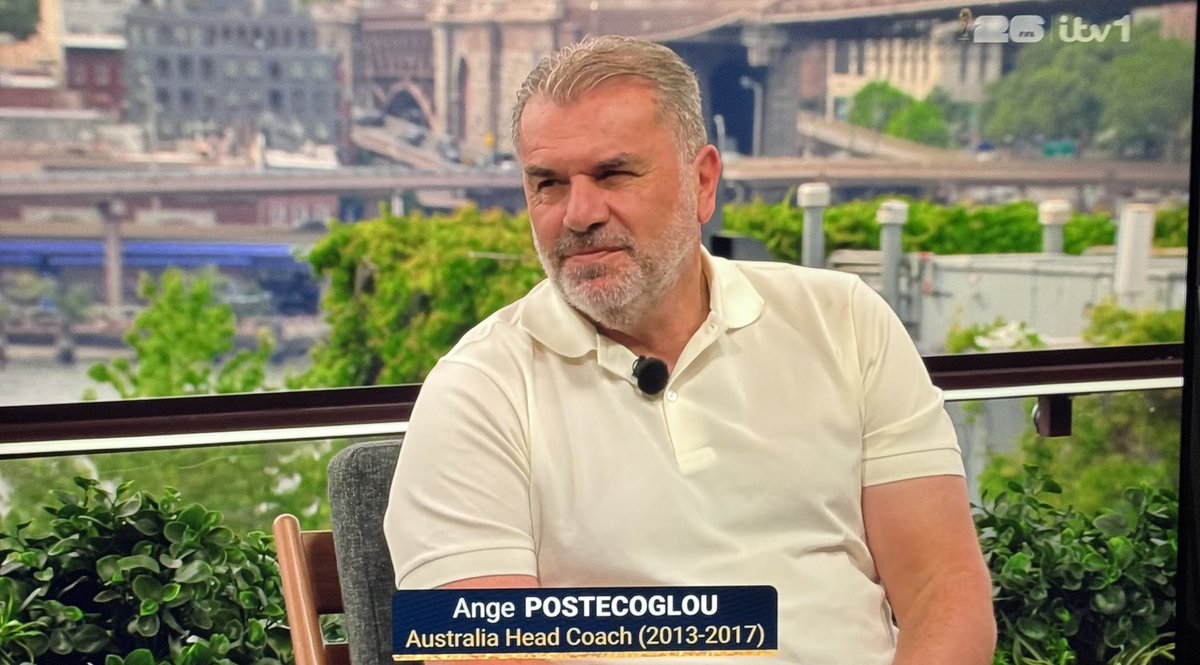
Ange Postecoglou on Japan’s 🇯🇵 defeat vs Brazil 🇧🇷:
“Ancelotti trusted his players, while Moriyasu moved in the opposite direction.”
That, in essence, was the message running through Ange Postecoglou’s ITV analysis. His comments were not only about substitutions or tactical details; they were about mentality, trust, and whether Japan had the courage to keep playing like a team capable of beating Brazil.
He began by giving Brazil their credit, saying: “Strong teams know how to win. Carlo Ancelotti’s decisive move came from trust.”
Ange added: “Ancelotti introduced attacking players, gave them responsibility, and allowed their quality to decide the game. Brazil did not retreat from the pressure of the moment; they leaned into it. Japan, by contrast, responded to the pressure by moving away from the very principles that had made them competitive in the first place.”
“This was the key contrast. Ancelotti trusted his players to keep chasing the game, while Japan gradually abandoned the aggressive, front-foot approach that had allowed them to trouble Brazil earlier in the match.”
Ange was not suggesting that Japan needed to attack recklessly or chase the game with wild, desperate football. The solution, as he suggested, was controlled courage: “Japan had to keep threatening Brazil, press at the right moments, and prevent the match from tilting completely toward their own goal. Once Japan dropped too deep, Brazil were invited forward again and again, and against a team with Brazil’s quality, sustained pressure usually becomes only a matter of time before it turns into a goal.”
What made Ange’s comments even more painful is that he had already warned about this at halftime. He said, “Japan must not drop deep,” reminding viewers that Japan had lived similar moments before: 2–0 up against Belgium in 2018, then 1–0 up against Croatia in 2022.
“Against Brazil, the same pattern seemed to return, not only as a tactical collapse but as a psychological retreat.”
“Japan did not simply lose control of the match; they stopped playing like a team that truly believed it could beat the opponent in front of them.” That is the larger lesson from Ange’s analysis.
“Japan must play like they believe, not only in the first half, not only when the match is under control, but especially when the opponent is Brazil, the pressure is rising, and the instinct is to retreat.”
Postecoglou clearly believes in Japanese football. Before the match, he said, “Japan winning would not be a surprise to me.” For him, Japan are no longer a team whose success should be treated as a pleasant surprise. They have already moved beyond the dark-horse stage.
“Belief, however, has to be matched by courage on the pitch. Japan have reached the point where they must break the wall, protect their identity under pressure, and start acting like genuine World Cup contenders.”