Summer afternoons, E.M.Remarque + G. Durrell stories, Nick Cave music and good conversations make me happy. Spell mistakes + narrow-mindedness do the opposite.
One world-renowned French writer and volunteer believed that being human means feeling responsible for what happens around you. Another famous German thinker and volunteer wrote, "It is important to note that it is precisely the most vigorous life that sacrifices itself most willingly." These two quotations perhaps best capture the essence of Ukrainian volunteers — those who chose to fight rather than flee.
There is no greater happiness than defending what is dear to you, taking responsibility for the fate of your country, and making your own decisions about your life while standing at the epicenter of historic events for your people.
I am proud that Azov has been a stronghold of the volunteer spirit in Ukraine since its inception. Today, the unit remains true to its origins. No modern weapon frightens the occupiers more than disciplined, well-trained, and motivated fighters — those who made the conscious choice to exchange the comfort of their homes and the calm of rear towns for the steel thunderstorms of battles for their motherland’s freedom; those who safeguarded Ukraine’s independence in 2014 and again in 2022, driven by their hearts, even when lacking proper training; those who have become true military professionals today.
I congratulate every Ukrainian volunteer on our day and thank you for the choice you have made, for the responsibility you have taken, and for standing your ground despite the hardships of this difficult path. Glory to Ukraine! Glory to Ukrainian volunteers!
“Evacuating children from basements”
I asked my cousin to tell me a story that would provoke a reaction because the fundraiser is barely breathing. Something sad, funny, or scary.
He chose scary and sad.
I had never heard of these events.
In the summer of 2022, he and several of his teammates were in the east, near Avdiivka. My cousin himself was wounded; his knees were swollen, and his other comrades were also injured; one of them lost his eye because of the injury.
They were waiting at the stabilization point to be taken out and sent to hospitals. At the stabilization point, they were given anesthetics and waited.
After some time, they received information, while still at the stabilization center, that there were children in the basements who were being prepared by the Russians to be sent to Russia. So, they went to clear the basements and rescue the children.
In total, six people participated in the operation.
There were children in the basements. Some of them had barcodes on their bodies or tattooed numbers like prisoners (I don't really understand what exactly he meant by barcodes, but the point is that children were marked).
The youngest girl was 7 years old. There were both girls and boys there. After AFU soldiers took the children away, the boys were washed by adult men together with my brother, and the girls were washed by female doctors.
For some time, these children lived with the soldiers and doctors.
My brother told this story to my mother, and his mother said that if some children had nowhere else to go, she would take them and become their caregiver.
From the first operation, the military brought back 12 children. There were murdered children in the basements. Raped and tortured. Will their bodies ever be buried as each of us deserves? Or will those basements blow up and the traces of these crimes be unearthed by archaeologists in tens or hundreds of years?
He also said that the children were kept in such conditions that “pigs have a better life.”
Please share this story.
Ukraine is shooting down a smaller proportion of Russian missile attacks than it was earlier in the war. Over the past month, Ukraine's air defense forces have managed to shoot down only 30% of missiles launched by Russian troops - the Wall Street Journal reports.
This is due to Russia increasing its drone and missile attacks on Ukraine, and firing missiles that are much harder to shoot down, e.g. ballistic missiles. The amount of Patriot missiles (that are capable of shooting down ballistics) is also limited for Ukraine.
We need more Patriot system and missiles! Our cities and our civilians are unprotected while Russia rains missiles on our heads.
Over the past six months, Ukraine's air defense forces have shot down an average of 46% of missiles, and for the previous six months, the air defense effectiveness rate was 73%, the newspaper calculated based on data released by the Air Force Command.
As for drones, which are easier to destroy, the WSJ notes, the air defense effectiveness rate decreased slightly - by only 1%, to 82% on average over the past six months.
According to the WSJ, Russian troops have increased the intensity of missile and drone strikes against Ukraine - by 45% over six months compared to the previous six months.
https://t.co/pfLitBFza2
📹: angelina_sinkevych/TikTok (a mom from Odesa lives through a recent Russian missile attack with her child)
Tomorrow was war.
Little did I know, that just a few hours after I made this photo in Kyiv, we will wake up not to fireworks but to the sounds of the war.
That in just a few days Kyiv will not fall because of many amazing people. That the president, whom they told, is a comedian, "needed ammo, not a ride" knowing that the probability to succeed is measured in "error margin" levels. That some brave man had destroyed the Antonov airport runway and Estonia and UK had given Javelin that helped to save Kyiv.
Little did I know that my best friend Jura, with whom we drank wine just months ago, with his Mouton Rothschild 1945 "V for victory", wine made to celebrate the victory of the Allies and Churchill in 1945, will be selling off his wine collection to buy food, armor, and medicine. And will become one of the protectors of Kharkiv. Will help to hold the positions and sell off everything, turn his hotel into a center of refugees and bomb shelter, but keep the last bottle of "1945" from the "victory vintage".
Little did I know that the friend, whom I believed was "always my shelter" will be gone even before the first air raid was over.
That the medical center of my "second family" in Dnipro will become one of the hospitals close to the frontline and Olya will forget her life and sleep saving others and that one of the young reformers, "one of us" will die in a helicopter crash. And I will be crowdfunding for buying military surveillance drones.
Little did I know that we will be celebrating every "crossing the red line" like our life depended on that. Because lives just depend on that. Depend not only on the bravery of the people and armed forces but on every barrier we break.
With every ten thousand rounds of ammo that we asked and arrived.
With every new HIMARS and Patriot that we ask and arrived.
With every new Leopard we asked and arrived.
And with so many that we asked and never arrived.
Little did I know then, in an elevator in Kyiv on February 23rd that a year later I will be saying thank you to Germany for sending us the tanks. To Estonia and Lithuania for being just the best friends. For Denmark and Netherlands and so many more that sent their own ammo and weapons to save and protect.
And there is still this bottle of vine left. V from the victory vintage for everyone who is on the right side of history.
At the Berlin Film Festival, 🇺🇦 director Oksana Karpovich presented her film 'Intercepted.' The film features intercepted telephone conversations between 🇷🇺 soldiers in Ukraine & their families. While not all quotes are exact, I convey the essence as accurately as possible.
1/11
🎄 In a stirring Christmas video, while the world sings of a silent night, Ukrainian soldiers belt out a starkly different tune. In the backdrop of a war-ravaged Christmas, their voices rise from Bakhmut’s trenches to Lyman’s ruins. They’re rewriting Lennon’s “War is Over” - because for them, it’s anything but.
Watch their defiant chorus in a land where sleigh bells are drowned by artillery. Support their unyielding fight for freedom & #ArmUkraineASAP!
Let’s make their raw, unfiltered Christmas echo worldwide.
#Ukraine #RealChristmasSpirit
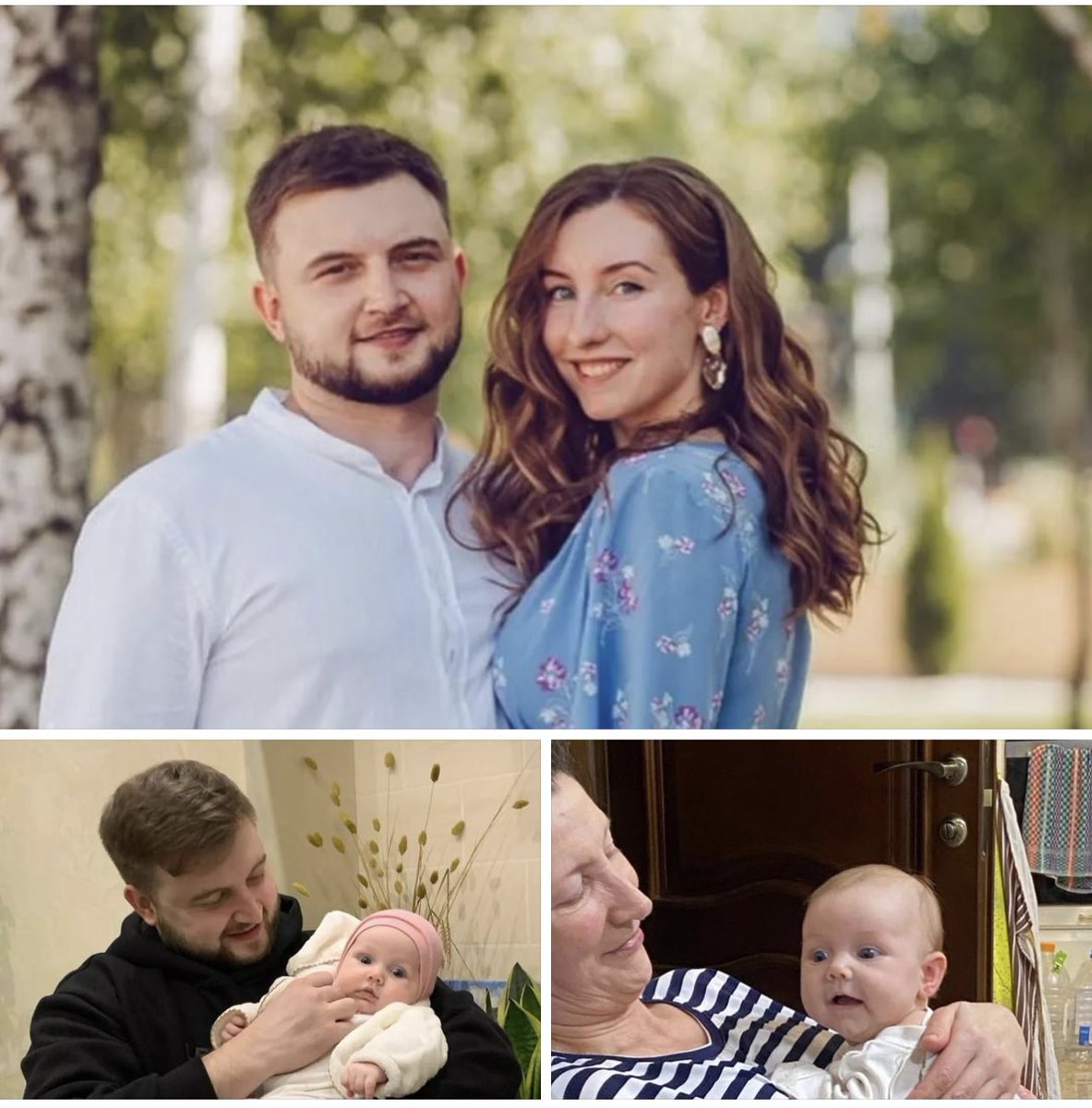
Ukrainian Defender Yurii Hlodan, whose family was killed by Russians in Odesa in April 2022, died at the front.
On April 23, 2022, while Yurii went to a store, a Russian missile hit their building. Yurii's three-month-old daughter Kira, her mother Valeriia, and grandmother Liudmyla were killed.
After the deaths of his family, the man joined the Armed Forces of Ukraine.
"Time is short, the enemy does not wait. The fact is that there is a war here, we are not painting the grass to match the ruler. If you make a mistake, you are already wounded or dead. It's very painful to lose your comrades, and it's a shame to realize that it could have been you, or you could be next," Yurii said.
Whole generations of Ukrainians, whole families are killed in this war. This is true genocide.
Deepest condolences. This is an unbelievable tragedy.
Photo: Facebook / Yurii Hlodan
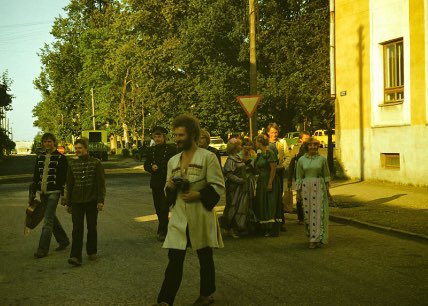
NAFO in occupied Estonia, 1982.
Yes. Before there was an internet - or any brain-damaged cartoon dogs - there were activists subverting russian propaganda and helping push back russian imperialism with the same spirit of NAFO (and remarkably similar jokes).
Let me explain.
⏪ In the early 1980s, a third generation of occupied Estonians entered university. Their parents had been brutalised by soviet rule, but they had new energy, new confidence, and new ideas to overthrow the empire.
The students began to organise. Anti-occupation protests spread like never before.
It started through semi-official networks. One example was EÜE, which were construction summer camps for students organised by the youth wing of the communist party. Each group was sent to the countryside with an official task - like to build a barn - in order to learn “Soviet work ethics”.
But, while there unsupervised, the students instead bonded over how to defeat the occupation and found creative ways to relentlessly mock their occupiers. The camps turned into cells of resistance.
In 1981, one such camp called itself Persostrat. The name was typically soviet - an abbreviation of a clunky, pompous phrase. (And it sounded like “ass sphere” in Estonian.) The group spent the summer writing their own parody soviet songs.
The next summer, in 1982, a new camp formed out of most of the same members and was sent down to south Estonia. They called themselves Euromais with a plan to parody soviet corn growing campaigns.
After arriving, they came up with a better idea.
“Enough of this Soviet shit,” said their camp leader, Mati Laur. They decided instead to declare their camp as a NATO base. Specifically, a British NATO base, because the British had a key role in supporting Estonia during its war of independence and they knew that reference would annoy the occupiers even more.
They put up signs in English and organised a strict schedule that included afternoon tea and picnics. They imitated and exaggerated British culture, manners, and fashion while ridiculing the unsophisticated russian occupiers. They wrote and enthusiastically sung their own anthem about how NATO would free Estonia from the russians. It was sung to the tune of Yankee Doddle, an iconic tune among Estonian youth as it was the opening to Voice of America’s Estonian broadcasts, which usually got through before the soviet jammers could interrupt it.
Incredibly, this “NATO base” was near an actual soviet base, which we now know had nuclear warheads.
Yet, to the students, the location was Satterfield, an English-sounding name invented for their imagined secure utopia.
Satterfield became a pre-internet kind of meme, enduring for years to come through networks across Estonia. An invitation to Satterfield was code for resistance organising.
Members of this “British NATO base” later formed part of the core of the student resistance to soviet occupation. They had a leading role in campaigning to anull the nazi-soviet pact and helped get the Singing Revolution started.
A decade after establishing their mock base, they achieved their goal. Estonia and its Baltic neighbours were free and the soviet union was no more.
The members of that original group are now well respected men and women in free Estonia. One who helped write that song even became Ambassador to NATO (the real one).
Estonia is now NATO with real NATO bases - and where the British really are based.
“We’ve been waiting for you since 1949,” explained @EerikNKross, former director of Estonian intelligence, who shared the story with them.
Eerik is now also part of NAFO, doing his bit to deliver supplies to Ukraine as part of @69thSB. To him, Satterfield and NAFO are part of one story. And proof that mocking russia can indeed make a real difference.
The spirit of Satterfield lives on.
It is thanks to Eerik that this story has been documented. You can read it from him in more detail here: https://t.co/h9linIihKZ
An incredibly tough but fascinating interview with Ukrainian military medic Yuriy Armash. Yuriy was captured by Russians in the early days of the war and recently released in a prisoners' swap. In captivity, he helped hundreds of tortured Ukrainians to survive. A must read 1/
The news of Russian sabotage of the Baltic-connector natural gas pipeline between Finland and Estonia was today followed by massive bomb threats against Estonian schools and kindergartens. Latvia experienced similar threats already a couple of days ago.
I don't think we needed a reminder that Ukraine is fighting for all of us, but thanks anyway.
Yesterday, I had quite a depressive mood.
I woke up today, and one of the first things I saw on my feed was a video of a guy describing his last call with his mother. She was trying to leave the occupied territory with her other son’s children.
Russians killed them all while the mother was still on the line.
The last thing that guy heard was the crying of his 1.5-month-old nephew, which stopped after the shot.
Hearing that reminded me why I'm doing what I'm doing.
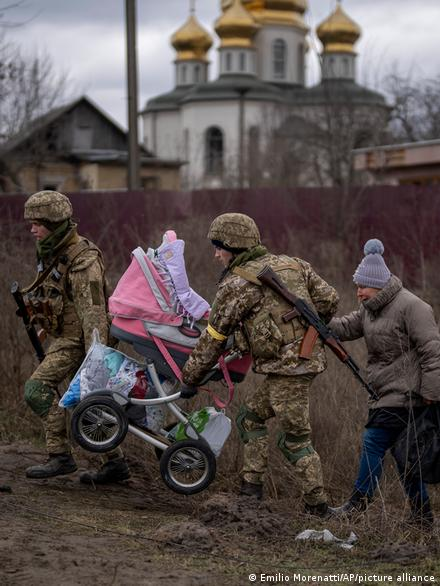
On February 24, 2022, Denys Fedko's relatives attempted to evacuate from the Kherson region. Through his phone, Denys heard how the occupiers were shooting everyone, including an eighteen-month-old child. On that day, Denys quit his business and decided to devote himself entirely to volunteering. He has been evacuating civilians from the war zone and helping those who have been left behind.
🎥 @holosameryky
Gev Iskajyan (@geviskajyan) is in Goris, Armenia, monitoring the situation.
Currently, nearly 100,000 Armenians from Artsakh, who were forcibly displaced, have arrived in Armenia.
A significant humanitarian crisis is anticipated in Armenia, with a multitude of challenges that these Armenians from Artsakh are expected to face.
Humanitarian aid is of utmost importance, as is border security, and sanctions on Azerbaijan, as we work to stop the escalation of this second Armenian Genocide.
To take action now, visit
https://t.co/JszYv78Gs5
#120000Reasons #SanctionAzerbaijan
#SOSArtsakh
#StopAliyev
The Armenian Relief Society, drawing upon over a century of experience, stands as one of the most reputable organizations operating in Syunik. They are currently on the ground, assessing the situation, offering vital aid and resources, including clothing, to the displaced people of Artsakh.
Take a moment to listen to this message from ARS Chairperson, Dr. Nyree Derderian, and consider visiting their website to make a donation today.
Visit - https://t.co/12oigmbxvY
My great-grandfather was a very rich man. He owned a lot of land and, most importantly, a windmill, which was crucial for flour production.
When the Communists fought for power, he convinced people to accept this new politics, so that Ukraine would be part of the USSR and not part of the Russian Empire. He considered this his contribution to the collapse of the Russian Empire.
Years later, the Bolsheviks confiscated his land and property and declared him an enemy of the people, the worst accusation one could expect at the time. He, a father of four, was sent to concentration camp.
I don't know how long he stayed there, but he survived and came back broken. He returned to see that his eldest daughter Zina had been taken by the Nazis to Berlin to work. My grandmother, her sister, has been looking for Zina all her life. She asked me to find out something about her. But I didn't have that opportunity. I don't know if Zina made it to Berlin, if she is alive, and if she died, then how.
His youngest son Lev froze to death after the Nazis took away his sheets in the winter and he was left lying on the metal.
My grandfather taught me German when I was a child, which boiled down to two phrases:
Hände hoch und gute Nacht.
Even after that, my grandmother kept saying all her life that the Russians were worse than the Germans.
Controversial statement, but understandable. She recalled with horror the artificial famine organized by Stalin in Ukraine in the early 1930s. People ate dogs, even their own children, or simply died of starvation in the streets.
She was 5. Her name was Lyubov, which means Love. And she had a friend of the same age and with the same name. Perhaps this is how girls were named in the hope of a different life.
Because of the severe famine, people sent small children to steal ears of grain at night so that they would not be noticed. That's how many people in their village survived. One night, a rumor spread through the village that there was a Chekist raid, so it was dangerous to go to the field. My great-grandmother did not let my grandmother go that night. And her friend was sent to the field, apparently they had no food at all. There was shooting at night. The girl was brought home wounded in the morning. My grandmother never saw her friend named Love again.
When my mother wanted to go to university, she was rejected. Because she was the granddaughter of an enemy of the people. She sat down on the stairs at the entrance to the university and sat there as a protest against this attitude. One professor asked her why she was sitting there. She replied that she would sit on the stairs until she was allowed to study.
Then my grandmother received a call from the KGB. My grandmother was shaking when she was telling me this story. And she had to go to the city to meet the KGB. She was afraid for herself and even more so for her rebellious daughter.
But it was 1980s, and the KGB knew that the USSR would soon collapse. They had a serious conversation with my grandmother and told her that new times were coming, and gave my mother permission to study.
That's how my mother became a doctor. At the university, she met my father, who was from the same village, but they hadn't crossed paths before they met at the university.
I was born when my mother was in her last year of studies. So she took me to my grandmother's house, where I grew up for the first years of my life. My parents were unable to register me in Zaporizhzhia, where I was born and where they studied. Therefore, I was registered in the city of Henichesk, Kherson region, where my parents stopped to show me to my father's relatives.
I was not born and have never lived in Henichesk, but that's what my passport and Wikipedia say. When I became the press secretary of the President, every newspaper in Henichesk proudly wrote about me. Although none of these people had ever seen me.
My grandmother used to say that there is nothing worse than war. I am glad that she does not see what Ukraine is going through now.
There was so much pain in my family, so many transgenerational traumas that they are still a burden.
I have a large tattoo of ears of wheat on a Ukrainian embroidery on my back. Bread has always been important to my family. And I understand why my grandmother disliked the Russians so much.
But Ukrainians have always fought. And we deserve to finally start building a future where meritocracy and equality will prevail, where there will be opportunities and security. Building a career in my country is much more difficult than in Western countries. But so many windows have been opened, so many connections made and so much sacrificed. Ukraine has to become a country of success, and democracy has to win. I #StandForUkraine to keep the memory of my family alive, to correct their mistakes, to heal their suffering, and to create the future.
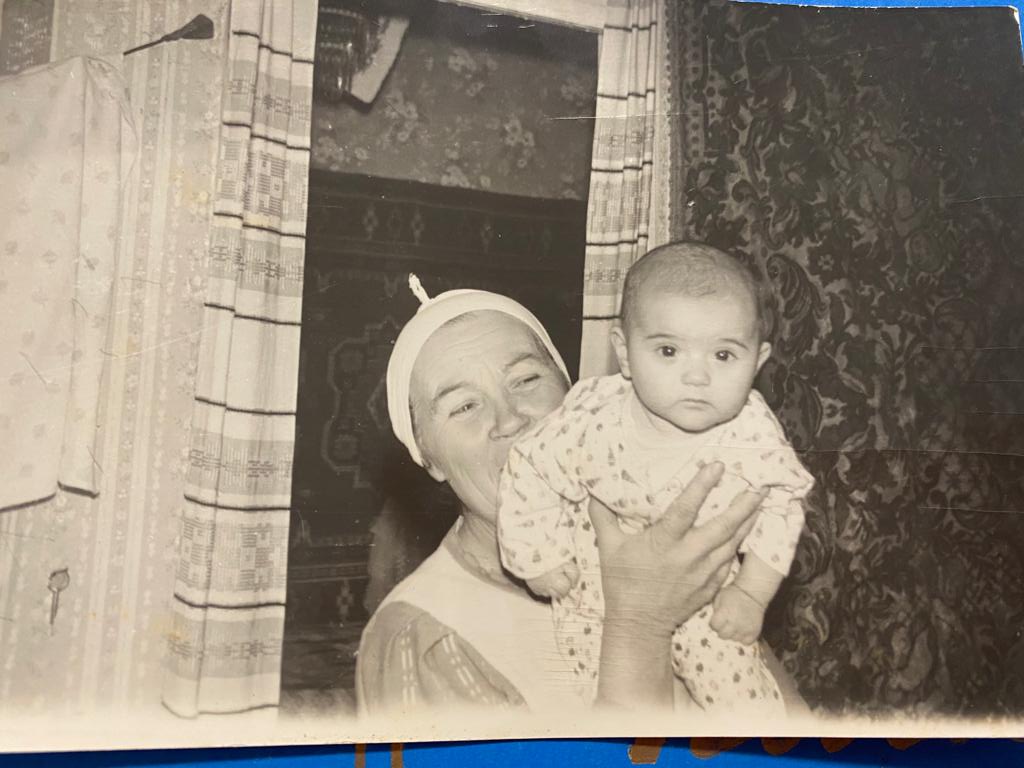
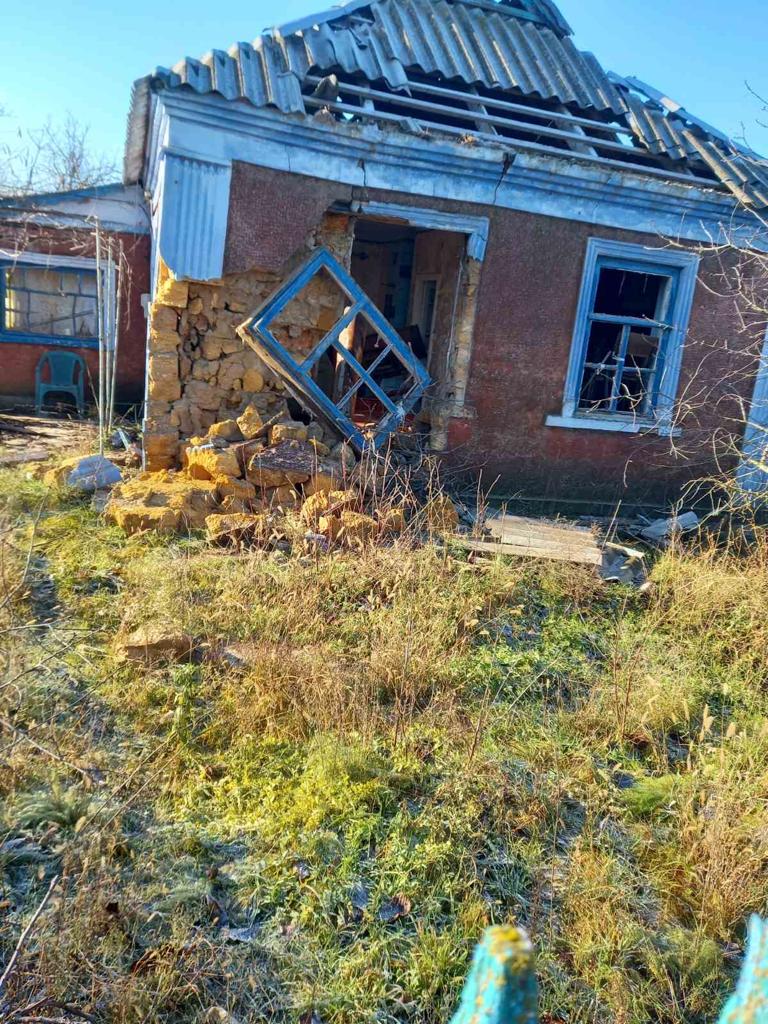
This is my Granny and me 6 months old in our house that you see now on the second photo. R.I.P.
If sport is out of politics, why does Russia kill Ukrainian athletes?
Bodybuilder Lyudmila Chernetskaya was killed by a rocket attack in Odesa.
FC Gostomel player Dmytro Martynenko was killed in Kyiv region as a result of a Russian bomb that hit his house.
A 14-year-old weightlifting athlete, Alina Peregudova, was killed in the besieged Mariupol during shelling.
In Irpin, Russian invaders shot and killed Ukrainian boxer and children's coach Oleksiy Dzhunkovsky.
In Kharkiv, 19-year-old Vladislav Shapovalov was killed by Russian occupiers during shelling. He was engaged in kettlebell lifting.
In Irpin, Oleksandr Sheremet, the coach of the national team of schoolchildren of Ukraine and the Irpin children's and youth orienteering school, died.
In Melitopol, floorball player Viktor Katanchyk died after being seriously injured during a rocket attack on the city.
Ukrainian athlete and former captain of the Ukrainian water polo team Yevhen Obedinsky died in Mariupol at the age of 39. He was shot dead by Russian soldiers on the balcony of his apartment.
In Mariupol, 11-year-old Ukrainian gymnast Kateryna Dyachenko was killed.
Sambo wrestler Artem Pryimenko was killed in a rocket attack on a residential sector of Sumy.
A 20-year-old Ukrainian champion in sports dancing, Daria Kurdel, was killed in the shelling of the Ingulets district.
A Russian missile attack on the village of Serhiivka in Odesa region killed football coach Oleksandr Shyshkov.
Valentyn Voznyuk, a track and field coach and director of the Specialized Children's and Youth Sports School of the Olympic Reserve No. 3 of the Dnipro City Council, was killed with his wife during a Russian terrorist attack on the city of Dnipro.
In Dnipro, 15-year-old Maria Lebid, a ballroom dancer, was killed in a Russian missile attack on a residential high-rise building.
Anastasia Ihnatenko, an athlete, coach and judge in sports acrobatics, was killed in a terrorist attack in Dnipro.
During the shelling of Kharkiv, 21-year-old Anastasia Goncharova, a multiple Ukrainian cycling champion, was killed in the street.
In Kherson, 12-year-old Arina Shnabska, a prize-winner at the Ukrainian junior taekwondo championship, was killed in the shelling.
During the shelling of Kyiv, 9-year-old Victoria Ivashko was killed. She was engaged in judo. She died on International Children's Day.
And this is not to mention the athletes who were crippled by Russia and who stood up to defend Ukraine and died (about 300 of them).
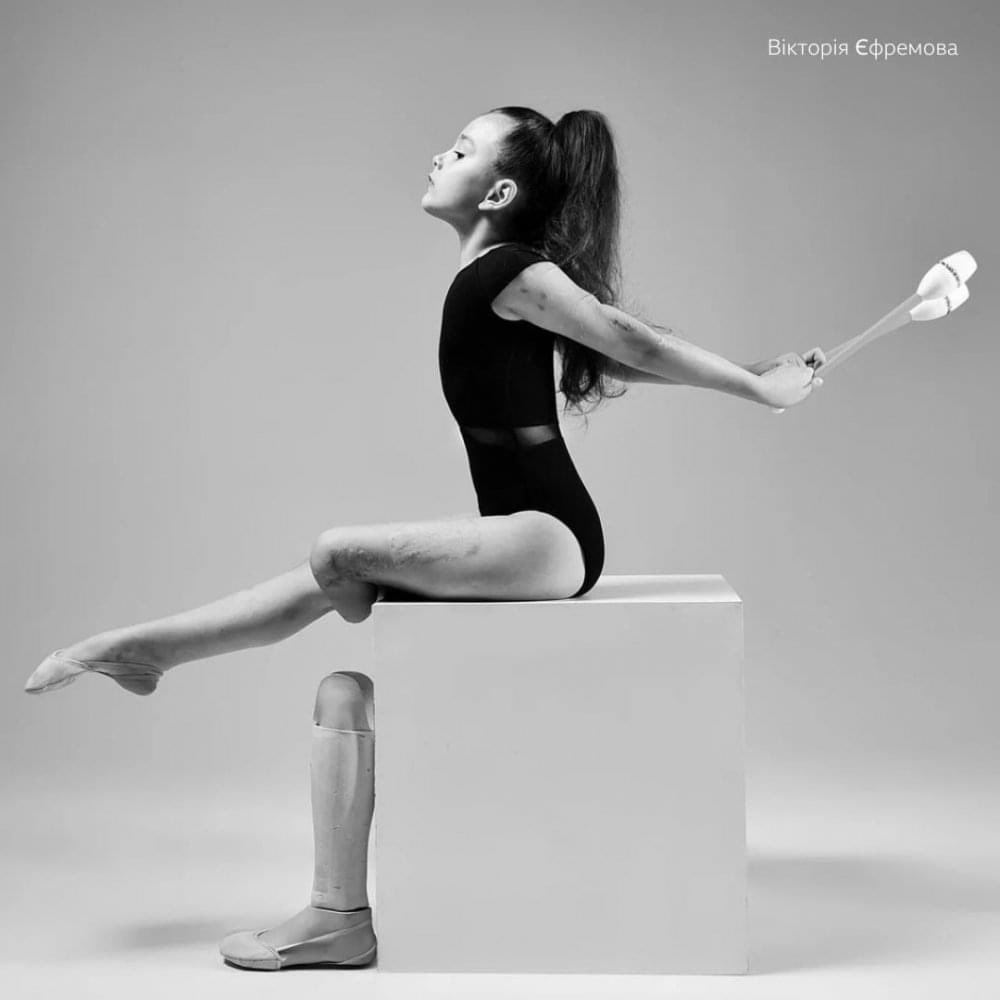
The photo shows 7-year-old gymnast Oleksandra Paskal from Chornomorsk, who lost her leg due to shelling in Odesa region. She was fitted with a prosthesis and returned to competitions. I wouldn't be surprised if another "neutral flag" representative demands to shake hands at one of them.
Information by Maryna Kurylchuk
“Why are the russians doing this to Ukraine? Because they can, because the world has allowed them to.”
Testimony of Taira (Yuliya Payevska) to the US Helsinki Commission. She was captured and imprisoned by russians on March 16, 2022 and released on June 17, 2022.
1/n
83 years ago today, the soviets invaded Latvia and Estonia, after invading Lithuania the previous day - all as illegally colluded with their nazi allies through the Molotov-Ribbentrop pact.
At the time, the world was largely distracted by the fall of Paris to the nazis. While decent people were horrified by that, the soviets officially sent their congratulations to nazi Germany.
Meanwhile in the Baltics, the soviet occupiers overthrew the governments, began harsh repressions, and staged rigged elections for their own candidates who then illegally ‘requested’ our countries joined the soviet union.
There are some who still don’t understand (or pretend not to understand) that this occupation was an occupation.
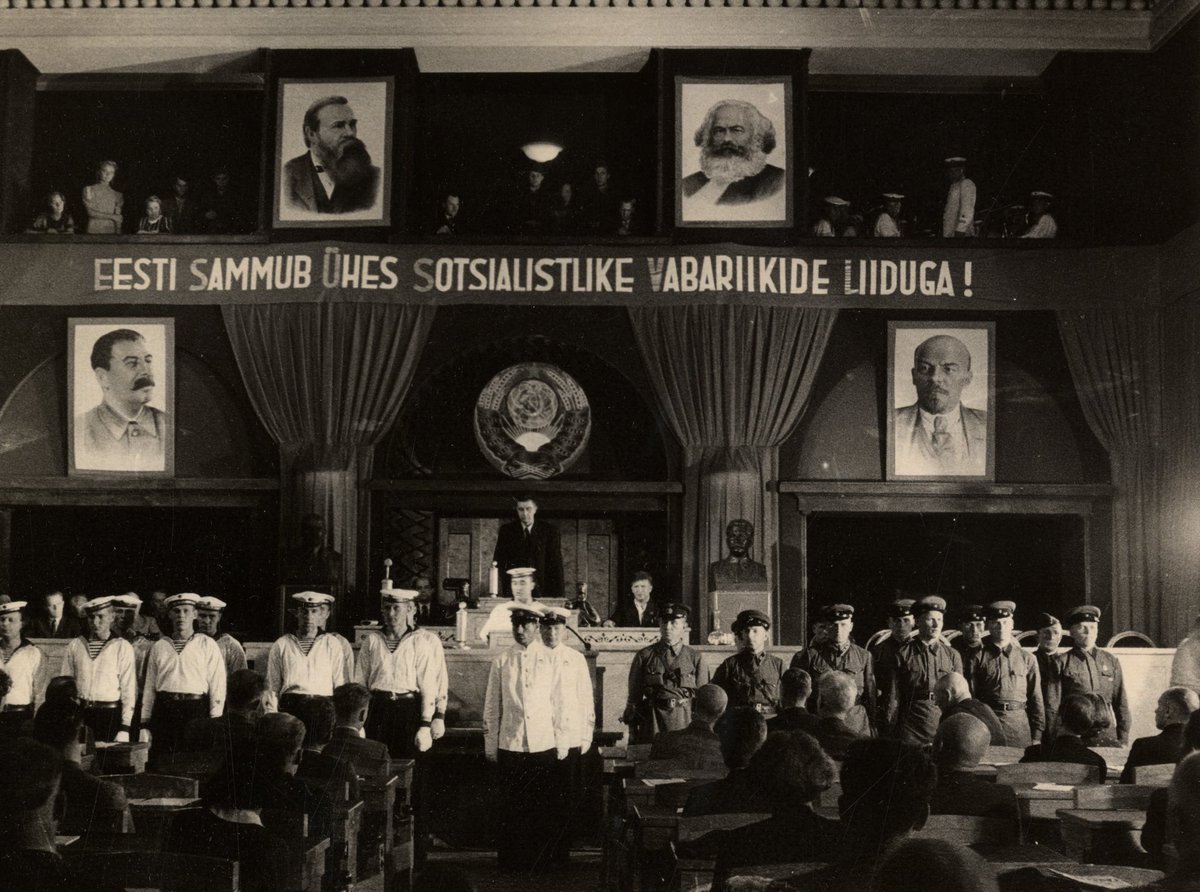
This pic shows the absurd theatrics that those bad takes are based on. This is supposed to be Estonia ‘requesting soviet membership’. Yes, that’s the occupying soviets literally occupying the Estonian Parliament during the process.
But the Baltic countries never legally joined the soviet union and so never had to leave it. We’re not ex-soviet republics. We didn’t become independent in 1991. Instead, we formally annulled the nazi-soviet pact - which was already invalid from the moment it was signed - and kicked the occupiers out. We continue to exist on the basis of legal continuation since our countries were founded.
And we will never, ever recognise russia’s illegal annexations of anyone else. Ukraine will end its occupation too.