In 1893, Frederick Douglass invited Ida B. Wells to lunch. She noted a place across the street, but indicated they would not receive service there. “Mr. Douglass, in his vigorous way, grasped my arm and said, ‘Come, let’s go there.’” Together, they “sauntered in...as if it were an everyday occurrence, cocked and primed for the fight if necessary.” Douglass grabbed a table and chair for him and Wells, as “paralyzed” staff looked on. A stand-off ensued with wait staff until the proprietor realized it was Frederick Douglass, and warmly welcomed him while sharing stories of a time past when Douglass visited his hometown. “When [the proprietor] finally went to another part of the room, Mr. Douglass turned to me with a roguish look and said, ‘Ida, I thought you said that they didn’t serve us here. It seems we are getting more attention than we want.’”
Frederick Douglass spent his life fighting for justice and equality. He never knew the date of his birth. This is something he struggled with throughout his lifetime. Douglass believed that he was born in the month of February in 1817. In fact, records show that Douglass was born in February of 1818. He chose the 14th of February for his birthday because his mother would call him her “little Valentine." Unfortunately, Douglass never knew much about his parentage. His mother, Harriet, was sold off when Douglass was but a child, and he only met her a few times before she passed away. Though born enslaved in Maryland, he escaped as a young man and became a leading voice in the abolitionist movement.
🖋️if you love our content, please consider supporting our page on https://t.co/16fHyPFENu (follow the ko-fi page too for weekly posts roundup)
On this day in 1968, Bobby Hutton, an original member of the Black Panther Party was shot dead by the Oakland police, unarmed. He was only 17 years.
After being bombed with tear gas and trapped in a burning basement, he came out shirtless to prove he was unarmed and the police immediately shot him 12 times and he died.
He was only 17 years.
-Robert James Hutton also known as "Lil' Bobby” born on April 21, 1950 and at 16-years old he became the first member and the first treasurer of the Black Panther Party. Hutton met Black Panther Party founders Huey Newton and Bobby Seale at the North Oakland Neighborhood Anti-Poverty Center, a "government-funded agency that employed local youth to work on community service projects.
On April 6, 1968, two days after the assassination of Dr. Martin Luther King, Jr., and with riots raging across cities in the U.S., Hutton was traveling with Eldridge Cleaver and other BPP members in a car. The group were stopped by two Oakland Police officers and had a confrontation. The two police officers were shot. Hutton and Cleaver fled to an apartment building where they engaged in a 90-minute gun battle with the Oakland Police Department. Some incoming bullets had also caught fire. Ultimately, Cleaver was wounded, and Hutton voluntarily surrendered to avoid getting burnt alive. According to Cleaver, although Hutton had stripped down to his underwear and had his hands raised in the air to prove that he was unarmed, Oakland Police shot the 17 year old Hutton more than 12 times, leading to his death. The Police report claimed that Hutton was attempting to run and was wearing a trench coat and his hands were not visible.
🖊️As the only admin behind this page, I try to research to educate. If you appreciate this effort, you can support to help the page thrive on https://t.co/HHs3SgCItN (link in bio) Your support is deeply appreciated! Or just follow the page for articles.
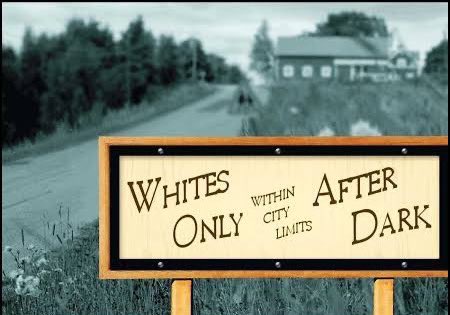
A sundown or sunset town was a town, city, or neighborhood in the US that excluded non-whites after dark.
The term sundown came from the signs that were posted stating that people of color had to leave the town by sundown.
A THREAD!
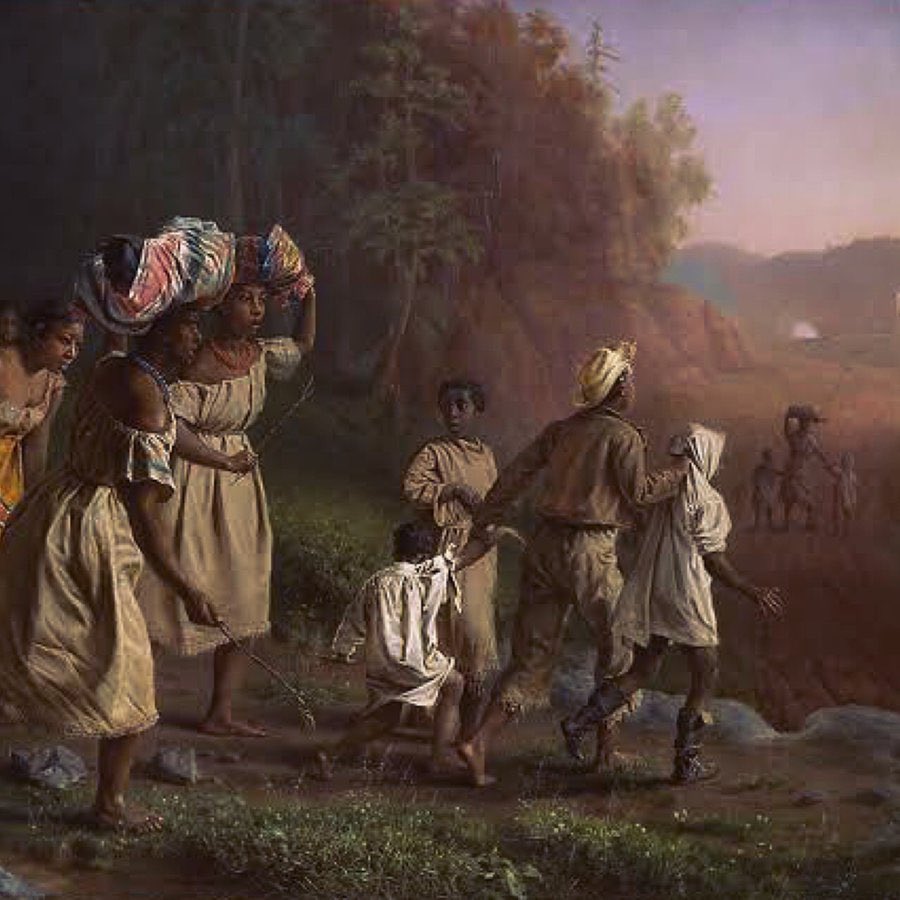
Mexico abolished slavery in 1829. Enslaved people were escaping to Mexico. The U.S. tried to get Mexico to sign a fugitive slave treaty to return escapees but Mexico refused to sign such a treaty, insisting that enslaved people were free once they set foot on Mexican soil.
—Did you know that Juneteenth is also celebrated in a part of Mexico?
Nacimiento Mexico was once home to thousands who escaped slavery in the US. As many as 10,000 slaves followed a clandestine Southern Underground Railroad to Mexico.
—To date, many Black Mexicans from the Texas area retrace a portion of the same route their African American ancestors followed in 1850 when they escaped slavery.
—Descendants of slaves who escaped across the southern border observe Texas’s emancipation holiday with their own unique traditions in the village of Nacimiento.
—Slave hunters would patrol the southern border for escapees, led by the Texas Rangers but the Mexican army would be there waiting for them (the slave hunters) to turn them away.
Andrea Motley Crabtree, the Army's first female deep sea diver and the first Black American female deep sea diver in any branch of service.
#WomenHistoryMonth
—Andrea Motley Crabtree holds a significant place in history as a Black woman who broke barriers in the United States military. In 1980, she became the first Black American woman to serve as a deep-sea diver in the U.S. Army, marking a significant milestone in the integration and diversification of military roles that were traditionally held by men.
Deep-sea diving is a highly specialized and demanding field, requiring rigorous training and exceptional physical and mental strength. The role involves underwater missions that can include salvage operations, construction, demolition, and repair tasks under challenging conditions. By qualifying as a deep-sea diver, Crabtree not only shattered racial and gender barriers but also demonstrated the capabilities and resilience of African American women in highly demanding and technical fields.
Crabtree's accomplishment came at a time when the U.S. military was undergoing significant changes regarding the inclusion and roles of women and minorities. Her success paved the way for future generations of women and African Americans in the military, showcasing the importance of diversity and inclusion in enhancing the capabilities and reach of military operations.
In addition to her pioneering military career, Crabtree's story is one of perseverance and determination. Facing both racial and gender discrimination, she had to prove her worth and capabilities in a field that was not only physically demanding but also traditionally unwelcoming to people like her. Her achievements have inspired many, highlighting the importance of breaking down barriers and challenging stereotypes.
Andrea Motley Crabtree's story is a testament to the progress that has been made in diversifying the military and other traditionally male-dominated fields. It also serves as a reminder of the work that remains to be done in achieving full equality and inclusion. Her legacy continues to inspire and motivate women and minorities to pursue their dreams, regardless of the obstacles they may face.
🖊️As the only admin behind this page, I try to research to educate. If you appreciate this effort, you can support to help the page thrive on https://t.co/vf5SMSPu4z. Your support is deeply appreciated! Or just follow the page for articles.
Malcolm X's wife, the late Dr. Betty Shabazz.
Born Betty Dean Sanders, she was an educator, civil rights advocate and the wife of Malcolm X.
Growing up in Detroit, her foster parents largely sheltered her from racism. She attended the Tuskegee institute in Alabama where she had her first encounters with racism head-on. Unhappy with the situation in Alabama, she relocated to New York City where she became a nurse. It was there that she met Malcolm X and in 1956 joined the Nation of Islam. The couple were married two years later in 1958. Along with her husband, Shabazz left the Nation of Islam in 1964. She witnessed his assassination the following year. Left with the responsibility of raising six daughters is a widow, Shabazz pursued higher education and went to work at Medgar Evers College in Brooklyn, New York. By 1980, Shabazz was overseeing the Health Sciences Department and the college president decided she could be more effective in a purely administrative position then she was in the classroom. She was promoted to Director of Institutional Advancement. In her new position, she became a booster and fundraiser for the college. A year later she was given tenure. By 1984, Shabazz was given a new title, Director of Institutional Advancement in Public Affairs, a position she held until her death. Shabazz befriended Coretta Scott King, the widow of Dr. Martin Luther King Junior and Myrlie Evers-Williams, the widow of Medgar Evers. The three women shared the common experience of losing their activist husbands at a young age and having to raise their children as single mothers. The press came to refer to the trio as the “Movement Widows“.
MEMORIALS:
•In late 1997, the Community Healthcare Network renamed one of its Brooklyn, New York, clinics the Dr. Betty Shabazz Health Center, in honor of Shabazz.
•The Betty Shabazz International Charter School was founded in Chicago, Illinois, in 1998 and named in her honor.
•In 2005, Columbia University announced the opening of the Malcolm X and Dr. Betty Shabazz Memorial and Educational Center. The memorial is located in the Audubon Ballroom, where Malcolm X was assassinated.
•In March 2012, New York City co-named Broadway at the corner of West 165th Street, the corner in front of the Audubon Ballroom, Betty Shabazz Way.
PORTRAYALS IN FILM:
🎬Yolanda King, the daughter of Martin Luther King, Jr., and Coretta Scott King, played Dr. Shabazz in the 1981 television movie Death of a Prophet.
🎬She was portrayed by Angela Bassett in the 1992 film Malcolm X.
🎬Bassett also played the part of Dr. Shabazz in the 1995 film Panther.
🎬Dr. Shabazz was portrayed by Victoria Dillard in the 2001 film Ali.
🎬Dr. Shabazz was the subject of the 2013 television movie Betty and Coretta, in which she was played by Mary J. Blige.
🖊️As the only admin behind this page, I try to research to educate. If you appreciate this effort, you can support to help the page thrive on https://t.co/vf5SMSPu4z. Your support is deeply appreciated! Or just follow the page for articles.
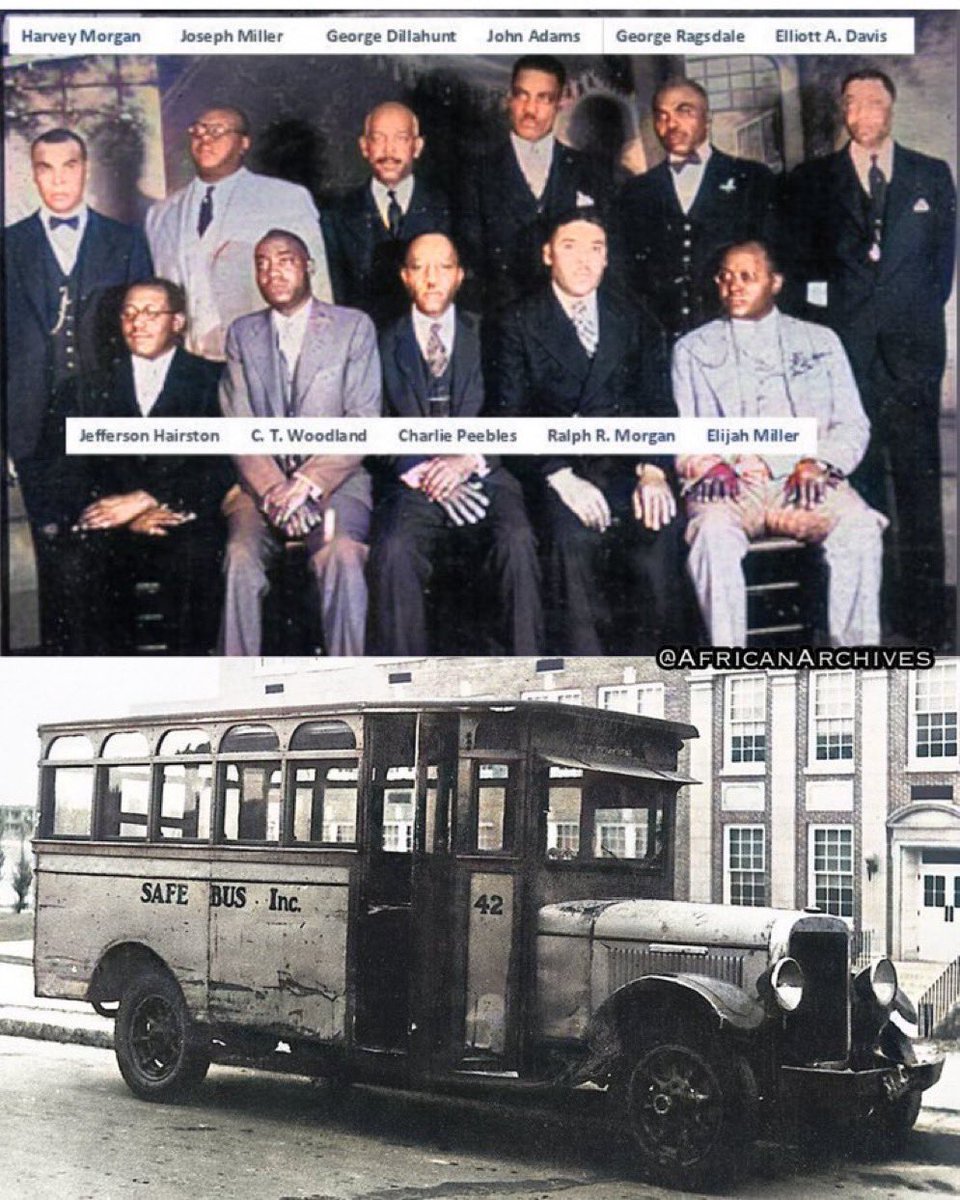
In 1926, thirteen black men put together their savings and founded Safe Bus Company, making it the largest black owned bus company at that time.
It was formed in Winston-Salem to serve the black neighborhoods due to segregation and operated till 1972.
Thirteen Black men put together their life-savings and purchasing shares of stock for $100,000; forming Safe Bus Co, Inc. on May 26, 1926, Safe Bus Co became the largest African-American owned bus company in the nation.
The company grew large and fast and was at one point named the largest black-owned transportation company in the world. In 1955, Safe Bus grossed $825,000. At it’s prime, the company carried 15,000 fares a day, grossed $18,000 a week and had 75 employees.
Fares started at five cents in the early operating days and grew as the company expanded. The number of buses expanded as well, from 35 to 42. Safe Bus operated in 20 percent of the city.
Black bus drivers made, around $1.60 to $2.50 an hour. “That was more than school teachers were making then.”
By 1968, Safe Bus provided transportation to all city residents. The company took on more routes, but finding drivers proved difficult.
Despite more routes, after integration, Safe Bus started to lose money. Old attitudes about segregation made it difficult to make a profit, and the company lost 60 percent of riders, according to the Winston-Salem Transit Authority.
“When the whites started riding Safe Bus, they thought they had to go to the back,”.
After integration Black people Started riding on white-owned buses so they could sit up front with white people. Stockholders voted to sell the company to the city in 1972. The Winston-Salem Transit Authority became responsible for all public.
🖊️As the only admin behind this page, I try to research to educate. If you appreciate this effort, you can support to help the page thrive on https://t.co/vf5SMSPu4z. Your support is deeply appreciated! Or just follow the page for articles.
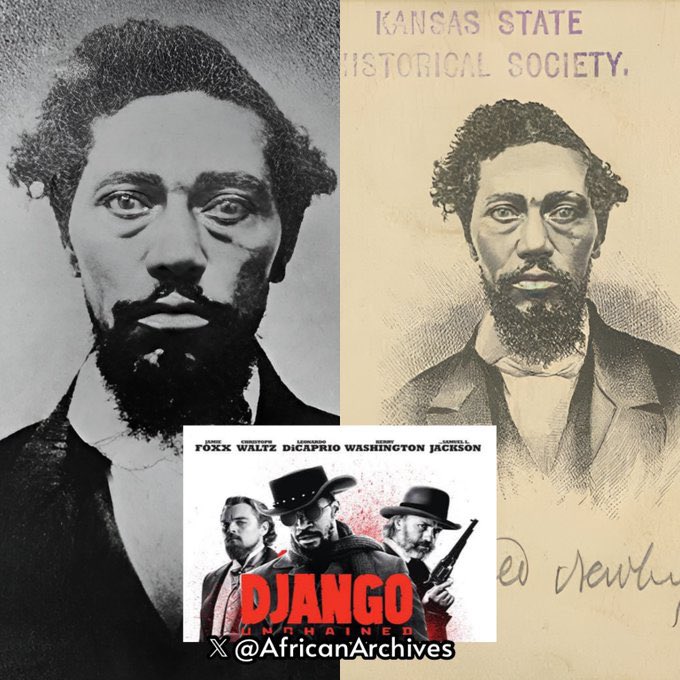
Dangerfield Newby is the actual man on which the movie D’Jango Unchained is loosely based.
He was a member of the John Brown raiders. He joined the gang to save his wife, Harriet and children from slavery.
—Dangerfield Newby (1815 – October 17, 1859) was the oldest of John Brown's raiders, one of five black raiders, and the first of his men to die at Harpers Ferry, Virginia.
Born into slavery in Fauquier County, Virginia, Newby married a woman also enslaved. Newby's father was Henry Newby, a landowner in Fauquier County. His mother was Elsey Newby, who was a slave, owned not by Henry, but by a neighbor, John Fox. Elsey and Henry lived together for many years and had several children, although interracial marriage was illegal in Virginia. Dangerfield was their first child. Dangerfield Newby, his mother and his siblings were later freed by his father when he moved them across the Ohio River into Bridgeport, Ohio. John Fox, who died in 1859, apparently did not attempt to retrieve Elsey, Dangerfield, or any of his siblings. Dangerfield's wife and their seven children remained in bondage. A letter found on his body revealed some of his motivation for joining John Brown and the raid on Harpers Ferry.
Dangerfield Newby's wife, Harriet Newby, was the slave of Jesse Jennings, of Arlington or Warrenton, Virginia. Newby had been unable to purchase the freedom of his wife and seven children. Their master raised the price after Newby had saved the $1,500 that had previously been agreed on. Because all of Newby's other efforts had failed he hoped to free them by force. Harriet's poignant letters, found on his body, proved instrumental in advancing the abolitionist cause. Newby was six foot two.
On October 17, 1859, the citizens of Harpers Ferry set to put down the raid. Harpers Ferry manufactured guns but the citizens had little ammunition, so during the assault on the raiders they fired anything they could fit into a gun barrel. One man was shooting six inch spikes from his rifle, one of which struck Newby in the throat, killing him instantly. After the raid, the people of Harpers Ferry took his body, stabbed it repeatedly, and amputated his limbs. His body was left in an alley to be eaten by hogs. In 1899 the remains of Newby-plus remains of nine other raiders-were reburied in a common grave near the body of John Brown in North Elba, New York.
Dangerfield Newby's wife, Harriet and her children were sold to a Louisiana slave owner after the raid.
🖋️🖊️As the only admin behind this page, I try to research to educate. If you appreciate this effort, you can support to help the page thrive on https://t.co/vf5SMSPu4z Your support is deeply appreciated! Or just follow the page for articles.
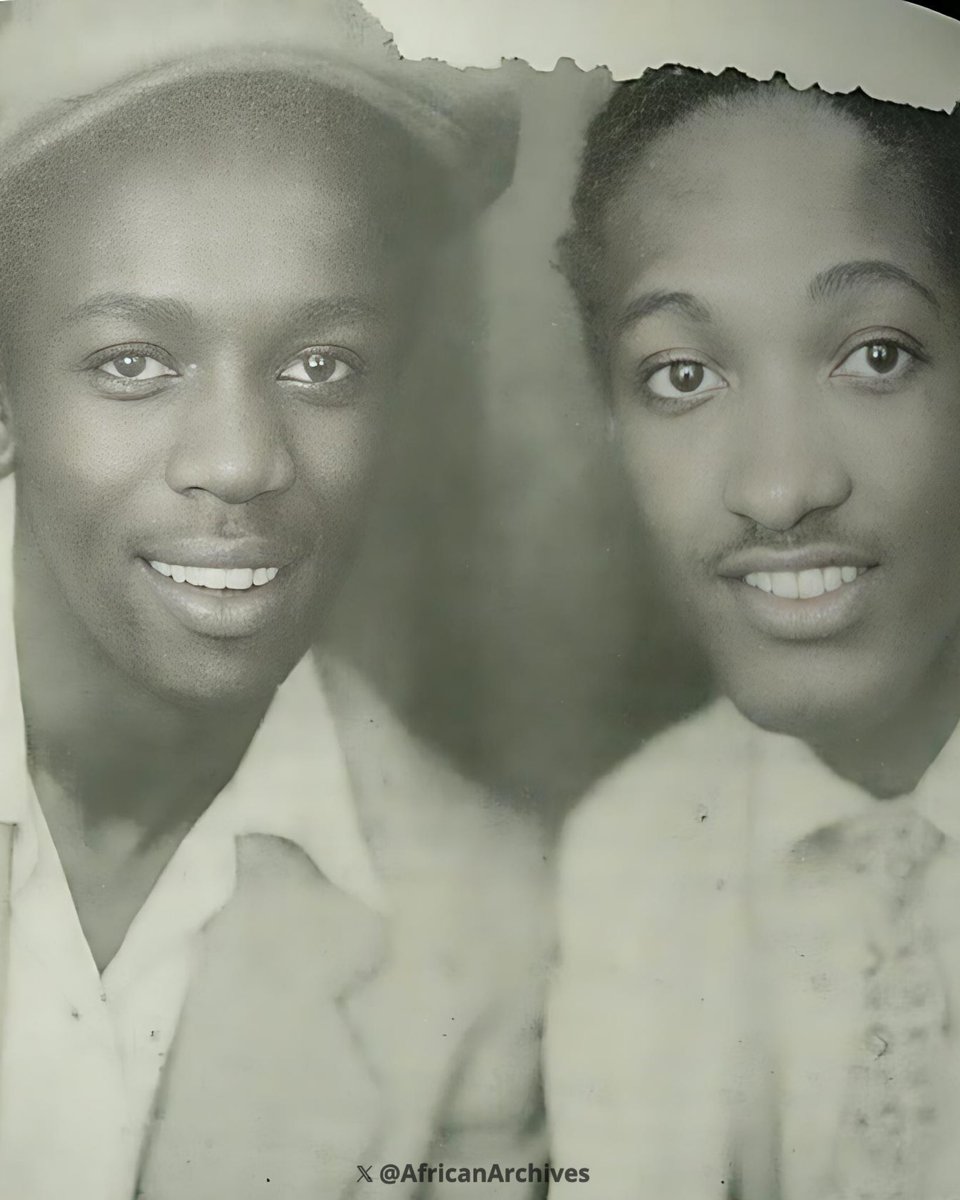
Legends. Soul singers Lou Rawls and Sam Cooke.
Rawls and Cooke made enormous contribution to soul music internationally and had strange coincidences dominate their lives.
The month in which Cooke died (December) is the month in which Rawls was born, and conversely, the month in which Rawls died (January), is the month in which Cooke was born.
Rawls was born in Chicago, Illinois, on December 1, 1933, while Cooke moved there from his birthplace in Mississippi, with his parents as a two-year old in the year that Rawls was born. Both men sang as children in churches and as a result, had very deep gospel backgrounds.
In high school, as classmates, they rehearsed gospel songs together and later performed at churches and auditoriums across the country with the Pilgrim Travelers and Soul Stirrers gospel groups. Their voices were, however, miles apart, with Rawls emitting a deep husky baritone and Cooke, a smooth crystalline high-tenor.
Cooke in particular, began to attract legions of female fans to his concerts, and in short order was becoming something like a sex symbol as he gave stirring renditions of Nearer To Thee, Be With Me Jesus, and Touch The Hem Of His Garment.
Rawls portrayed himself as a preacher of sorts in his early performances but was more of the philosophical type. His later recordings reflected this: One Life To Live; What's The Matter With The World, Has The World Gone Mad; If I Coulda Woulda Shoulda.
Both men got into secular music just about the same time in the late 1950s. But just before that, a serious motor vehicle accident nearly ended their careers and their lives. They were travelling in the same motor vehicle on a tour of the south with the Pilgrim Travellers when the incident occurred. One passenger was killed, Cooke was slightly injured, and Rawls was pronounced dead by a doctor on the way to the hospital but Luckily, Rawls had only slipped into a coma, which lasted five and a half days. He suffered memory loss and didn't completely recover for a year. Rawls' recording of One Life To Live, some years later, seems to echo his thoughts about the accident, while his first hit, Love Is A Hurting Thing, reveals the haunting side effects of a love affair. Similarly, Cooke's first hit, You Send Me, touched on the topic.
🖋️You can donate on https://t.co/zRRXALWp3X to support our work 🖤 thanks!





![AfricanArchives's tweet photo. In 1893, Frederick Douglass invited Ida B. Wells to lunch. She noted a place across the street, but indicated they would not receive service there. “Mr. Douglass, in his vigorous way, grasped my arm and said, ‘Come, let’s go there.’” Together, they “sauntered in...as if it were an everyday occurrence, cocked and primed for the fight if necessary.” Douglass grabbed a table and chair for him and Wells, as “paralyzed” staff looked on. A stand-off ensued with wait staff until the proprietor realized it was Frederick Douglass, and warmly welcomed him while sharing stories of a time past when Douglass visited his hometown. “When [the proprietor] finally went to another part of the room, Mr. Douglass turned to me with a roguish look and said, ‘Ida, I thought you said that they didn’t serve us here. It seems we are getting more attention than we want.’”
Frederick Douglass spent his life fighting for justice and equality. He never knew the date of his birth. This is something he struggled with throughout his lifetime. Douglass believed that he was born in the month of February in 1817. In fact, records show that Douglass was born in February of 1818. He chose the 14th of February for his birthday because his mother would call him her “little Valentine." Unfortunately, Douglass never knew much about his parentage. His mother, Harriet, was sold off when Douglass was but a child, and he only met her a few times before she passed away. Though born enslaved in Maryland, he escaped as a young man and became a leading voice in the abolitionist movement.
🖋️if you love our content, please consider supporting our page on https://t.co/16fHyPFENu (follow the ko-fi page too for weekly posts roundup)](https://pbs.twimg.com/media/GMWBaNiWgAARQUq.jpg)