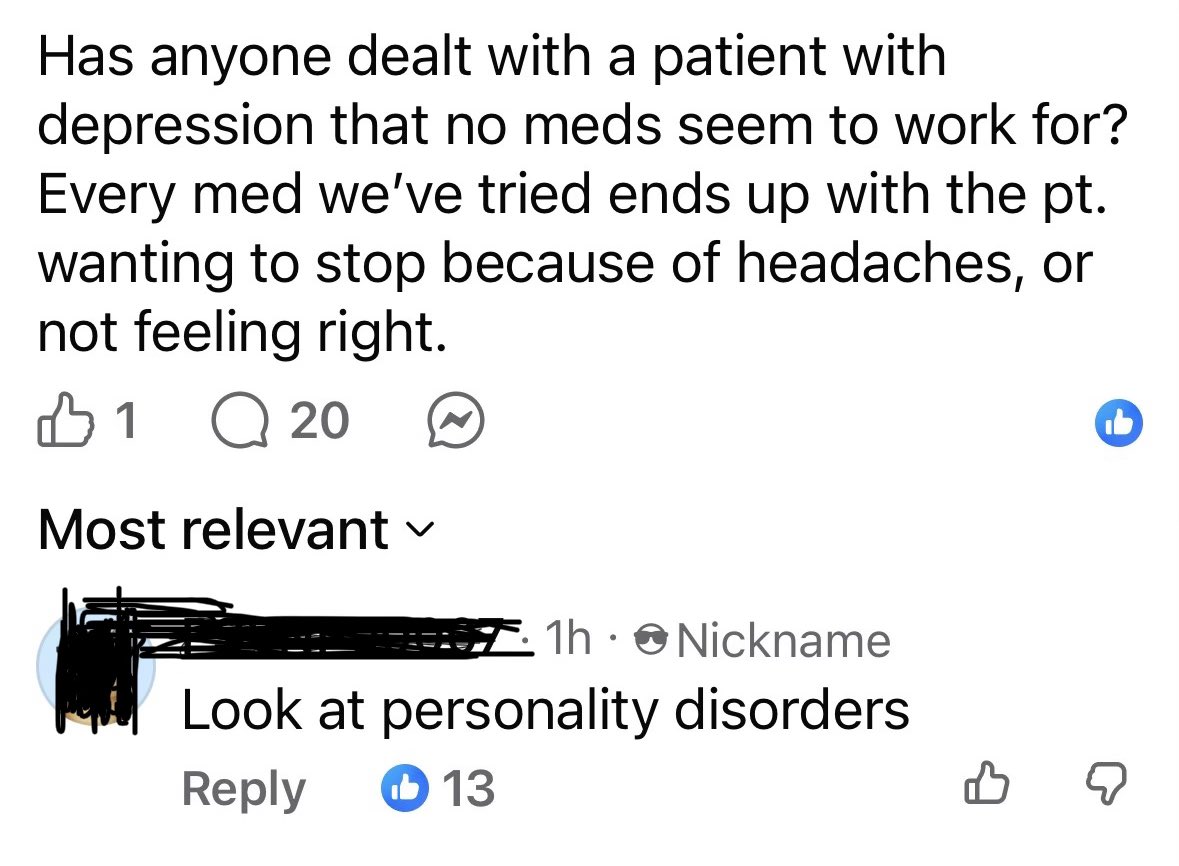
If you’ve ever laughed at Jordan Peterson and his struggle with benzos and other psychiatric drugs or if you’re struggling to understand the Lindsay Clancy case, I encourage you to watch this video about a man who died by su1cide after experiencing horrific side effects from psychiatric meds.
I also encourage you to follow this doctor who in my opinion is a great educator on the subject and helps people safely taper off psychiatric medications.
Whatever your opinions on these people, adverse effects and withdrawal from psychiatric drugs are not something to mock or take lightly. We should be having serious conversations and hold Pharma accountable.
The neurofication of everyday life, aside from fuelling a global psych-drug market, is driving young people to reframe various forms of real distress & difficulty as indicating fixed disabilities, that neither they nor anyone else can change. This is debilitating a generation.
One of the reasons I’m so skeptical of this massive neurodiversity narrative is that I don’t see some normal neurotypical baseline. I see a bunch of people that struggle with the same things we all do like understanding and relating to others.
@_soyrebeIde_ @radical_lib_soc to prawda, UJ nie pobiera. i nieprawda, przy rekrutacji do szkół doktorskich była dwuetapowa rekrutacja, pierwszy etap ocena projektów przez 2 recenzentów, drugi etap rozmowa.
“But women sexualise themselves”… no, men sexualise our existence.
There’s a fetish for the schoolgirl, the teacher, the secretary, the nurse, the nun, the “innocent” girl, the “experienced” woman, the boss, the assistant, the submissive, the dominant, the “barely legal,” the mother, the babysitter, the neighbour, the coworker every version of us gets turned into something sexual.
Covered? There’s a fetish. Modest? There’s a fetish. Uncovered? There’s a fetish. Even discomfort, even vulnerability is sexualised.
The same woman will be sexualised and then shamed for it in the next breath. That contradiction isn’t ours to carry.
Saying women sexualise themselves is just a way to dodge accountability because no matter what we do, you were already going to sexualise us anyway.
Psychiatrists should be more transparent that antipsychotics are frequently used for behavioral management rather than to treat or cure an underlying disease.
By implying that an antipsychotic fundamentally “treats” psychosis rather than acknowledging that it bluntly blocks dopamine receptors, we have created a catch-22. It is not surprising that individuals are rightfully upset when these medications are prescribed in what appear to be alternative or off-label ways.
I suspect that if the field had been more honest, it wouldn’t seem like such a leap to use antipsychotics to address agitation in other situations. This means acknowledging that a significant reason we use them in schizophrenia is to manage the severe agitation that often accompanies the condition, rather than to “cure” it.
This transparency, however, does not negate the very real problems associated with their use. Antipsychotics are at times inappropriately prescribed merely for the convenience of overburdened staff in inadequate facilities. Yet this is not always the case. Even in well-run facilities or homes with particularly caring family members, all involved often reach the difficult conclusion that antipsychotics genuinely improve the patient’s living conditions. When accompanied by thorough informed consent, these medications can sometimes be a tool that allows a patient to safely remain at home longer.
How, then, does one differentiate the well-intended use of antipsychotics as a compassionate last resort from their lazy use for convenience? Not easily. Failures such as lack of informed consent, erroneous diagnoses, chronic understaffing, and poor clinical evaluation make inappropriate use easier to identify. The WSJ is right to point out these failings. However, the broader public conversation about the role of these medications needs to be more honest and nuanced.
For context, people should revisit the landmark case of Clites v. Iowa (1982). Timothy Clites, an 18-year-old with developmental delays, was committed to a state hospital. There, he was prescribed antipsychotics specifically to manage behavioral disturbances stemming from his developmental delay, rather than for psychosis. His medical care was particularly poor, exemplified by the fact that he was not seen by a physician for three entire years. After Clites developed severe and permanent side effects from the antipsychotics (tardive dyskinesia), his father sued the state. The court ultimately found that the hospital failed to meet the standard of care because it used the medications not for the patient’s benefit, but for institutional convenience.
Gen Z has been so depoliticised by over-medicalisation, that it's not pushing back. The mental health industry is largely responsible for this, as it’s told us that redemption isn't to be found in structural reform, but in finding the right diagnosis or illness/neuro identity.
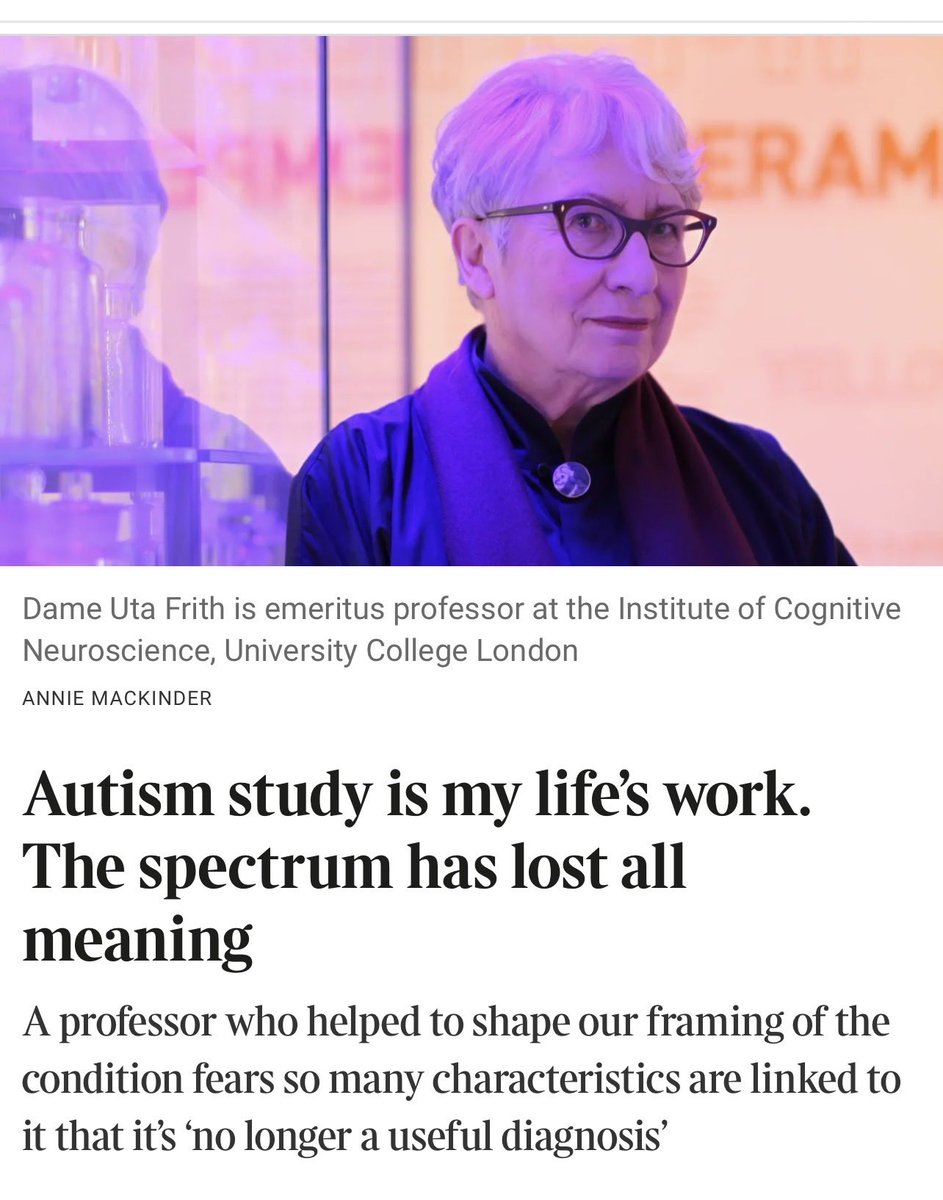
Autism:
“The spectrum has become so accommodating that I fear that it has now been stretched so far that it has become meaningless and is no longer useful as a medical diagnosis.”
Problem is that psychologists, and increasingly a flood of master’s level therapists have come to rely on the autism diagnosis to support their practice. Their livelihood. I suspect schools face a similar reliance on autism diagnoses for extra funding.
Furthermore: Parents love it because their child gets extra services. Students love it because it makes them special. Drug companies love it because they profit from drugs.
Psychologists are supposed to be the gatekeepers on diagnoses, but we are not doing very well at it.
Hoping the UK review will make it clear to people that there is no biological basis for neurodiversity. 'There's no need to propagate a myth that the biological basis of neurodiversity has been found to substantiate the need for accommodations to people's differences'
"The task of repoliticizing mental illness is an urgent one if the left wants to challenge capitalist realism".
- Wonderful new paper by @RadoslawStupak - please give it a go if you want a deeper understanding of the politics of critical psychiatry.
https://t.co/3c8uArz4gb
How often it is that a young person’s pain (self-harm; eating problems) is a desperate attack, via the self, on a dysfunctional family, idea, school or wider system; a plea for systemic change. But we rarely see it like that - instead we pathologise them & treat *their* disorder.
What we call pathology is often protest against conditions that act against the flourishing & well-being of the individual. Conversely, to be 'well-adpated' often means to have sacrificed vital aspects of the self to become one of the demoralised/servile cogs inequality relies on