What’s going on in the NBA, MLB & other major sports is just a reflection of what’s happening throughout the rest of society, and most people aren’t even aware of it yet.
Society has moved from an ownership economy to an access economy, and I don’t think people fully understand what that means for society.
Look at what’s happening around us. People are increasingly renting homes instead of owning them. Sports teams are moving toward private equity and fractional ownership. Entertainment and software have become subscriptions. Cars are leased, financed and even adding subscription features. Music went from something you bought and owned to something you pay every month to access.
Different industries, same trend. As valuable assets become more expensive, fewer individuals can afford to own them. Eventually ownership starts migrating toward corporations, private equity firms, investment funds and other institutions capable of pooling large amounts of capital.
And when ownership changes, the incentive changes with it. An individual might own something because they love it. A family might own something because they want their children and grandchildren to have it. But an institution owns something because the numbers have to work.
So everything becomes a financial optimization problem. How much revenue can we get out of this asset? What can we charge for that used to be included? What can become a subscription? What can be rented instead of sold? What else can we monetize? How much more value can we extract from the same customer?
You can even see it in many cities. Beautiful land, open spaces, historic neighborhoods and locally owned businesses increasingly have to justify themselves against whatever produces the highest financial return. A field becomes a subdivision. A neighborhood becomes a development. A local business becomes a national chain. Eventually every city starts looking the same because everything is being optimized by the same spreadsheet.
And that’s where the societal impact becomes much bigger than people realize. The danger is that we can become richer on paper while becoming poorer in all the things a spreadsheet doesn’t know how to measure.
We’re in an economy where people have access to more things than any generation in history while actually owning fewer things. Meanwhile, the institutions receiving all of those payments are using that cash flow to accumulate even more assets.
That’s why becoming an owner is going to be more important than ever. If you own valuable assets today, whether that’s a home, land, a business, equity or other productive assets, you need to think very carefully before giving them up.
Obviously not every asset is worth holding forever. Sometimes selling is the right decision. But the next 10-20 or 30 years will make ownership of genuinely scarce and productive assets nearly impossible for the average person, and eventually even for people with good incomes.
Because income and ownership are two different things. You can make $200,000 a year and still be competing against an institution managing billions of dollars. A good salary doesn’t necessarily give you the purchasing power to compete with pooled capital.
That will become one of the defining economic divides of the future. Not simply rich versus poor. Owners versus renters. People who own appreciating and productive assets versus people whose income is continuously being used to pay the people and institutions that do.
Everything could become more convenient, more efficient and more accessible while simultaneously becoming more financially optimized to extract every possible dollar from the consumer.
It’ll produce incredible returns for capital. But it won’t produce a better society. If you can become an owner, become one. And when you acquire something genuinely valuable, understand what you have before you give it up.
Because a time coming where buying it back will be significantly harder than selling it was.
Nobody feels motivated every day.
It's easy to be productive on the days you're fired up and energetic.
What separates the high achievers is the progress they make on the days they don't.
I don’t measure wealth by income anymore.
I measure it by options.
Can I leave a bad job?
Can I survive six months without a paycheck?
Can I buy assets during a recession?
Can I sleep without worrying about money?
That’s the scoreboard I’m interested in.
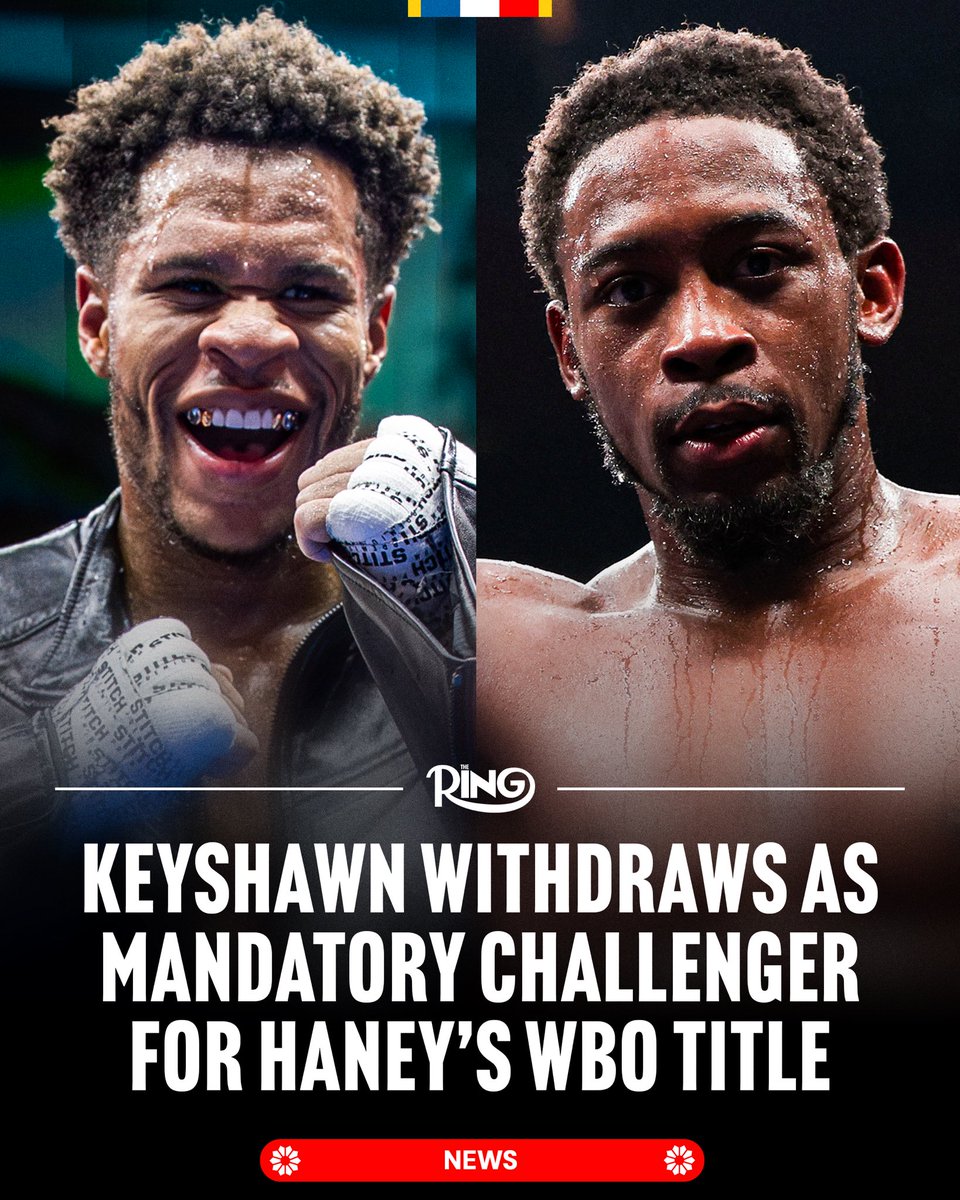
‼️ Breaking: Keyshawn Davis' team has formally informed the WBO that he will not move forward with challenging Devin Haney for his welterweight title, according to a letter obtained by The Ring's @MikeCoppinger.
Davis was set to earn $2.13 million following the result of Thursday’s purse bid that was won by Top Rank.