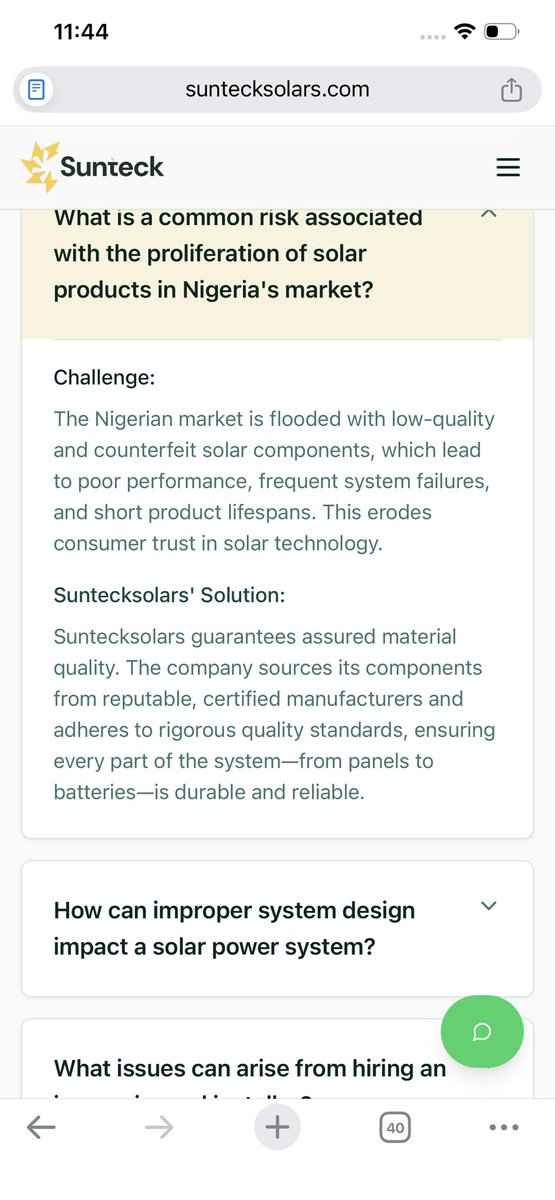
@instablog9ja Suntecksolars has helped clients live 100% off-grid for over five years without a generator or NEPA, proving that with a professional energy audit and expert system design, 24/7 solar reliability is entirely possible—contact us today for your free energy audit.
#suntecksolars
1. Roof Installations are Standard: Across the globe, roofs are the most efficient use of space for solar. The issue isn't the roof; it’s the mounting hardware and cable management. Using fire-rated mounting kits and proper DC breakers eliminates the risk of roof fires.
Again on solar installations and safety.
DO NOT INSTALL SOLAR PANELS ON YOUR ROOF AND INVERTERS/BATTERIES INSIDE YOUR HOUSE.
1) Buy quality name brand products and equipments, hopefully by yourself, from places like Fouani.
2) Hire actual experienced solar professionals. Research and interview them. The economic situation in Nigeria has turned some electricians into emergency solar experts.
3) Don’t install your panels on roofs of your inhabited dwellings if avoidable. Build a carport if necessary.
4) Only install your batteries and inverters in a cool and well ventilated space. Under your staircase or anywhere inside your house is not safe. Build a separate enclosure externally.
5) After the install, pay a separate electrician to come and give you a second safety opinion on the electricals, etc he’s not to correct anything.
6) Invite your solar installer to come out and perform at least a yearly paid safety inspection. Get a receipt from him and have him document what he inspected and certified.
7) This post is for fellow layman homeowners like me. It’s not for alleged blowhard know it all solar professionals.
8) Solar might not be for you if you cannot do it safely. That you can afford it or epileptic NEPA wahala is not an excuse.
9) Stop comparing installations abroad with Nigeria. The abroad have working and efficient emergency services like fire department and ambulances. Nigeria doesn’t.
10) I recommend solar if it can be done safely. Power is no longer an issue for me and I should have done it a long time ago. Together with Starlink it gives me a somewhat semblance of abroad life.
Watch these videos.
@OloyeSomorin Actually, we deserve credit for being transparent enough to highlight both the challenges and the solutions in this industry. That honesty is the best advertisement we could have—it proves that Suntecksolars truly understands the science and safety of solar.
@OloyeSomorin Our reputation is built on the trust of clients who value quality. My point isn't to argue, but to educate: there is a world of difference between high-grade engineering and the low-standard setups you're worried about.
@OloyeSomorin Calling us jokers while using our own identified challenges and solutions to build your argument is quite a contradiction. The risks you mention are exactly why Suntecksolars exists—to provide high-grade, certified components that make rooftop and indoor installations 100% safe.
@OloyeSomorin Calling us jokers while using our own identified challenges and solutions to build your argument is quite a contradiction. The risks you mention are exactly why Suntecksolars exists—to provide high-grade, certified components that make rooftop and indoor installations 100% safe.
• Professional Integration: Instead of hiring a second person to "check" work, we provide a transparent, certified installation process that meets international safety standards from day one.
• Battery Chemistry Matters: We prioritize LiFePO4 (Lithium Iron Phosphate) technology, which is inherently stable and non-combustible compared to other types.
Our Perspective at Suntecksolars
We believe safety is built into the engineering, not just the location. Here is a more balanced approach:
• Customized Design: We don’t just "slap" panels on a roof; we assess the structure and use industrial-grade protection.
3. Material Quality is Everything: You mentioned buying from big retail names, but generic "big brands" aren't enough. Knowing the specific chemistry of your battery and the tier-rating of your panels is what actually prevents disasters.
Indoor Inverters & Batteries: High-end inverters and Lithium (LiFePO4) batteries are designed for indoor environments. Unlike old lead-acid modern lithium systems are sealed and safe. The danger comes from poor ventilation and substandard wiring, not the indoor location itself.