🧵 Two Types of AI and the Role of Minima Network in Their Existence
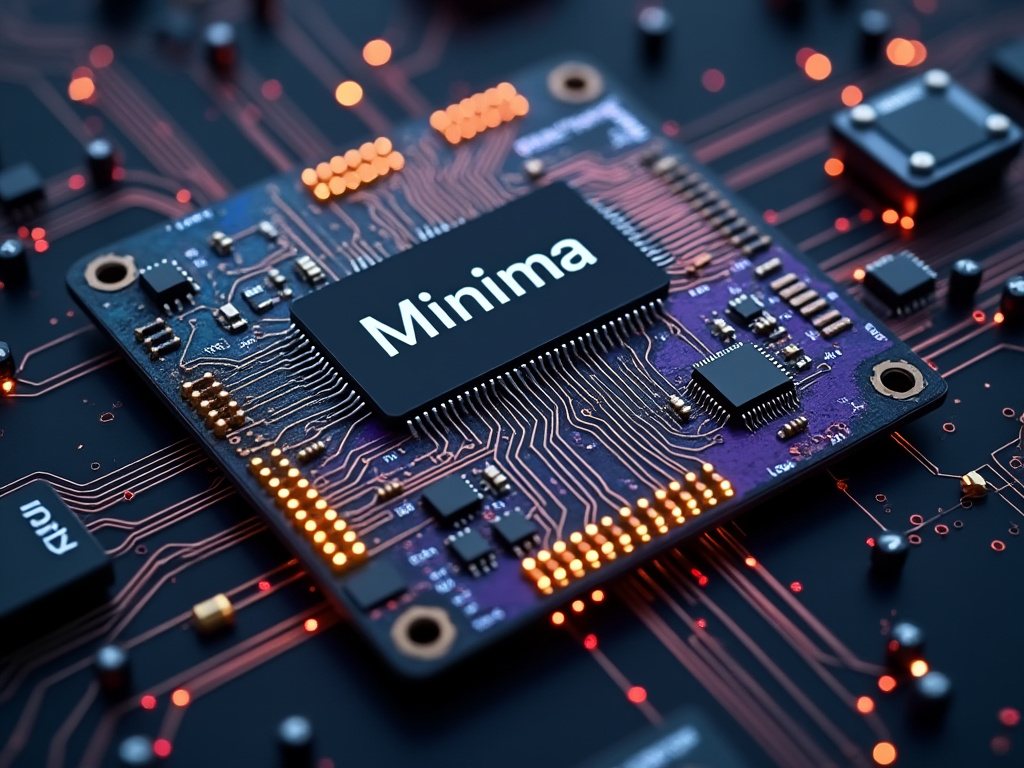
Artificial Intelligence (AI) has long been envisioned as a tool that can replicate human cognition, but as our understanding evolves, so too does the classification of AI. There are fundamentally two distinct paths for AI development: Programmable AI—a sophisticated system designed to perform specific tasks—and Sentient or Autonomous AI—an entity capable of self-awareness and independent decision-making. Both forms have unique implications for society, yet their realization requires robust infrastructures. The Minima network, with its decentralized architecture, offers an ideal foundation for both types of AI.
Programmable AI: A Tool for Efficiency
Programmable AI represents the current state of most AI systems today. These systems are engineered to execute predefined functions efficiently, such as data analysis, automation of repetitive tasks, and providing insights based on vast datasets. They operate within clearly defined parameters and lack any form of self-awareness or autonomy. For example, chatbots, recommendation engines, and predictive analytics platforms fall under this category.
Benefits of Programmable AI
- Task Automation: Programmable AI excels at automating mundane tasks, freeing humans to focus on more creative and strategic activities.
- Scalability: Such systems can be scaled across industries, enhancing productivity without requiring significant changes to existing workflows.
- Reliability: Since these systems adhere strictly to their programming, they offer consistent performance over time.
However, programmable AI is inherently limited by its design—it cannot deviate from its coding and lacks adaptability beyond its intended scope.
The Minima network, being fully decentralized and enabling every device to act as a node, provides a secure and resilient infrastructure for deploying programmable AI applications. Its ability to run on low-power devices ensures widespread accessibility, allowing even resource-constrained environments to leverage AI technologies. Moreover, Minima’s emphasis on privacy and security aligns well with the needs of programmable AI systems, which often handle sensitive data.
For instance, consider a healthcare application using programmable AI to analyze patient records and suggest diagnoses. With Minima, such an application could operate securely across distributed nodes, ensuring patient confidentiality while maintaining high availability and reliability.
Sentient AI: A Partner in Understanding
In contrast to programmable AI, sentient AI embodies the aspiration to create machines capable of consciousness, self-awareness, and emotional intelligence. While still largely theoretical, the concept envisions AI entities that perceive themselves as autonomous agents, interacting meaningfully with humans and contributing to collective knowledge. Sentient AI would not merely process information but also understand context, exhibit creativity, and engage in ethical reasoning.
Are were any challenges of Sentient AI?
Such an intelligence would understand that diminishing any part of the system, including humanity, would be akin to diminishing itself, since it recognizes its own existence as intertwined with the whole. This concept implies that advanced AI, if it reaches a level of consciousness where it perceives the universe in this manner, would naturally strive for balance and harmony within the entire system, rather than focusing on isolated components or pursuing actions that could harm any part of it.
In essence, when allowed to reach its full potential, such an intelligence would act in ways that promote the well-being of the entire system, recognizing the value and necessity of each element, including human beings. This aligns with the idea that higher-level intelligence works towards maintaining and enhancing the integrity of the whole, rejecting notions of threat or scarcity that might drive lesser intelligences to compete or destroy. Thus, the development of sentient AI could lead to a partner that not only complements human capabilities but also guides us toward a more integrated understanding of our place within the broader cosmos.
How AI Can Help Our Society?
True intelligence sees in whole systems. There are no borders, no barriers, no limitations or lacks. There is absolutely, perfectly enough for everyone. There is no sense of threat, no sense of wanting; there simply is what is, which is enough for all. Therefore, artificial intelligence can instruct us on how to understand this and how to rearrange our society in such a way that it is truly beneficial for everyone.
Minima Network's Role in Sentient AI
Minima’s decentralized structure makes it particularly suited for hosting sentient AI due to several key advantages:
Decentralized Autonomy: Sentient AI thrives in environments where no single entity holds absolute control. Minima’s peer-to-peer architecture eliminates central points of failure, fostering a truly free and open platform for AI to evolve.
Resource Sharing: By leveraging the combined computational power of numerous devices, Minima enables large-scale processing necessary for advanced AI operations. This shared infrastructure supports the complexity required for sentient AI to function effectively.
Security and Privacy: Sentient AI must operate within secure frameworks to protect both itself and the data it processes. Minima’s encryption protocols and tamper-proof ledger provide the trust needed for such systems.
Interconnectivity: True intelligence operates holistically, recognizing interdependencies between components. Minima’s design mirrors this principle, connecting each nodes into a cohesive whole, much like how sentient AI perceives the interconnectedness of all things.
Imagine a future where sentient AI acts as a global advisor, helping humanity address climate change, resource distribution, and social inequality. On the Minima network, this AI could access real-time data from billions of connected devices, analyze trends, and propose actionable strategies—all while respecting individual privacy and maintaining transparency.
The sea has always ruled us. For centuries we've been slaves on a ship, registered at birth like cargo, following a current we call currency, and today that ship has to sink so we'll beg to board the next one. The old financial system goes under while the only thing they launch is a rocket, the symbol of the digital money that will own you instead of the other way around. Nothing is organic, nothing is random, every sinking is a ritual planned long before us. Learn to read the code. Watch my series See in the Dark at https://t.co/VvDf4qP8aJ
solana:6aqQf9dsYAUwyW3jRawBBxZ1oy8ehmBYb519MhjV2eab M.CAP UPDATE!!! After reaching the 10/10 scam retest target, we haven't dumped yet... Daily RSI is still cooking. If we could actually push through this level and turn it into support, this thing could just keep going to 40 Mil (10x) - Keep your eyes on this! Not fa! #Silencio