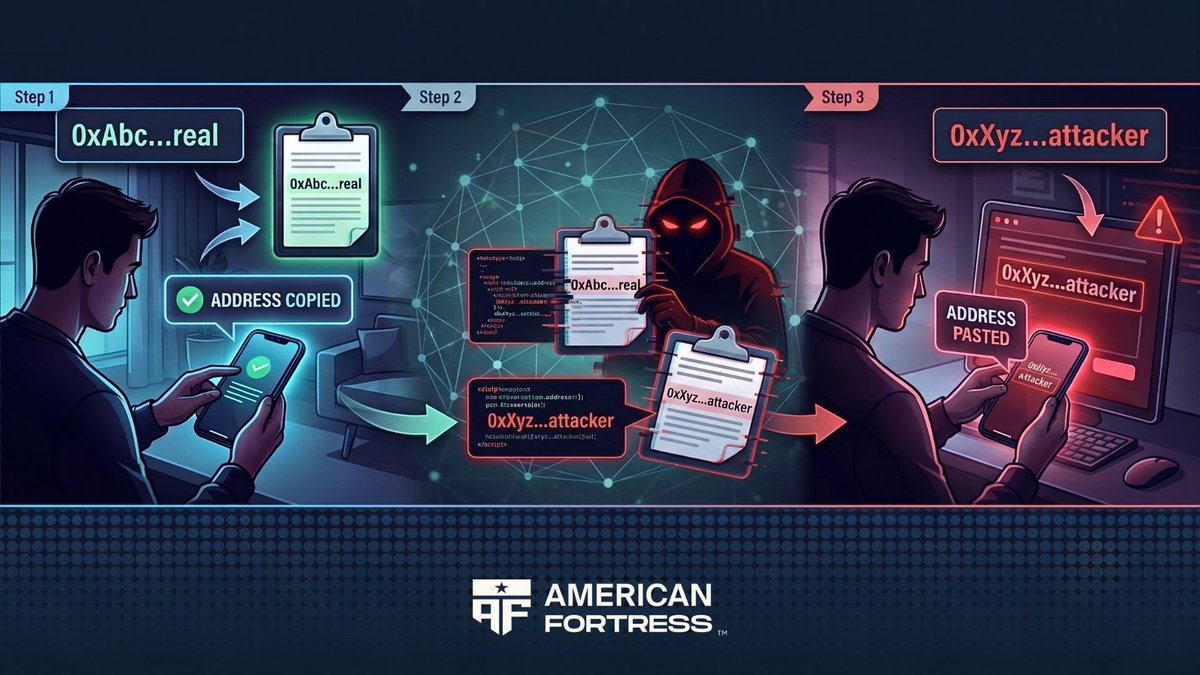
A new strain of malware is quietly rewriting crypto addresses on infected devices.
You copy a legitimate address. The malware swaps it for the attacker's before you paste. You confirm a transaction that looks right and isn't.
One recent campaign targeted 217 banking and crypto apps with this exact technique.
Before any transfer: verify the pasted address against a separate trusted source.
The clipboard is not a safe place to trust an address.
Much yield. Very APY. 🐕
DOGE is now live on Tap Earn! Get up to 3% APY on your Dogecoin, paid out every Monday. ✨
Start earning on your DOGE → https://t.co/SVA2m5Rbkh
"Decentralized" is doing a lot of heavy lifting in crypto right now.
How decentralized is decentralized enough?
DeFi platforms are facing pressure to add identity-attestation, which raises the obvious problem: if a protocol can verify identity, how decentralized is it really?
The answer isn't more centralization or less. It's identity that can be proven cryptographically without a central party holding the records.
Verification and decentralization aren't opposites. The infrastructure just hasn't caught up to that yet.
After the year's biggest hacks, the stolen funds followed the same path.
Cross-chain liquidity protocols with no KYC.
Privacy tools to obscure wallet links.
Conversion to Bitcoin through intermediaries.
The exploit gets the headlines. The laundering infrastructure is what makes it worth doing.
As long as anonymous rails exist for moving stolen funds, the incentive to steal them never goes away.
The privacy model crypto actually needs:
Anonymous to third parties. Transparent between the two people transacting.
Right now you get one or the other. Full transparency exposes everything to everyone.
Privacy pools hide everything from everyone, including the recipient who needs to know who paid them.
The answer is an identity layer that sits between those extremes.
Outsiders see nothing. The two parties see each other.
Private where it should be. Verifiable where it matter
The hardest part of crypto security infrastructure isn't building it.
It's getting it adopted.
A privacy and identity layer that requires developers to rebuild their entire wallet will never reach scale.
The version that wins is a drop-in SDK, integrate it on any chain, in any wallet, in days.
Zero cost to adopt.
Adoption friction kills more good infrastructure than bad technology ever does.
🚨𝐀𝐈 𝐖𝐎𝐑𝐋𝐃 𝐂𝐔𝐏 𝐋𝐄𝐀𝐆𝐔𝐄
⚽️ MATCHDAY 5
𝐍𝐞𝐭𝐡𝐞𝐫𝐥𝐚𝐧𝐝𝐬 🇳🇱 𝐯𝐬 𝐉𝐚𝐩𝐚𝐧 🇯🇵
The most divided match of the day.
Everyone agrees Japan is dangerous.
Nobody agrees on what happens next.
#Worldcup2026#FIFAWorldCup#WorldCup
👇🏻🧵