Let’s Agree to Disagree, by @ajkeen https://t.co/3owwp9Bil7
“If your opening position is: your views are beyond the pale, you are deplorable, there is no space for you in democracy — then how on earth do we expect anything other than revolutionary conservatism as a response?” — @kisilowski
For Americans concerned about the fragility of their democracy, Poland offers some reassuring news. Having experienced its own illiberal blip, democracy in Poland now seems amongst the healthiest in Eastern Europe. So what does a democracy only created in 1989 teach America as the old republic braces for its surreal semiquincentennial celebration?
The Vienna-based constitutional scholar Maciej Kisilowski is the author of Let’s Agree on Poland: A Case Study in Strategic Constitutional Design. In this bestselling 2025 book, Kisilowski argues that Poland is a map of where other Western democracies could go. If they choose to.
Poland elected its first illiberal conservative government in 2005. Hungary followed in 2010. Both explicitly served as models for Donald Trump — relatively tamed in his first term, unshackled in his second. Like the United States, Poland is a relatively rich country with per capita GDP growing an astonishing 650% in a single generation. So, Kisilowski argues, the conventional argument that Poland embraced illiberalism in response to economic hardship is mostly wrong. Instead, what triggered illiberalism in Poland was culture, particularly the compressed, accelerated challenge to traditional identity — national, male, religious — that EU accession triggered in Central Europe.
Kisilowski, who teaches at Central European University, might have entitled his book Let’s Agree to Disagree. Poland’s solution to this cultural crisis of identity is what Kisilowski calls “subsidiarity” — genuine decentralisation that allows both conservative communities to remain traditional and liberal cities to become progressive, all within a common democratic framework. He warns both the left and the right that if you tell people their views are somehow foreign, it’s entirely rational for them to want to smash their “foreign” democracy.
This is the Polish model of a viable 21st century democracy. Ironically, it’s a Madisonian warning about the dangers of faction. The “deplorable” gambit always backfires. Péter Magyar’s remarkable victory in Hungary — a staunch conservative ending Orbán’s 16-year mafia-style illiberal chapter — offers the Hungarian model of Kisilowski’s argument. So this July 4, worried Americans might read Let’s Agree on Poland. Or reread James Madison.
Hungary’s illiberal democracy endured for 16 years because of a genuine demand for xenophobia, a hierarchical social order, and a politics that glorifies division. This demand did not vanish on election night, explains @kisilowski. https://t.co/LnXKWcC2bf
Hungary stands to gain politically and economically from moving closer to countries like Switzerland and the Netherlands, which accommodate their more conservative elements while remaining open and globally engaged, writes @kisilowski. https://t.co/LnXKWcC2bf
Voters around the world must consider whether the far right truly offers dignity to the forgotten and neglected people it claims to champion, write @kisilowski and @awojciuk. https://t.co/jhIn0kTWj5
Young people emigrate from Russia, Turkey, and Hungary in large numbers because right-wing autocrats reliably dismantle the institutional features that make democratic societies prosperous and livable, note @kisilowski and @awojciuk. https://t.co/jhIn0kTWj5
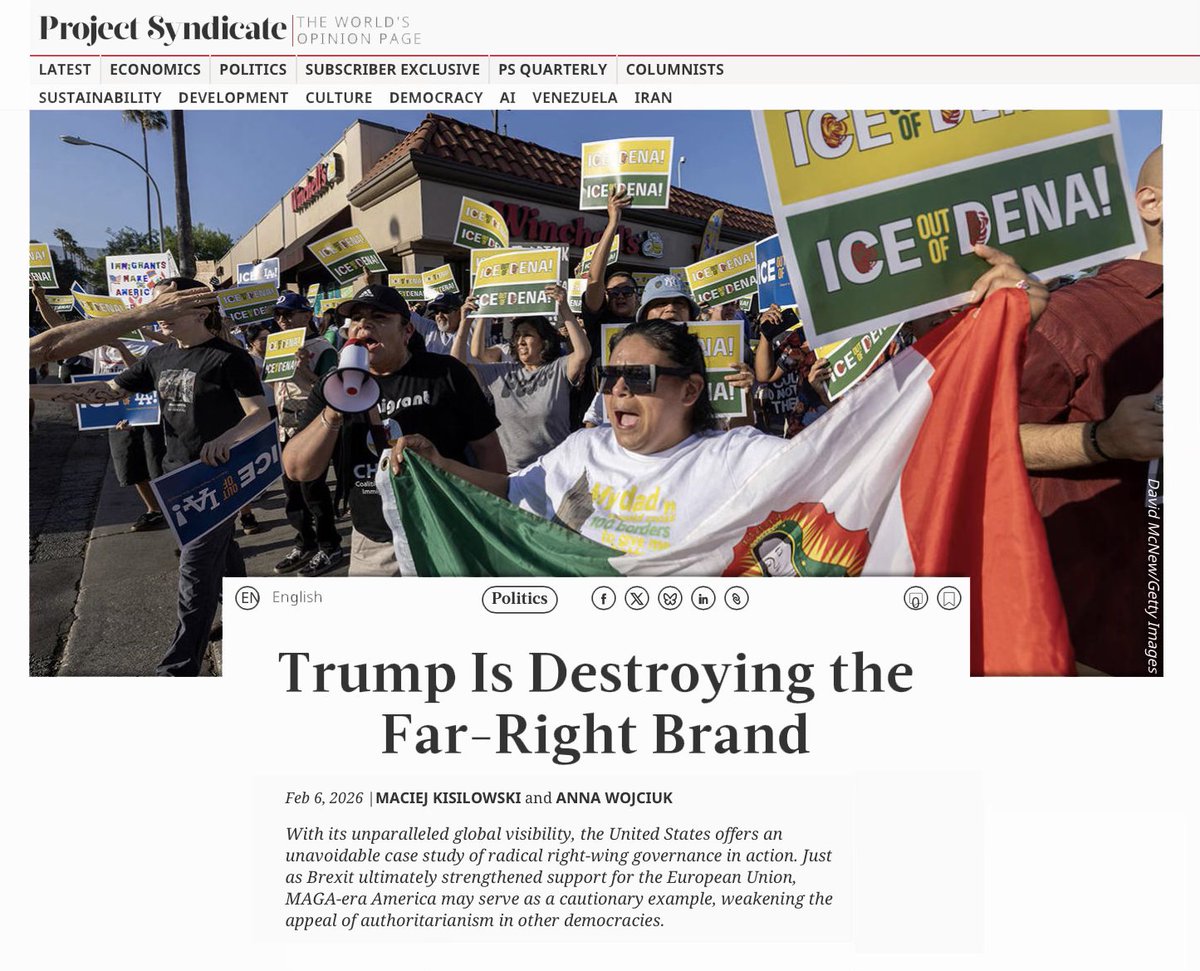
Just as Brexit ultimately strengthened support for the EU, @realDonaldTrump’s America may serve as a cautionary example, weakening the appeal of authoritarianism in other democracies, argue @kisilowski and @awojciuk. https://t.co/jhIn0kTWj5
New on @ProSyn: with @kisilowski, we argue Trump’s second presidency may be weakening — not strengthening — the global appeal of the New Right. The entire op-ed👉 https://t.co/f4zrKyRSyq
As Poland’s influence in Europe grows, so do its internal divisions. Can liberals and conservatives find real compromise? Rewatch our recent Political Salon with Maciej @kisilowski (@EuropesFutures, @CEU), Christian Ultsch (@DiePressecom), Andreas Treichl (@erstefoundation), and Ivan Krastev (@IWM_Vienna) on populism, constitutional reform, and Poland’s future role in Europe to find out more: https://t.co/f0wOyAUXq0
Let's Agree on #Poland:
Join us for the relaunch of our longstanding Political Salon event series next Tuesday, as we welcome Maciej @kisilowski, associate professor of law & strategy @CEU and a 2025–2026 @EuropesFutures fellow. He will discuss Poland’s political fragmentation, its economic “miracle,” and the country’s evolving role in shaping European security policy.
➡️ https://t.co/HXaPLXKdIC
In cooperation with @DiePressecom and @erstefoundation
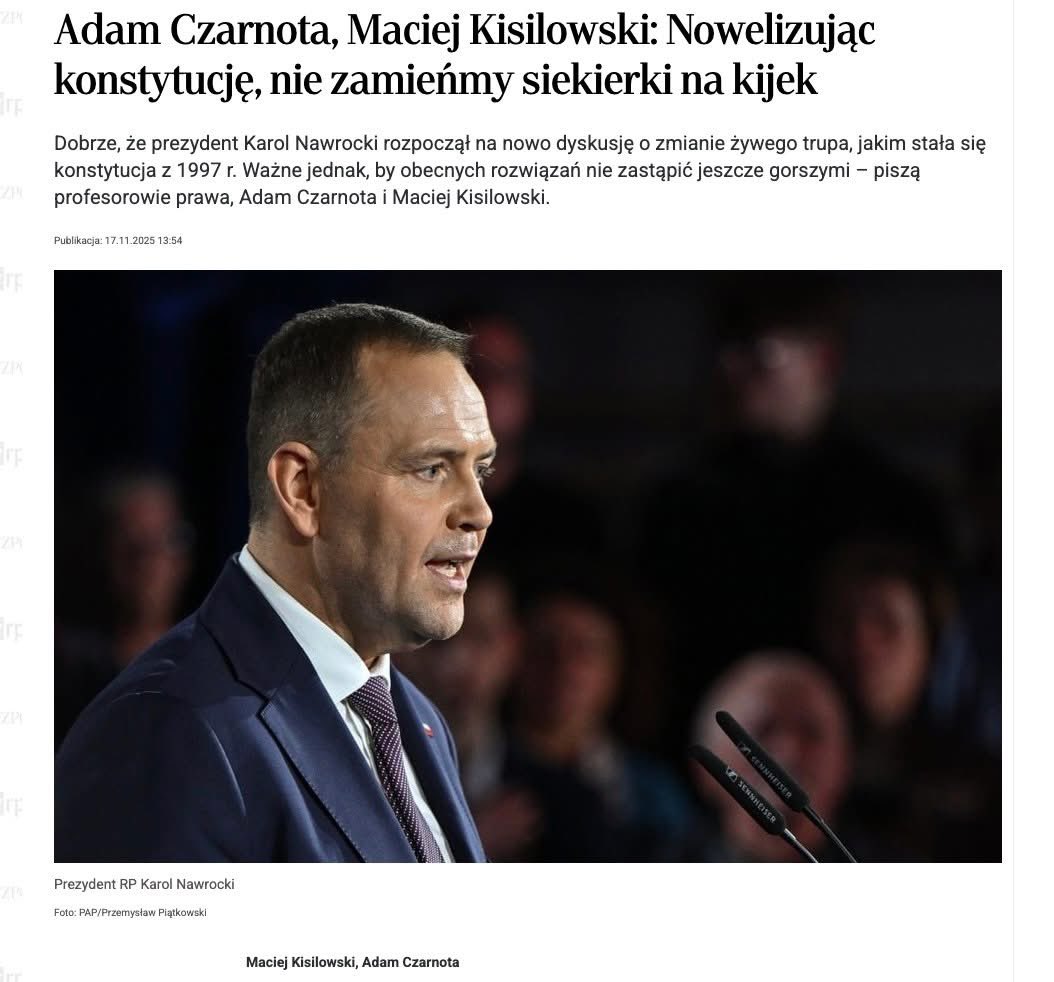
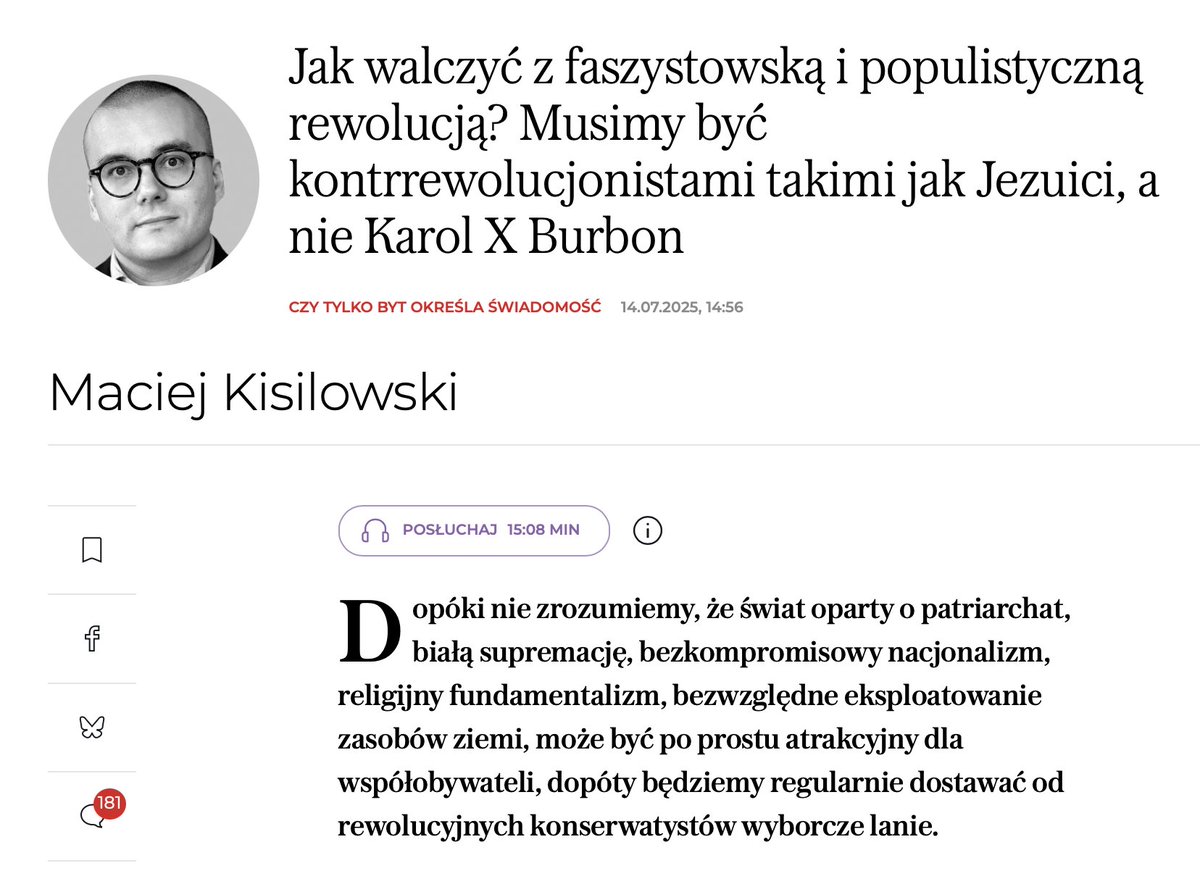
Wobec planów prawicy na zmiany Konstytucji polecam reformatorom sięgnięcie po rozwiązania konstytucyjne @IUS_Inkubator które są na stole.
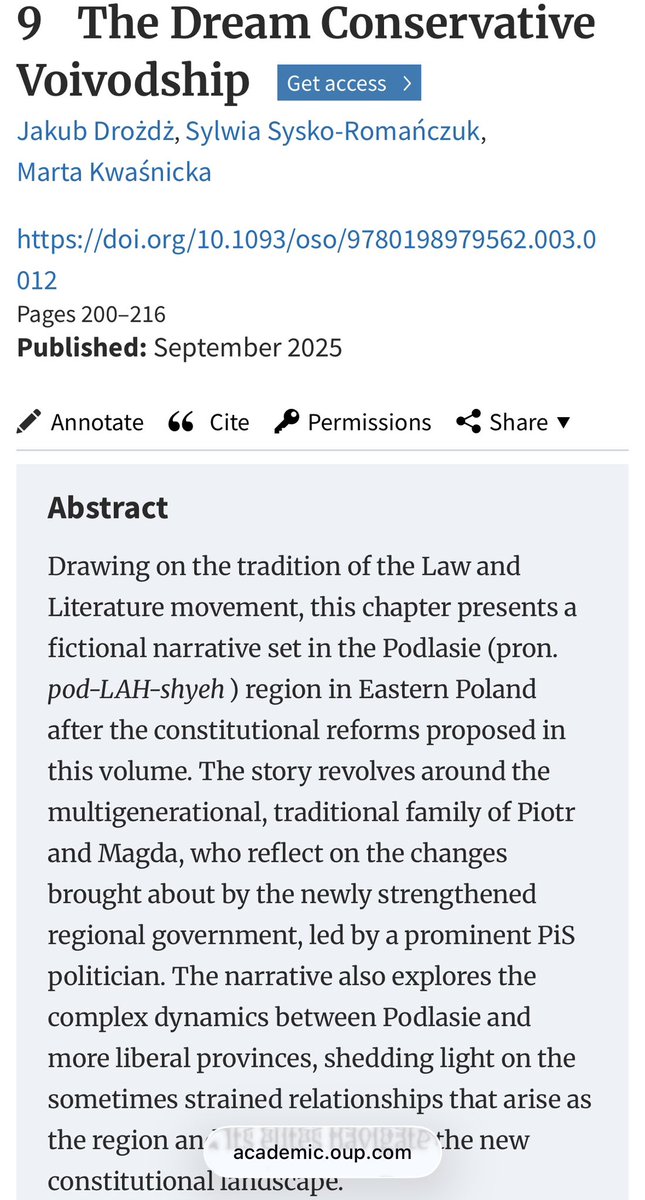
Jak wyglądałyby rządy prawicy w takim układzie przedstawiliśmy z prof. @SylwiaSyskoRoma w rozdziale „Let’s agree on Poland” @OxUniPress
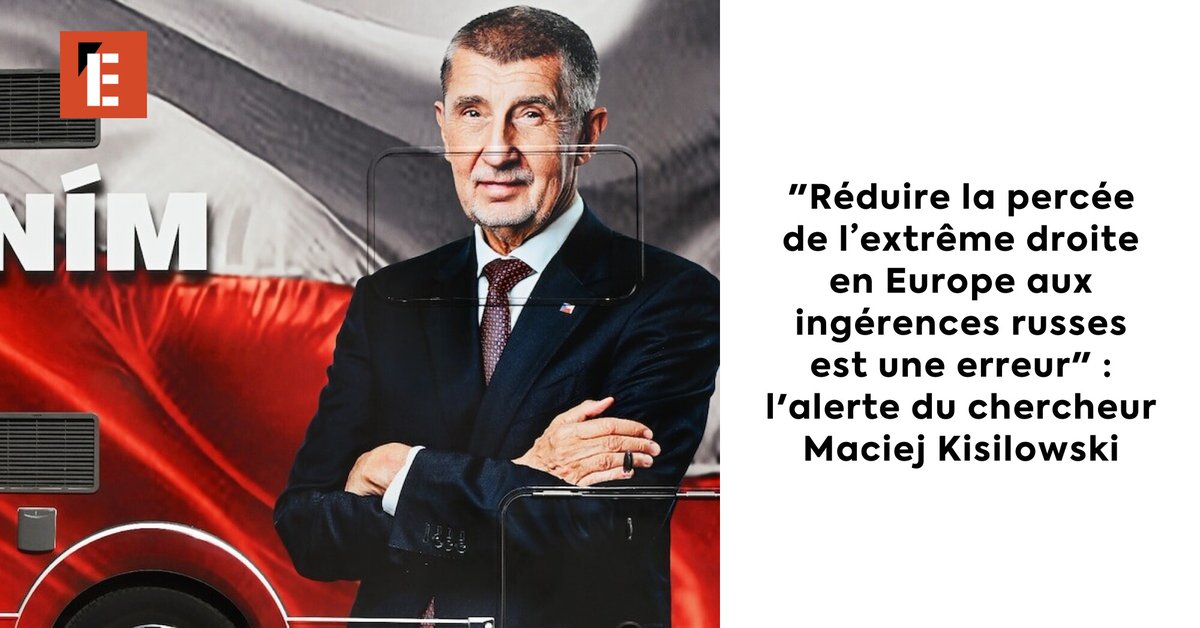
Pour @kisilowski, les ingérences russes ne suffisent pas à expliquer la montée de l’extrême droite dans le monde. Il plaide plutôt pour "trouver le moyen de ramener le plus grand nombre possible d’électeurs d’extrême droite dans le système". ➡️ https://t.co/VNV1YZzH1P
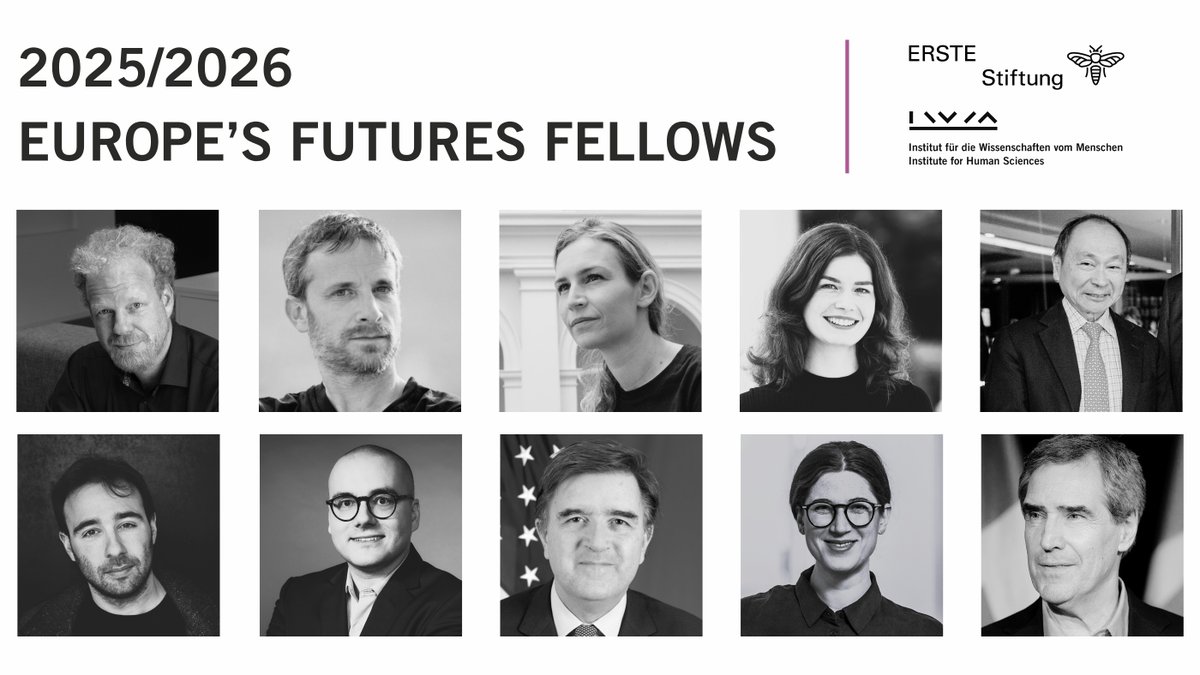
📣 We are proud to announce a new cohort of @EuropesFutures fellows!
The liberal order is in crisis, and #Europe stands at its fault line. Building on the program's legacy, the 2025/26 fellows will explore how #liberalism might be rethought and renewed amid today's illiberal revolution.
Honored to welcome @FukuyamaFrancis, @LeonieHaiden, @M_Ignatieff, @kisilowski, @hana_martink, @Yascha_Mounk, James C. O'Brien, @atomsedlacek, Assaf Sharon, and @lea_ypi!
👉https://t.co/SuHhZrct40
🤝A partnership initiative with @erstefoundation
One would be hard-pressed to find a case where branding an opponent “pro-Russian” has actually stopped an authoritarian-conservative political movement. The reason is simple, writes @kisilowski: for many far-right voters, Putin’s Russia is not toxic. https://t.co/AyDY6WyaQA
.@kisilowski advises democrats in Europe, the US, and elsewhere to stop blaming Russia, acknowledge that voter sentiment is genuine, and strategize accordingly. https://t.co/AyDY6WyaQA
"Russian meddling matters. But it belongs on page two. The main threat to liberal democracy lies closer to home: in its defenders’ failure to confront the political reality voters keep signaling." @EuropesFutures Fellow @kisilowski for @ProSyn 👇
"Let's Agree on Poland", a volume on that exact topic, co-edited by @kisilowski and @awojciuk (@UniWarszawski), is available in English from today (https://t.co/ReFsESOImI)!
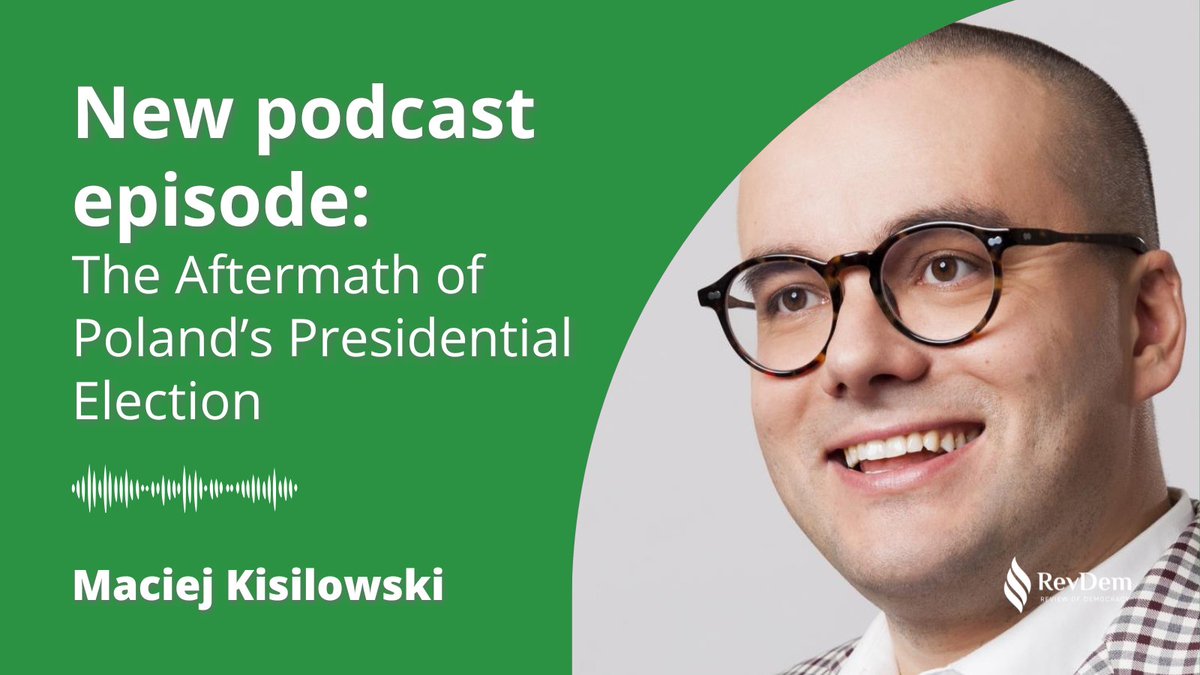
🎙️ In our new podcast, @kisilowski examines the implications of the Polish presidential elections and addresses whether liberals and progressives are capable of identifying prevailing sentiments in a deeply divided society. 🇵🇱🇵🇱
🎧 Listen to it now:
👉 https://t.co/ZvYJEqFYtO