MOUNT ETNA ERUPTS AS RED AVIATION ALERT GRIPS SICILY
Things are getting intense in Sicily…
Mount Etna is erupting again, sending thick volcanic ash into the sky as multiple lava flows pour from the volcano.
The ash became enough of a problem that incoming flights at Catania Airport were suspended, while Etna remains at RED the highest aviation color code.
Explosive activity and lava flows are continuing as the volcano remains closely monitored.
Etna has been restless for weeks, but today the skies over Sicily are once again filling with ash.
👇 Anyone in Sicily seeing Etna from where you are? Drop your location and let us know what it looks like.
#MrMBB333 #MountEtna #Sicily #Volcano
#Etna: le colate emesse dalle due fratture attive a quota 2.750 e 2.360 m avanzano lentamente. I fronti si trovano a quota 1.800 m.
Lungo il campo lavico si stanno formando anche dei bellissimi dust devil, ovvero dei piccoli vortici di polvere.
Video di AccuraExplorer
🇮🇹ITALIA
🚨🌋ERUPCIÓN DEL MONTE ETNA EN CURSO
La erupción del Volcán #Etna continúa. El Cráter Voragine está produciendo una vistosa actividad estromboliana acompañada de modestas emisiones de ceniza en dirección a Catania.
🌋📹 Otro ángulo visual de la #explosión del volcán #Popocatépetl [09:18 h de hoy, centro de MX] desde la cámara de San Pedro Benito Juárez, #Puebla.
Recurso proporcionado por nuestro colaborador
.: Diego Vázquez G. [https://t.co/MVI35ggbEf]
#SASSLA
Alcune immagini della colata emessa dalla nuova frattura dell'#Etna.
Un'eruzione subterminale in piena regola: frattura a quota 2.700 m con emissione di lava fluidissima che nel giro di poche ore ha percorso alcuni chilometri, fermandosi a quota 1.700 m.
Foto di Emilio Messina
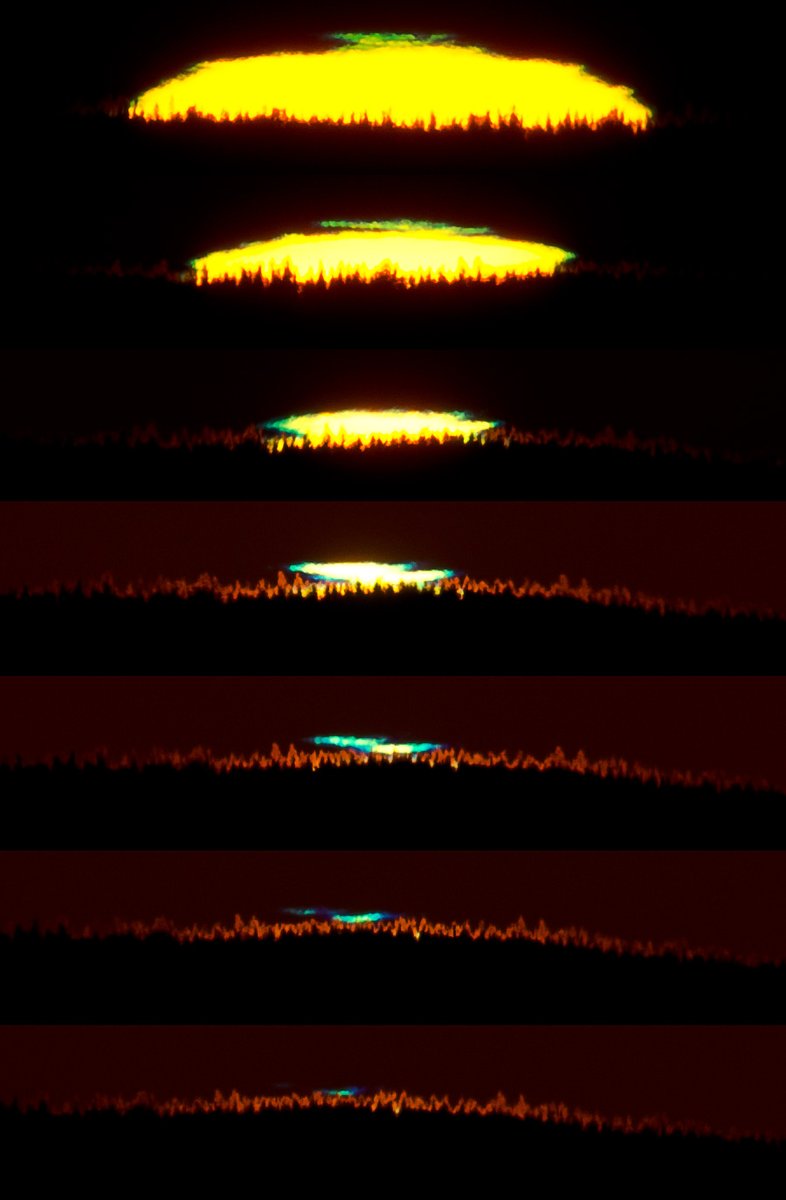
@forallcurious And you posted a FAKE video. The Green Flash occurs just briefly, hence the name. And THIS is what it really looks like, not that A.I. SLOP.
Kīlauea’s ongoing summit eruption has now filled about 60% of the volume created by the 2018 summit collapse. If current eruption rates continue, the crater could be nearly filled by early 2028—after which lava may begin spreading onto the main caldera floor. Forecasts remain rough due to variability in eruption rates and other aspects of volcanic activity. USGS Hawaiian Observatory staff continue to closely monitor Kīlauea.
Learn more: https://t.co/L6bMZJtCge
🗺️1: Map showing thickness of Kīlauea summit eruption lava flows. A west-east profile at the bottom of the map shows topographic changes since 2018.
📸 2: USGS Hawaiian Volcano Observatory scientists monitor episode 51 of lava fountaining at the summit of Kīlauea on July 15, 2026.
#Kilauea #VolcanoWatch #LavaFlow
A hui hou to volcanology legend Bruce Houghton.
After 25 years at UH Mānoa, he leaves a legacy that changed how scientists understand eruptions, hazards, and Hawai‘i’s basaltic volcanoes.
His high‑speed imaging work, leadership during Kīlauea crises, and decades of mentorship will shape the field for generations.
Mahalo, Bruce.
Read more: https://t.co/OGcjtcig0Z
📸: Bruce Houghton uses an 8K high-speed camera operating at 120 frames per second to document episode 28 of Kīlauea's ongoing summit eruption.
#Volcanology #VolcanoWatch #Ahuihou
Drone footage of molten lava bubbling inside Iceland's Litli-Hrútur volcano. This churning is driven by convection currents, where hotter, less dense material rises, cools, and sinks; the same process you see when water circulates in a boiling pot on your stove.
📽️: Giles Laurent | CC BY-SA 4.0