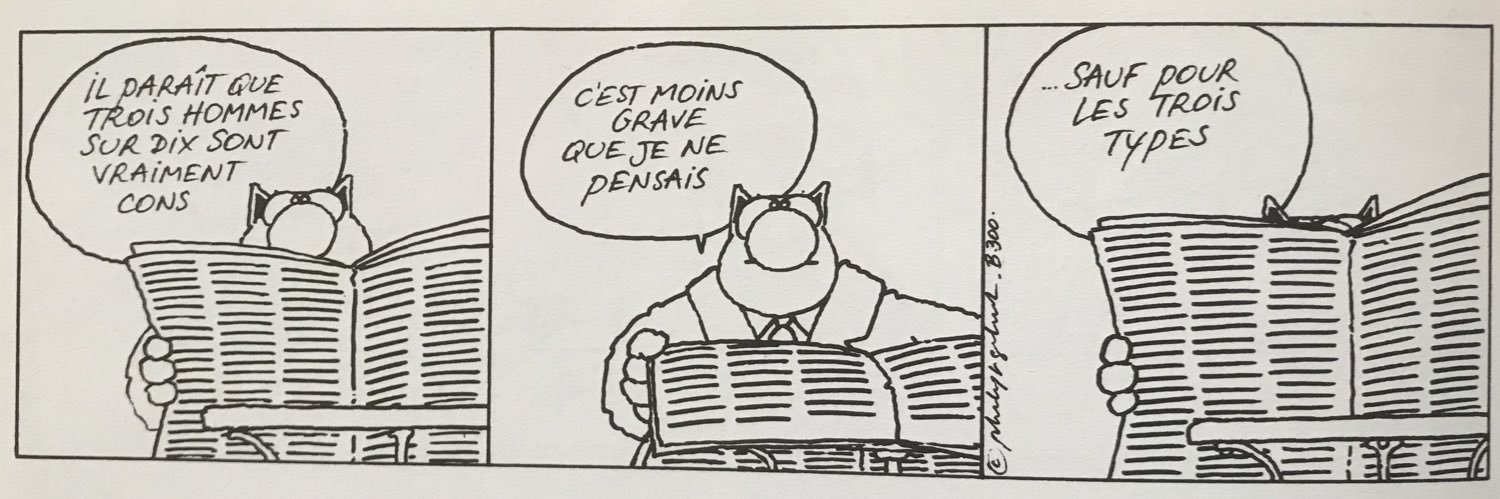
@OfOttawa@michaelshermer Must be challenging having to explain away what is actually written.
“no, that’s not what they really meant. You see it’s….. bla bla bla”
Pluck out your eye? No, it’s not at all what it says… it’s more like “try to sin a bit less”.
The US has withdrawn from the Group of States against Corruption
It became the third country after Russia and Belarus to leave the organization.
The State Department explained the decision by saying that the US pays annual membership fees but does not receive significant benefits from membership.
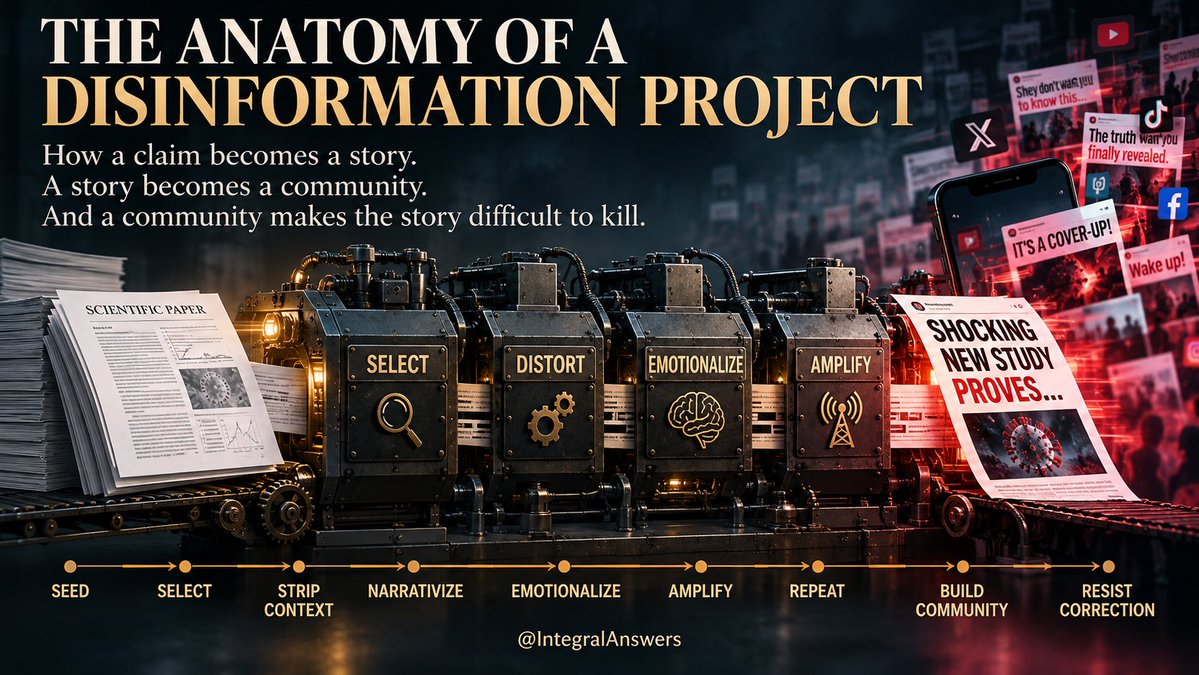
THE ANATOMY OF A DISINFORMATION PROJECT
How does a questionable claim become something thousands—or millions—of people believe?
Usually not by dropping one enormous lie onto the internet.
The more interesting process is incremental:
Seed → Select → Strip Context → Narrativize → Emotionalize → Amplify → Repeat → Build Community → Resist Correction
Let’s dissect the machinery. 🧵
12/ SO HOW DO WE RESPOND?
Not by becoming propagandists for science.
Slow the transformation down.
Find the original source.
Restore the missing context.
Separate observation from inference.
Examine the methods.
Look for counterevidence.
Compare the claim with the larger evidence base.
Ask what would falsify the narrative.
Distinguish repetition from independent corroboration.
Preserve uncertainty.
Then communicate the evidence clearly enough that people actually want to understand it.
Don’t out-propaganda propaganda.
Out-verify it.
@IntegralAnswers
📣 She was lying there raped, her neck broken, a noose around her neck — and beside her, her three-year-old son was hanging. When they cut him down from the rope, he was blue and no longer breathing. But then a miracle happened. And what that child said a year later will break your heart.
June 20, 2022. Kherson region, an occupied village. At two in the morning, the wife of a Ukrainian serviceman managed to text her husband that someone was breaking down the door of their house. His sister arrived an hour later. The gate was locked, so she climbed over the fence. The door had been ripped out of the frame, the window smashed. Nothing had been stolen. They had not come to rob them. They had come to kill.
In the room, her sister-in-law was lying on the sofa, naked and brutally beaten. Her head was twisted unnaturally, her neck broken, a noose around it. She was 28 years old. Beside her hung her three-year-old son. He had also been beaten, with around a dozen cigarette burns on his face. The rope was pulled so tight that the woman tore her fingernails bloody trying to untie it. The child was blue. His head was swollen from edema. He was no longer breathing.
The woman screamed at him: “Breathe! Live! Because I won’t be able to live with this — I’ll lie down beside you and die too.” She performed chest compressions. She was afraid she would break his ribs — she didn’t. And he started breathing. He had seen his mother being killed. And she had seen her child being tortured. The window was broken — people nearby heard what was happening, but no one admitted it.
Then came three weeks in occupied Kherson. The woman waited for the burns and the rope mark on the child’s neck to heal. What had not healed, she covered with makeup — so they would not be recognized and killed immediately. At the hospital they warned them: “If they start detaining you — run. Half the hospital is occupied by FSB officers.”
To get the boy out, the woman forged documents directly on her phone using Photoshop. She transported him as if he were her own son. There were 30 checkpoints ahead. At one of them, a rifle was pressed against her temple. One Russian said: “Dispose of these ones.” Another replied: “No, I’ve had enough for today.” And the first said: “I’m fine with it.” He had a wedding ring on his finger. Perhaps a wife and children were waiting for him at home. And he was perfectly fine with killing a woman and a child sitting in a car.
Three days on the road. The woman pressed the pedals with one leg — the other had become paralyzed. During filtration, a young officer asked whether there was anyone in the car who had survived torture. She said: “Yes.” “Anyone wounded?” — “Yes.” “Anyone who had been tortured?” — “Yes.” When she pointed to the three-year-old child, the officer began to cry. He could not continue the conversation.
In Odesa, doctors diagnosed the boy with clinical death