How Many People Have Long COVID? The Statistics Are ‘Pretty Scary’
Long COVID threatens to amass into a new wave of chronic illness with ramifications for health care systems and the economy for years to come.
https://t.co/MmoQYt4ucZ
New research on Long COVID might explain why some people's bodies never seem to stand down after infection.
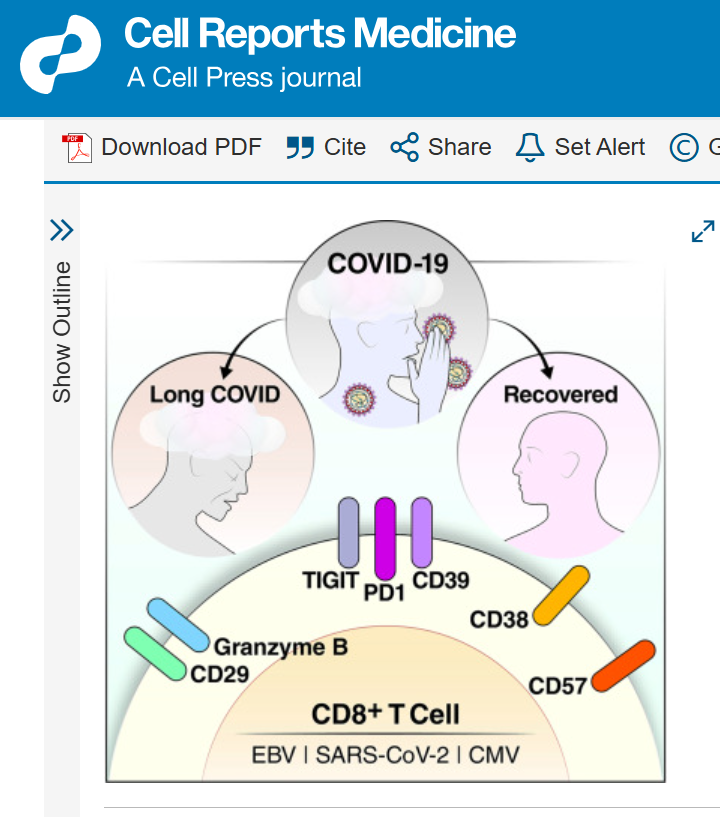
When you catch a virus, your immune system sends out specialized killer cells (CD8+ T cells) to hunt down and destroy infected cells. Once the virus is cleared, those killer cells are supposed to calm down and stop being so aggressive.
Researchers at UCSF and Fred Hutch tracked these killer cells in people 4 months after COVID, comparing those who fully recovered to those who developed Long COVID. They didn't just look at cells fighting COVID itself. They also checked killer cells targeting EBV and CMV, two extremely common viruses that most adults already carry quietly in their bodies for life, usually kept in check without issue.
@CellRepMed
Nur, um das deutlich zu machen: Ich halte es nicht für einen "Zufall", dass die Ärzt*innen hier informiert sind. Die Uniklinik in Göttingen ist bislang die einzige in D, die einen Traktionstest bei vermuteter oder bereits diagnostizierter CCI (kraniozervikaler Instabilität) anbietet, um zu eruieren, ob eine operative Stabilisierung (Fusion/Versteifung) Symptomerleichterung bringen *könnte*.
Es handelt sich hier um Ärzt*innen auf der neurochirurgischen Station, und Dr. Bettag und Prof. Rohde (Neurochirurgen) haben schon mehrere Betroffene mit CCI "betreut", und einige davon haben eben auch ME, LC, MCAS, SFN, PoTS, hEDS etc., da die Krankheitsbilder oft überlappen und komorbide vorkommen können.
Beim Traktionstest wird beispielsweise auch geguckt, ob sich das PoTS unter Traktion bessert etc. Viele Betroffene haben die Trifecta aus hEDS, PoTS, MCAS – zusätzlich zur CCI. So kennt man also auch diese Krankheitsbilder.
Es wäre wichtig, dass dieses Wissen überall ankommt, aber das ist noch ein langer Weg.
Schwerstes ME/CFS ist auch, wenn der Hausarzt die weitete Behandlung der 15 jährigen ablehnt, weil es für ihn "psychisch zu belastend" ist.
Funfact: Er hat sie nie gesehen...
"No mRNA. No spike protein. The LNP alone, empty, produced thousands of changes in gene expression, including suppression of energy metabolism and activation of inflammatory pathways."
"This matters enormously for how we think about the biology of mRNA vaccines."
https://t.co/3Ld9gGJTmc
A new mouse study gives us a hard close-up of something long COVID data keeps hinting at.
SARS2 gets into the brain, clears out within a month - and the damage it leaves behind doesn’t just persist, it keeps growing. The virus clears out and leaves scorched earth behind it🧵
Wie lange wollen wir noch Zeit und Ressourcen in die Psychologisierung dieser Erkrankungen investieren, statt konsequent die biomedizinische Forschung voranzubringen?
Mast cells may be at the heart of small fiber neuropathy, pain and autonomic dysfunction from long covid.
"The collected research suggests that the spike protein of the SARS-CoV-2 virus directly binds to specific receptors on the surface of mast cells. These docking points include the angiotensin-converting enzyme 2 and toll-like receptor 4 proteins. This cellular interaction triggers the mast cells to release their inflammatory payload without requiring a traditional allergic trigger. Once released, these harsh chemicals bathe nearby nerve endings, making them overly sensitive to pain.
The prolonged presence of these mediators initiates a localized chain reaction of inflammation. The chemicals degrade the structural integrity of small nerve fibers, leading to the numbness and burning characteristic of neuropathy. In the autonomic nervous system, this localized damage disrupts the normal transmission of signals required to regulate blood pressure and heart rate.
Read more...
Overactive immune cells might drive nerve pain in long COVID via @psypost https://t.co/DxxWCedVU1
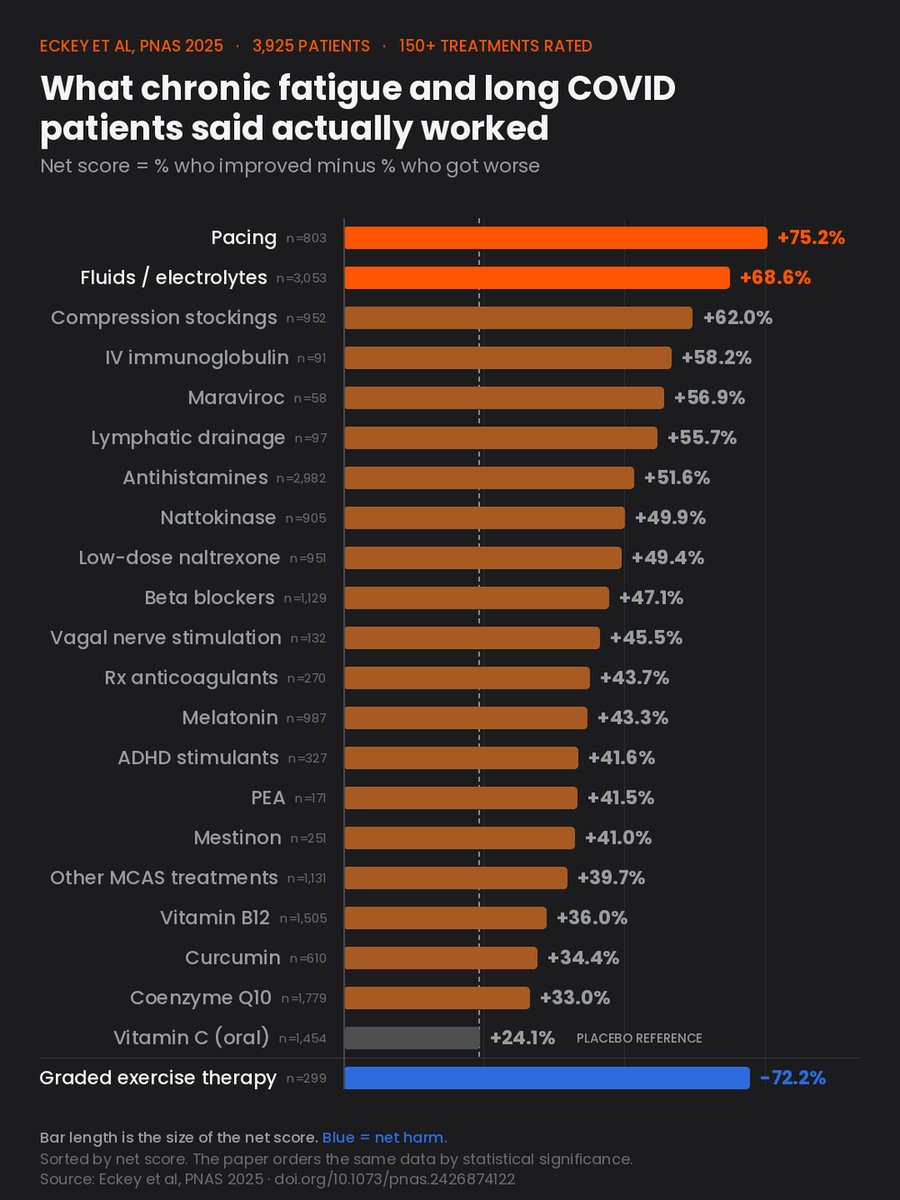
3,925 people with chronic fatigue and long COVID rated more than 150 treatments in a 2025 study.
-The 2 highest rated were pacing and fluids/electrolytes. Both free.
-They were the only 2 that worked across every patient subgroup.
-Dead last, by a wide margin, was graded exercise therapy.
Here's why salt and water outperformed the pharmacy.
I've made a genetics app, which is designed so that #MECFS & #LongCovid patients can upload a genetics file & it will scan for genetic variants related to my hypothesis which I've developed further over the last year
https://t.co/S0sGPuBlbM
@lifeanalytics@DanMissailidis
1/10
Ich möchte es mal so sagen. Eine nicht zu vernachlässigende Anzahl der Totenscheine, die ich ausgefüllt habe dürfte auch mit der Langzeittoxizität von Ibuprofen verknüpft sein.
A new Long COVID brain-imaging study found lower readings from a marker linked to dopamine-releasing nerve endings. This may point to reduced dopamine signalling. Lower readings tracked with apathy, slower movement and memory decline.
Let’s break it down 🧵
What if #LongCOVID brain fog doesn’t start in the brain—but in its protective coverings?
➡️ A new review proposes that the meninges, the membranes surrounding the brain, may serve as a reservoir for persistent SARS-CoV-2 Spike protein.
➡️ These membranes are not passive coverings—they are highly active immune organs packed with mast cells, blood vessels, and lymphatic channels. 1/
Die ganze Dekade ist ein Witz und stirbt an Bürokratie, wie zwischenzeitlich fast alles in DE. Ich bin pissed … um es mit den Worten einer Bundesministerin zu sagen.
Nationale Dekade gegen postinfektiöse Erkrankungen – hier werden Sie bestens informiert.
Zwar handelt es sich formal um unterschiedliche Förderinstrumente und nicht zwingend um denselben Haushaltstopf. Politisch und strukturell gehören beide Sachverhalte jedoch zusammen: Auf der einen Seite bleiben öffentlich angekündigte Forschungsmittel des Bundesministeriums für Forschung, Technologie und Raumfahrt (BMFTR) in erheblichem Umfang ungebunden:
➡️ https://t.co/crMraLkgiX
Auf der anderen Seite existieren konkrete Antragsteller und therapeutische Entwicklungsansätze, die an den institutionellen Zugangsschwellen scheitern:
➡️ https://t.co/HIEmj1aD1w
Das Problem ist damit offenbar nicht ein Mangel an Forschungsinitiativen, sondern eine Diskrepanz zwischen den vom BMFTR verkündeten Förderzielen und der tatsächlichen Förderpraxis des @bmftr_bund.
https://t.co/Trkhe0gaXM