🚨 repostando porque o link tinha dado problema
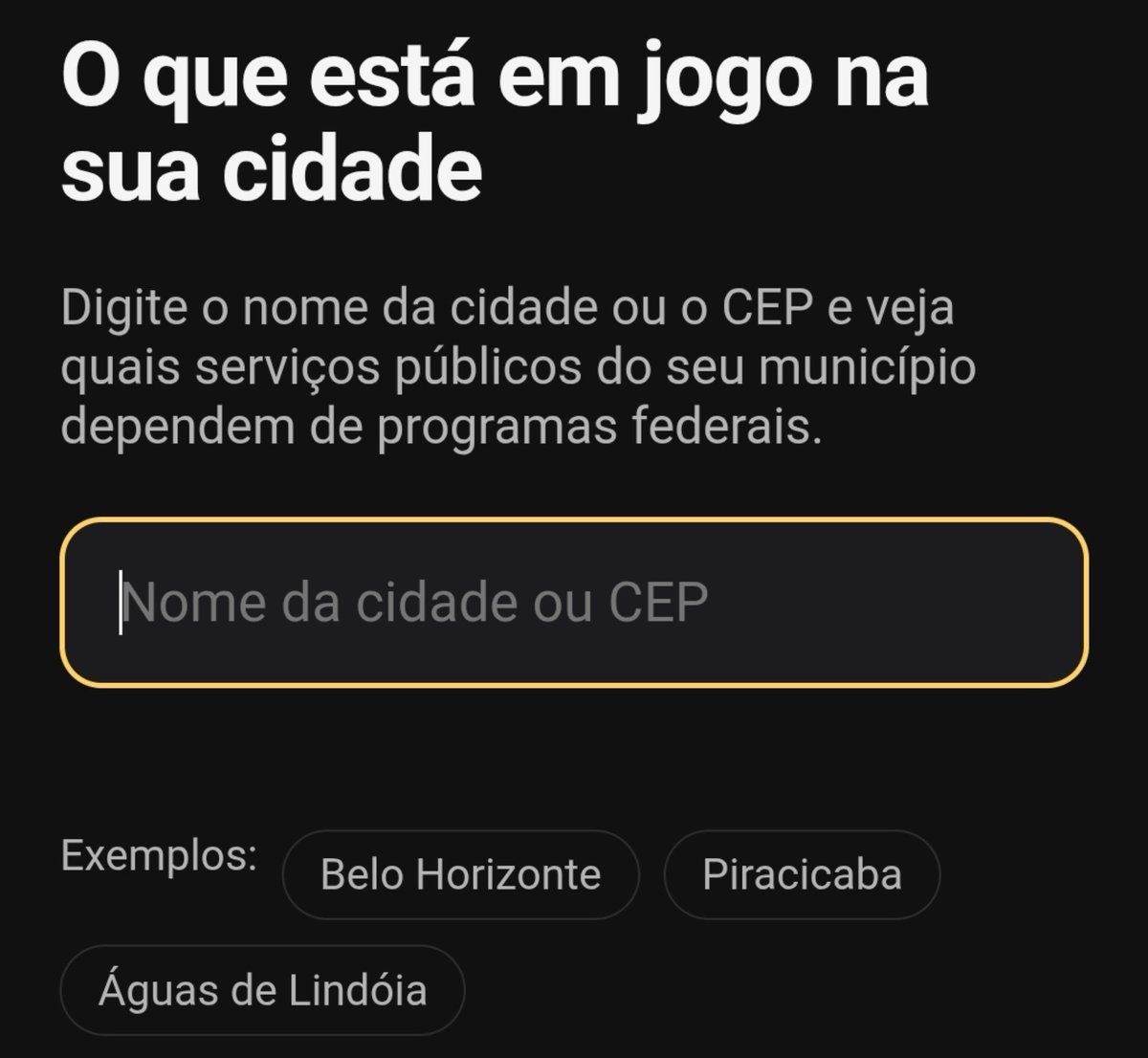
galera esse site aqui mostra o que pode acontecer na sua cidade caso o flavio seja eleito, baseado em todas as falas que ele deu durante a campanha
acessem, se informem e compartilhem
https://t.co/9pmgodzwAI
🚨 VOCÊ JÁ SE PERGUNTOU O QUE SUA CIDADE PERDE MESMO AO ELEGER FLÁVIO BOLSONARO?
Acesse o link, digite o nome da sua cidade e veja o que aparece. Espalhe o resultado! 👇
https://t.co/F6agwjEuft
#FandomsComLula
@cz_binance Ironic that CeFi is the last line of defense when DeFi bridges get drained. Harmony's Horizon bridge lost ~$100M because it only needed 2 of 4 multisig signers - basically a honeypot. Bridge security is still the weakest link in the stack.
Ethereum itself must pass the walkaway test.
Ethereum is meant to be a home for trustless and trust-minimized applications, whether in finance, governance or elsewhere. It must support applications that are more like tools - the hammer that once you buy it's yours - than like services that lose all functionality once the vendor loses interest in maintaining them (or worse, gets hacked or becomes value-extractive). Even when applications do have functionality that depends on a vendor, Ethereum can help reduce those dependencies as much as possible, and protect the user as much as possible in those cases where the dependencies fail.
But building such applications is not possible on a base layer which itself depends on ongoing updates from a vendor in order to continue being usable - even if that "vendor" is the all core devs process. Ethereum the blockchain must have the traits that we strive for in Ethereum's applications. Hence, Ethereum itself must pass the walkaway test.
This means that Ethereum must get to a place where we _can ossify if we want to_. We do not have to stop making changes to the protocol, but we must get to a place where Ethereum's value proposition does not strictly depend on any features that are not in the protocol already.
This includes the following:
* Full quantum-resistance. We should resist the trap of saying "let's delay quantum-resistance until the last possible moment in the name of ekeing out more efficiencies for a while longer". Individual users have that right, but the protocol should not. Being able to say "Ethereum's protocol, as it stands today, is cryptographically safe for a hundred years" is something we should strive to get to as soon as possible, and insist on as a point of pride.
* An architecture that can expand to sufficient scalability. The protocol needs to have the properties that allow it to expand to many thousands of TPS over time, most notably ZK-EVM validation and data sampling through PeerDAS. Ideally, we get to a point where further scaling is done through "parameter only" changes - and ideally _those_ changes are not BPO-style forks, but rather are made with the same validator voting mechanism we use for the gas limit.
* A state architecture that can last decades. This means deciding, and implementing, whatever form of partial statelessness and state expiry will let us feel comfortable letting Ethereum run with thousands of TPS for decades, without breaking sync or hard disk or I/O requirements. It also means future-proofing the tree and storage types to work well with this long-term environment.
* An account model that is general-purpose (this is "full account abstraction": move away from enshrined ECDSA for signature validation)
* A gas schedule that we are confident is free of DoS vulnerabilities, both for execution and for ZK-proving
* A PoS economic model that, with all we have learned over the past half decade of proof of stake in Ethereum and full decade beyond, we are confident can last and remain decentralized for decades, and supports the usefulness of ETH as trustless collateral (eg. in governance-minimized ETH-backed stablecoins)
* A block building model that we are confident will resist centralization pressure and guarantee censorship resistance even in unknown future environments
Ideally, we do the hard work over the next few years, to get to a point where in the future almost all future innovation can happen through client optimization, and get reflected in the protocol through parameter changes. Every year, we should tick off at least one of these boxes, and ideally multiple. Do the right thing once, based on knowledge of what is truly the right thing (and not compromise halfway fixes), and maximize Ethereum's technological and social robustness for the long term.
Ethereum goes hard.
This is the gwei.
The biggest crypto bull run is coming.
Countries will be buying Bitcoin.
Institutions will be going all in.
Bitcoin will capture the same attention AI stocks did.
Trillions will flow into crypto.
You’re not prepared for what happens when the CLARITY Act becomes law.
This is the new EF Mandate.
For many of you, the contents should be no surprise, and a clarification along the lines that we have been going and thinking for the past few months. But the clarification is nevertheless worth making.
Ethereum is a unique object and has a unique role in the world. Its role is to be a sanctuary technology, to preserve technological self-sovereignty, to enable cooperation without coercion, domination or rugpulling, and to provide an escape hatch, to ensure that no single person, organization or ideology's victory in cyberspace can be total.
The Ethereum Foundation is a steward of Ethereum - the original steward, and today, the steward specifically dedicated to preserving and expanding the above aspects of Ethereum. This means a heavy emphasis on CROPS (censorship and capture resistance, open source, privacy, security), both at the protocol layer, and at the access layer, user-facing applications and tools that we create or contribute to.
There are things that we do in Ethereum because we believe that they are valuable for the underlying goals that we have for Ethereum. There are things that we do not do because from the perspective of our values we find them uninteresting (or worse, harmful). But there are also things that we do not do because while they are useful, they are not our role.
At the Ethereum protocol layer, we focus on decentralization, verifiability, inclusion guarantees, protocol liveness, security and privacy first and foremost. We also value capabilities (eg. L1 scale, account abstraction, perhaps some forms of in-protocol aggregation), particularly because improvements in these capabilities better enable users to properly benefit from Ethereum's CROPS properties and displace the need for higher-layer intermediaries that might weaken the extent to which Ethereum's properties carry over into the full stack.
We also believe that the Ethereum protocol must strive to pass the walkaway test. "We do X to specialize to serve the use cases of today, if more use cases appear later, we will continue to keep adding more EIPs for them later" is logic fit for many other blockchains whose names you hear often on this forum, but we do not believe it is logic fit for a decentralization-first blockchain like Ethereum.
At the application layer, we focus on making "the zero option" - user experience that goes hard on ensuring security and privacy, avoiding dependence on intermediaries, and respecting the user's agency - as high quality as possible. We see this as complementary to work in the Ethereum ecosystem that "goes broad", starting from the world that it exists, and brings it onchain and improves its properties over time. Such work has its natural home outside the EF. We intend to be supportive of such efforts. We believe that the two are complementary: tools that are developed within the EF can be adopted by anyone, including partially, and even partial adoption that improves people's security, privacy and agency is a good thing.
But the form of user experience that is more heavily insistent on CROPS properties is where we want the EF to develop its center of expertise. This does not mean shrinking from the hard questions. We believe in a vision of self-sovereignty that protects users, and does not leave users in the cold to face environments where they lose their life savings if they make a mistake, and click "yes" on a confirmation screen by accident two seconds after. But such protection must be designed based on a philosophical baseline of empowering the user, not empowering centralized organizations that claim to act in the user's name. This quadrant of design space - caring about users' (including non-experts') well-being and safety, and yet insistent on doing this in a way compatible with their agency and freedom, is underserved (not just in crypto, but in the world). We wish to use Ethereum as a platform to build out and showcase this quadrant, and ideally work with others to expand its reach over time.
This is also a new chapter in how we see our position in the world. We must see ourselves not just as the Ethereum community, but also as maintainers of the Ethereum tool within what you might call the CROPS community or the sanctuary tech community, or a dozen of other words that have for a long time been used by people with similar values to us but far outside Ethereum. This means open-mindedness to new conceptions of what things in the world are our natural allies.
Ethereum is not the world. Ethereum is a specific object in the world that is here to have specific properties. The Ethereum Foundation is a specific organization within Ethereum - one steward, not the sole one.
I encourage all to read the mandate in detail; it includes concrete examples of how we intend to deal with the challenges and nuances of these ideas. We are doubling down on Ethereum and are excited about its next chapter.
I think Q4 - Q1 2027 are going to be an electric time to for crypto markets. It hasn't been easier to onboard new people into the markets.
Retail is coming & when they do it will happen quick. I think we are on the verge of the biggest onchain alt season we have seen in years
I resigned from the Ethereum Foundation today. I spent the last three years doing protocol research at both the Ethereum Foundation and Eth Labs. Neither organization is acting responsibly. They are racing straight to a fully decentralized world computer and gambling with the future of every institution on earth. More thoughts below.
One positive consequence of all the recent detailed thinking about transaction formats - not just 8141, also "future of state" discussions eg. UTXOs, PBT, keyed nonces, and also recursive STARK mempool - is that we have a much more explicit understanding of how transactions have "actions" and "dependencies", and we can engineer around optimizing the two separately.
An action is an effect that a transaction has.
A dependency is a fact about the transaction and/or the state that must be true for the transaction to be valid.
eg. a signature is a dependency, a Merkle proof of a UTXO is a dependency, a ZK-SNARK (or STARK) is a dependency, a call that sends ETH is an action
Dependencies can be processed in parallel. Dependencies that involve state can be reasoned about by a mempool, especially if the specific state accessed is statically declared. Dependencies that are pure (no state calling allowed) can be processed once at the mempool layer and never need to be processed again - and potentially even replaced with a STARK verifying them, allowing not just execution but also data to be elided.
In principle, dependencies and actions can all be expressed as calls (if needed, calls to precompiles). This would make the transaction format itself very bare-bones and minimalist (a list of calls, flags for the type of each call eg. dependencies would be static or pure calls, and origin, nonce, etc) and allows maximum cross-compatibility even if different EVM chains have different features.
In 2015-era Ethereum, thinking explicitly about these differences was not very important: execution was execution, there were few enough transactions that we could process them all serially, and single-key ECDSA accounts were good enough for everyone.
Ethereum's current scaling strategy, however, requires moving beyond that paradigm. Ethereum is beloved by many developers because the execution and state model is so dynamic and flexible. But dynamic and flexible is not friendly to scaling. Fortunately, >90% of Ethereum's activity by volume does not require anything dynamic and flexible. So, we require contracts, accounts and transactions to more explicitly specify what is dynamic and flexible and what is more statically-analyzable but more restrictive, and more statically-analyzable things get the lowest gas cost and thus scale the most. Effectively, learning from the best of both the 2015-era Ethereum model and a more Bitcoin-like model (reminder: Bitcoin has had what I call account abstraction since the beginning), and making a mixture of both (really, the full spectrum between both) available, with gas costs appropriate for the level of scale involved.
New state types, the recursive STARK mempool, keyed nonces, etc all go in this direction.
This all relates to transaction types, because a general-purpose transaction type is a very natural interface layer on top of which all of this can be implemented, and the current thinking around the EIP-8141 transaction type is going in this exact direction that is friendly to these kinds of future generalizations.
So in that sense, 8141 done well is not just a culmination of 10 years of account abstraction work, it's also preparation for the next few years of responsible decentralization-friendly hyper-scaling.
Regular reminder:
A key property of a blockchain is that even a 51% attack *cannot make an invalid block valid*. This means even 51% of validators colluding (or hit by a software bug) cannot steal your assets.
However, this property does not carry over if you start trusting your validator set to do other things, that the chain does not have control over - at that point, 51% of validators can collude and give a wrong answer, and you don't have any recourse.
The best way to build an L2 is to lean into the L1's offerings (security, censorship resistance, proofs, data avail...) more, and reduce your logic to just being a sequencer and a prover (if based, just a prover) over the core execution.
This is the combination of trust minimization and efficiency that the 2010s enterprise blockchain crew wanted, but was never able to achieve. Now, with Ethereum L2s, you can achieve it. And we've already seen successful examples of the L1's features protecting users' rights if something on the L2 goes wrong.