Why the government is unlikely to cut capital gains tax
My column @91basispoints (No Paywall. You just need to register).
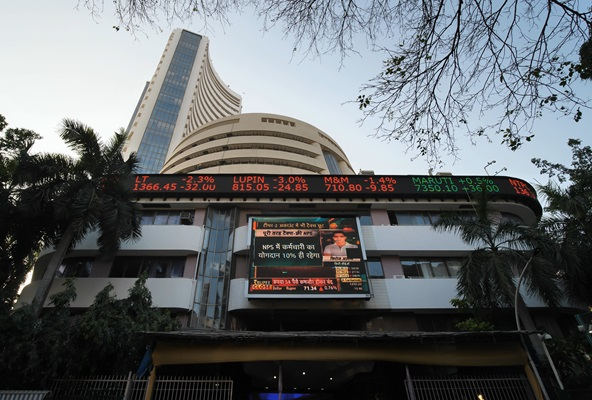
Fund managers, stock brokers, wealth managers, investment bankers, financial influencers, anchors on business news channels – and just about anyone in and around the business of managing other people’s money (OPM), are only saying one thing these days: Cut capital gains taxes and get foreign investors back.
But will the government bite the bullet. The OPM wallahs badly want it to.
The taxes collected by the central government will take a beating this year.
In late March, the government cut the excise duty on both petrol and diesel by ₹10 per litre. Depending on which economist you want to believe this is expected to cost the government anywhere from ₹1.3 lakh crore to ₹1.7 lakh crore in 2026-27, assuming that the cut stays.
Along with this, the corporate income tax collected is going to take a hit. The oil marketing companies are big corporate tax payers.
They are currently selling petrol and diesel at their pumps at a loss. The chances that they will make any profit this year are non-existent. This will hurt the government.
If the war in West Asia continues, the fertiliser subsidy bill of the government is likely to balloon. Again numbers vary from Rs 50,000 crore to Rs 1 lakh crore.
The government will have to take measures in order to support the economy. This money will have to come from somewhere.
in a scenario where the common man is suffering, the government can’t be seen to be cutting the capital gains tax – a cut which will benefit the rich and the foreigners. It is bad for the WhatsApp narrative, which has become a very important part of the political discourse these days.
https://t.co/04dj51vAZC
When I met a financial influencer
My weekly Paisanomics column in the Mumbai Mirror. Something I had great fun writing. Do read and share. The link is in the first comment.
Sometime back I sat across a finfluencer to record a podcast.
He was shocked I kept money in FDs.
Shocked that smaller stocks fell 80% between 2008-09.
He didn’t like it when I said that even the most famous investors – from Warren Buffett to Rakesh Jhunjhunwala – always spoke in broad generalities in public. They never gave away their formula. And why would they?
Or that most people working in the business of managing other people’s money (OPM) just had one KRA: to keep saying that the stock market will go up because it’s gone up in the past.
The podcast still hasn't dropped. Funny, that. Or as Upton Sinclair once said: "“It’s difficult to get a man to understand something when his salary depends on his not understanding it.”
Here's what I've figured: finfluencers don't sell investing.
They sell certainty. Being overconfident is the very nature finfluencing. It helps build a loyal following.
As Vivek Nityananda writes in Beyond Doubt: “Advice by confident people is more likely to be followed.”
Which is why there are barely any nuanced finfluencers. It’s all up, up and away for them.
Knowing history is bad for their business. Most finfluencers became popular only after the pandemic broke out, when stock prices went from strength to strength. And that’s the story they can most easily recall and want to sell.
And the best ones deceive themselves first – so they don't have to work as hard deceiving you.
Confidence is not the same thing as competence. Never has been. Indeed, as Paul Beatty writes in The Sellout: “Money talks, bullshit walks.”
https://t.co/3P1syXLKaR
Rupee@95: Why the RBI will keep defending the rupee
The Rupee’s Mauna Kea Problem: What We Don’t See Matters More
My column for @91basispoints.
First, as a retired RBI governor told this writer sometime in the late 2000s, doing nothing is not a strategy that the RBI can follow. In times of crises, it has to be seen to be doing something.
Second, the rupee is as much a political issue as it is an economic one. Hence, allowing it to keep depreciating without major intervention is not a strategy that the RBI can follow.
Third, the continued depreciation of the rupee will have an impact on the fiscal deficit of the government.
Indeed, decisions made by central banks are rarely purely strategic. By choosing the slightly messy tactical path, the RBI is acknowledging that while the costs of intervention are visible, the costs of doing nothing are hidden.
https://t.co/6TqAiH2t9V
The RBI’s Policy Has a Plot Beneath the Obvious Script
By Phynix
Do you ever fall into those YouTube rabbit holes where someone dissects a film frame by frame and suddenly what felt straightforward becomes impossibly intricate? You watch Inception again and realise Cobb’s wedding ring only appears in dream sequences, or that the first letters of the characters quietly spell out something you missed entirely. Or you revisit The Shining and notice Kubrick’s obsessive placement of objects, like that yellow Volkswagen Beetle which was less a prop and more a petty argument with Stephen King. Even television does this, with Breaking Bad planting details seasons before they matter, or Game of Thrones bleeding colour and motif into scenes long before the violence arrives.
The best stories do not hide things randomly. They layer them and reward a second look.
That is exactly what the RBI’s latest policy feels like.
On the surface, the April Monetary Policy Committee meeting looked like a simple hold. Rates unchanged at 5.25%, stance retained, projections nudged. It is the kind of policy you would file under “as expected” and move on. But slow the frame down and there’s a completely different film playing underneath.
Click to read the full newsletter on BasisPoint’s coverage of the policy.
https://t.co/lwEhZy1af9
@kkalyanram, @Dhananj89102936, @madhavankutty_g, @gaurasengupta, @ShubhadaRao, @VK_2021, @yuvika_singhal, @AbheekBarua
#RBI #RBIPolicy #MPC #Inflation #Rupee #OilShock #Macro #Markets
In diplomacy, duration often matters less than intent. Sheikh Mohammed bin Zayed’s two-hour dash to New Delhi was not ceremonial, it was a signal.
In a period of flux across West Asia and growing unpredictability among external powers, such leader-level engagement points to quiet calibration rather than crisis management.
Read @atahasnain53 's column for BasisPoint: Why MBZ’s Two-Hour Dash to New Delhi Matters
https://t.co/reYZakEf4q
#IndiaUAE #WestAsiaGeopolitics #StrategicAutonomy
#GeopoliticalSignals #EmergingWorldOrder
The 60:40 Reality
States today account for around 60% of total public expenditure in India, while the Centre accounts for the remaining 40%. On the revenue side, the picture is reversed: the Centre raises about 60% of combined revenue, while the states collectively raise around 40%. This asymmetry now sits at the heart of India’s fiscal and macroeconomic story, writes former RBI Governor Duvvuri Subbarao.
This 60:40 reality means India’s macroeconomic outcomes can no longer be read through the Union Budget alone. Growth, borrowing costs and stability will increasingly depend on how state finances are managed—how they spend, how transparently they borrow, and how closely fiscal choices are coordinated across levels of government.
Read Subbarao’s column for BasisPoint:
State Finances are India’s New Macroeconomic Frontier
https://t.co/xv864X2b0X
#Budget2026 #BPIBudget2026 #DrSubbarao #StateFinances #FiscalFederalism #PublicDebt #BondMarkets #IndiaEconomy #Macroeconomics
15 days ago, I spent 6 of the best hours I ever have, discussing the economy with two brilliant economic minds:
(@Dhananj89102936) & @kaul_vivek . No brain -killing sensex "5 lakh" target, " kya Lagta hai", etc .
Just core macro eco theory and practice. Decoding India's numbers is being Sherlock Holmes. A key clue is in the M3, broad money supply. That's anemic, and usually is 1.25-1.5 x of growth. It's just 9% growth, so impliedly, actual growth is more like 6%. Or if you normalise the deflator to a more realistic number, you will get 4-6% growth. That's the corroborated number across most data.
And that's why the markets are behaving as they are.
Baccha Party 🎉,
If there is only one analysis of the GDP data you should read, read this by Dhananjay Sinha.
https://t.co/s5zFCGO1HS
India’s latest debate on inflation targeting misses a crucial point: the framework has worked, but only when it stays flexible.
Yes, inflation is lower on average since adoption—but periods of unnecessarily high real interest rates have also hurt growth. In an economy driven by supply shocks, rigidity can turn monetary consensus into groupthink. India doesn’t need to abandon inflation targeting—just adapt it to its own realities so stability doesn’t come at the cost of momentum.
🔹Should India define flexibility more explicitly within inflation targeting rather than rely on unstated norms?
🔹If supply shocks dominate inflation, why does fiscal action still play a minor role in our price-stability strategy?
Read former MPC member Ashima Goyal’s column for BasisPoint:
Inflation Targeting Needs Flexibility, Not Unanimity
https://t.co/F3xERdkmhj
#InflationTargeting #RBI #MonetaryPolicy #IndiaEconomy #InterestRates #Growth #Policy #MPC
India’s terror threat is evolving in ways few have noticed. Doctors and urban professionals entering the matrix mark a new, more deceptive phase.
Lt Gen Syed @atahasnain53 (Retd) explains the stakes with clarity and authority. A must-read for anyone tracking national security👇
The Educated Radical: How India’s Urban Terror Ecosystem is Evolving https://t.co/xoAk7JhJXg
#Security #NationalSecurity #CounterTerrorism #UrbanSecurity #India #Policy #InternalSecurity
What if sustainability wasn’t about spending more—but circulating smarter?
India’s energy transition isn’t just about clean power. It’s about who benefits, who pays, and how long each rupee lasts. Circular finance flips the script: instead of locking capital in long-gestation projects, it regenerates it—through refinancing, reinvestment, and monetization. It’s not just a financial model; it’s a blueprint for equity, scale, and ecological discipline.
🔹Can every rupee finance more than one green project?
🔹Can clean energy also protect livelihoods and ecosystems?
🔹Can finance become circular—like nature itself?
Read @MayaramArvind's column for BasisPoint:
A Just Energy Transition Needs Circular Finance
https://t.co/X5Ne74vLit
#CircularFinance #EnergyTransition #GreenFinance #ClimateAction #RenewableEnergy #Sustainability #JustTransition #India
Mumbai’s Happy Paradox: Leaky Tunnels, Unbreakable Spirit
What if progress depends less on design and more on endurance?
This week on Basis Point Insight, we explored a single thread through very different subjects on how systems survive their own flaws.
Banks have grown too careful to compete. Regulations meant to protect end up excluding. Markets seek safety but lose vitality. Policies drift between intent and confusion. Even corporate success, without alignment, turns brittle. And yet, the economy moves forward. Institutions adapt, often not by choice but by necessity.
That, perhaps, is India’s quiet advantage: a capacity to move forward even when nothing feels fully ready.
Check out the full coverage here:
https://t.co/0hFbVzyx1t
@apirk16, @SanjayMansabdar, @SVenkat_Delhi, @MayaramArvind, @krishnadevanv, @csoyantar, @politicalbaaba, @tkarun
#Mumbai #Happiness #CityLife #Resilience #IndiaEconomy #UrbanIndia #SpiritOfMumbai #Infrastructure
I was truly moved by the tears of @JemiRodrigues recounting her story of self-doubt and redemption after steering the Indian Women's World Cup Team to victory and a place in the Finals. I was further moved by this article by @atahasnain53 combining the #WomenInBlue story with that of the Armed Forces. I hope it is widely read and sparks inspiration in many young Indians. Gen Hasnain teaches us that winning each time is unimportant; it is winning with character and converting failure to success that is even more precious. Shabash! 🫡
https://t.co/gYQ9LKD7xr
Can trade wars make India an FDI winner?
Will Trump’s tariffs divert capital from China to India’s reforming economy?
What is correct mood gauge for FDI, net or gross, and why?
Read former RBI Deputy Governor Michael Patra’s latest column for BasisPoint:
Riding Giants: How India May Catch the Next Big FDI Swell
https://t.co/4YbvXw6Gzi
#FDI #India #Economy #GlobalMarkets #startup
India adopted ECL to align with global norms — but without the data, governance, or institutional discipline that make it work.
NBFCs live in a dual-rule world, banks remain exempt, and auditors seldom challenge assumptions.
The result? Global standards on paper, domestic reality in practice.
Until governance, audit rigour, and supervisory trust catch up, India’s provisioning reform will remain more appearance than substance.
Read @apirk16's column for BasisPoint:
Provisioning for Appearances: RBI’s Half-Hearted Tryst with ECL
https://t.co/ygGr5BOIAS
#RBI #ECL #IFRS9 #NBFCs #Banking #FinancialStability #IndiaEconomy
The Stain Theory of #Investing
"Daag Acche Hain" ad campaign for a detergent brilliantly reframes childhood messes into adventures. Today's market mavens have hijacked this playbook with alarming audacity.
Indian #markets have entered their detergent era.
Tariffs get patriotic packaging, consumption slowdown becomes premiumisation proof, and #AI disruption morphs into productivity paradise. The game of #cricket, too, has not been spared.
When you see a glass as half-full, you are an optimist, but when a weakness is burnished as virtue, a spin doctor is at play.
In his 1983 letter to #BerkshireHathaway shareholders, Warren Buffett wrote, "...those who cannot fill your pocket will confidently fill your ear."
Read @krishnadevanv's column:
The Stain Theory of Investing
https://t.co/UGMGpL8C9E
#valuation #PR #mutualfunds #brokers #stockexchange #equities
PoJK is burning, not from secessionist zeal but from bread-and-butter grievances that Islamabad has ignored. Heavy-handed crackdowns and token concessions have deepened civic anger and risk long-term instability. India’s response must be strategic, not populist: resist triumphalism, internationalise governance failures thoughtfully, and support legitimate civic channels without incitement.
A steady, credible long game, rooted in legal, humanitarian and diplomatic outreach, will undercut Pakistan’s legitimacy and protect regional stability.
Read Lt Gen Syed @atahasnain53's (Retd) take on why the smart play is patience plus strategy, not chest-thumping:
PoJK On The Boil: Why India Must Replace Populism With Strategy
https://t.co/113ppX8mel
#PoJK #Geopolitics #IndiaStrategy #SouthAsia
Perhaps the first full analysis of what attacks on Hamas leadership in Qatar will result in. Rules of war changing with precision targeting and range of weapons.Wars well beyond the battlefield.
https://t.co/SRTkK0aEm7