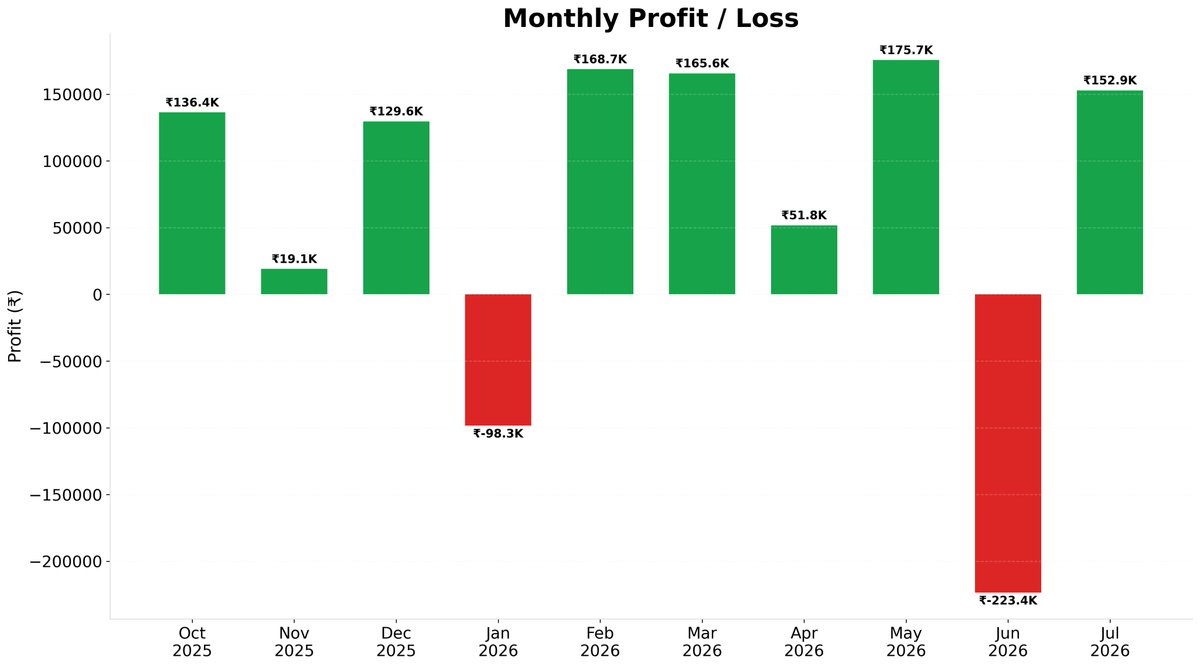
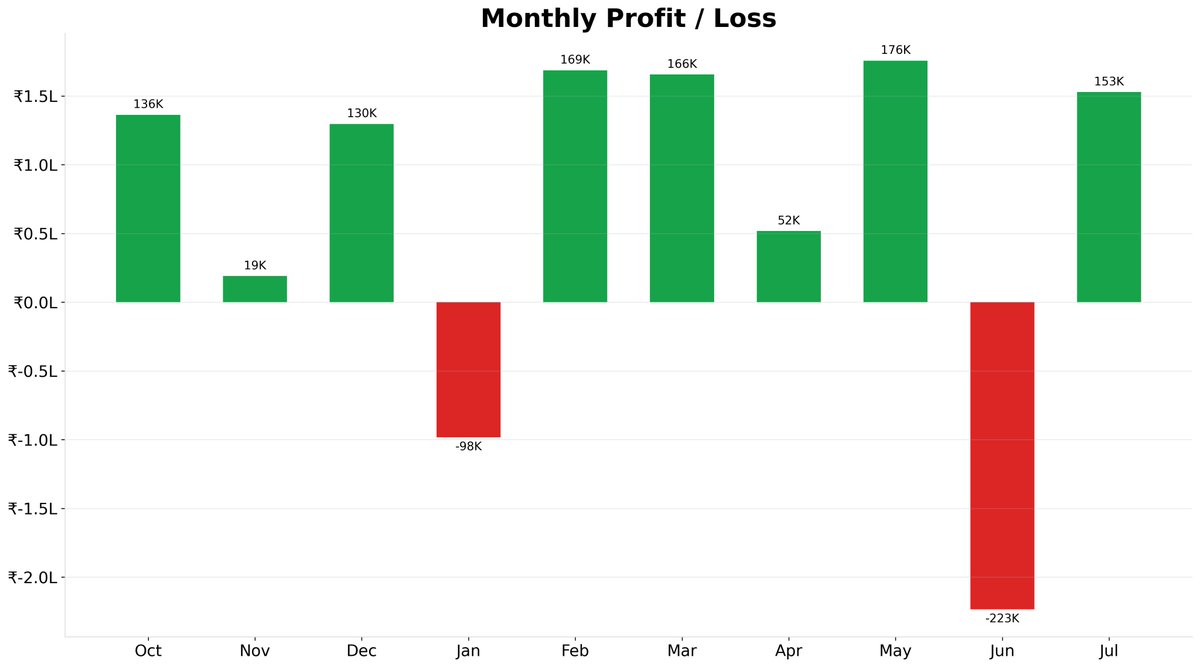
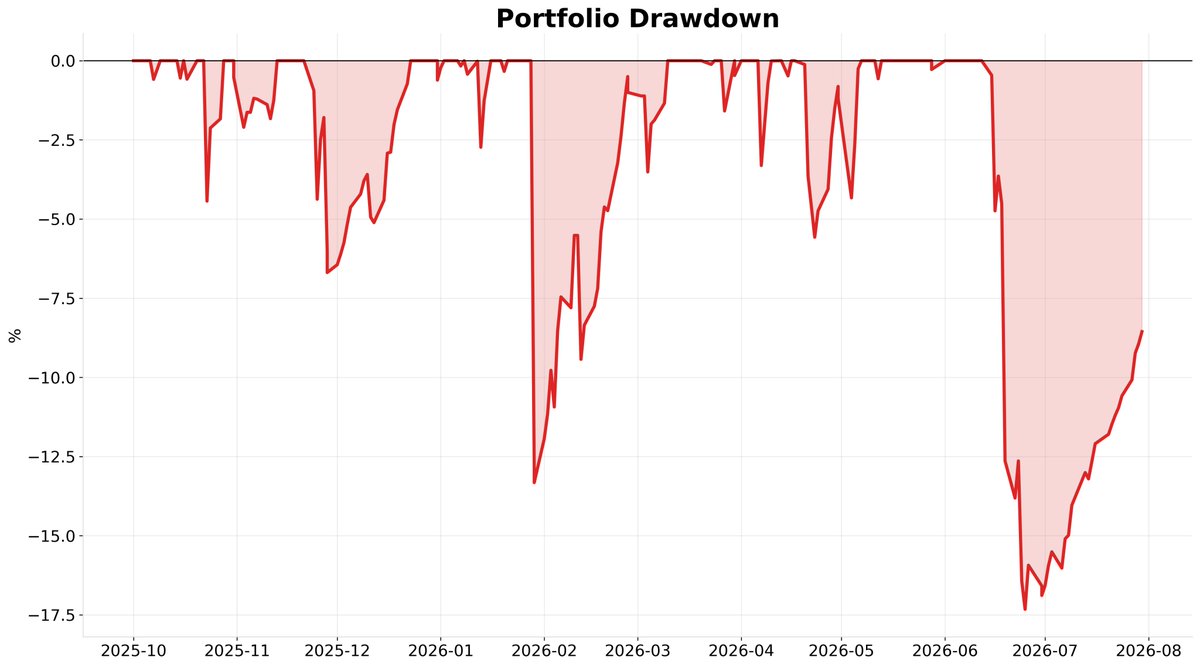
📊 Trading Update | Oct 2025 → Jul 2026
Started with ₹10,00,000 in October 2025.
Current portfolio:
• ₹16,78,119
• Net Profit: ₹6,78,119
• Overall Return: +67.8%
• July Return: +9.6%
No shortcuts. Just defined-risk options trading, backtesting, disciplined risk management, and continuous learning.
Sharing the charts for full context.
Still learning. 📈
I think the debate around CAS is heading in the wrong direction.
Too much of the discussion has become about the profitability or livelihood of straddle sellers.
That’s the wrong lens. 1/n 🧵 🪡
🫰Option Sellers diverting overall market infra change into a petty straddle/strangle selling issue
👍Good take by @kkunal_Tandon
Pricing will evolve
🆘The call for a ban will not work
Arguments seems weak, mostly fueled by platform they are promoting
#fintwit#India#nifty
@SarangSood Bhai etfs need a price where they close each day and rebalance. Vwap price is just a number not a tradable price and it leads to tracking errors.
So for etfs they need a closing auction to execute huge qty at a unique price ( 1 price)
That’s why this CAS .
Lower bands are possible, but the priority is ensuring price discovery and a successful settlement. You don’t want ETFs/MFs unable to rebalance because the auction failed. Order modifications before the freeze are also necessary; after the freeze, restrictions are already much tighter.
@SKantekar It’s still an option. The only difference is that expiry now includes a discrete CAS jump instead of continuous trading till the close.
The market will adapt by pricing that auction risk. If your model doesn’t, booking before 3:15 is probably the safer approach.
I think the debate around CAS is heading in the wrong direction.
Too much of the discussion has become about the profitability or livelihood of straddle sellers.
That’s the wrong lens. 1/n 🧵 🪡
Umm
1) if they don’t settle together then CAS spikes would be even more and it would become more illiquid. ( no incentive to capture spot to cas premium)
2) US has CAS as a parllel to regular market. Most other close with CAS or similar process.
3) Most markets have been doing this for long and we will also adapt to it here . Arb opportunities can’t stay forever.
@vtchakarova Yes I agree .
But i was told jig is up if it’s closed for 3 months .
Here we are almost 6 months from start of the war and it’s still to show up meaningfully.
I think the debate around CAS is heading in the wrong direction.
Too much of the discussion has become about the profitability or livelihood of straddle sellers.
That’s the wrong lens. 1/n 🧵 🪡
I think the debate around CAS is heading in the wrong direction.
Too much of the discussion has become about the profitability or livelihood of straddle sellers.
That’s the wrong lens. 1/n 🧵 🪡
Like i have been saying effected big straddle sellers can buy all 50 stocks or most heavyweights.
And provide exit liquidity in CAS to etf funds with those stocks and make a profit.
In process save their livelihood as well .
CAS was introduced to solve a pricing problem. It has revealed a participation problem.
Proprietary traders are ~40% of cash market turnover, and most of it is intraday, closed out before 3:15 PM.
Since selling into the auction largely requires already owning the stock, the day's largest source of liquidity has little or nothing to sell.
I think the debate around CAS is heading in the wrong direction.
Too much of the discussion has become about the profitability or livelihood of straddle sellers.
That’s the wrong lens. 1/n 🧵 🪡
I think the debate around CAS is heading in the wrong direction.
Too much of the discussion has become about the profitability or livelihood of straddle sellers.
That’s the wrong lens. 1/n 🧵 🪡
I think the debate around CAS is heading in the wrong direction.
Too much of the discussion has become about the profitability or livelihood of straddle sellers.
That’s the wrong lens. 1/n 🧵 🪡
I think the debate around CAS is heading in the wrong direction.
Too much of the discussion has become about the profitability or livelihood of straddle sellers.
That’s the wrong lens. 1/n 🧵 🪡
Markets always adapt. But adaptation isn’t free. The debate should be about whether the new equilibrium improves or worsens overall market efficiency. 9/n
Markets adapt. Liquidity providers will adapt too—whether through cash hedges, different execution strategies, or wider pricing.
The question isn’t whether adaptation is possible.
The question is what is the cost of that adaptation, and who ultimately bears it? 8/n