helping developers get more out of @sanity_io \n (he/him) \n ask me about real-time text-fields fields in front of delightful JSON \n advisor @heavybit
this is exactly how our new custom customer-facing agent works for @sanity_io: Jev answers 13 typed questions on every turn, and then we pass it to good code as old business logic decide what happens next.
it works incredibly well and we're already seeing great results over the vendor out-of-the-box chatbots we replaced
✍️ https://t.co/UkT65jH4cz
how to Jev
• you pay for the `state` part of your request once, no matter how many questions you ask about it
• so it's usually cheaper to ask every question you might want answered, even before you know if you need the answer
• then use code to sort it out
take in all the information you might need, and filter down to what's important! reliable automation means covering all your bases
@eve is great! It let us replace two vendor chatbots in just two weeks (and get way better UX and biz results for it) on @sanity_io.
pudding & proof: https://t.co/IwTFWPa4l7
eve is generally available with v1.0.
• Build agents on your own harness
• Ship multi-tenant, multiplayer agents
• Govern & trace sessions with Agent Runs
• Render agent UIs via Next.js, Nuxt & more
Read the blog → https://t.co/z9FFQrpN8H
Some of you have been asking very politely. Some of you have just been asking.
GPT-6.2 Astra and Sol are now available.
Super efficient and built to perform where it counts—the real world.
https://t.co/qr2iP0GpfX
@kevinmanase@sanity_io yes! turns out that improving the user experience close to where folks are already showing that intent works. who would've thought? 😆
We recently fire two just-add-water chatbots on @sanity_io, and replaced them with our own custom-built agent.
We're already seeing about 3x the first-stage sales opportunities and can offer our users an agent with up-to-date context and can know who they are (if they want it to).
Under the hood:
→ We're running @typesafeai's Jev on every turn to answer typed questions (intent, audience, rapport, did they just say "no thank u"). We added rules in code to decide what renders (more chat, booking form, etc). It's cheap and fast!
→ @eve made it really easy for us to plug all the pieces together and ship this fast. Like in production within two weeks fast (had to get it out before the old agent contract ran out). We can now run the same agent across the website, in the sales form, on Discord, and wherever else we need it to go.
→ Our recently GA'ed Sanity Context with Knowledge Bases powers the context layer, so now we're walking the talk by literally staking our business on this stuff working well.
And we're keeping the agent rules, prompt, guardrails as content in Sanity, not code, so we can very quickly improve agent behavior without deploying it again. And we used our App SDK to build a custom agent console to give us the observability, emulation, and other tools to keep this agent tight.
@even, @phofstee, @spaghetti_emoji, and I wrote down the lab notes and the hard-earned learnings. It's a good read if you want to do something similar!
https://t.co/UkT65jH4cz
@mstockton We’ve been running this in prod for a while at @sanity_io and can attest that it works really well. Especially when you have an agent on the other side triaging (and sometimes fixing things) on the other side.
https://t.co/g2T4DoYZrK
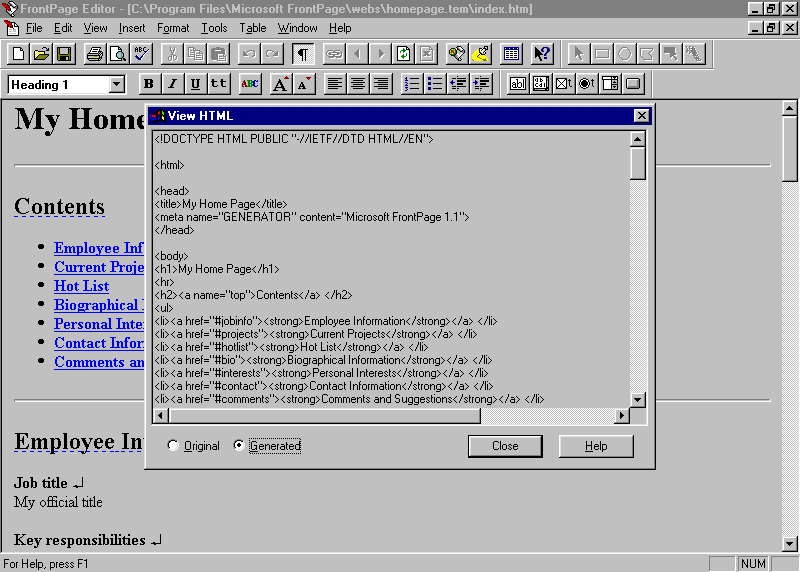
In November 1995, Vermeer Technologies developed the FrontPage 1.0 editor for WYSIWYG web development.
In January 1996, Microsoft bought Vermeer and, in June, released an editor called Microsoft FrontPage 1.1
Actually great advice for men is to maybe take less advice from other men on the Internet.
(Yes, I see the tautology)
(Yes, I mostly used const back when we typed out code, just for the thrill of spending some compute on the extra character)
(Yes, lived experience tells me that Ryan’s advice is perhaps not great advice)
(Yes, hopefully, his irony was lost on me)
My advice to men is to just bury your feelings.
Nobody cares. Nobody has or will ever care. It'll bother them that you do. Doesn't matter.
Lock in and just do the thing.
Somebody needs to do the thing. That's you.
masked decoding on gemma 3 12b to control text rivers
if a token isn't the length i want it to be, i mask it out
added a lora for width tags so the model is aware of text length + coherence RL afterwards
Deslopping AI-generated writing assumes that there’s no-slop to unveil.
Fine-tuning will only make the slop version of whatever you tuned for. Yes, it might take on your mannerisms, but also in places where you don’t want it etc.
It might kinda work for shorter texts (like emulating how you chat), but for longer text you’re just working against the statical nature of generative AI. You need to take style, structure, formatting, how you build arguments, how you cite, cultural references you are likely to employ into account. And it doesn’t factor in that you are also evolving as a writer.
I’m happy to be proven wrong on this, but I have yet to see anyone actually manage to pull this stuff off.
Set out building a "deslop writing" skill this afternoon.
Naively thought it'd be easy, especially given the amount of writing I do. Turns out it's near impossible! Experimented with a bunch of stuff:
- Explicitly instructing the model to edit common slop patterns
- Letting fable 5.2 hill-climb towards better results, using Opus as the writer and Pangram as the oracle
- Having fable build a voice profile based on my previous writing
- Testing existing skills that claim to do this
From my (fable's) brief research, seems like the only reliable way to do this without a human in the loop is via fine-tune a model with human(s) tone and work.
Maybe writing for a human audience to enjoy is the final-frontier job 😂 (good news for me)
*statistical
See. AI would probably not do 👆 or 👈🏻.
(I’m not necessarily against AI writing as such. I have just banged my head against this particular problem since GPT3.5)