Does exercise have a dose-dependent impact on cognition in PD?
Our work led by @seemillerJoe now online @ParkinsonismD
Physical activity levels associate with cognitive performance in OFF and ON-states. Even some physical activity can benefit cognition.
https://t.co/Xecf3Zj67r
@MichaelOkun This is a really great pearl and nice article. We also need to keep in mind that RFC1 can also present with a “partial” phenotype with only sensory neuropathy / neuronopathy. Many cases still have chronic cough https://t.co/NTWpoDdPTG
Does dopamine replacement affect cognitive (thinking) function in Parkinson's? Is it all about the motor? Guess what folks, Semiller, Pontone and Mills teach us about the aspects of cognition that 'change' on and off dopamine replacement therapy.
Key Points:
- The authors point out that there is 'striatal dopaminergic denervation in a posterior/dorsal to anterior/ventralgradient, leaving motor and associative cortico-striato-pallido-thalamic loops differentially susceptible to hyperdopaminergic effects with treatment.'
- The authors point out that we usually guide our dopamine replacement primarily by motor symptoms.
- They tested folks on and off dopamine replacement and guess what? 'Symptomatic medication differentially affected performance on two cognitive tests in Parkinson's.
- 'Core Stroop measures improved, Stroop interference was unchanged, and SDMT performance worsened, likely reflecting complex changes in processing speed and executive function related to acute treatment.'
My take: Dopamine replacement therapy can affect thinking and cognition. Thank you to these authors for reminding us to look more deeply and think beyond motor function.
https://t.co/BhXoegPOvn #Parkinsons
Can individual anatomic or network-based substrates of parkinsonian bradykinesia components (amplitude, frequency) be parsed based on their responses to DBS? @minjaekim716 led a study that suggests they can using infrared motion tracking https://t.co/ewR9NUSS6a
Kelly Mills @JohnsHopkins nice editorial MAP DBS '1st step' in gathering efficacy evidence use imaging-influenced DBS programming in a real-world scenario. Speed, access and challenges in under-served regions? @DBSThinkTank https://t.co/Czc60BmAbx
@MichaelOkun Surprised that visuospatial function is not queried given that it differs at early stages of dementia https://t.co/1lrHrUGMp2 and by brain path https://t.co/a7oTqyY253
@AlbertoEspay@AMahajanMD Theoretically, an small molecule aggregation inhibitor should increase monomeric synuclein, but I don’t know that there is data on UCB0599 or others that shows that. https://t.co/X0I8Tl909c
Thank you @DafsariHaidar for the excellent talk on DBS and mood outcomes in PD. It moved us up the “slope of enlightenment” on the hype cycle of adaptive DBS by asking whether it may have a different effect on non-motor fluctuations than continuous stim #MDSCongress
https://t.co/hnFuu3Ls3B COVID might be a “hit” in 2-hit hypothesis in murine model with human ACE2. @RSmeyne @pnschmidt how long does the post SARS-CoV-2 increased risk last? Does 2nd hit effect eventually decline?
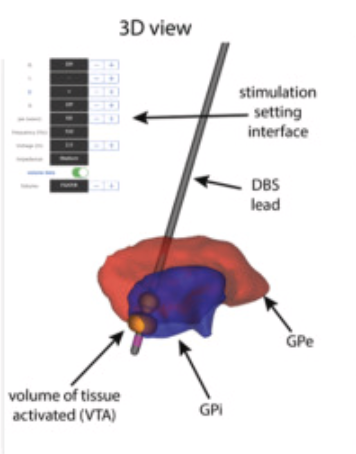
Congratulations to Nelson and Bender Lab (@NeuroBender) members, led by former graduate student Jon Schor on our manuscript on deep brain stimulation just published in eLife! https://t.co/QAnTespsos
@ChristosGanos We partnered with an art therapist with group therapy experience (Anna Mills, no relation). Bought supplies and mailed to participants. Sessions were on zoom. Learned a lot in this pilot; hoping to scale it up!
Hot off the press, and led by @jaredhinkle4 , this study explores how STING activation contributes to pathology in synucleinopathies..
https://t.co/PFSNeSqe2D
A lot has changed in the world of Parkinson’s disease since the 1960s, when levodopa and H&Y staging were introduced.
@LucaMarsili1 and I review disease milestones at a time when both “disease” and milestone are on the drawing board.
#neurology https://t.co/7pZ6oVp406