Official Statement of FFWPU North America and FFWPU Europe & the Middle East on the Case of Republic of Korea v. Dr. Hak Ja Han
July 8, 2026 (USA time)
On July 10, prosecutors in South Korea are expected to deliver the government’s final arguments against Dr. Hak Ja Han, the Mother of Peace. It seems inevitable that they will ask for a conviction and seek a lengthy prison sentence for an 83-year-old spiritual leader whose life has been defined by the pursuit of peace, unity, and reconciliation for all humankind.
After mobilizing hundreds of police and investigators, and spending millions of dollars, the prosecutors have failed to show that she ordered, directed, or intended any crime. After months of detention and interrogation, the government’s case rests on innuendo, association, and a maze of technical accusations that obscure more than they prove.
As her life story confirms beyond any legitimate challenge, Mother Han answers to a higher calling. She knows what is in her heart and what she pursues, and even now, she asks us to respond not with bitterness or fear, but with prayer.
This is not the first time our founders, Mother Han and her late husband, Rev. Sun Myung Moon have stood before the powers of this world. Like so many other religious leaders, they have been misunderstood, accused, and persecuted for their faith and commitment to peace.
This moment is larger than one trial. This represents a test of whether people of faith in South Korea can still speak truth to power.
We will keep praying and remain strong. We are confident that the truth will be revealed, and Mother Han's work for lasting peace will not stop. As Dr. Martin Luther King Jr. often said, "The arc of the moral universe is long, but it bends towards justice.”
What Could Happen to Dr. Hak Ja Han: A Realistic Look at June 12 and Beyond
Dr. Hak Ja Han's final hearing is set for June 12, 2026.
Here is what can realistically happen, and what South Korea's conviction numbers say about the odds.
When will the verdict happen?
June 12 is the closing hearing, not the verdict. Both sides give final arguments that day. The judge then takes about 2 to 4 weeks to decide. Expect the actual verdict between late June and mid-July 2026.
Where does she stay while waiting?
She is already detained, so she stays in the detention center during those 2 to 4 weeks.
What happens on verdict day?
Her status changes immediately, on one of two paths.
Path A — She goes home that day. A Not Guilty verdict, a suspended sentence, or a fine voids the detention. She is released the same day. This is what happened to Rev. Son Hyun-bo in February 2026: suspended sentence, released that day.
Path B — She stays in custody. If the judge orders actual prison time, she remains confined to serve it, usually at the detention center if there is an appeal.
How do appeals work?
Not on verdict day. After the verdict, both sides have a strict 7-day window to file for appeal. The appeals trial starts months later.
Can prosecutors lock her back up if they appeal?
No. If she is released on verdict day (Path A), filing an appeal does not put her back in jail. She stays free at home during the appeals process. She would only be re-arrested if she loses the appeal and the higher court orders prison.
What are the realistic odds?
South Korea has one of the highest conviction rates in the developed world. Per the Supreme Prosecutors' Office, the full-acquittal rate in first-instance courts hit 1.06% recently, a decade high. For years it sat below 1%. Ministry of Justice data for 2007 to 2015 showed the not-guilty rate never rose above 0.7%, and fell under 0.5% in four of those years.
In plain terms: more than 98 of every 100 defendants who reach a verdict are convicted of something. A full acquittal is rare.
Two things to keep in mind.
These are averages across all cases, not a prediction for one trial. And a conviction is not the same as prison.
The acquittal numbers only count people cleared of every charge. Many who are convicted still receive suspended sentences or fines, which under Path A means release on verdict day.
The dates that matter: June 12 for closing arguments, late June to mid-July for the verdict, and the 7 days after for appeals.
Sources:
The Korean Criminal Procedure Act (형사소송법, Act No. 341 of 1954, as amended) — official English translation, hosted by WIPO Lex (World Intellectual Property Organization, a UN agency): https://t.co/PgU98rWMJn
Supreme Prosecutors' Office statistics, reported via Seoul Economic Daily (the 1.06% decade-high acquittal rate, 6,415 acquittals, 0.59% in 2016): https://t.co/q64moGOlNc
Everyone knows how to love… until it becomes difficult.
What do we do when love doesn’t land, when trust is blocked, or when our heart gets tired?
This message is about learning to love with God, not alone.
You Were Born to Love
https://t.co/5psxSyKtTV
#HigherGroundTour2026 #FaithFreedomPeace #GodsDreamOneFamily
Dr. Hak Ja Han fell multiple times in her 70-square-foot cell at Seoul Detention Center in January. She never complained.
According to her lawyers, she does not express pain unless it is severe. She tried to maintain a composed appearance. She asked only for painkillers.
No one at the facility diagnosed the shoulder injury.
It was only discovered after a court granted her third medical suspension from detention and she was transferred to a hospital. Doctors found the left shoulder damage that had gone untreated for months.
The question that should keep someone in Seoul awake tonight: how does a post-cardiac-surgery 83-year-old fall repeatedly in your custody, ask for painkillers for months, and no one orders imaging on her shoulder?
The answer is in the pattern.
November 2025: three-day release for emergency eye surgery. Returned to custody.
February 2026: ten-day release for fall injuries. Extension denied. Returned.
March 2026: third suspension granted. Confined to hospital.
April 14, 2026: shoulder surgery. For an injury sustained in January.
204 days since her arrest on September 23, 2025. No conviction. No verdict.
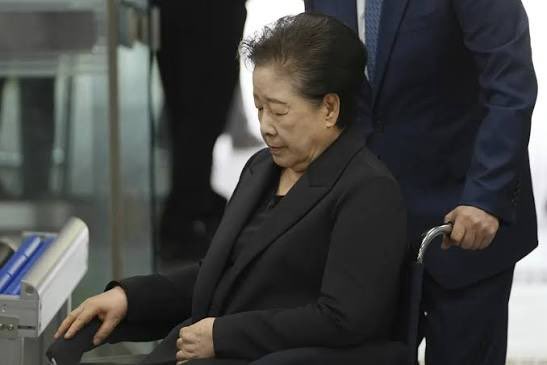
She arrived for questioning in a wheelchair, still recovering from heart surgery. The court detained her anyway.
A former political prisoner from communist Czechoslovakia wrote publicly that her conditions are worse than what he endured in 1974.
Former U.S. Secretary of State Mike Pompeo @mikepompeo called it lawfare.
On April 3, she was nominated for the 2026 Nobel Peace Prize.
She received that nomination recovering from a surgery that should never have been necessary. Because the injury should have been caught in January. Because she should not have been falling in the first place.
When a detention facility cannot keep a patient from falling, cannot diagnose what those falls break, and the patient is too dignified to scream, the system is not failing.
It is choosing not to look.
Source: Internal Message from FFWPU
BREAKING: Korea’s Special Commission DECLINED TO INDICT Dr. Han and others in the “religion–politics collusion” case.
This is not an acquittal from the current trial. It simply means there is no further indictment at this point. Either the evidence wasn’t sufficient, or the statute of limitations had passed. But the investigation is not closed.
What stands out is the timing. One of the central figures, Jeon Jae-soo, is now running for mayor under the Democratic Party. This clearly benefits him ahead of the June elections.
More importantly, it at least appears to show that the narrative around this case has always been stronger than the evidence IMO. But... more inquiry is needed.
#ReleaseTheMotherOfPeace #GodsDreamOneFamily
https://t.co/NRA3CknncZ
When you really know the many fruits of her work you can only wonder why she is nominated for Peace Nobel price only now. When you realise that a women of goodness is in detention center you wounder why South Korea is getting crazy. Moreover, you wounder who is behind that evil.
#religiousfreedom
The international press isn't covering this.
Dr. Jan Figel, the European Union's former Special Envoy for Religious Freedom, has formally nominated Dr. Hak Ja Han of the Family Federation for the 2026 Nobel Peace Prize — while she sits in a South Korean detention cell.
His nomination cites six grounds: thousands of interfaith peace ambassadors deployed globally, Korean reunification summits, the Sunhak Peace Prize, UN ECOSOC consultative status, a proposed DMZ International Peace Park, and cultural diplomacy through the Little Angels Troop.
Figel wrote that many international observers regard her detention as politically motivated, aimed at silencing her global peace work.
US Vice President JD Vance also raised her case directly with South Korea's Prime Minister in official bilateral talks.
When an EU diplomat files a Nobel nomination and a sitting US Vice President flags a detention in official talks, the story is bigger than one courtroom.
What does it take for a story this significant to reach the headlines?
Most people assume anyone can nominate someone for the Nobel Peace Prize.
Here is the truth. They can't.
The Norwegian Nobel Committee only accepts nominations from a narrow list of qualified individuals:
• Members of national assemblies and governments of sovereign states
• Members of the International Court of Justice
• University professors in history, law, philosophy, theology, and social sciences
• Directors of peace research and foreign policy institutes
• Past Nobel Peace Prize laureates
• Former members of the Norwegian Nobel Committee
Tens of thousands of people worldwide qualify. Most of the world's population does not.
The person who nominated Dr. Hak Ja Han for the 2026 Nobel Peace Prize is Dr. Jan Figel.
He is not a random political figure.
Dr. Figel served as the European Union's first-ever Special Envoy for the Promotion of Freedom of Religion or Belief outside the EU, a position created in 2016 at the request of the European Parliament.
He is also a former European Commissioner for Education, Training, Culture and Youth, and former Deputy Prime Minister of Slovakia.
As EU Special Envoy, Figel helped secure the freedom of 25 individuals persecuted for their religion across Pakistan, Sudan, Iran, and Cuba, including a central role in the Asia Bibi case, a Catholic woman facing execution in Pakistan for blasphemy.
He is currently the interim president of FOREF Europe, the Forum for Religious Freedom Europe, and a co-chair of the IRF Roundtable in Washington, D.C.
Figel cited Dr. Han's decades of interfaith dialogue, humanitarian cooperation, Korean Peninsula peacebuilding, and family values advocacy as the basis for his nomination.
This is what a credentialed, independent religious freedom nomination looks like. The nominator has spent his career freeing people from death rows and confronting authoritarian regimes in defense of conscience.
When someone with that record submits your name, it is not a publicity move. It is a professional judgment.
https://t.co/1ksRRVE6kb Bitter Winter starts today publishing an in-depth analysis of the Tokyo High Court decision dissolving the Unification Church, in six parts.
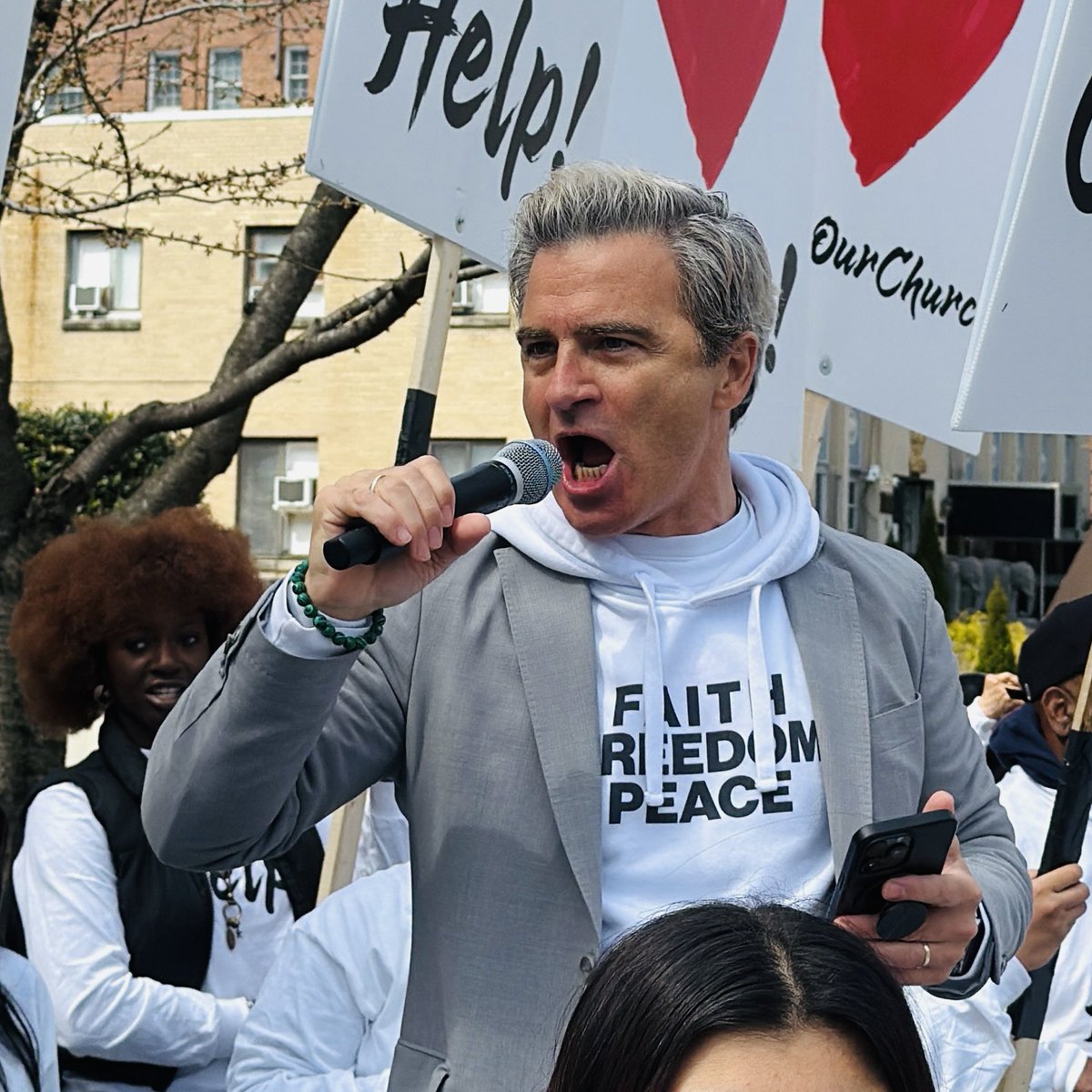
Help! Appeal (Washington, DC) 3/19/26
“All right. Are you ready?
First, I’d like to thank the United States of America—a nation where we have true freedom. I also want to give a heartfelt round of applause and deep gratitude to the police and the Secret Service for keeping us safe. Let’s show them some love.
Family, we’re not here because we have nowhere else to be. We’re not here asking for help for ourselves. We are here because we believe in raising our voices together—not just for our church, but for people of faith around the world who may feel afraid, unsure of their value, and who need to be reminded that God is with them.
Isn’t that right?
We could say this on any street in America, but we chose to stand here outside the embassy of Japan. Today, the Prime Minister of Japan is visiting our country. So let’s give her a warm welcome.
Today, I want to share the heart of an open letter sent to Prime Minister Sanae Takaichi.
I write to you as a faith leader deeply connected to Japan. The decision to uphold the dissolution order of the Family Federation has been deeply painful for our global faith family. For many, this may seem like a policy matter—but for us, it is personal.
It affects real families, real communities—people who have spent their lives living for the sake of others.
For decades, Japanese members of our movement have quietly served around the world—with humility, discipline, and deep love. They are among the most trusted and devoted people in every country they serve.
They have committed themselves to peacebuilding, humanitarian work, and strengthening families across cultures.
Dear Prime Minister, these men and women have helped Japan shine across the world.
I have worked alongside them. I have seen their sincerity. These are not people who weaken society—they uplift it.
They do not harm people—they serve them, love them, and bring hope. And in doing so, they bring honor to Japan.
Today, we are asking for help—not for privilege, but for fairness. Not for exemption, but for understanding.
What is at stake is something fundamental: the freedom to believe, to gather, to pray and sing together without fear of being dismantled.
Religious freedom is not just for believers. It is at the core of all freedom—the freedom to know that your rights come from your Creator, not from government.
In recent years, religious organizations around the world have faced increasing pressure. This moment goes beyond our community. It raises a larger question: how will religious freedom be protected in the future?
For many of our members, the impact has already been devastating. Decades of sacrifice were swept away in a single day. Hundreds of churches and offices were closed. Families were displaced. Even personal belongings—even food—were left behind.
This is happening now.
And we are here to say: there must be a misunderstanding.
We love Japan.
We love Japan.
We love Japan—and we love the Japanese people.
Japan has long been respected as a nation of dignity, stability, and human rights. But today, the world is watching. The decisions made now will shape not only Japan’s future, but its moral leadership on the global stage.
So I ask you, Prime Minister: please consider the human side of this decision—the parents, the children, the grandparents. Families like mine.
My wife is Japanese. My children are half Japanese. I love Japan deeply. It is a beautiful country with sincere and incredible people.
And we look forward to returning—to sing, worship, and stand together with our family of faith.
We will come to Japan. We will gather. We will pray. And we will remind one another of this truth:
Faith cannot be jailed.
Faith cannot be dissolved.
Faith cannot be taken away.
Remember who you are—you are God’s children.
And thank you, America, for allowing us to say that loudly and freely.
We love Japan. Thank you.
When I say “God’s dream,” you say “One family.”
#GodsDreamOneFamily Thank you!”
OPEN LETTER TO JAPAN:
A Personal Plea to Japan’s Prime Minister
By Demian Dunkley
President, Family Federation for World Peace and Unification USA
Prime Minister Sanae Takaichi,
I write to you as a faith leader who is deeply connected to Japan. The recent decision to uphold the dissolution order of the Family Federation has been so painful to our global faith family.
For many, this may appear to be a policy matter. For us, it is deeply personal. It affects real families, real communities, and people who have spent their lives trying to live for the sake of others.
For decades, Japanese members of our movement have quietly served around the world—with humility, discipline, and deep love. They have contributed to peacebuilding, humanitarian work, and the strengthening of families across cultures.
Prime Minister, these Japanese men and women have helped Japan shine globally.
I have worked alongside them. I have seen their sincerity. These are not people who weaken society—they are people who strive to uplift it.
Today, our church is asking for help.
Not for privilege, but for fairness. Not for exemption, but for understanding.
At stake is something fundamental: the freedom to believe and to practice one’s faith without fear of being dismantled.
In recent years, religious organizations around the world have increasingly faced dissolution. This moment extends beyond our own community and raises broader questions about how religious freedom is protected.
For many of our members, the impact has already been deeply felt. Decades of personal sacrifice and care were suddenly swept away when hundreds of churches and offices were closed in a single day.
Japan has long been respected as a nation that upholds dignity, stability, and human rights. The world is watching.
The decisions made now will shape not only Japan’s future, but its moral leadership on the global stage.
I ask you to consider the human side of this decision—the parents, the children, the grandparents.
Families like mine.
Families like those across Japan.
Respectfully,
Rev. Demian Dunkley
https://t.co/JID4nN40Xs
#helpourchurch #faithfreedompeace