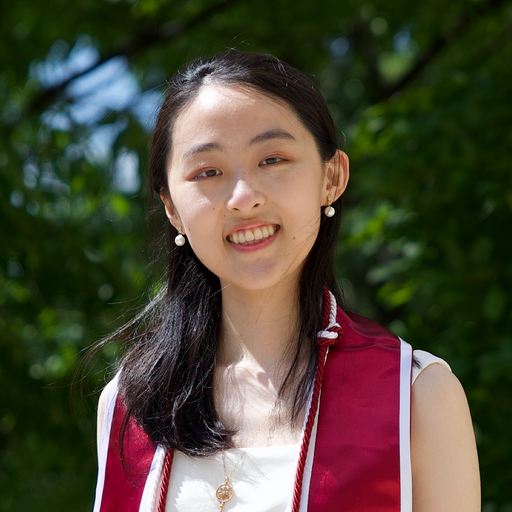
Our colleague Eva Yi Xie, a Princeton neuroscience PhD student, was detained by ICE at Reagan National Airport on her way home from SfN, where she’d just presented her poster. She’s being held in Chantilly, VA. Please help us bring her home. 📷
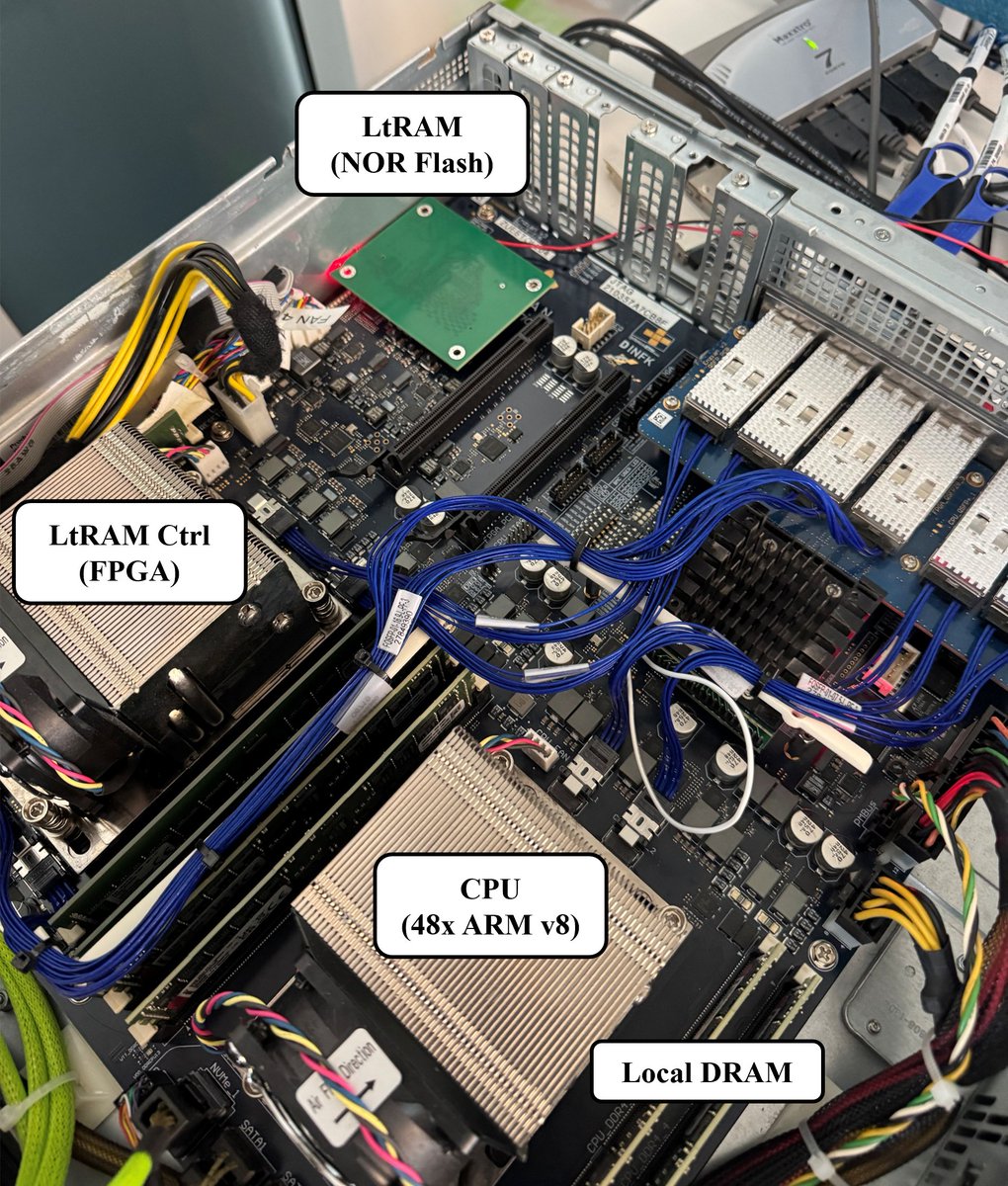
By giving the OS knowledge of LtRAM constraints instead of treating these memory technologies like slower DRAM, we aim to match the performance of pure DRAM on read-mostly workloads while delivering LtRAM's density and cost advantages.
That's a wrap on SOSP!
Shout out to my collaborator David for giving a talk on our latest work "The Kernel's Write: Application Read-Only Memory" at the DIMES workshop.
https://t.co/VSSLnJ9Skn
We argue that LtRAM can be integrated as another memory category alongside DRAM, but to do so, we need to shift more responsibility to the OS.
The OS handles wear and migration, and crucially, LtRAM pages are read-only to applications and only written during page migrations.
If you're at OSDI this week, come by on Wednesday to hear Akshay talk about our work on "Continuation-Centric Computing with Arca"!
https://t.co/ZmhvEQIZCl
Arca is an operating system with continuation-capture as a core primitive. By focusing on continuations in Arca's design, it is able to
1. Capture and resume serverless functions in lightweight, isolated "funclets" in as little as 2.55 µs, and
As part of my goal to feed and learn from visiting PhD students, I brought @kmohr_ out for Banh Mi. Katherine's doing her PhD at Stanford and she taught me about new types of memory that might replace L1-L3 caches, serverless systems that track all I/O and move compute to data, and DSLs (like Halide and Exo) with support for passing scheduling and implementation hints to the compiler so programmers get more control over optimizations.
Thanks for all the pointers, Katherine! Good luck with paper submissions!
@MarkRober Our caps don't fly away but they do have a message for you! (Still a bit of a WIP but they'll be done by commencement tomorrow... hopefully)