Remember...
Your operations deserve better than the systems you’ve been tolerating.
If any of this resonated — even one post — it’s worth a quick conversation.
No pressure. No hard pitch. Just an honest chat about what’s possible for your business.
@kenyanpundit@MwangoCapital Its likely that our Kenya project costs are likely higher than Ethiopia's then add the Roads Authorities and it gets very sad, how will we ever sort this sorry state of affairs??
Key questions to ask yourself before signing any ERP contract:
1. Who on my team owns this project full-time?
2. Do I have a clear go-live date in the contract?
3. What happens if the project goes over time or budget?
4. What does ongoing support look like after year one?
The best ERP is not the most expensive one.
It is the one your team actually uses.
A KES 5M system with 20% adoption will always underperform a KES 1.5M system with 95% adoption.
Invest in change management as seriously as you invest in the software.
As we come to the end of Q1, Here is a question worth reflecting on..
If your operations suddenly ran 30% more efficiently next quarter, what would you actually do with that extra time, money, and energy?
Write it down. Make it concrete.
That’s your real “why”.
A bank approves your loan faster when your financials are clean and up-to-date.
ERP does that.
More businesses are discovering that their system upgrade also doubled as a credibility upgrade — with lenders, investors, and partners.
Your financials are your reputation.
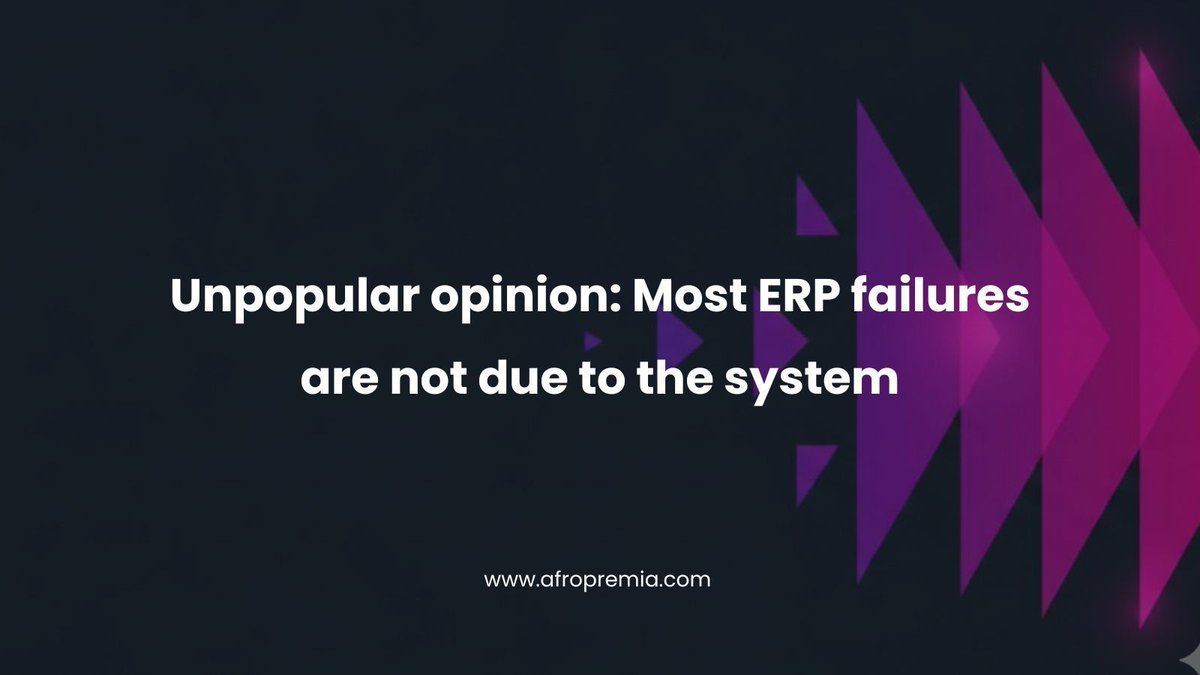
Unpopular opinion: Most ERP failures are not due to the system
They are a change management failure.
The software works. But no one trained the team properly. OR owned the process. OR measured adoption.
Technology is only 30% of the implementation. People are the other 70%.
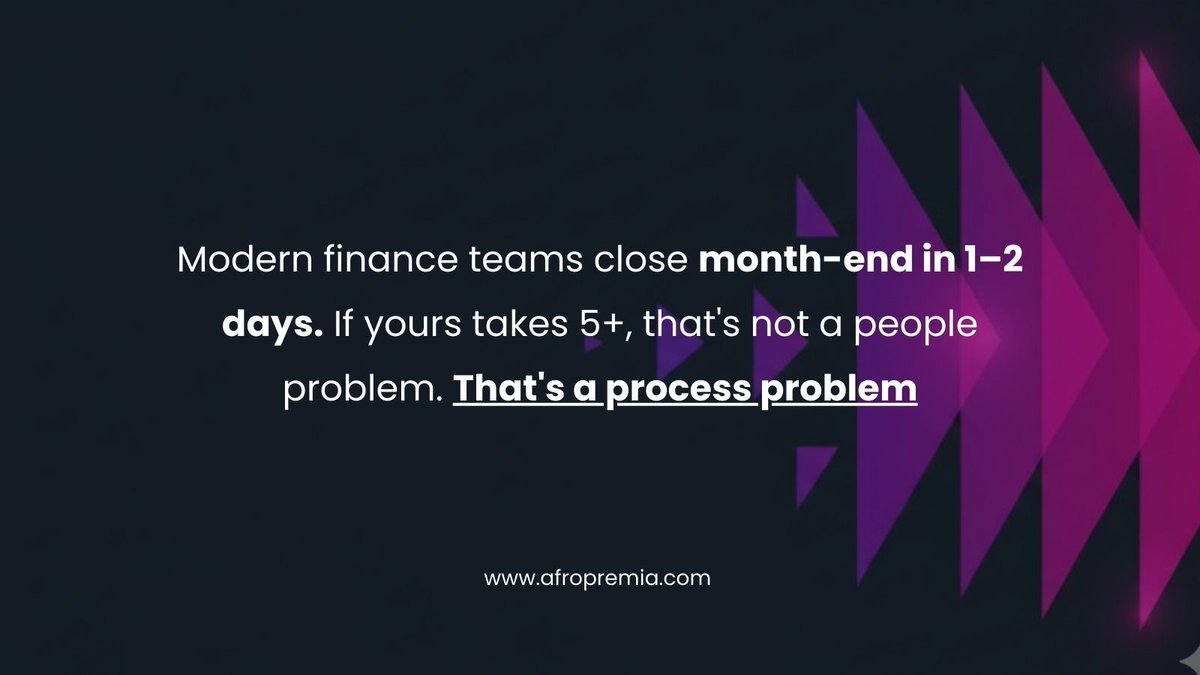
'We used to spend 4 days on the month-end.
Now it's done in one morning.'
— Finance Manager, logistics company, Nairobi
This is not a magic trick. It is what happens when your data lives in 1 connected system instead of 12 spreadsheets.
Quick tip: Before your ERP demo, prepare specific scenarios from your business.
Example:
- 'Show me how a purchase order flows from approval to payment.'
- 'How does the system handle multi-branch inventory transfers?'
Generic demos hide gaps. Specific scenarios expose them.
eTIMS is not optional. So what?
From KRA: all VAT-registered businesses must use eTIMS-compliant invoicing.
If your accounting system cannot generate and transmit eTIMS invoices in real time, you are exposed to penalties, and manual workarounds are not a long-term fix.
The difference between ERP and accounting software in one sentence (almost)...
Accounting software records what happened.
ERP helps you manage what is happening — and plan for what comes next.
One is a ledger. The other is a nervous system for your entire business.
Weekend reminder:
Your operations should work for you, not the other way around.
If your business cannot function normally without you personally involved in every decision, that is a systems problem.
- QuickBooks.
- Excel.
- WhatsApp.
- Google Sheets.
- A separate HR system.
- A standalone POS.
Every gap between those tools is a gap in your data.
And a gap in your data is a risk to your decisions.
How many tools does your team currently use?
Every extra day of delayed close is a decision your business couldn't make.
Pricing. Hiring. Inventory.
All waiting on numbers that should already exist.