European businesses are rapidly expanding their use of AI agents. More than half of the AI use among our EU enterprise and business customers now involves these tools, and the number of small business users has grown 8x across the region.
Our latest Economic Research report explores Europe’s shift toward agentic AI—and the opportunity to turn broader adoption into deeper use.
https://t.co/jUjCF5sW0B
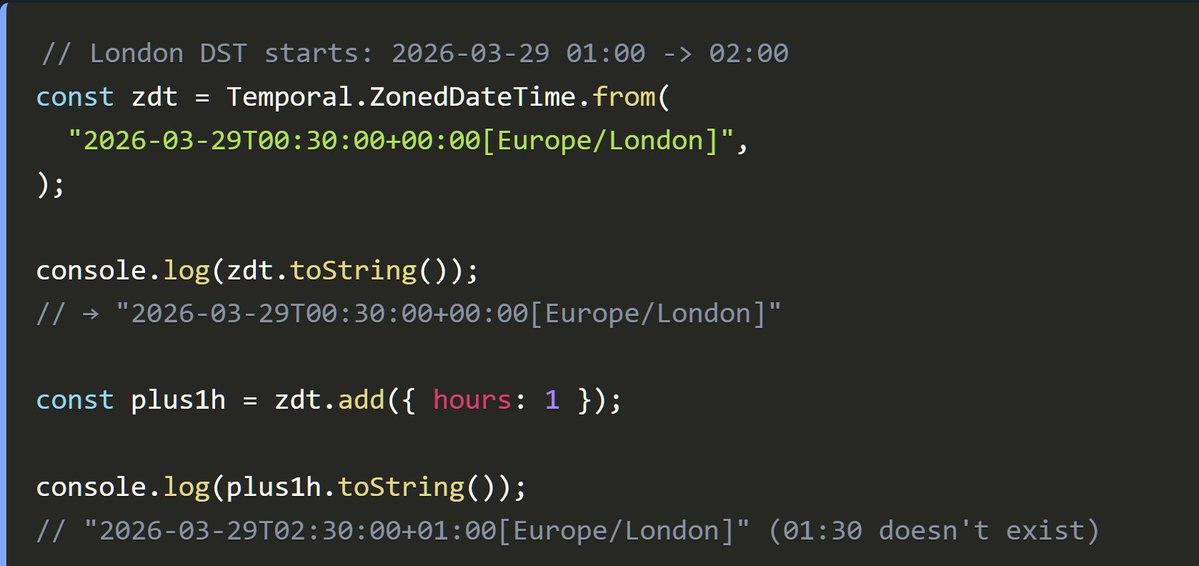
Temporal is now Stage 4 at TC39 🎂🎂🎂
Thanks to all the other champions of JavaScript's new date-time API. It has been a wild ride over many years!
I wrote a blog post explaining how we got here 📜
🧵
MF Shared Tree Shaking is coming soon 🚀
This article walks through the high-level workflow and core ideas.
I’ll dive deeper into implementation details if there’s interest :D.
https://t.co/ms8cBpYJM6
I really appreciate all these pointers. This will help a lot.
From what I recall, my biggest issue with copying everything to the latest folder was the inability to remove old assets. Right now I keep the last 10 versions—or more if younger than x days—of a specific client because I’m afraid of one downside with stable URLs: if a user tries to access an older version, it might not be available anymore, resulting in basically mixing two versions.
I was thinking maybe I could use headers or tags somehow. Once a client is on a sticky version, it gets added to a header, and then your router/service could potentially handle serving the rest. Other reasons are rollbacks and the ability to pause deployments.
What is the best way to get stable asset URLs for microfrontend deployments? @lucamezzalira@ScriptedAlchemy
I currently deploy to Azure Blob storage with version folders but this results in our users having to re-download assets that haven't changed.
Yeah, almost. Right now, I have it set up so that on each deploy, a new version folder gets created with the static assets. I then move the mf-manifest.json into the latest folder that's served to the client, which links to the remoteEntry.js in the version folder.
This works, but it has one big drawback: on every deploy, users have to re-download all assets that might not have changed — despite using content hashes.
Apple: "“After careful evaluation, we determined that Google’s technology provides the most capable foundation for Apple Foundation Models"
https://t.co/zS3NMuhgK6
Rspack 1.7 is out 🎉
The final minor release of the 1.x series, focused on stability and polish.
Next stop. Rspack 2.0 in 2026 🦀
https://t.co/QvjFv75WL5
Spent some time with Rsdoctor today and honestly: 🔥
It gave me exactly the insights I needed to cut bundle size by double-digit percentages.
Huge shout-out to @rspack_dev incredibly useful tooling.
1.0 - make it work
2.0 - make it fast & modern
Porting webpack was about reducing enterprise risk, getting 40,000 unit tests for free, knowing we could pump a few $100 billion in revenue through it without worrying.