The Great Awakening begins.
A new universe where icons come alive.
Join over 2M people already on the waitlist:
👉🏼 https://t.co/cHUJfvzaP6
Learn more👇🏼
First IP presale done.
Less than a week.
𝗨𝗦$𝟭.𝟴𝟱𝗠 in revenue.
𝟮𝟲𝟴𝗞 SATO companions sold.
This was Chapter 1.
𝟮𝟱+ 𝗶𝗰𝗼𝗻𝗶𝗰 𝗜𝗣𝘀 drop in 2026.
Next stop: TGE 🔥
This is a “Reindeer Cyclone”.
A swirling mass of threatened reindeer stampeding in a circle making it impossible to target an individual. The weakest and fawns are in the middle..
Today we're releasing new features and updates to provide more control, greater fidelity and even more expressiveness when using Runway.
We are excited to introduce Motion Brush, Gen-2 Style Presets, updated Camera Controls and more.
Thread below
Anti-distraction helmet, 1925. "The Isolator" was worn by its inventor, science fiction writer Hugo Gernsback. The helmet was made out of wood and apparently blocked out 95 percent of ambient noise. The wearer looked through tiny glass holes, ensuring that no nearby movement could be visible. Oxygen was supplied via the tube.
The evolution of the English language over a 1,000-year time span traces back to the 5th century when England was invaded by different tribes, including the Angles, Jutes, Saxons, and Frisians. Their languages produced what we know today as Anglo-Saxon or Old English, which sounded similar to German. In the 8th, 9th, and 10th centuries, invasions by the Vikings of Denmark, Norway, and Sweden brought another form of the same Germanic language, Old Norse, which mixed with Old English.
In the year 1066, French forces led by William the Conqueror conquered England. Over the next 300 years, thousands of French words entered the English language, especially those related to governance and food. During the English Renaissance, many Latin-based words also entered the language, partly due to English poets, writers, and playwrights. Shakespeare, for instance, wrote plays set in Italy, such as "Romeo and Juliet," "The Merchant of Venice," and "Julius Caesar."
By the mid-1500s, a modern-day English speaker would be able to communicate with some patience and concentration. While there would be some archaic pronunciations, shifting meanings, and evolving figures of speech, the language overall would be recognizable.
Hot take:
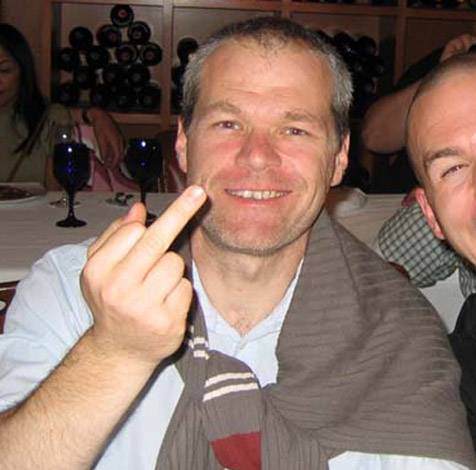
Uwe Boll was right.
Internet critics are pretentious pseudointellectuals who sniff their own farts, and the only way to interact with them is by beating them in boxing.
I think artists should clap back at critics. They can't create that's why they bring people down.
Here's my conversation with Mark Zuckerberg, his 3rd time on the podcast, but this time we talked in the Metaverse as photorealistic avatars. This was one of the most incredible experiences of my life. It really felt like we were talking in-person, but we were miles apart 🤯 It's hard to put into words how awesome this was for someone like me who values the intimacy of in-person conversation. It gave me a glimpse of an exciting future with many new possibilities and fascinating questions about the nature of reality and human connection ❤
Timestamps:
0:00 - Introduction
0:52 - Metaverse
15:27 - Quest 3
30:16 - Nature of reality
34:54 - AI in the Metaverse
51:51 - Large language models
57:49 - Future of humanity
@lexfridman This is purely mind-blowing
I can't stop myself from pausing every 15 seconds to process what I'm watching, and I'm at the 6 minutes mark
Science-fiction predicted this
The future is now
Congratulations Lex for this historical interview