A technique I enjoy to bring less glamorous meditation practices like breath / concentration meditation alive, is to bring a devotional energy to them.
When concentrating on my breath, I relate to the breath for the duration of that session almost like a god.
I experience myself offering every stray thought, every emotion, every sensation to the breath as a sacred offering.
Almost like the breath is a sacrificial fire that I am inviting all else to be consumed in.
I try to develop a worshipful attitude to the breath, looking to it not as just air passing through but as a revered living intelligence.
When distractions come up, instead of experiencing myself as fighting them, I experience myself as inviting their energy into the sacred energy of the breath.
Unification by magnetism rather than by exclusion.
I think the reason that so many religions draw on devotional energy is that devotion is kind of a preset capacity that is coded into human beings that automatically unlocks particularly strong flavours of love, concentration, energy and commitment.
A capacity that can be recruited into almost any practice.
Obviously once one is in sustained concentration, all these frames can be dropped - actually to me deep states of concentration naturally sustain a kind of devotional energy in their own right.
But it can be a super powered way to get deeply absorbed in the first place.
In general, I think our natural capacity for devotion - and all the powerful qualities it gives us access to - is much underused in ostensibly more mundane practices.
In medieval times, within the arms race of ever more demonic torture devices, some sadistic genius came up with the idea of the Little Ease.
This was a prison cell built so small in every dimension that a grown man could not stand upright in it nor lie down at full length nor properly sit.
The pain is relentless and without relief and inflicted by one's own body. Prisoners were known to go insane within a few days. A stay at the Little Ease was considered even more cruel than the rack, the thumbscrew, and the other ghoulish machinery of the Tower of London.
A breeding pig will spend her whole life in a version of that box.
These are social, roaming creatures (more intelligent than dogs) who will never leave this corset of steel.
They have been selectively bred to be bigger than their frames can support. Yet we put them in cells so confined that they cannot comfortably sit, and their attempts to do so (for example, by sneaking their limbs into adjacent stalls) reliably lead to fractures and sprains.
They cannot sweat, yet have nothing to roll around in to cool themselves off. Except their own manure, which (contrary to the common misconception) they are so averse to (thanks to their strong sense of smell) that new sows will often suffer from constipation to avoid soiling the space from which they eat and sleep.
Here is how the writer Matthew Scully described what saw at one of Smithfield’s “gestation barn”:
> “Sores, tumors, ulcers, pus pockets, lesions, cysts, bruises, torn ears, swollen legs everywhere. Roaring, groaning, tail biting, fighting, and other “Vices,” as they’re called in the industry. Frenzied chewing on bars and chains, stereotypical “vacuum” chewing on nothing at all, stereotypical rooting and nest building with imaginary straw. And “social defeat,” lots of it, in every third or fourth stall some completely broken being you know is alive only because she blinks and stares up at you … creatures beyond the power of pity to help or indifference to make more miserable, dead to the world except as heaps of flesh into which the [insemination] rod may be stuck once more and more flesh reproduced.”
—
The Save Our Bacon Act is trying to unroll the few state protections we have against this barbaric cruelty - for example California’s Prop 12 - which banned the sale of pork from pigs kept in gestation crates.
It’s incredibly important we don’t end up with this sort of federal preemption.
SOB will not only kill the most important animal welfare related laws in the US of the past decade, but more importantly, it will also restrict ALL future legislative progress (aka how the animal welfare movement has gotten its biggest wins).
The Senate is currently deciding whether to add the SOB Act to the Farm Bill.
With relatively little money now, we can discourage the most pivotal senators in the Ag committee from backing this amendment.
Defeating this bill is even more important given the amount of philanthropic funding I expect to come online in the next year or two.
It will plausibly be over 10x more expensive to repeal SOB than to prevent it from passing in the first place.
All that money that could be spent transforming our society's relationship to mass animal suffering will instead have to be spent just getting us back to where we are right now.
That's why money spent now fighting this bill (and I mean right NOW) is so effective.
If you’re in a position to donate six figures, please DM me.
My babies are getting so smart, it's freaking me out.
I was looking forward to using GA or bayesian optimisation to find a sweet set of parameters, but hand-tuning is giving scarily good results. I cant stop watching!
(No global coordinator, all acting entirely on local cues)
for anyone else who is still stuck on "the body is just a very complex machine", I recommend this essay by philip ball
people who continue to say this either don't know what they're talking about, or they use the word "machine" in such a broad sense that it's vacuous
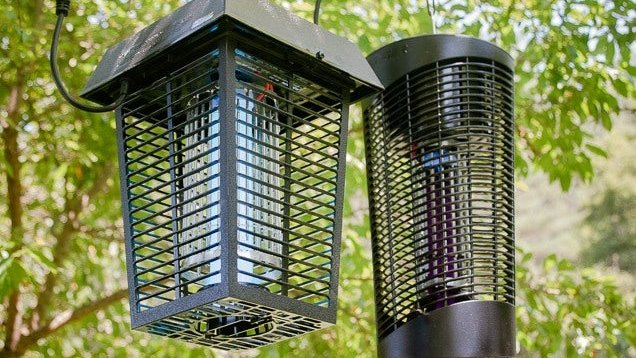
If you have a bug zapper up, it's time to take that shit down.
A landmark University of Delaware study (Frick and Tallamy, 1996) counted nearly 14,000 insects killed by residential bug zappers over a single summer.
Mosquitoes were 31 of them. A mere 0.22%.
The other 99.78% were moths, beetles, midges, fireflies, and the night-shift pollinators your yard depends on.
Mosquitoes don't navigate by light. They find you by your carbon dioxide, body heat, and skin chemistry. Your bug zapper is invisible to them and lethal to almost everything else.
Harvard Medical School's Zika page specifically warns against bug zappers because they may increase mosquito populations by killing the predators that eat them.
What actually works: eliminate standing water within 100 feet of where you spend time outside.
Bug zappers are 1970s technology built on a 1970s misunderstanding of mosquitoes. It's time to take it down.
Farmers have figured out that the cheapest pesticide is a strip of flowers.
When you plant wildflowers through a crop field, not just around the edge but in strips running through the middle, you get ladybugs, lacewings, hoverflies, and parasitic wasps living in the field instead of visiting it.
They eat the aphids, the caterpillars, and the mites for free, all summer long.
In controlled trials, fields with tailored flower strips had leaf-beetle numbers 40 to 50% lower and crop damage cut by around 60%, enough to drop below the threshold where spraying was even considered worth it.
The flowers attract a standing army to our fields.
We spent decades engineering chemicals to kill the insects eating the crop, when the insects that eat those insects would have worked for the price of seed.
A grumpy man can control a family without ever raising his voice. He just has to make his displeasure expensive enough. A long silence at dinner. A ruined car ride. Soon, everyone starts pre-adjusting. The kids are told “not now” before they can ask. She chooses the restaurant he likes, the movie he won’t complain through, the route that avoids traffic because traffic makes him unbearable. This is how a household becomes organized around one person’s refusal to regulate themselves.
Jam devs: stop wasting day 1 rebuilding movement, physics, vehicles, and UI.
I open-sourced Kinema:
a playable 3D browser game starter built with TypeScript + Three.js/WebGPU + Rapier.
Built with AI help.
https://t.co/ROQZ1xguNn
#gamedevjs#threejs#webgamedev
The best conversations feel like jazz. Someone plays a note, you extend it, they take it somewhere unexpected, you follow, and suddenly you're somewhere neither of you could have reached alone. No one is keeping score. No one is waiting for the other person to be wrong. The whole thing is generative each move makes the next move possible.
Sing in a way that is easeful, joyful, that associates singing with the liberation of your heart and muscles. Enjoy making sound! Enjoy the feeling of resonance coursing through the odd chamber of you! Let your singing ancestors remember singing through you!
There's a fairly common assumption that to know yourself better, you should attend to yourself more—journal, introspect, meditate on your patterns. And there's something to this.
But also. The more you make yourself an object of attention, the more you reinforce the narrating self—the self that has problems, the self that needs fixing, the self with its story of development.
I notice that when I, instead, sort of forget about myself and attend deeply to the outer world (when I unself as Murdoch would say) I actually see myself more clearly in a paradoxical way.
If I engage fully with something other than myself—another person, a challenging task, nature, a genuine question—I notice that another self reveals itself. The self as subject rather then the self as object. The self-knowledge I gain by losing myself in attention of the Other is a knowledge that is less like a fact about me and more like a taste.
I think both kinds of self-awareness are useful. But … why am I saying this? Yeah: I sometimes have the mistaken feeling that if I suppress myself and give my attention to others, that will somehow take away from me, but when I do it, genuinely; when I really attune to someone else, I attune to myself, and it becomes a source of deepened connection to myself, even though I at the same time forget myself.
Maybe it all went wrong when we killed the whales. Maybe their songs kept the great dream together. Vast brains slowly, carefully ordering the world with actions subtler than the apes could ever see. God is dead. His blubber lit a lamp in London