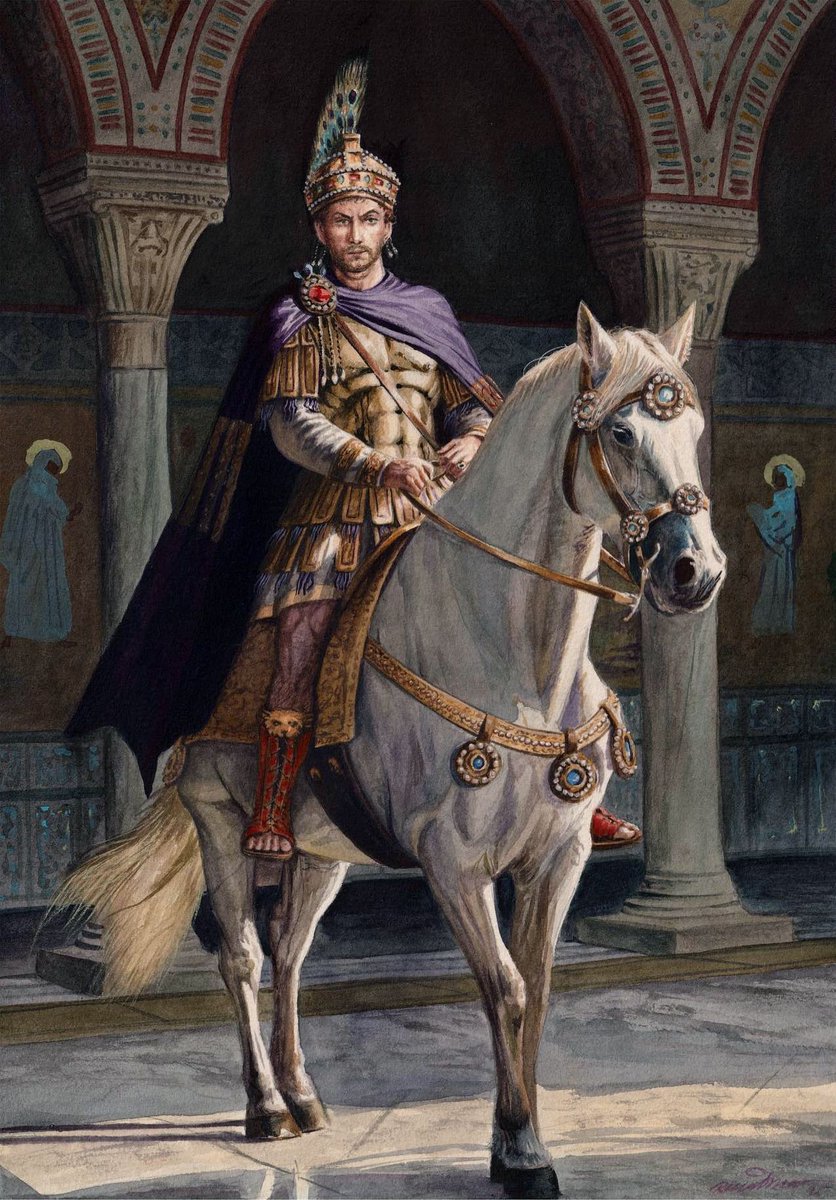
Μυστράς.
Στο Παλάτι των Παλαιολόγων
Η καθηλωτική Αίθουσα του Θρόνου μας μεταφέρει στην καρδιά της Βυζαντινής Αυτοκρατορίας.
Τα πιστά αντίγραφα των ενδυμασιών των Αυτοκρατόρων, των Δουκών & των Αρχόντων ζωντανεύουν τον μύθο της καστροπολιτείας.
Δέος που δεν περιγράφεται με λόγια.
Ok, this came out of nowhere.
In a rare move, the Greek government renovated the Palace of the Despots at the fortress city of Mystras.
The place where Constantine XI Dragas Palaiologos ruled before becoming the last Roman emperor.
While there are undoubtedly issues with the reconstruction (especially as we don't have original plans), this is a step in a right way in promoting Byzantine heritage.
Από τα ερείπια στην απόλυτη λάμψη!
Χρειάστηκαν 42 χρόνια για να ολοκληρωθεί η κορυφαία αναστήλωση στο Παλάτι των Δεσποτών στον Μυστρά. Η ιστορική έδρα των Παλαιολόγων στέκει ξανά επιβλητική, έτοιμη να μας ξεναγήσει στο ένδοξο βυζαντινό παρελθόν. Ένα ταξίδι στον χρόνο😍...🙏🌿🌻
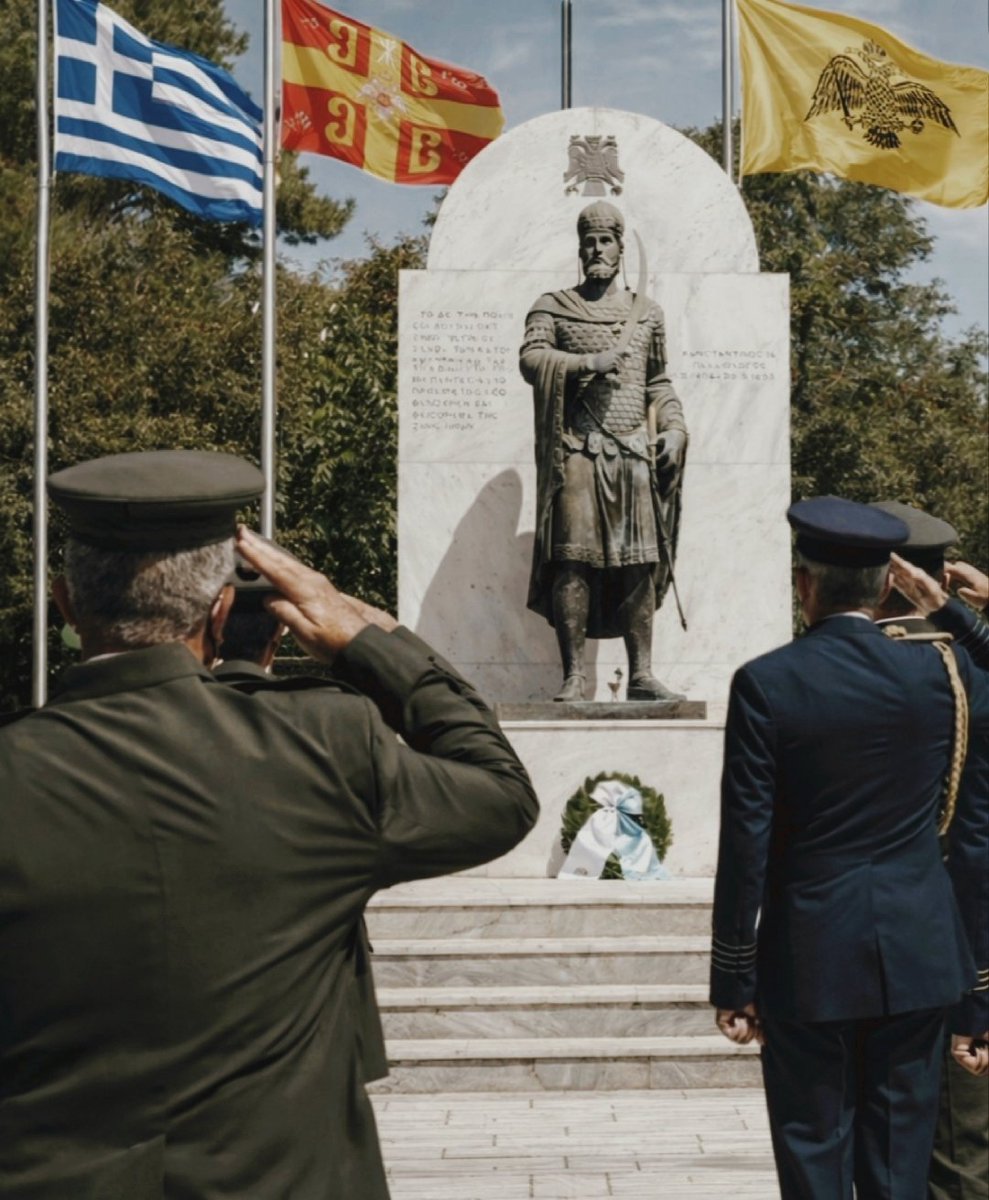
@RomeInTheEast Actually was at Mystras where Constantine was crowned Emperor, before going to Constantinople to assume his position. Here is the exact spot at the church of Saint Dimitrios at Mystras, where Constantine became the last Emperor.
Yesterday the Palace of the Despots at Mystras in Greece was reopened after restoration.
The palace was the residence of the rulers of the Despotate of the Morea, the last province of the Eastern Roman Empire in the Peloponnese. Constantine XI ruled here before becoming emperor.
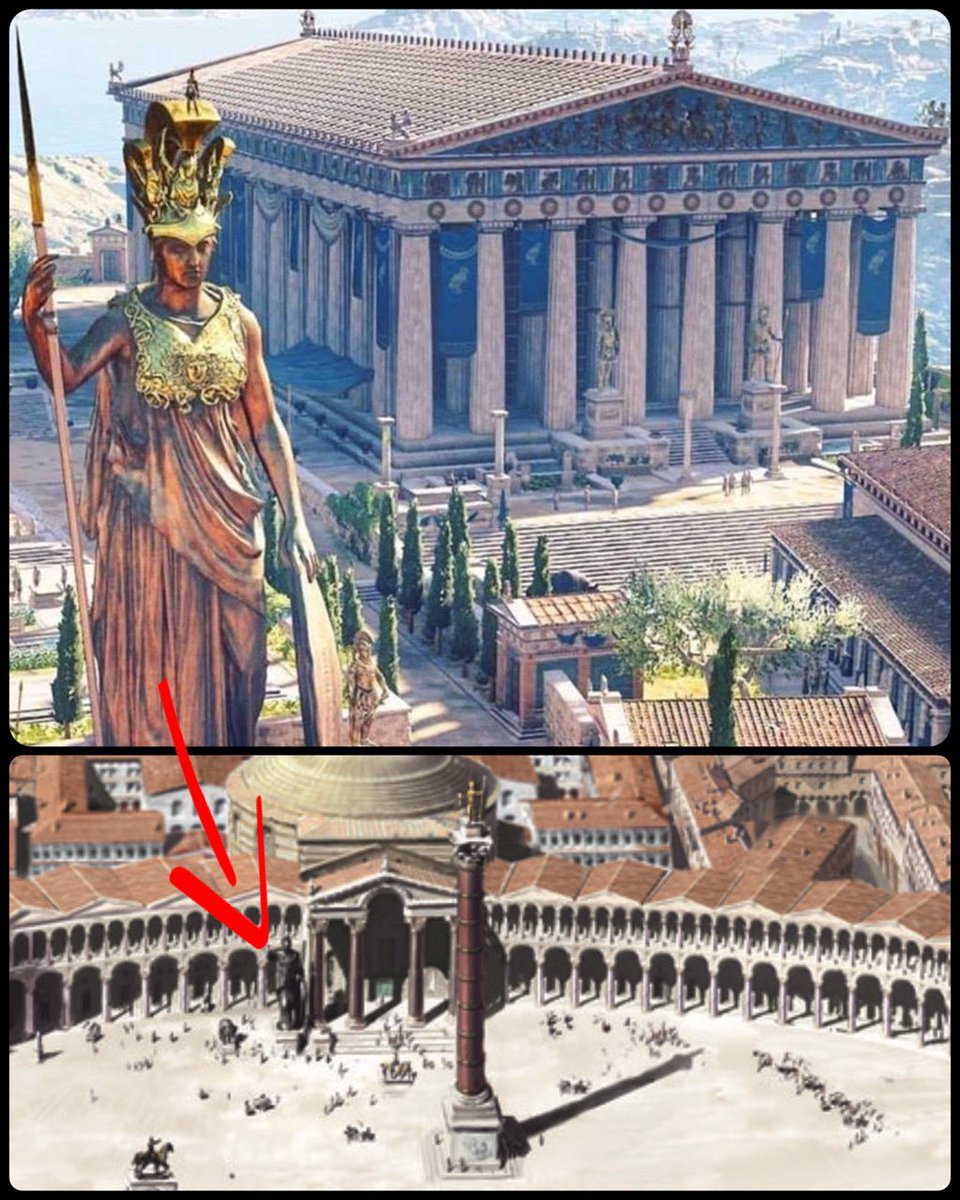
The Athena Promachos was a massive Ancient Greek statue on the Acropolis, a work of the famous Phidias.
In the 5th century it was sent to Constantinople to adorn the Forum of Constantine. The Athena Promachos stood there until superstitious locals destroyed it in 1203AD!
Niketas Choniates, a contemporary source, records this sad episode:
“The wine-bibbing portion of the vulgar masses smashed the statue of Athena that stood on a pedestal in the Forum of Constantine, for it appeared to the foolish rabble that she was beckoning on the Western armies. She rose to a standing height of thirty feet and wore a garment made of bronze, as was the entire figure. The robe reached down to her feet and fell into folds in many places so that no part of the body which Nature has ordained to be clothed should be exposed. A military girdle tightly cinctured her waist. Covering her prominent breasts and shoulders was an upper garment of goatskin embellished with the Gorgon's head [the aegis). Her long bare neck was an irresistible delight to behold. The bronze was so transformed by its convincing portrayal of the goddess in all her parts that her lips gave the appearance that, should one stop to listen, one would hear a gentle voice. The veins were represented dilated as though fluid were flowing through their twisted ways to wherever needed throughout the whole body, which, though lifeless, appeared to partake of the full bloom of life. And the eyes were filled with deep yearning. On her head was set a helmet with horsehair crest, and terribly did it nod from above. Her braided hair tied in the back was a feast for the eyes, while the locks, falling loosely over the forehead, set off the braided tresses. Her left hand tucked up the folds of her dress while she pointed her right hand toward the south; her head was also gently turned southward, and her eyes also gazed in the same direction. Whence they who were wholly ignorant of the orientation of the points of the compass contended that the statue was looking toward the west and with her hand was beckoning the Western armies, thus erring in their judgment and misapprehending what they beheld.”
“As the result of such misconceptions, they shattered the statue of Athena, or, rather, guilty of ever-worsening conduct and taking up arms against themselves, they discarded the patroness of manliness and wisdom even though she was but a symbol of these.”
Though most statues were preserved in Constantinople until destruction by the Crusaders who melted them for monetary gain in 1204, this one was destroyed by the local Romans. Choniates shows his disappointment with his compatriots in his retelling of it.
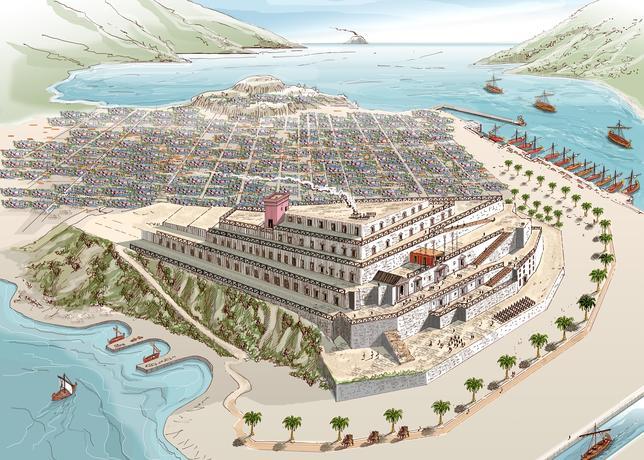
¿Sabías que una ciudad del levante español financió el ejército más terrorífico de la Antigüedad? Era una fortaleza inexpugnable rodeada de agua, pero un milagro de la marea permitió que un joven general romano la conquistara por sorpresa. Cartagena. Tira del hilo 🧵👇🏽👇🏽👇🏽
Ein paar historische Hintergründe zur Robin-Hood-Legende: 🧵
Die normannische Armee, die ab 1066 England eroberte, bestand zu großen Teilen aus Glücksrittern, Söldnern, dritten Söhnen und anderen Habenichtsen.
1/6
🧵In 2003, two tourists poking around a tiny Saudi Arabian island stumbled on a Latin inscription in the dirt.
What it said rewrote the map of the Roman Empire.
Rome's furthest outpost wasn't in Britain. It wasn't in Persia.
It was here 👇
Today in AD 1204,
An exasperated crusader army sat outside Constantinople, baying for blood and gold, ready to sack the city.
What followed was one of the greatest tragedies in the history of the world.
[𝐌𝐞𝐠𝐚 𝐓𝐡𝐫𝐞𝐚𝐝] 🧵
Ethic background of the most famous Eastern Roman emperors
1) Justinian the Great 🇬🇷
2) Constantine the Great 🇬🇷/🇮🇹
3) Basil II 🇬🇷/🇦🇲
4) Heraclius 🇬🇷/(🇹🇳)
5) Constantine Palaiologos 🇬🇷/🇷🇸
6) John Tsimiskes 🇦🇲
7) Nikephoros Phokas 🇬🇷
8) Leo III 🇬🇷 (Isaurian)
#fyp#byzantine
It has been a few months since I published my book on the imperial residence, and I believe enough time has passed to share my vision of the #GreatPalace of #Constantinople. Join me in this🧵of #3Dreconstructions if you wish to learn more about the heart of the #ByzantineEmpire.
Today in AD 527, Justin I appointed his nephew Justinian as co-emperor.
Upon succeeding to the sole rule of the empire Justinian:
> Reconquered Africa.
> Reconquered Rome and the rest of Italy.
> Reconquered southern Spain.
> Become ill with plague but survived.
> Reformed the legal system with so much impact that it is influential 1500 years later.
> Brutally crushed the Nika rebellion.
> Embarked on an enormous building programme and built one of the greatest churches ever.
> Stamped out paganism in the empire.
> Fortified the empire with 140 new forts and restored 250 old ones.
> Successfully micromanaged the economy through the catastrophic plague and the year a volcano blocked out the sun.
> Became one of the only emperors to be called ‘the great’.
A great treasure in my library is The Tomb of Alexander by Edward Daniel Clarke published by Cambridge University Press in 1805. For two centuries Clarke's discovery has been disbelieved, but my own research has shown that his sarcophagus really did entomb Alexander the Great🧵1/








![nonregemesse's tweet photo. Today in AD 1204,
An exasperated crusader army sat outside Constantinople, baying for blood and gold, ready to sack the city.
What followed was one of the greatest tragedies in the history of the world.
[𝐌𝐞𝐠𝐚 𝐓𝐡𝐫𝐞𝐚𝐝] 🧵 https://t.co/4c7jXdCHiw](https://pbs.twimg.com/media/HFuadt4WsAA2uO4.jpg)
![RomanMemeSquad's tweet photo. 5 times The Byzantines were outnumbered and still won 🇬🇷 ⚔️
[Thread] 🧵 https://t.co/1tNtUIk4CQ](https://pbs.twimg.com/media/HFObgc0WwAAdBuu.jpg)