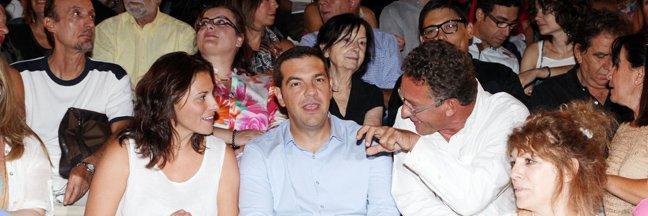
🇧🇬🤝🇬🇷 I extend my deepest gratitude to Prime Minister Kyriakos Mitsotakis for his leadership, wisdom and courage in making this historic agreement possible. Today, Bulgaria and Greece demonstrate that the shadows of the past can be left behind and that our shared future can be built on trust, mutual respect, friendship and an ever stronger strategic partnership. @kmitsotakis
Δουλεύεις στο κανάλι ενός φασίστα που τον βοηθάς να διαδώσει την προπαγάνδα του ενώ κρύβεις ότι ευθύνεται για τη δολφονια Λυγγεριδη από τον στρατό του
Όσο λοιπόν είσαι πρώτο φερρφωνο στην προπαγάνδα και οσο καλύπτεις δολοφόνους, βούλωσε το Λάκη
Η ηγεμονία της Αριστεράς έχει ηδη τελειώσει στην βαση της κοινωνίας. Αν το αντιληφθεί και η Πολιτεία ώστε να εφαρμόσει κάποια στιγμή το νόμο καλά θα είναι...
@YannisKaramits@SinodinosP Μόνο η Ελλάδα του Κυριάκου δίνει αυξήσεις, όλη η Ευρώπη είναι σε σφιχτή δμκη πολιτικη , οι μίζεροι είστε εσείς της αντιπολίτευσης.
Και το κείμενο στα αγγλικά :
"The barbarity of the Ottoman administration knew no bounds, since the success of its generals was literally measured by the weight of human body parts. After every suppression of an uprising or battle with the Greeks, the greatest joy of the Sublime Porte was the arrival of the government couriers. The Ottoman commanders collected thousands of severed ears and noses of men, women and children, salted them so they would not rot, stacked them in large baskets and sent them as “peshkesh” to the Sultan’s palace in Constantinople.
There, the baskets were emptied publicly in the courtyard of the palace. Officials counted them one by one to calculate the soldiers’ reward, while the Muslim mob gathered to celebrate the spectacle, looking at the piled-up limbs of the "infidel" Rum. It was an official state procedure that spread enthusiasm in the capital..."
-------------------
A quotation here: This exact horrific scene was repeated on a massive scale in 1822, when after the Massacre of Chios the Ottoman fleet sent dozens of baskets with ears and heads of Greeks to Constantinople, which were exhibited publicly outside Topkapi for the "entertainment" of the crowd!
-------------------
This is what Thomas Gordon writes, among other things, in his work History of the Greek Revolution (1833). A Scottish officer, an ardent Philhellene, but also an extremely honest and strict soldier who recorded the atrocities of both sides without sparing anyone. He is in fact the one the Turks use as a "source" to support the alleged ethnic cleansing of Tripolitsa, having however read only the pages that suit them.
They talk about "Ottoman peace" of which they are even proud and present the Greek Revolution as "unprovoked betrayal" and "genocide"...Only their "history" has enormous black holes that literally “empty” them.
Like the official firman of 1826 sent by Sultan Mahmud II himself, which is registered in the Ottoman archives and we have a public entry by their state chronicler, Lütfi Efendi (Lütfi Tarihi), who officially confessed that the Greeks were forced to revolt because of the illegal massacres, the incredible corruption and the brutal oppression of the Turkish administrators who even violated Sharia. When their own Emperor confesses in writing the guilt of his state, they have the audacity to talk about "betrayal" (yes, we read that too).
They talk about Tripolitsa where yes a massacre took place, yet they "forget" the bloody plane tree of the city, where for decades their ancestors hanged Greeks, while the aghas amused themselves in the surrounding coffee houses watching them expire. They forget that the first thing Kolokotronis did was to cut down that tree in order to erase the shame of Ottoman sadism...
They forget that they turned violence into "entertainment". Their own official punishments, such as the Hook (Cengel) and Impalement, where the slow death of Christians was turned into a public spectacle and festival for the Ottoman mob, prove who really enjoyed the blood.
Edward Dodwell, an Irish archaeologist, traveler and painter who traveled extensively in Ottoman Greece between 1801 and 1806, in his two-volume work A Classical and Topographical Tour through Greece (1819), describes how the horrific violence and torture of the Greeks was not merely a "punishment", but a form of public entertainment and spectacle for the Muslim mob. When he was in Athens he witnessed the official Ottoman execution by hook and recorded the horror, but mainly the sadistic joy that the blood of the Greeks caused to the conquerors: "The punishment of the hook is the most horrific that the human mind can conceive. The condemned is thrown from a height onto sharp iron hooks and left there to die... What causes the greatest revulsion is not only the savagery of the act itself, but the behavior of the crowd. The Muslims gather by the thousands around the scaffold. There is not a trace of pity. On the contrary, the spectacle is treated as a feast and entertainment. The spectators enthusiastically bet on how many hours or days the "infidel" Christian will manage to stay alive on the nails, while the Turkish aghas sit at a short distance, lazily smoking their narghile and enjoying the victim’s torment as if watching a theatrical performance..."
And it is not enough that they consider us "traitors". Τhey also try to load us with the shame of the slave market. And where? In Kalamata!
Kalamata was indeed connected with the harshest and most massive slave trade of women and children of the 19th century, but the perpetrator was the Ottoman side. The Sultan was so incapable of dealing with the Greek Revolution that he was forced to sell out Crete and the Peloponnese to Ibrahim of Egypt in exchange for slaughtering and enslaving the Greeks. The Ottoman leadership itself signed the plan for the complete replacement of the Greek population with Egyptian fellahin.
In May 1825, the Egyptian army of Ibrahim Pasha, acting as an official instrument of the Ottoman Sultan, burned Kalamata and implemented the infamous "Plan of Deportation". According to the State Archives of Cairo (Dar al-Mahfuzat), the customs registers of Alexandria, as well as the official Minutes of the British Parliament (April 1828), more than 8,000 to 15,000 Greek women and children from Kalamata and the rest of the Peloponnese were violently seized, stacked on ships and sold in the slave markets of Egypt. The Ottoman state even had a direct financial share in this atrocity, since, as we mentioned yesterday, under the Ottoman law of Pencik, 1/5 (20%) of every "booty" and slave automatically belonged to the Sultan’s state treasury in Constantinople.
It is worth mentioning here that in the official Archives of Abdeen Palace in Cairo, the correspondence shows that Muhammad Ali was a cold, realist politician. He saw the slave trade purely in business and diplomatic terms. He therefore wrote to Ibrahim to stop sending white Christian captives massively and publicly to the markets of Alexandria. Not because he was merciful but because he had excellent relations with France and England and immediately realized that the images of chained Greek women and children being sold like animals in Egypt had caused a huge wave of outrage in European public opinion! Ibrahim, however, being on the battlefield and facing the hard guerrilla warfare of the Greeks (who of course did not surrender), displayed a vengeful mania. He ignored the diplomatic balances and simply continued the slave trade. Only in 1826, after the fall of Missolonghi and the campaigns in Mani and Messenia, he sent new massive "cargoes" of slaves to Egypt. And when he realized that he could not subdue the Greeks, he began uprooting olive groves, systematically burning cities (such as Kalamata and Tripoli) and slaughtering indiscriminately. It would therefore be good if they first read the archives of Abdeen Palace in Cairo before "rewriting" their history.
Calling the Greeks "traitors" because they revolted shows that they do not understand the meaning of freedom. You cannot betray a conqueror. The Ottoman Empire was not our homeland. It was the foreign oppressor who seized our lands by force. We were not citizens. We were "rayahs", obliged to pay tax simply in order to live and to endure the child-levy. When a people rises up against a racist regime of 400 years that steals its children and its property, it does not commit treason. It wages a War of Liberation. If they wanted loyal citizens, they should not have built an empire based on violence and discrimination.
Freedom is not treason, it is a right!
Ανησυχεί το κομμουνιστικό ΑΚΕΛ ότι οι καθημερινές πτήσεις των ελληνικών μαχητικών ενδέχεται να προκαλούν αναστάτωση σε πολίτες και τουρίστες. 🙄
Εξηγήστε μας αν έχετε την καλοσύνη Γενικέ Γραμματέα του ΑΚΕΛ, κ. @ststefanou,
▪️ Αντιλαμβάνομαι ότι ως κομμουνιστικό κόμμα που είστε, η έννοια της πατρίδας βασίζεται στο ότι «οι εργάτες δεν έχουν πατρίδα».
Γιατί λοιπόν δεν λέτε ξεκάθαρα και σταράτα ότι στην ουσία πατρίδα δεν «έχετε» αντί να υποκρίνεστε ότι δήθεν τα ελληνικά F-16 αναστατώνουν του πολίτες και τους τουρίστες;
▪️ Αντιλαμβάνομαι ότι ως κομμουνιστικό κόμμα που είστε, και όπως συχνά διαλαλείτε, είστε υπέρ της εργατικής τάξης ενάντια στον ιμπεριαλισμό.
Αφού είστε κατά του ιμπεριαλισμού γιατί τότε είστε υπέρ της Τουρκίας και των εν Κύπρω «εγκάθετων» της; Ειδικά από την εποχή του τουρκοκύπριου ηγέτη Μεχμέτ Αλί Ταλάτ, παρόλο που αυτοπροβάλλεστε ως αντικατοχικό κόμμα, οι επί της ουσίας θέσεις σας για λύση του Κυπριακού «συμπίπτουν» με αυτές των εγκάθετων από την Τουρκία ηγετών της. Όχι μόνο συμπίπτουν αλλά και με σθένος από εσάς προωθούνται. Όπως κάνετε τώρα και με τα ελληνικά F-16.
Και μια τελευταία απορία κ. Στεφάνου,
Ως κομμουνιστικό κόμμα που είστε, ο κύριος στόχος σας είναι να μετατραπεί η Κύπρος σε μια άλλη κομμουνιστική χώρα; Σε μια άλλη δηλαδή Κίνα, Κούβα, Λάος ή Βόρεια Κορέα; (Δεν υπάρχουν άλλες ανά το παγκόσμιο κομμουνιστικές χώρες.)
| @KalenteridisSav@cirithungol21@AKEL1926 #Κύπρος
https://t.co/u27QsyXqKE
Διπλή αναβάθμιση για την Ελλάδα: Ο οίκος Fitch αναβάθμισε την ελληνική οικονομία, φέρνοντάς μας ένα ακόμα βήμα πιο κοντά στην επενδυτική βαθμίδα. Και η Διεθνής Διαφάνεια κατέγραψε για τη χώρα μας βελτίωση 7 θέσεων της στο δείκτη αντίληψης διαφθοράς.
Η Ελλάδα επιστρέφει!
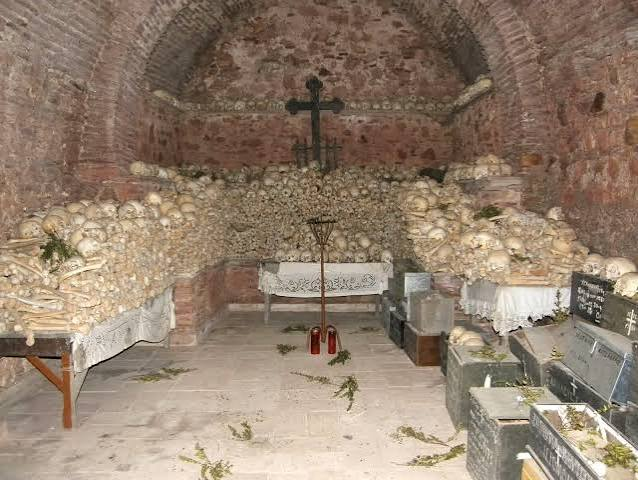
Μου αρέσει που οι γείτονες ζητούν αποδείξεις για την Σφαγή στη Χίο...
Οι πηγές (εκτός από δεκάδες πρωτογενείς, σύγχρονες πηγές της εποχής,οθωμανικές, ευρωπαϊκές και διπλωματικές, οι οποίες προκάλεσαν το τεράστιο κύμα του Φιλελληνισμού στην Ευρώπη), βρίσκονται στα ίδια τα λογιστικά βιβλία των προγόνων τους που μετρούσαν τις ψυχές των Χιωτών ως φορολογήσιμα εμπορεύματα και εξέδιδαν αποδείξεις για τις γυναίκες και τα παιδιά που πουλούσαν στα σκλαβοπάζαρα.
Τα ίδια τα οθωμανικά αρχεία αποδεικνύουν ότι το κράτος αντιμετώπισε τη σφαγή και την υποδούλωση των Χιωτών ως μια εξαιρετικά κερδοφόρα εμπορική δραστηριότητα, φορολογώντας το σκλαβοπάζαρο κεφαλή προς κεφαλή!
Στο οθωμανικό δίκαιο υπήρχε ο επίσημος φόρος Pencik (από το περσικό penc-yek, που σημαίνει το ένα πέμπτο). Για κάθε αιχμάλωτο που πιανόταν στη Χίο και μεταφερόταν στα σκλαβοπάζαρα (για παράδειγμα το Avret Pazarı, το παζάρι γυναικών της Κωνσταντινούπολης), ο έμπορος ή ο στρατιώτης έπρεπε να πληρώσει φόρο στο οθωμανικό θησαυροφυλάκιο.Ο έλεγχος γινόταν από τον κρατικό αξιωματούχο, τον Επόπτης των Σκλαβοπάζαρων δηλαδή. Μόλις πληρωνόταν ο φόρος ανά κεφαλή, το κράτος εξέδιδε ένα επίσημο πιστοποιητικό ιδιοκτησίας, το Tezkere (ένα είδος "απόδειξης" για τον σκλάβο).
Σύμφωνα με τις αναφορές των ξένων διπλωματών, όπως του Άγγλου κληρικού Robert Walsh που βρισκόταν στην Κωνσταντινούπολη, μέχρι την 1η Μαΐου 1822 είχαν εκδοθεί 41.000 επίσημα teskeres μόνο για τους σκλάβους που προέρχονταν από τη Χίο! Το οθωμανικό κράτος εισέπραττε κανονικά το ποσοστό του (συνήθως το 1/40 της αξίας του σκλάβου για τοπικές αγοραπωλησίες ή το 20% για λάφυρα πολέμου), βγάζοντας τεράστια κέρδη από την καταστροφή του νησιού. Οι Χιώτισσες πουλιόνταν στους δρόμους για 100 γρόσια το κεφάλι, και το κράτος κρατούσε το μερίδιό του...
Απόδειξη; Το Οθωμανικό Κατάστιχο D330, το οποίο φυλάσσεται σήμερα στην Εθνική Βιβλιοθήκη της Βουλγαρίας...και είναι απογραφή των περιουσιών που δημεύτηκαν από τους Χιώτες οι οποίοι συμμετείχαν ή θεωρήθηκε ότι συμμετείχαν στην εξέγερση του 1822.
Συγκεκριμένα για κάθε ιδιοκτησία σημειώνει:την κατάσταση του ακινήτου (καμένο, γκρεμισμένο, ισοπεδωμένο ή άθικτο), το όνομα του ιδιοκτήτη,
την τύχη του (με κόκκινη μελάνι: νεκρός, εκτελεσμένος, φυγάς, αιχμάλωτος, αγνοούμενος ή παρών).
Το έγγραφο αποτυπώνει δηλαδή, με την ψυχρή γραφειοκρατική ματιά του κατακτητή, τις άμεσες συνέπειες της σφαγής: μαζική φυσική εξόντωση, φυγή, αιχμαλωσία, ολοκληρωτική καταστροφή του οικιστικού ιστού και δήμευση των περιουσιών που πέρασαν στο οθωμανικό δημόσιο. Αποτελεί μία από τις σημαντικότερες πρωτογενείς πηγές για το μέγεθος της καταστροφής στην πόλη και τα γύρω χωριά. Το πρωτότυπο εντοπίστηκε το 1981 από τον Αναστάσιο Ιορδάνογλου στη Εθνική Βιβλιοθήκη "Άγιοι Κύριλλος και Μεθόδιος" της Σόφιας και εκδόθηκε μεταφρασμένο και σχολιασμένο το 2025.Καταγράφηκαν 2.275 οικίες, από τις οποίες μόνο 72 παρέμειναν αβλαβείς (περίπου 3%). Καταγράφηκαν δεκάδες εκκλησίες (περί τις 66 στις συγκεκριμένες περιοχές), οι περισσότερες κατεστραμμένες ή καμένες. Στο σύνολο του νησιού διασώθηκαν μόλις 72 εκκλησίες από εκατοντάδες που υπήρχαν πριν.
Καταγράφονται επίσης καταστήματα, φούρνοι, ανεμόμυλοι, χωράφια, αμπέλια, δέντρα και άλλα περιουσιακά στοιχεία, με την ίδια εικόνα εκτεταμένης λεηλασίας και πυρπόλησης.Από την τύχη των ιδιοκτητών που σημειώνεται στο κατάστιχο οι μελετητές συνάγουν ότι στις απογραφείσες περιοχές περίπου το 1% του πληθυσμού παρέμεινε εν ζωή, το 41% ήταν νεκροί και το 58% αγνοούμενοι (φυγάδες ή αιχμάλωτοι).
Η σφαγή δεν έγινε στο κρυφό, έγινε με κρατική σφραγίδα και φορολογικές δηλώσεις!