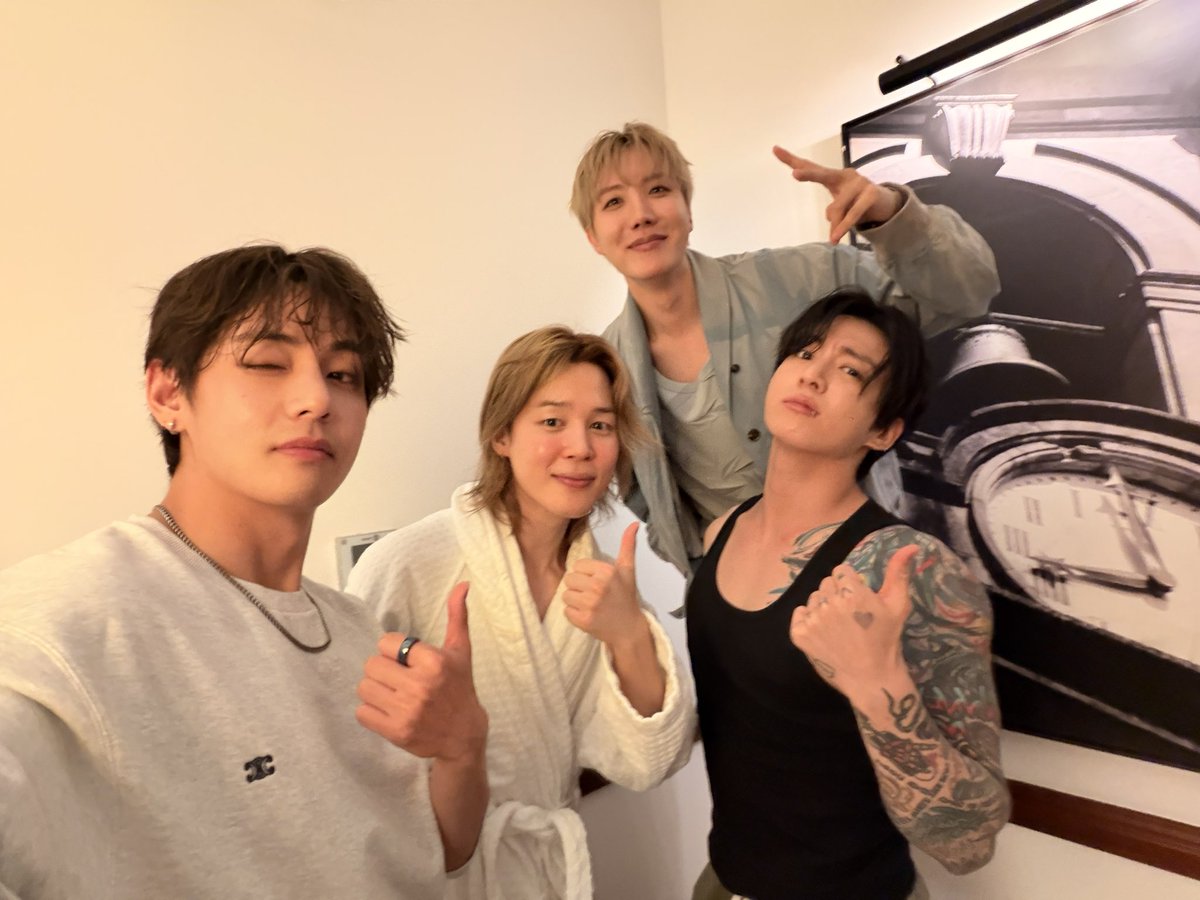
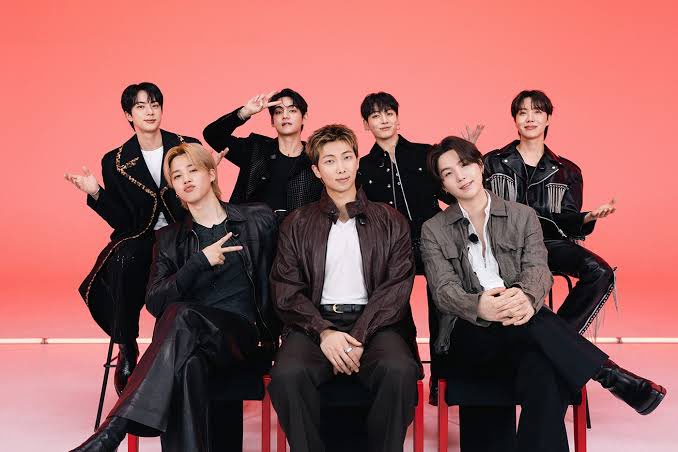
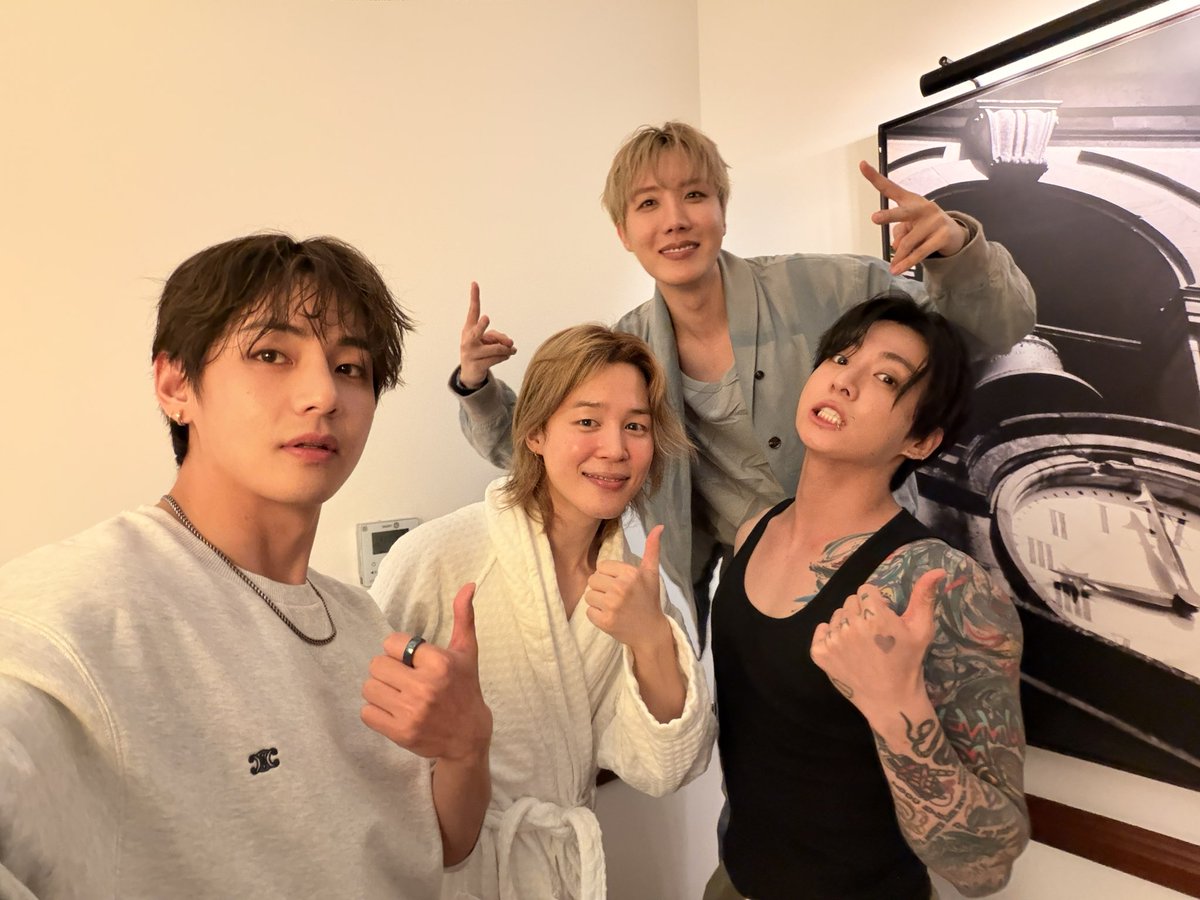
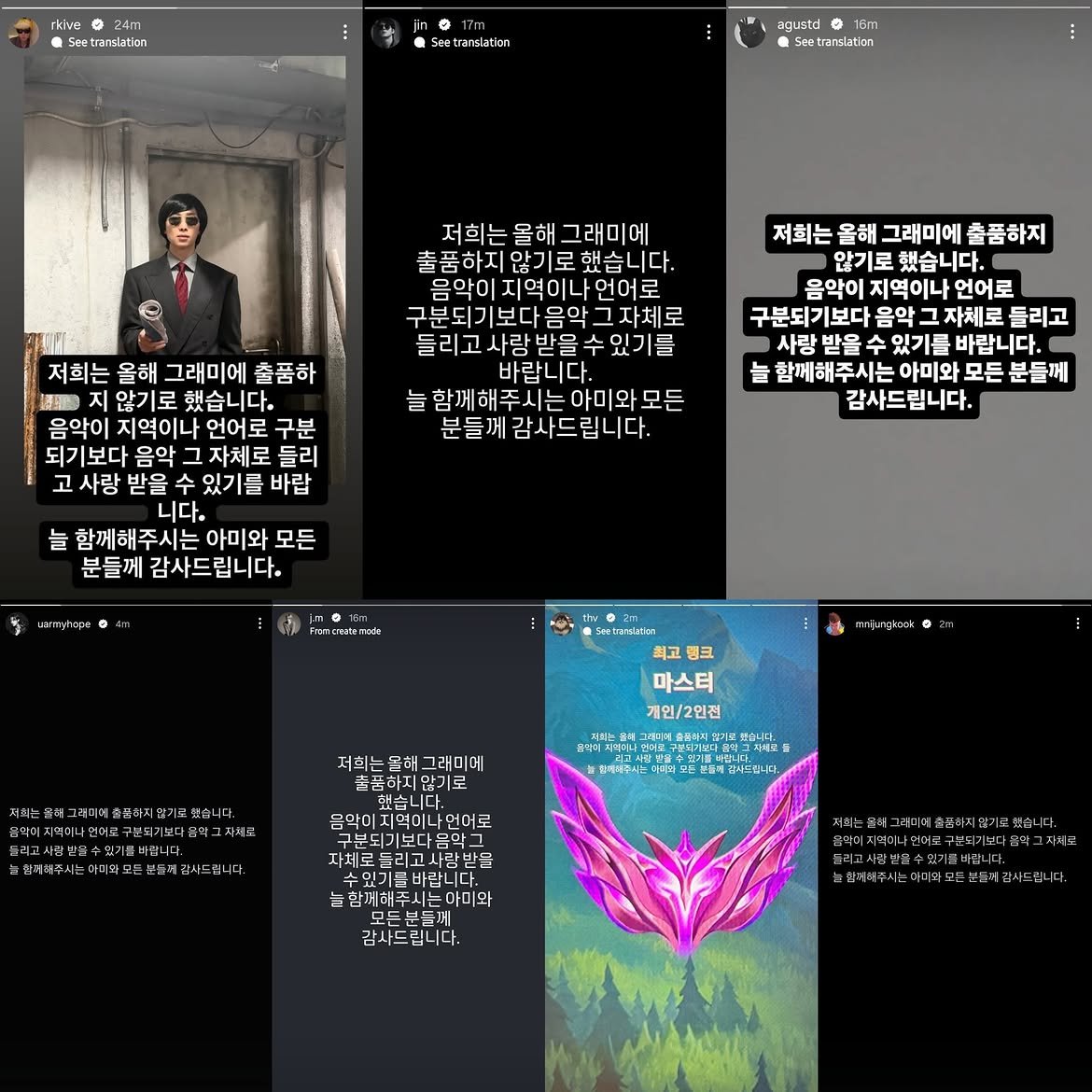
We're truly honored to win 🏆BEST GROUP, 🏆SONG OF THE YEAR, and 🏆BEST K-POP at the 2026 #VMAs✨
Thank you, ARMY. We couldn't have done any of this without you!💕
#BTS#방탄소년단
Namjoon reading F*ck Seth Price by Seth Price is such an interesting detail because the title itself tells you a lot about what the book is trying to do.
“F*ck Seth Price” sounds like he’s insulting himself, but that’s exactly the point. Seth Price is both the person being “rejected” and the person who wrote the book. It plays with the idea of an artist’s identity — how we attach an artist’s name to everything they create and then turn that person and their work into something that can be labelled, bought and consumed.
The book explores art, creativity, identity, authorship and the art world, especially the strange relationship between creating something and then watching it become a product.
So the title isn’t simply “f*ck this guy.” It is also a way of questioning the idea of Seth Price as an artist, as a name, and as a product — making the artist both the subject and the object of the critique.
Before this weekend, the BTS ARMY was waiting eight long years for the K-pop boy band to return. They came, they saw and they conquered the hearts of North Texans.
🔗 https://t.co/R2gbBtVy3O
Between Jungkook’s pained knee, Hobi’s blistered feet and Taehyung’s hearing loss, let me never take for granted everything that our seven give us. Let me never forget what it costs them and their bodies to love us. Let me repay that love with nothing but gratitude.
"Refusing Grammy consideration did not make the group disappear. It made the Academy explain why one of the world’s largest musical acts found its framework unacceptable."
#ArtHasNoAliens
BTS and the Grammys: What They Gave Up, What the Academy Lost
BTS's decision not to submit their work for Grammy consideration involved a real exchange. They gave up the possibility of a first trophy and the institutional status attached to becoming Grammy winners. Their refusal shouldn't be romanticised as costless, nor did it abolish the category. The Recording Academy can continue without them, and another artist may still become its inaugural winner.
But participation would also have carried a cost.
The new category groups different genres, languages and national industries within a regional framework. A prominent inaugural nominee or winner would not merely receive recognition within that structure. Their participation would help normalise the structure itself.
BTS's name would have supplied the category with immediate attention, prestige and historical significance. A BTS victory would have made the category immediately consequential. A nomination would still have brought it global visibility. Their participation could also have been presented as evidence that one of the most prominent acts the category could encompass had accepted its terms.
BTS withheld more than their presence. They withheld their symbolic capital and the appearance of representational consent. The Academy may create the category without BTS, but it can't convert their global status into its inaugural precedent without their participation.
Institutions don't legitimise new structures through rules alone. They also rely on recognised figures to enter them and make them appear normal, desirable and permanent. BTS were valuable not only as possible recipients of the award, but as a precedent that could help turn a contested category into an aspirational one.
The consequences were never fully bilateral. A third actor shaped them: the fandom. ARMY isn't a formal party to the Grammy process or a single unified body. It's a distributed network capable of converting support into visibility, collective memory and reputational pressure. Its response has already extended the effects of BTS's refusal by intensifying scrutiny of the Academy, the category and the arguments used to defend it, while making the scale of support for BTS visible. The Academy now confronts more than the absence of seven artists. It confronts a network capable of preserving, circulating and contesting the meaning of that absence beyond institutional control.
The Academy didn't lose the category. It lost a particular and non-reproducible route to legitimacy. The public meaning of the first cycle will be shaped not only by the creation of a new award, but by BTS's refusal to participate in it.
This was neither a costless victory for BTS nor a complete defeat for the Recording Academy. BTS surrendered a form of recognition that carried real value. The Academy was denied access to value that BTS had already created.
They gave up the possibility of a trophy. The Academy lost the possibility of turning BTS into its precedent.
— Jay Song, an honorary associate professor at ANU Korea Institute of the University of Melbourne, says BTS did "an honorable thing for Asian Artists"
"The Grammys decision to create a separate 'Asian' Category was pathetic, defeatist and somewhat racist."
"It's like you asians compete against one another under us while we hold our own parties and celebrations."
#ArtHasNoAliens
ARMYs, this is one of the most interesting and trenchant takes on BTS's Grammys decision, even digging into America's history of "Separate but Equal."
Kim Ou-joon, one of Korea's most influential public figures and its most prominent progressive voice (I recently wrote a seven-part article about him in the Articles section), devoted a lengthy segment to the BTS-Grammys controversy on his program, Gyeomson News Factory. It is the most-watched live political and current affairs program on YouTube in Korea (and in the world), drawing more than 200,000 live viewers and averaging around 1.2 million views per day.
Kim was sick last Friday, so he wasn't there to host the show when three music critics appeared and made the most misguided arguments about BTS's decision:
1. This is just a Korean inferiority complex. It may feel emotionally satisfying, but it wasn't the right decision.
2. HYBE probably realized BTS had little chance of winning a major Grammy category anyway, so they made a calculated business move before the Grammys could reject them. This is basically a power game.
3. Now that the Grammys have created an Asian Pop category, future artists may dream of winning in that category. So we can't say BTS's decision was entirely the right one.
4. Didn't BTS work so hard to learn English and Japanese in order to break into the U.S. and Japanese markets? Now that there's an Asian Pop category, artists might not have to do that anymore. They could stay in their own language and still be nominated in the Asian Pop category. Isn't that actually a good thing?
Here is Kim Ou-joon's commentary from today's show. I translated them as faithfully as possible. Because of his short, conversational style of speaking, I added a few words here and there for context so that his intended meaning would come across accurately. And I omitted the exchanges between Kim and the announcer during Kim’s commentary.
—----------------------------
“I think the Grammys created the new Asian Pop Music category because they were planning to give that award to BTS. But then BTS refused to submit their music, and it became a global controversy.
Media outlets around the world started pouring out articles. From The New York Times onward, pretty much every major international media outlet we know covered it. And, for the most part, they viewed BTS's boycott positively.
They called it "a gentle but powerful criticism" (The Guardian). “Refusing was the right thing to do” (Cosmopolitan). "A declaration of independence" (Sportal Korea). “BTS had captured the spirit of the times" (The Economic Times)
Now, last Friday, the music critics who appeared on our program seemed to say that this new category could have become a stepping stone for Asian-language music to succeed in the global market, so they felt a little disappointed by BTS's decision.
Yes, I understand that point of view. There's some validity to it. But I think differently.
If I had been there, I probably would have argued against them pretty strongly. Since I wasn't, let me add my thoughts now, even if it's a little late.
Because I don't think this is something we should just let pass. I think this is a significant event, one that deserves to be recorded not only in Korean cultural history but also in the history of world culture.
Let me briefly explain why. To understand this, we have to look at it not from our perspective, but from the Western perspective. Using their way of thinking. Because it's a Western award show. It was their decision. We have to understand why they did it from their point of view. That's how you understand their intention.
Now, there's a precedent for this. I think it was 2019. MTV became the first major music award show to create a Best K-Pop category. It should have just been called Pop. Instead, they created a separate Best K-Pop category.
At the time, The Washington Post used a particular expression. They said this was America's "separate but equal" rule in music awards.
That phrase is extremely important in the history of the American civil rights movement. For Americans, just hearing those three words is enough. They immediately understand what's being implied.
This goes back to around 1890. Louisiana was one of the places where racial discrimination was especially severe. The state passed a law requiring separate railroad cars for white people and Black people. Black and white passengers had to ride in different train cars. Civil rights activists wanted to challenge that law as unconstitutional, as racial discrimination.
At that time, there was a man named Plessy. By appearance, he looked white. But he was one-eighth Black. His great-grandmother was Black.
At the time, America had what was called the one-drop rule. If you had even one drop of Black blood, no matter how white you looked, you were legally classified as Black.
So this man boarded a whites-only train car. Then he deliberately announced that he was Black. He wanted to be arrested.
That's how the lawsuit began. The case eventually reached the U.S. Supreme Court. The Louisiana judge's name was Ferguson, so in America it's known as “Plessy v. Ferguson.”
It's a very famous case. One of the most famous rulings in American history came out of that case. That's where the phrase "separate but equal" comes from.
The Court ruled that separating railroad cars was constitutional because, although they were separated, they were supposedly equal. In the end, it was a ruling that justified racial discrimination. This was at the end of the nineteenth century.
After that decision, segregation spread far beyond railroad cars. Because racial segregation had now been accepted under the Constitution, separation spread into every part of society. Schools. Hospitals. Parks. Buses. Theaters. Restrooms. Eventually even cemeteries. People were separated from birth until death.
But the facilities for Black people received less than one-tenth of the funding that white facilities received. Because the people making those decisions were all white. So the facilities for Black people were in terrible condition.
That's why the phrase "separate but equal" really meant separation, inequality, and exclusion. But those words were used to hide racial discrimination. That system continued for nearly seventy years.
That's exactly what The Washington Post meant when it described MTV's decision as "separate but equal." By creating a K-pop category, it looked as though K-pop was being treated equally. But in reality, it excluded K-pop from competing in the main categories while hiding that exclusion.
At the time, there was another expression people in the West used to describe MTV's decision. Ghettoization. During Nazi Germany, Jews were confined to ghettos. So people said K-pop had been ghettoized. It had been placed in its own separate space.
That expression also has a precedent. When Black music began to rise in America, award shows grouped Black artists into R&B and Rap categories. Black artists would receive those awards, while the major awards continued to go to the mainstream. People called that the ghettoization of Black music.
So MTV received that criticism. After that, MTV nominated BTS in the regular Pop category. And BTS won.
At the time, Billboard wrote that BTS had entered through the side door, and that it had taken a long time before they were finally allowed to use the front door like everyone else. After MTV, the other award shows adapted to that criticism.
The Grammys were the last one left. The Grammys see themselves as the most prestigious music awards because, unlike other shows, there is no fan voting. Like the Academy Awards, only industry professionals vote.
So they created a side door, just like MTV. This was basically saying, "Asia, come in through the side door. Separate but equal."
When MTV did this, BTS still attended despite the controversy. But this time, BTS declared to the American mainstream music industry, "We're not using the side door anymore." And they refused.
That's why Western media, who understand this context exactly, praised BTS. They said, "Well done." They called it the spirit of the times.
That's how I see it too. I think this will remain a landmark in world cultural history for a long time.
An artist from outside the mainstream boycotted the most prestigious award in the mainstream and declared, "You are out of step with the times."
It's contextually similar to Black Americans demanding racial equality and human equality.
That's why western media call it the spirit of the times. Some in Korea don't immediately understand why it's being called that. They think, "Wouldn't this have been a good opportunity for Asian artists?"
That Friday's comment comes from not seeing how people in America think about this issue. That's all I wanted to add.”
—--------------------------
For those who understand Korean, you can watch the video of his commentary here. (I wish I knew how to add English subtitles, but unfortunately I don't.)
https://t.co/bsgO5X8KwA
What BTS did isn't a boycott, y'all. Don't be misled by media outlets' poor word choices. A boycott is a withdrawal of support effective until a demand is met. BTS made no demands. This wasn't a negotiation. It was a repudiation. And it was the RA that burned the bridge, not BTS.