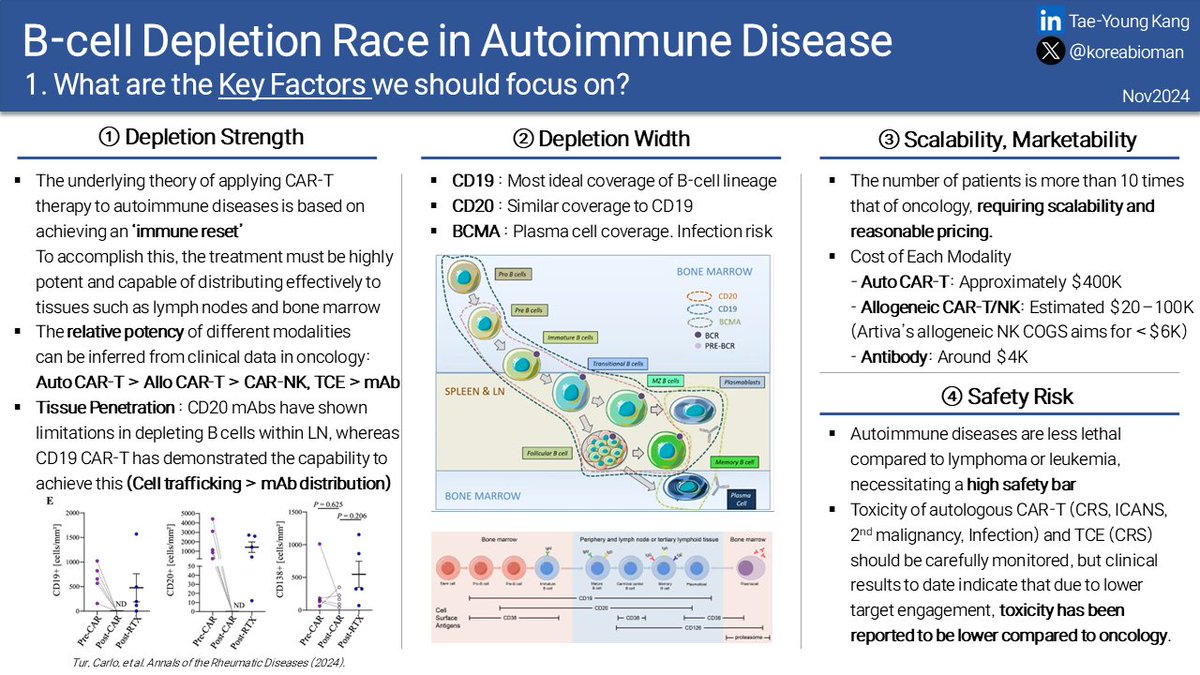
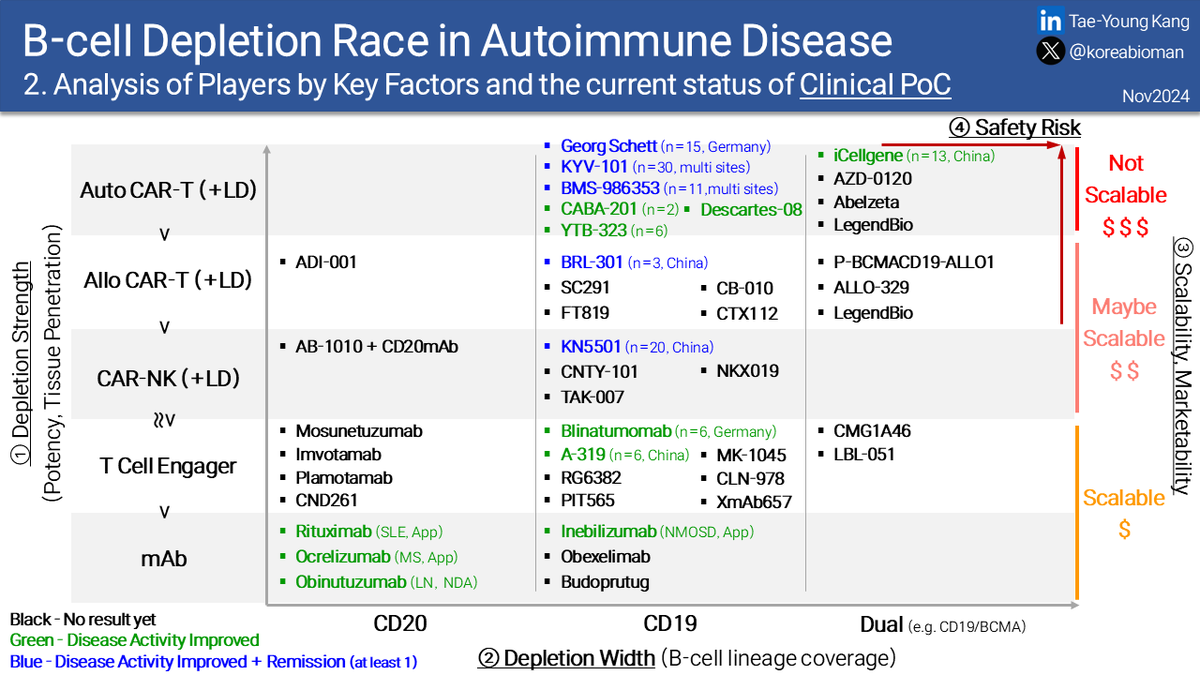
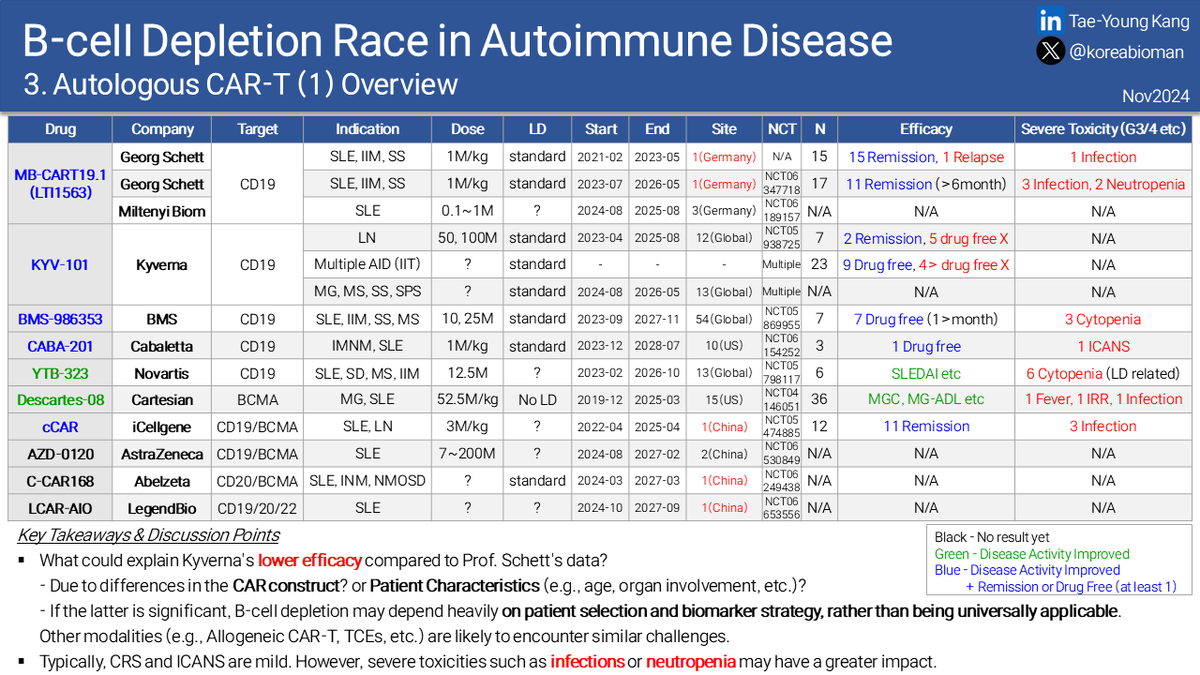
B-cell Depletion Race in AID 1
Identifying key players in this race could present an outstanding investment opportunity. Here’s how I approach this emerging field:
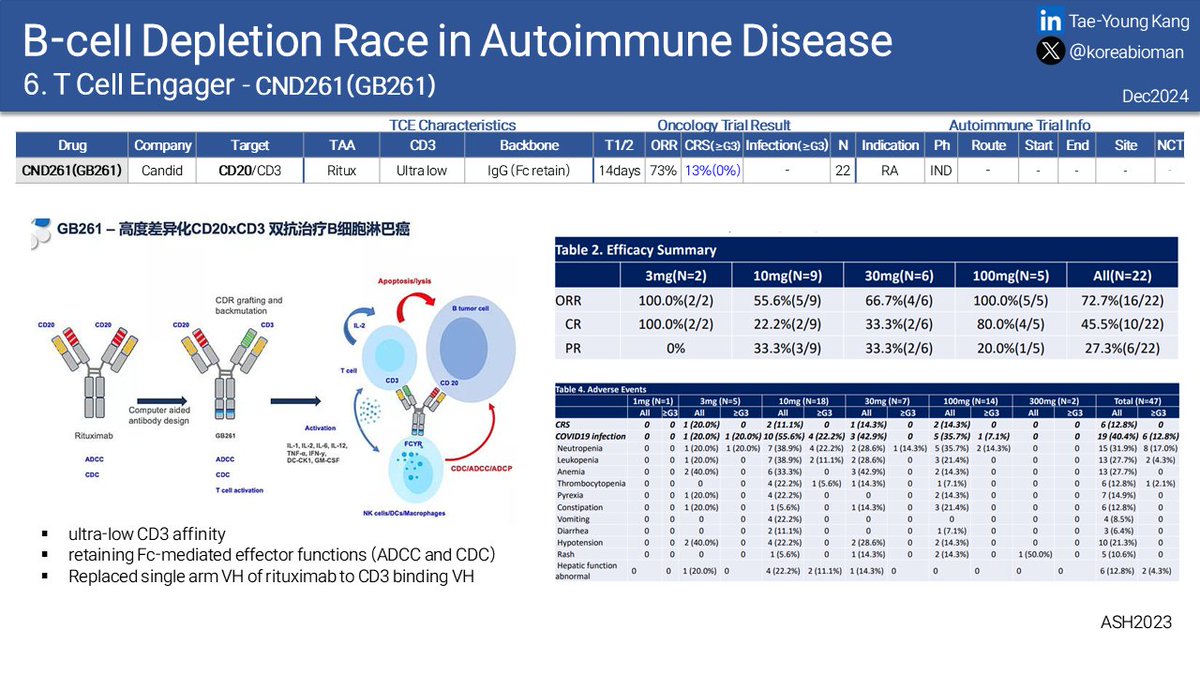
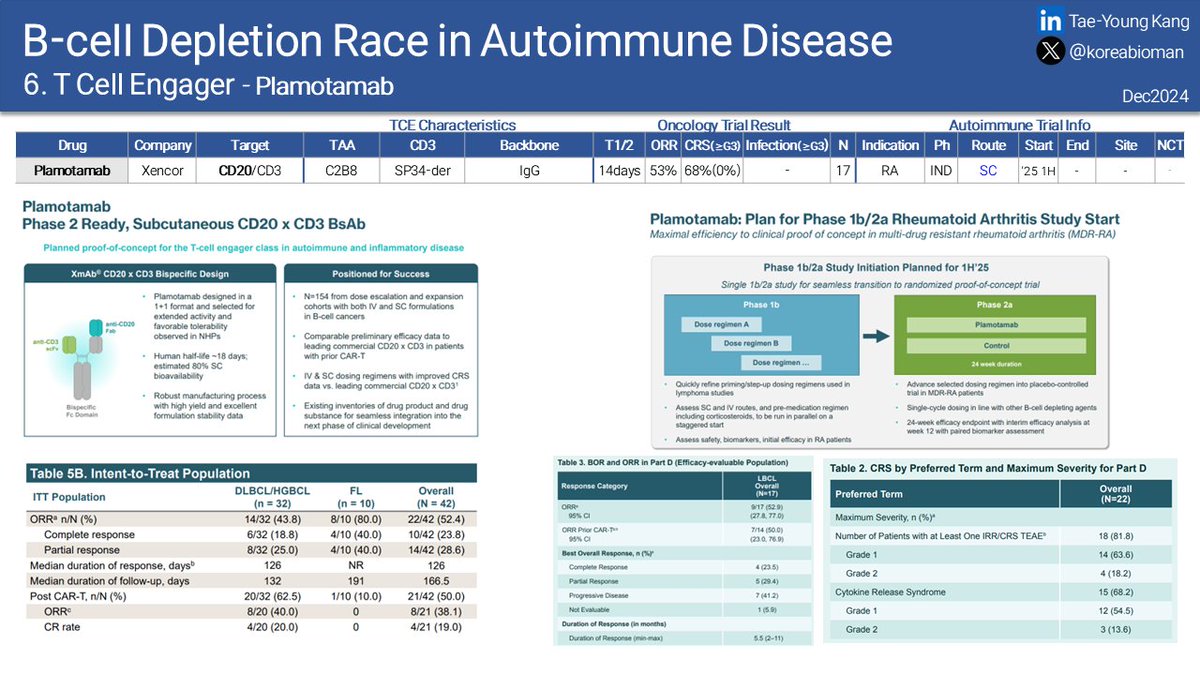
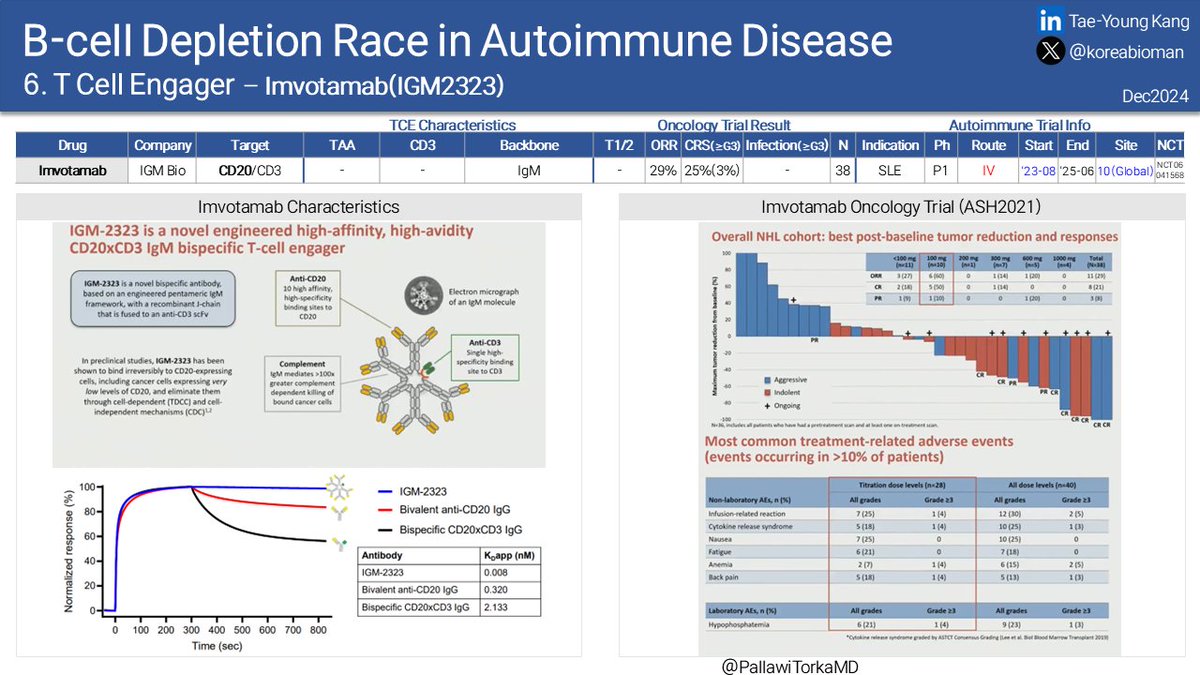
$SANA $IPSC $FATE $CRBU $CRSP $ALLO $PSTX $ACET $TAK $NKTX $LEGN $NVS $BMY $AZN $AMGN $RHHBY $MRK $CGEM $IGMS $XNCR
It looks like AAV gene therapy is finding its niche: local delivery of relatively low doses (E10-E12 total vg) in tissues as contained as possible.
Recent clinical wins by $QURE's AMT-130 (intra-parenchymal, Huntington's) and $REGN's DB-OTO (intracochlear, inherited deafness) support this trend. These follow prior approved drugs like $RHHBY's Luxturna (subretinal, LCA2) and $PTCT's Upstaza (intra-parenchymal, AADC deficiency), also delivered locally.
$NVS' Zolgensma is a special case -- although delivered systemically at relatively high doses, the infant BBB remains permissive, allowing efficient CNS biodistribution.
That $SRPT's Elevidys works at all (ie ambulatory patients) is remarkable, as it defies every single constrain we have learned to respect in AAV: a large, systemic target (skeletal muscle), high vector load (E14-E15 vg) and an engineered micro-dystrophin (~3.5 kb vs. 11 kb of full-length coding sequence).
It's a powerful reminder of what AAV gene therapy is capable of when aimed at the right setting.
One of key data to monitor closely.
Data looks similar to $FATE FT819.
Less LNP immunogenity issue due to steroids? Expect HN2301 to be licensed or acquired to MNC in near future.
3/ No lymphodepletion was required before dosing. Initially, a single low dose (2 mg/dose) was administered, with immunosuppressive drugs discontinued one week prior to the first HN2301 infusion. Patients experienced transient fever post-infusion, accompanied by CAR T cell generation.
Starting with the third patient, dose escalation was implemented, with a single dose of 4 mg administered every 48 hours for 2–3 doses.
6 hours post-infusion, CD8+ CD19-CAR T cells were detected in peripheral blood, peaking at 6 hours after each HN2301 infusion, with a reprogramming rate exceeding 60% and returning to baseline within 2–3 days.
Off-target CAR expression on non-CD8+ T cells was less than 10%.
Notably, in patients receiving the 4 mg dose, circulating B cells were completely depleted (<1 B cell/μL) within 6 hours of the first treatment, with depletion sustained for 7–10 days.
CD69 was significantly upregulated on CD8+ cells but not on CD4+ T cells, indicating CAR T cell activation.
Consistent with HN2301’s B cell depletion, anti-nucleosome antibodies significantly decreased in three patients, and anti-dsDNA antibodies decreased in patients 4 and 5. Complement levels in patients 4 and 5 normalized within 2–3 months post-treatment. After three months, SLEDAI-2000 scores improved significantly: patient 3’s score dropped from 14 to 4, patient 4 from 22 to 2, and patient 5 from 9 to 6.
🔮Interesting article below on mAb development - 50 years is tons of data to guide us on where things are going 2026–2032
1️⃣Masked and AND-gated biologics reach approval in solid tumors, first as CD3 T-cell engagers that only fully bind in protease-rich microenvironments, then as tumor-pH biased checkpoint combinations to cut irAEs.
2️⃣NK-cell engagers and CD16a-tuned bispecifics move TCE efficacy outpatient with lower CRS and simpler premedication.
3️⃣ADC 2.0 pivots to payload diversity, including innate-activating cargos and reversible DNA binders that reduce ILD. Expect the first biparatopic self-internalizing ADC approvals for low-density targets.
4️⃣Ophthalmology bispecifics that co-target VEGF plus leakage or fibrosis pathways set new dosing intervals, raising the bar to 12–24 week maintenance.
5️⃣SC dominates immunology, with quarterly maintenance becoming the norm as viscosity engineering and on-body infusors standardize.
6️⃣GTx / mRNA delivered mAbs, as complements, not competitors, to mAbs, in infectious disease prophylaxis where exposure, not peak concentration, is king.
7️⃣Mixture and coformulation approvals accelerate in immunology once a couple of large SKUs successfully establish payer precedent.
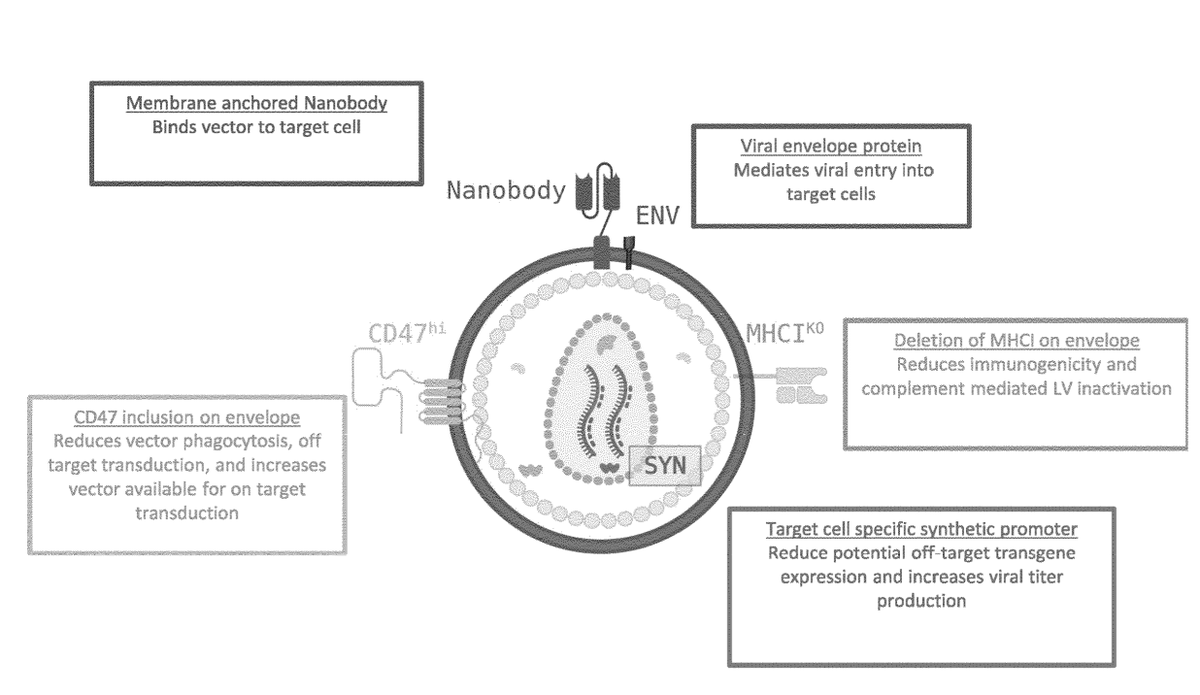
There is only 1 patent filing published by EsoBiotec:
Key innovations
- T-cell specific promoter (excl license fr Chromatin)
- CD47 to reduce phagocytosis (from observation that aCD47 enhances phagocytosis)
- Deletion of MHCI to reduce immunogenicity
https://t.co/7sNEm7jzEf
@BiomedicalRX@JessieChimni@carefree201215 maybe standard LD. My guesses are that LD is intense, and contributes to AID efficacy meaningfully. Not likely to rid of LD
VCs look to strategics on what MOAs they want to buy, not surprised VCs are relatively conservative when it comes to funding new MOAs.
Telling VCs to focus on funding new targets w/o any clinical validation isn't compatible with good IRR
B-cell Depletion Race in AID 1
Identifying key players in this race could present an outstanding investment opportunity. Here’s how I approach this emerging field:
$SANA $IPSC $FATE $CRBU $CRSP $ALLO $PSTX $ACET $TAK $NKTX $LEGN $NVS $BMY $AZN $AMGN $RHHBY $MRK $CGEM $IGMS $XNCR