Ghana will continue to live.
I have to decide to live, too.
This is my final message of defiance and submission.
This is my final message of resilience and tiredness.
This is both a statement of defeat and victory.
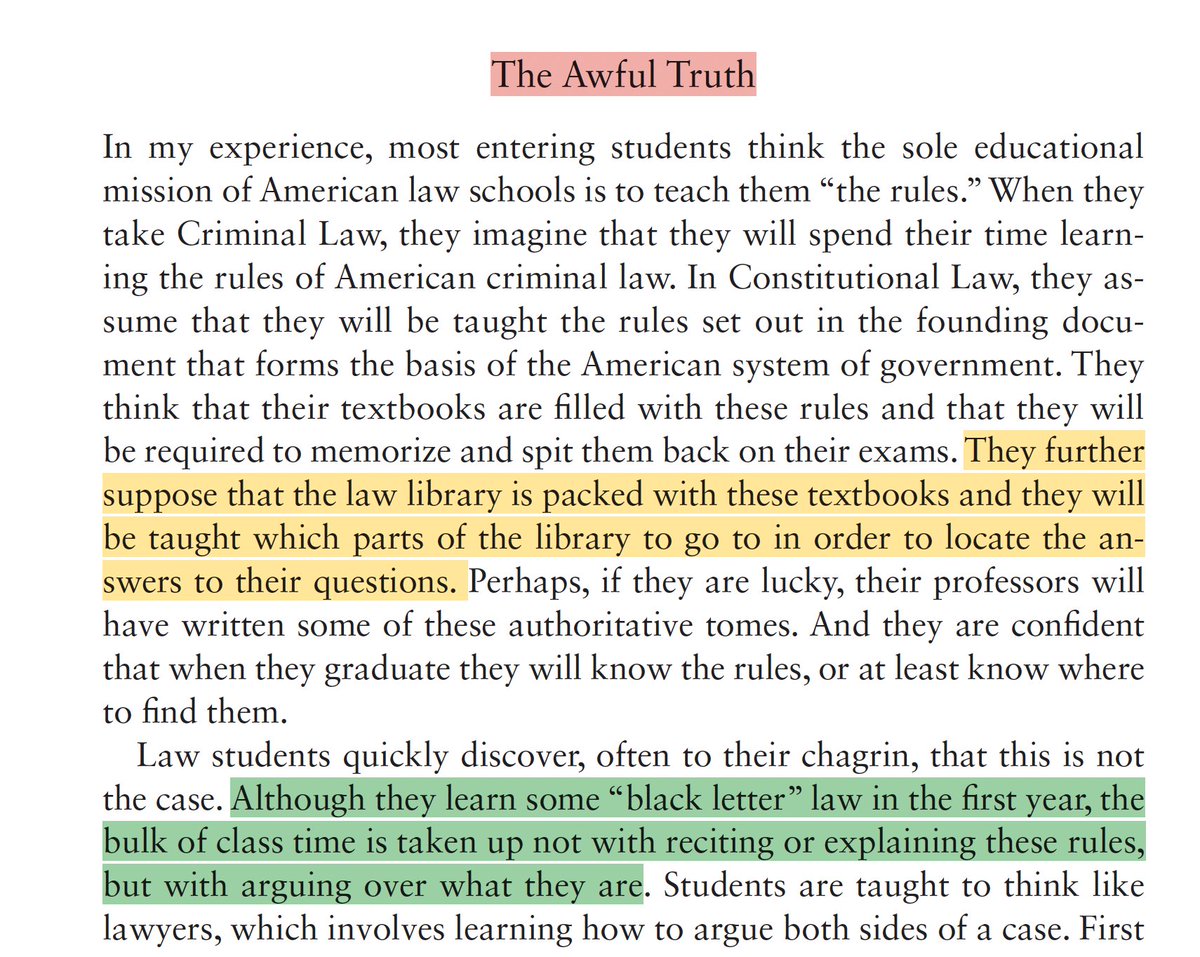
This is Scott Shapiro’s account of what America’s legal education does and seeks to do.
I wonder if we can say the same for Ghana. And if not, what is the ideological aim of legal education in Ghana?
Are we aiming to train legal robots who can memorize rules?
OR
We aim to nurture those who reason about law from a fundamental point of how the rules come about, why these rules exist, and what higher-order concepts the rules track.
and national identity is narrowed. Normalised erasure sustains asymmetric citizenship and undermines inclusive nation-building. There's a quiet akanisation’ of the Ghanaian state, and we can't pretend not to notice.
the absence of Ga samai and Ewe dzesiwo from Bank of Ghana heritage notes is not merely aesthetic; it is symbolic violence that normalises Akan hegemony in state iconography. This sort of selective representation turns public currency into a site of exclusion, reproducing ++
It..depends. But most of the time, when the average man is courting a woman, dates are largely centred around what she would enjoy. You’re planning things she’d like, taking her places she’d enjoy and usually funding the experience. You’re not necessarily doing things you’d ordinarily choose for yourself. Unless you’re lucky enough that your interests align pretty early.
Legal philosophy, at least in the period between the late 1950s until the early 2000s, enjoyed a brilliant renaissance, with figures such as Hart, Dworkin, Raz, and Finnis. But we sometimes forget what a small and often marginal subject it is, both in philosophy departments and in law schools. To that extent, those of us who are legal philosophers owe a debt of gratitude to Richard Posner, a titan of American law, for thinking that legal philosophy was important enough for him to write a stingingly sceptical book about it (The Problematics of Moral and Legal Theory).
Some companies use your personal data, like browsing history, to serve different prices to different costumers. It’s called surveillance pricing, and we just banned it in New York City.
This tweet will say the same thing in incognito mode, don’t worry.
@nsoh_azure To think that colonial power’s foreign legislative power can found a nation 😂😂
Reveals a lot about what you think about “ founding”
Britain founded Ghana then 😂
No serious person who paid attention to Ghana’s history thinks any political leader was Nkrumah's equal from 1951 to 1966.
And anyone who neither exercised executive authority nor took any action that significantly influenced executive policy towards the making of Ghana should be deemed a founder.
The UGCC was nothing more than a political party that never wielded real political power.
Any member of the UGCC, then, except in the first 3 years after its formation, is comparable in weight to Cheddar in Ghana’s politics today.
Quit the debate. There is nothing to debate.
You have a linear way of thinking about the issue, which is quite flawed.
If my opinion is argued separately and convincingly, I need not rebut any state policy.
You are misusing words.
There is no rebuttal burden. There is only an argumentative burden.
And the truth of my claim doesn't depend on whether the government will change its policy.
Lawyers are the ones who think for claim A to be true, you must prove that another claim B is untrue.
You don't have to. Epistemic inquiry can be entirely independent of rival claims.
Maybe your argument.
Because the executive policy is the colonial government's.
And that's consistent with British colonial practice.
That the question of independence must be decided by the colonial government. It is that executive policy that informs the British legislative Act.
For you to go about saying the Independence Act was passed in Britain as some rebuttal makes you think that the independence question is unilaterally decided in Britain. That's ahistorical to the events leading to Ghana’s independence.
The very 56 plebiscite on Togoland even mocks that view
You are engaging in a defective inference. And that's the point. The point isn't that state practice cannot be evidence of state policy.
1. Here, the state practice is equivocal. Merely being on currency says nothing about being a founder.
2. If you insist it is, you must do more than repeat the equivocal evidence of being on currency.
3. Even if it is assumed that there is a state policy, there is no burden to rebut it.
Again. That's a legally flawed use of burden.
4. No one has a burden to rebut state policy on founders because state policy is a political decision based on just another opinion.
And any other opinion stands equal to it, and the merit of either opinion depends on argumentative cogency, not on political weight.
No one has a burden to rebut state policy on a political inquiry as who a state founder is.
That's a very dogmatic view.
5. What next. If we want to decide when Ghana’s legal system started, we need to first look for state policy and rebut it 😂
If not, our opinion lacks merit? Masa
Lol.
The passage of the Independence Act hinges on a colonial executive white paper. That was what was necessary in deciding the independence question.
The Act only gives legal effect to the executive determination.
That was what the 56 election and compromise were all about.
Per your argument, British legislature founded Ghana? 😂😂Because they passed the independent Act?
@nsoh_azure Because that isn't the criterion; that's what your straw is.
The criterion is “significant influence on executive policy in making Ghana.”
And that criterion negates mere events that influenced any kind of executive policy.
It should be obvious.
Having persons on currency is a founder’s policy? Or a product of the founder’s policy?
Where from this theory?
And why should anyone begin the conversation by negating a policy if the so-called policy is only a criterion, just as a person’s opinion is?
As though there is a burden to rebut it, and if there isn't, the default should remain!
My burden only is argue the soundness of my criteria.
@nsoh_azure Because the executive policy decided the question of independence.
And anything relevant, even if legislative or judicial, should be relevant only to the extent that it significantly influenced executive policy.
Then let's also say that appointing a New governor after Burns, who permitted a Coussey committee, is also causally responsible for independence.
Then even the killing of McCarthy was. Or the poll tax boycott was causally responsible for our independence.
Maybe even the signing of bond 1844
Lol.