Vi a una chica decir que cuando se siente atrapada, imagina que tiene 85 años y recibe una sola oportunidad de volver a su cuerpo joven por un día. de repente, todo vuelve a sentirse mágico.
La caminata, el café, la música, la luz del sol.
Vive HOYYY
Nada es tan importante. Nada es tan grave. Estamos en un globo de tierra flotando en el medio de la nada y todos nos vamos a ir de este plano. Casi todo se puede solucionar y lo que no, excede tu preocupación.
Cuando alguien pierde su negocio, su oficio, su profesión, su trabajo, no pierde solo la posibilidad de pagar las cuentas: pierde su identidad.
Y si lo pierde porque obsoleció, porque el mercado cambió, porque el mundo fue más rápido que su capacidad de reacción...por lo que sea
@jotapeelei@Jesiksuarez Me paso el otro día en el laburo, una francesa dijo que quería que Argentina pierda contra España porque se ve que todo el mundo nos odia y somos un mal país
@claudiosavoia Me robaron el jueves pasado en Alcorta y Sarmiento, corriendo. Se llevaron hasta el buzo, no había ni un policía en las cuadras más transitadas de la ciudad
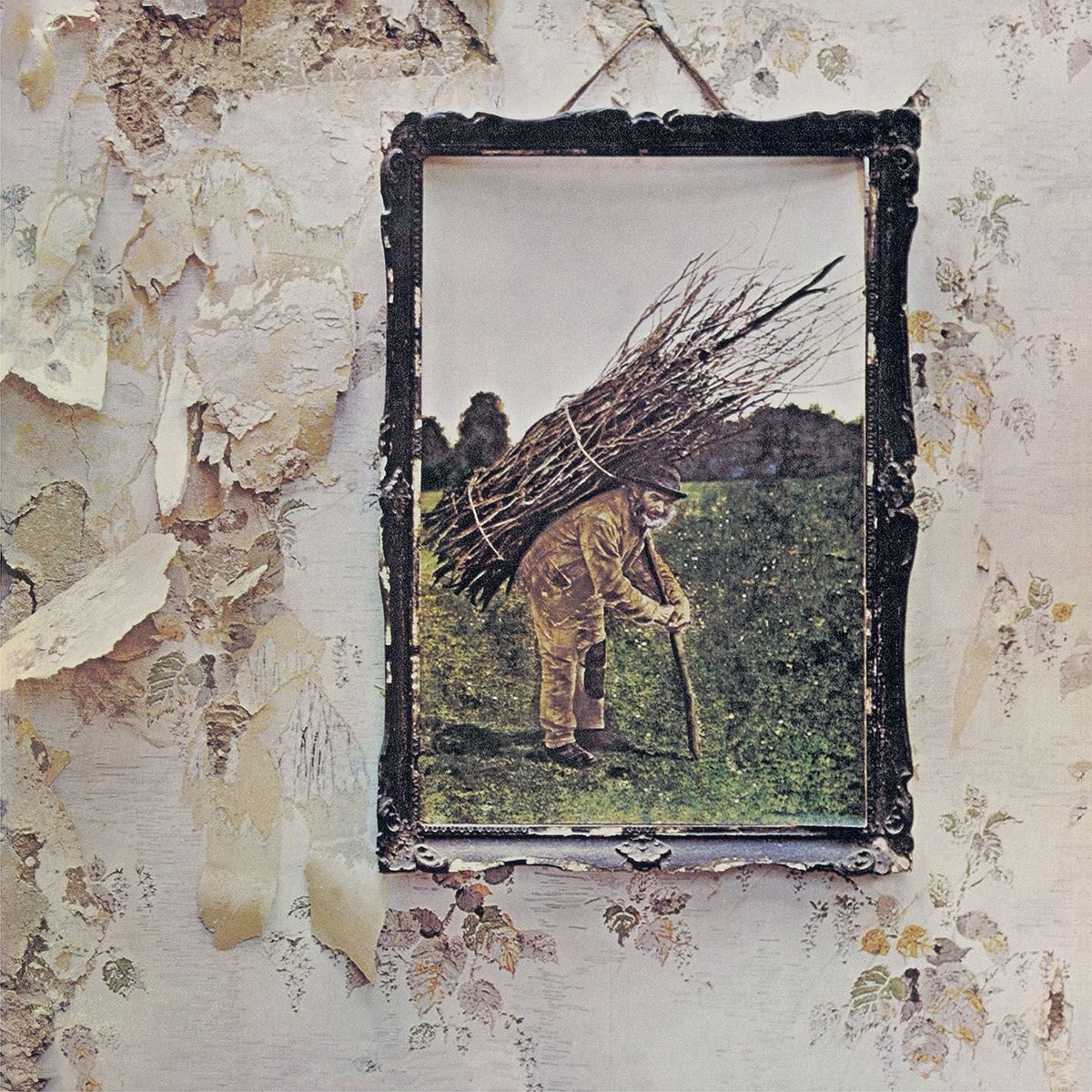
Led Zeppelin IV, also known as Four Symbols or Zoso, is the British band’s fourth studio album and one of the most important in Rock History.
It was released on November 8, 1971, with no official title on the cover and no mention of the band’s name, which sparked controversy with their record label, Atlantic.
Following the success of Led Zeppelin III, which had a more acoustic and folk-oriented sound, the band sought to evolve. Jimmy Page and Robert Plant returned to the Bron-Yr-Aur cabin in Wales to compose away from touring and reconnect with nature. They decided that this album would not feature a visible title as an artistic statement.
Each member chose a personal symbol to represent themselves on the back cover: Jimmy Page chose his mysterious ZoSo, Robert Plant a feather in a circle, John Paul Jones a sign of trust, and John Bonham three interlocking circles symbolizing his family.
Recording began in December 1970 at Island Studios in London. They then moved to Headley Grange, a dilapidated old country house in Hampshire, where they used the Rolling Stones’ mobile studio. That isolated setting with its special atmosphere was key. John Bonham recorded the drums for “When the Levee Breaks” in a three-story hallway, hanging microphones from the stairs to achieve that epic sound. Tracks like “Rock and Roll” emerged from spontaneous improvisations. The overdubs were done later in London, and the final mix was supervised by Jimmy Page in Los Angeles.
The cover features an old painting of an elderly man carrying firewood, found by Robert Plant and photographed on a crumbling wall. The back cover shows a modern building in Birmingham to contrast the old and the new. Inside, the figure of the Hermit from the Tarot appears alongside part of the lyrics to “Stairway to Heaven.”
It debuted at the top of the charts and became Led Zeppelin’s best-selling album, with over 37 million copies sold worldwide.
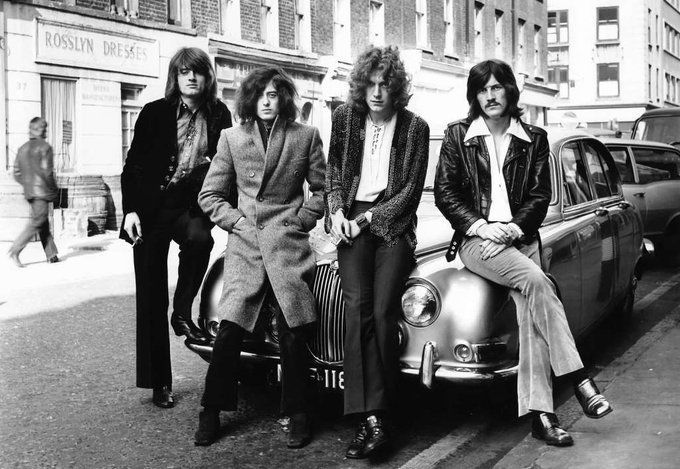
In late 1968, photographer Dick Barnatt captured this shot of Led Zeppelin leaning on a Jaguar in the streets of London. This was one of their first major shoots after becoming Led Zeppelin
Aquí Gran Rex y no lo puedo creer. Pensar que John Bonham murió en 1980. Que vi The Song Remains the Same en 1978 y a Plant y Page en numerosos conciertos. Que volé en los 70s con Zeppelin IV. Que estamos en el 2026.