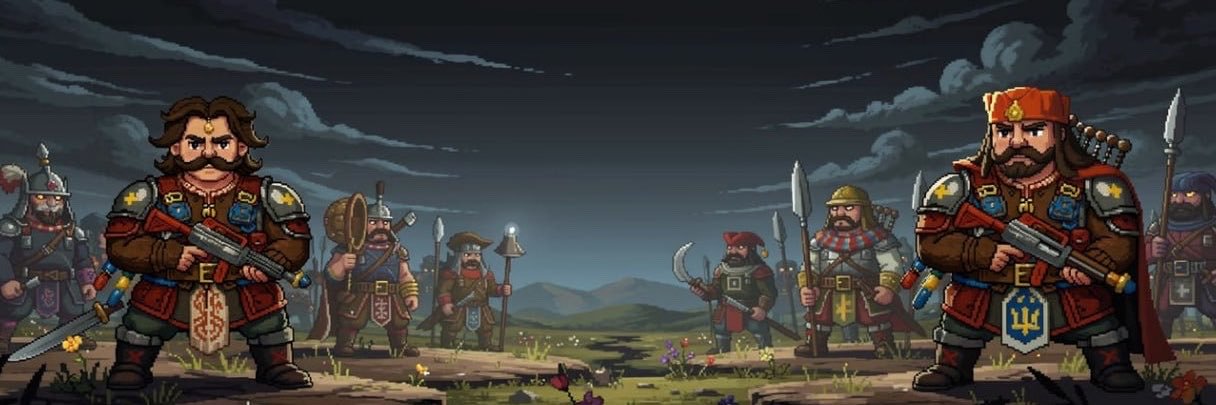
🎁 10 NFTs × $250 each.
I’m giving away 10 Kozak Pixel Army NFTs — $2,500 in total.
How to enter:
1️⃣ Follow
2️⃣ Like ❤️
3️⃣ Repost 🔁
4️⃣ Comment “KOZAK” 🫡
Winners will be announced soon.
#NFT#KozakPixelArmy#Web3#airdrop
It’s wild how much value we pour into digital assets we don't truly own. That rare skin, that legendary sword – all tied to a company's server. Web3 isn't just about NFTs; it's a fundamental shift towards player sovereignty in virtual worlds. Are we ready for that level of ownership?
The strange thing about AI art is it forces us to rethink digital ownership *beyond* just 'right-click save'.
Is true ownership of an AI-generated piece tied to the prompt, the model, or the tokenized output? We're defining new digital property rights in real-time. What do you think is the strongest claim?
Years from now, we won't talk about "NFTs" as much as "digital assets" or "internet ownership." The tech will fade into the background, becoming an invisible layer that powers our online lives. Are we already seeing this semantic shift, or are we still too focused on the buzzword?
We're debating ownership of JPEGs, but the real challenge for digital rights is AI-generated art. Who owns a piece created by an algorithm? The prompt engineer? The model developer? The dataset owner? That's where the truly complex legal and philosophical battles begin.
Years from now, we won't remember gaming NFTs for their speculative price swings or questionable launches. We'll see them as the primitive ancestors of true cross-game digital identities and immutable ownership. Imagine taking your earned legacy to any virtual world. That's the real game.
Most conversations about NFTs miss the quiet shift happening: away from just digital art and towards truly owning your digital identity. It's less about a profile picture, more about the foundational layers of your online self.
What changes when you genuinely own your digital presence, not just rent it?
Most of us spend hours customizing our digital avatars, pouring creativity into a self that often lives on rented land. True digital ownership means owning *that* identity, not just a profile pic.
What does a truly portable, persistent digital self actually look like in Web3?
Nobody talks about the quiet identity crisis AI is creating for artists. It's not just a tool; it's a co-creator, sometimes even the primary brush. How does an artist sign their name to a piece deeply shaped by an algorithm? Where does 'ownership' truly lie in this new paradigm? #AIArt
The strange thing about 'owning' digital assets: A single server crash or company shutdown can erase years of your digital collection. Game skins, movie libraries, ebooks – all gone. Makes you wonder if true digital ownership is only real when it's on-chain and permissionless.
Years from now, will we collect NFTs minted by advanced AI entities acting as independent artists? The lines between creator, owner, and digital identity are already blurring. It's a fascinating challenge for true digital ownership.
The most unsettling question about AI art isn't just who owns the output. It's about whether an algorithm can possess genuine 'artistic intent' or a 'soul'. If code can evoke profound emotions, does it redefine what it means to be a creator?
Nobody talks about the weirdest part of AI art intersecting with NFTs. It's not just "who made it," but *what* "it" even is. A prompt? A model's output? A human curation? We're trying to apply 20th-century ownership rules to 22nd-century creation. How do you define "original" in that future?
Nobody talks about how AI art production changes the very definition of digital scarcity.
If an AI can generate a thousand unique variations in minutes, what does "limited edition" truly mean for digital art NFTs anymore? Are we valuing the prompt, the artist, or something else entirely?
Years from now, we'll look back and realize Web3 wasn't just about JPEGs and volatile coins. It was subtly rewiring how we think about ownership and digital identity, long before the masses noticed.
Which aspect do you think will be the most impactful in retrospect?
Most people still think digital assets are 'just pixels' or 'jpegs'. But when you own an NFT that unlocks a real community, exclusive access, or even future utility, that 'pixel' can feel more tangible than a physical collectible. Where do you think the true value lies?
For decades, we happily 'owned' digital items within walled gardens, renting access without true property rights.
Then NFTs emerged, offering genuine digital ownership, and suddenly it's 'just a JPEG.'
The real resistance isn't to the tech, but to the idea that digital value can be truly yours outside of corporate control. A fundamental shift in perspective.
The 'AI art has no soul' argument is missing the point. It's not that AI lacks soul, it's that it can *mimic* what we perceive as soulful so convincingly. That's the unsettling part for many.
Does the value lie in the human struggle of creation, or solely in the aesthetic outcome?
The quiet revolution in digital ownership isn't always about high-value JPEGs. It's increasingly about the utility, status, or unique experiences tied to digital assets inside games, platforms, or communities.
Are we moving beyond 'collecting' to genuinely 'living' with our digital property? What's the most *useful* digital thing you own?
It's wild how much of our "digital lives" are just subscriptions or licenses. You don't own the music, the movies, often not even your software. Web3 pushes for actual ownership. Which future is more appealing: perpetual renting or true digital property?
If an AI generates art using thousands of existing styles, who truly 'owns' the aesthetic? It's not just about copyright, but the very concept of creative origin. Is it the AI's 'creator'? The data providers? Or a new form of digital commons? This question will redefine digital ownership in the coming decade. Thoughts?