Literalmente, un lago se vació en cuestión de horas y desencadenó el desastre en Nepal.
El agua contenida por un glaciar logró romper la barrera de hielo y, a partir de ese momento, la fuerza de la naturaleza fue simplemente implacable.
NEPAL FLOOD: HORRIFIC AERIAL VIEW
A horrific helicopter view of the Trishuli River corridor after the devastating floods in Nepal.
The scale of destruction is terrifying.
Fertilization is not random, and the fastest sperm does not always win: in reality, the egg decides who succeeds.
While for decades we were taught that fertilization is a race won by the fastest sperm, a study published in Proceedings of the Royal Society B shows how human reproduction actually works.
Scientists analyzed follicular fluid from 60 couples undergoing fertility treatment at St Mary's Hospital in Manchester, UK. They discovered that the egg releases chemical signals (chemoattractants) that actively attract sperm from certain men over others.
Through these chemical signals, the egg exerts its own biological selection, influencing which sperm manage to get close. The egg appears to favor sperm that offer optimal genetic compatibility with its own genome, particularly in genes related to the immune system, which may help produce healthier offspring.
Interestingly, this cellular preference does not always align with the couple’s conscious partner choice. In many cases, eggs showed stronger attraction to sperm from non-partner males.
This chemical communication demonstrates that female biology continues to evaluate and select options even after intercourse. Understanding this process could lead to more precise solutions for unexplained infertility. Science continues to reveal the remarkable level of biological interaction that occurs during reproduction.
[Fitzpatrick, J. L. et al. (2020). Chemical signals from eggs facilitate cryptic female choice in humans. Proceedings of the Royal Society B, 287(1928), 20200805. DOI: 10.1098/rspb.2020.0805]
🚨En 1986 lo echaron de TODOS los casinos de Las Vegas por contar cartas.
Así que se subió a un avión con 180.000 dólares y aterrizó en Hong Kong. Empezó a apostar a caballos.
Se fue con casi 900 millones.
Se llama Bill Benter.
Descubrió que las carreras de caballos no eran más que otro juego de conteo… solo que con más variables.
Llegó con un socio, 180k y una computadora.
Pasó años entrenándola para una sola cosa: calcular la probabilidad REAL de que cada caballo ganara.
Si su número era mejor que las cuotas del bookie → apostaba.
Si no → pasaba.
Esa es toda la “trampa”:
Valor esperado.
EV = p · b − (1 − p)
Solo apuestas cuando tu probabilidad de ganar (p) a esas cuotas (b) vale más que tu probabilidad de perder.
Esta clase nunca se grabó para hacerse viral.
Nadie pensaba que el profesor Tsitsiklis iba a soltar toda la base en 45 minutos en una pizarra.
Los alumnos de esa sala pagan más de 80.000 dólares al año por escucharlo.
Y aquí está gratis.
Todo quant, todo apostador profesional, todo analista de hedge fund empezó exactamente con esta hora.
Benter solo la vio… y realmente hizo la tarea.
Casi nadie sabe que esta conferencia existe.
Mírala antes de que la bajen.
La respuesta está en el video.
-Animal Planet™️ 🌎 -
A heartfelt thank you to **Cristina Zenato** 🦈💙
In 1996, while diving, a shark approached her with a fishing hook lodged in its mouth. Instead of fear, she chose courage and carefully removed it. That single act of compassion opened a door that has stayed open for three decades.
Since then, Cristina has removed over 400 hooks from the mouths of wild Caribbean reef sharks — by hand, often reaching deep into their jaws — without ever being harmed. Sharks she knows by name return to her. New ones sometimes seek her out. What began as one act of kindness has become a quiet, powerful partnership built on trust and respect.
Despite skepticism and concern from those around her, she kept showing up for these animals. Her work reminds us that fear doesn’t have to win when purpose is stronger, and that even the ocean’s most misunderstood creatures can recognize genuine care.
Thank you, Cristina, for the patience, the skill, the decades of dedication, and for showing the world a different side of sharks — one that is capable of connection, vulnerability, and healing.
The ocean (and the rest of us) are better because of people like you.
#CristinaZenato #SharkConservation #RespectTheOcean
In 1996, an Italian born diver named Cristina Zenato was on a routine dive off the coast of the Bahamas when a shark approached her. It did not attack. Instead, it circled her, revealing a fishing hook lodged deep in its mouth.
Most people would have frozen. Cristina reached out and removed the hook.
The shark, later named Foggy Eye, returned to her afterward and kept showing up at her dives. Word seemed to travel through the reef. One by one, other injured sharks began approaching her, each carrying its own hook, its own quiet request for help.
Over the next 20 years, Cristina removed nearly 300 hooks from sharks. She did this despite heavy opposition from family and friends who feared for her safety. She was never harmed.
Today she is known as the Shark Whisperer, a title earned through patience, trust, and an unshakable belief that these creatures deserve to be understood rather than feared.
Fear yields to purpose when you master your instincts.
How did Odysseus take 10 years to return home if Troy and Ithaca are separated by just only a few days of sailing. 🤔
Watch this video to get the answer. 😭
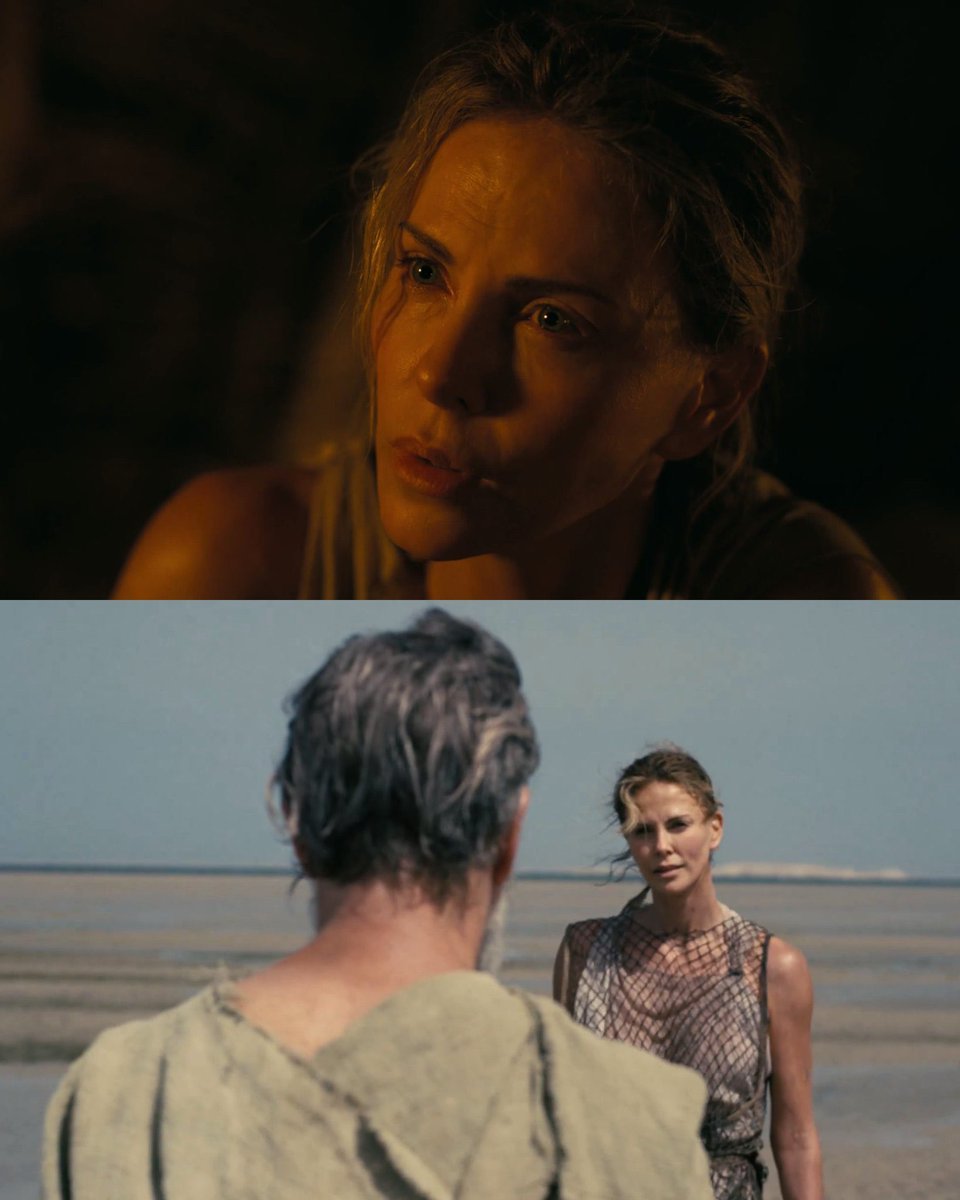
Jujur siapa yang habis nonton The Odyssey jadi pengen ngulik mitologi Yunani? 👀
Nah kali ini aku mau spill lore salah satu karakter yang menurutku kurang dieksplor di filmnya, yaitu Calypso.
Di film Nolan dia keliatan kayak cewek baik hati yang nolong Odysseus. Padahal... di cerita aslinya karakter ini jauh lebih kompleks. Bisa dibilang dia juga salah satu karakter paling morally grey di mitologi Yunani.
A thread 🧵
A viral video of a Thai passenger asking a group of young foreign tourists to lower their voices on the BTS has sparked a wider conversation about courtesy on public transport in Bangkok.
In the clip, the group can be heard speaking loudly inside a train carriage. After one person tries to block her camera, the Thai woman asks them to keep their voices down. A young woman in the group says they are discussing where to go next, and the passenger replies that talking is fine, but should be done at a normal volume.
She tells them that people in Thailand do not usually shout or scream on public transport.
The exchange escalates when one tourist responds: “Then sorry for bringing money to your country,” drawing laughter from others in the group. The Thai woman calls the remark bad manners, while others tell her to “shut up” and demand to know what her problem is. The group later gets off at the next station.
The footage has drawn strong reactions online, particularly over the suggestion that spending money as a visitor excuses disrespectful behaviour.
There may be no expectation of complete silence on the BTS, but many Bangkok commuters do keep conversations low and avoid drawing attention in a crowded carriage, especially late at night.
Was her response over the top, or are you glad she said what other passengers may have been thinking?