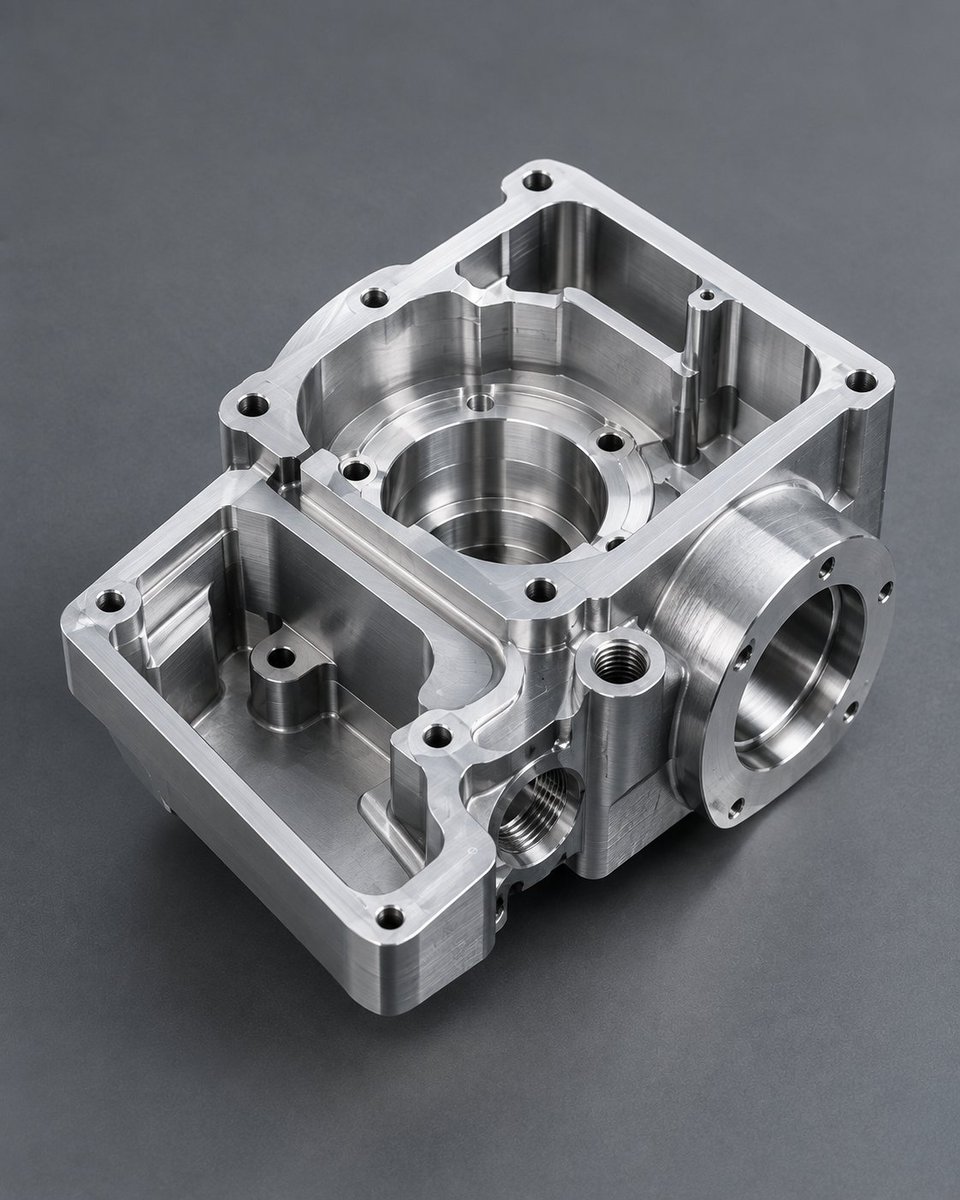
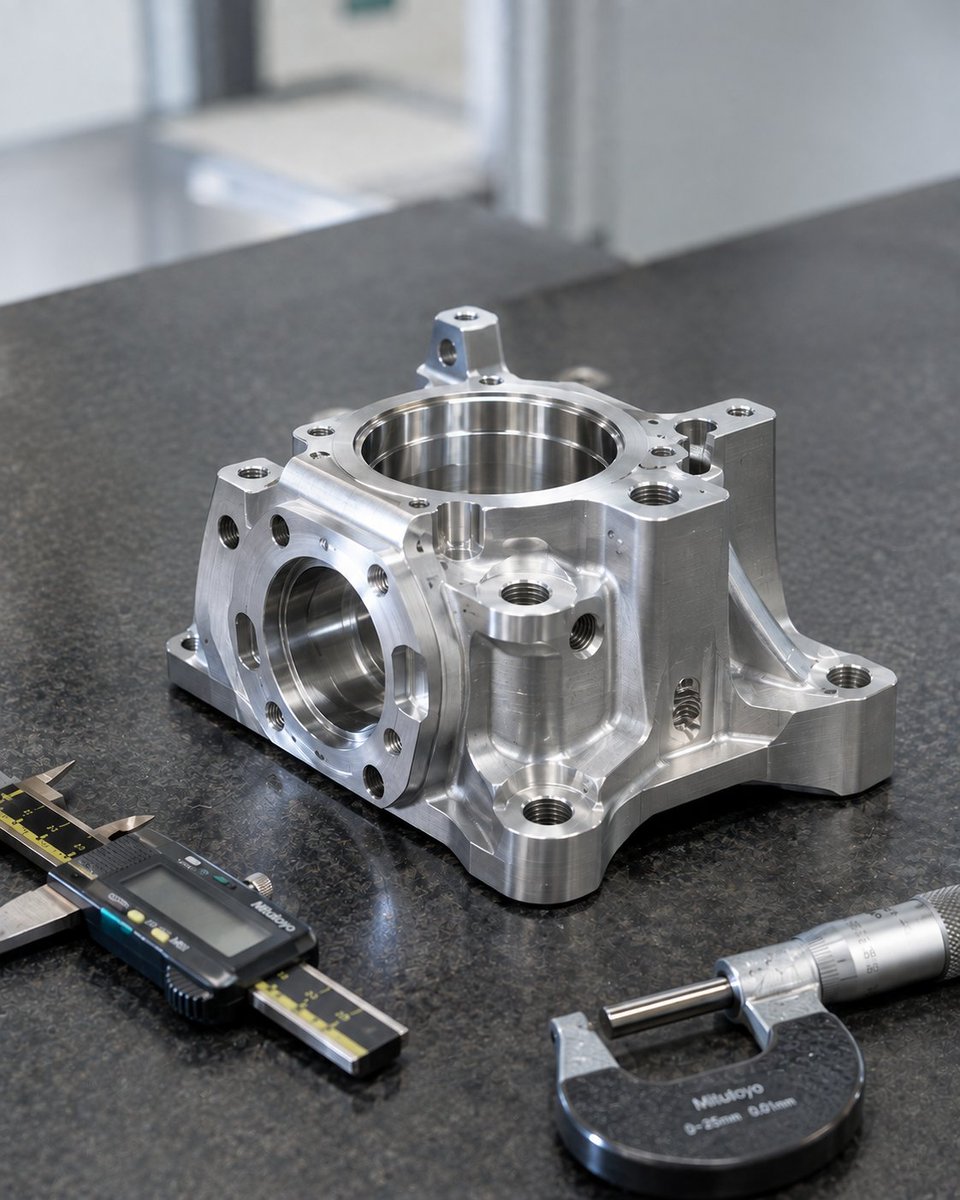
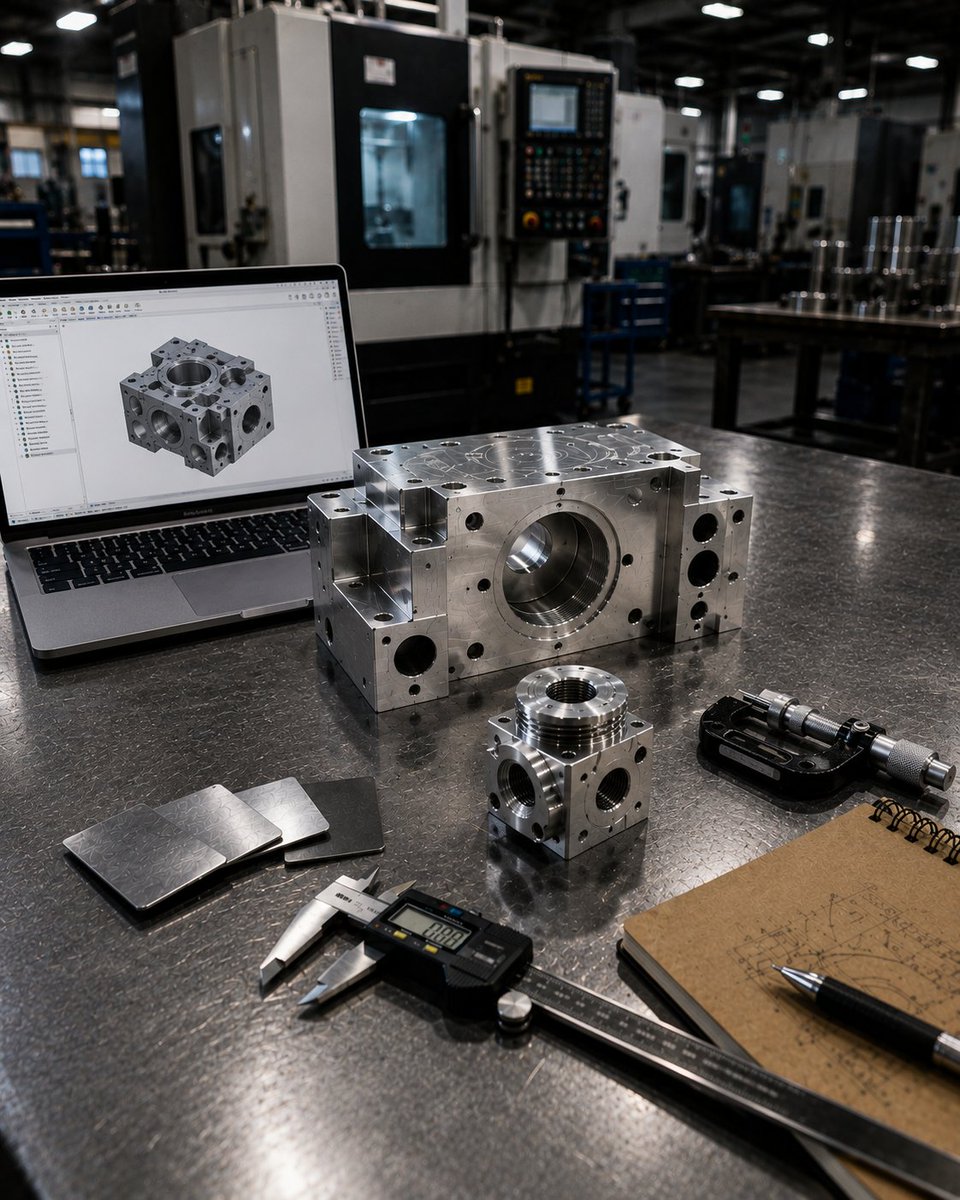
Inspection planning starts before machining.
Datum selection, measurement access, and tolerance requirements all play a role in achieving consistent dimensional quality.
Precision is planned, not just inspected.
#CNCMachining#PrecisionEngineering
Thread quality is more than getting the right size.
Accuracy, proper engagement, and burr control all matter for reliable assembly.
In precision CNC machining, even the smallest features deserve attention.
#CNCMachining#PrecisionEngineering
A smooth finish doesn't tell the whole story.
Surface integrity also considers residual stresses, subsurface deformation, and material changes caused by machining.
In precision CNC manufacturing, what's beneath the surface matters too.
#CNCMachining#PrecisionEngineering
Heat can influence dimensional accuracy in CNC machining.
Managing thermal variations is essential when manufacturing components with tight tolerances.
Precision requires temperature control.
#CNCMachining#PrecisionEngineering
Small burrs can create big problems.
In CNC machining, edge quality matters for assembly fit, component performance, and finishing requirements.
Precision goes beyond dimensions.
#CNCMachining#QualityControl
Precision machining starts with the right reference points.
Poor datum selection can lead to alignment errors, inconsistent measurements, and assembly issues.
The right datum makes a difference.
#CNCMachining#GDandT
First-article approval is just the beginning.
Ongoing inspection and process monitoring help maintain CNC machining quality throughout production.
Consistency is the real objective.
#CNCMachining#QualityControl
Deep pockets. Narrow channels. Limited tool access.
Internal geometry can increase CNC machining complexity, cost, and deflection risk.
Design for manufacturability matters from the start.
#CNCMachining#DFM
Tool wear can gradually affect dimensions, surface finish, and process stability. Effective monitoring helps manufacturers balance tool life against quality risks, scrap, and unplanned downtime.
#CNCMachining#Manufacturing
A complex part isn't made by a machine alone.
Programming, tooling, fixturing, inspection, and process control all play a role in achieving consistent precision.
#CNCMachining#Manufacturing#Engineering
Good design doesn't stop at functionality.
Features like wall thickness, corner radii, and tool access can have a major impact on machining efficiency and production cost.
#DFM#CNCMachining#Manufacturing
Quality starts with verification.
First Article Inspection (FAI) helps confirm that dimensions, materials, and critical features meet requirements before production moves forward.
#FAI#QualityControl#CNCMachining#Manufacturing
Complex internal features demand more than precision machining. Deep pockets, internal channels, and precision bores require the right tooling, process control, and inspection strategy.
#CNCMachining#Manufacturing#Engineering
Inspection data is more than a quality check.
It helps identify trends, reduce variation, improve repeatability, and drive continuous improvement across manufacturing operations.
#CNCMachining#QualityControl#Manufacturing#Engineering
Multi-material assemblies can improve performance, but they also introduce machining, tolerance, and assembly challenges.
Success depends on understanding how different materials work together.
#CNCMachining#Manufacturing#Engineering
Many manufacturing issues can be prevented through early collaboration.
Involving suppliers during design can improve manufacturability, reduce costs, and accelerate production readiness.
#Manufacturing#Engineering#CNCMachining
A component can meet dimensional tolerances and still create performance issues if flatness or parallelism is not controlled.
Geometric accuracy matters.
#CNCMachining#Manufacturing#Engineering#GDandT
A hole can meet its diameter tolerance and still fail its purpose if the position is incorrect.
In many assemblies, location accuracy matters as much as size.
#CNCMachining#Engineering#Manufacturing#GDandT