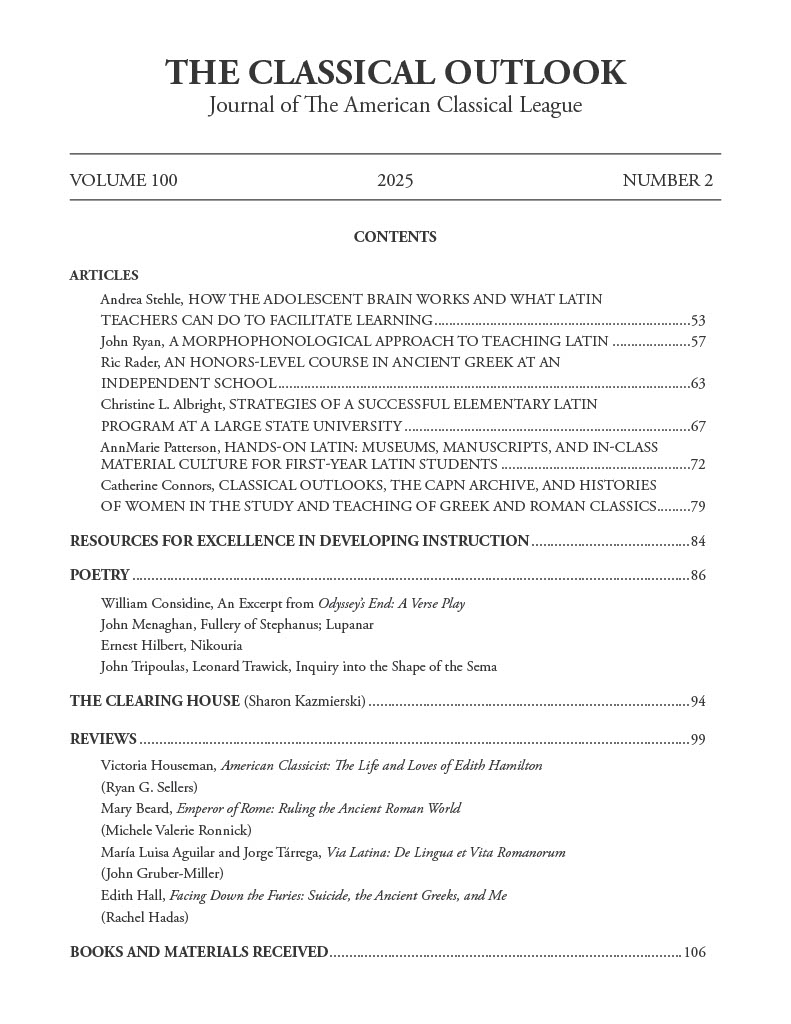
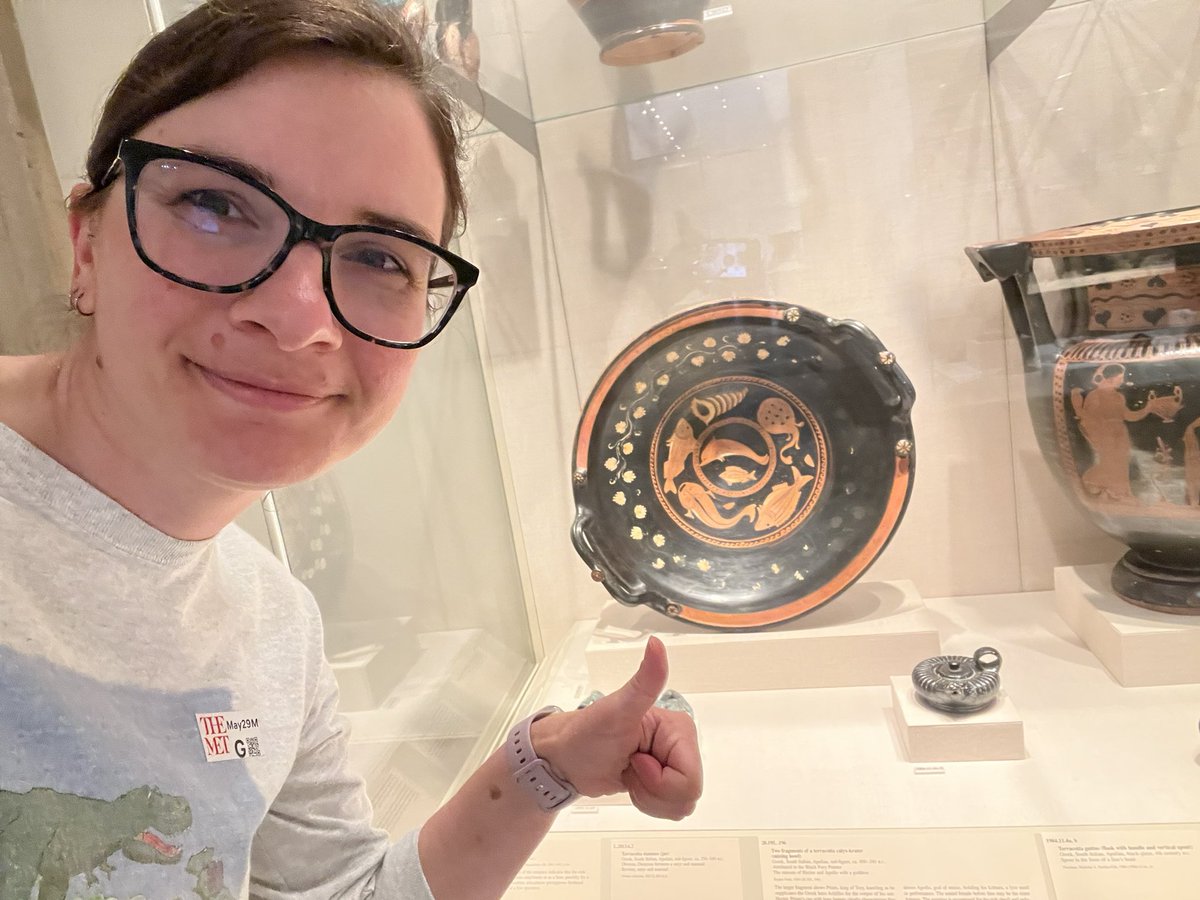
@duxfeminafacti9 I don’t color code but I suggest advanced students annotate using
NOM - single underline
ACC - double underline
VERB - circle
They put a triangle around conjunctions and bracket off clauses to help see nesting. I find this helps them organize what is essential versus added
Using Goethe's travel writings as inspiration, Lafayette College's Markus Dubischar lays out the outline of, readings for, and reflections on teaching "Journey to Rome", a course abroad that offers high-impact learning to students of many disciplines. Classical Outlook, 100.3.
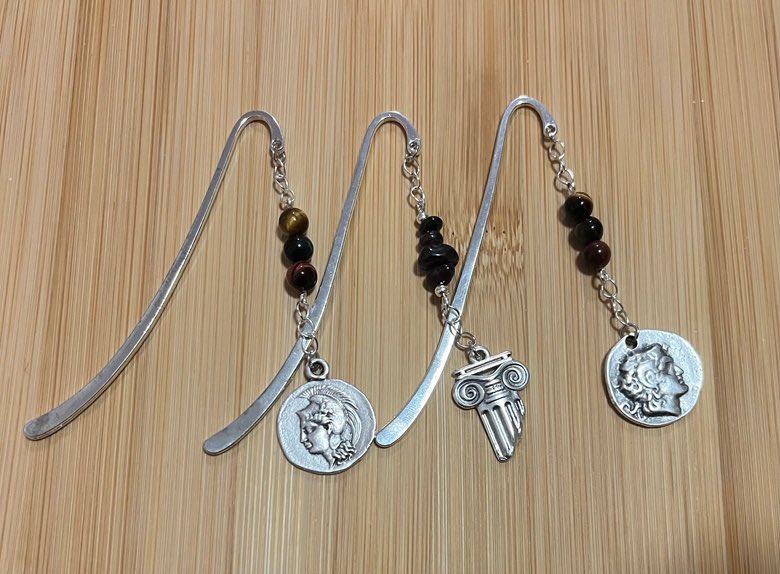
I’m Meg, a PhD researcher in Classics. I sell handmade jewellery inspired by my love of the ancient world using replicas of genuine Greek and Roman coins. All sales help support an early career scholar AND you get to own a beautiful thing! #ClassicsTwitter https://t.co/2tVEdIHIJP
📣 REMINDER: Teaching Classical Studies Across Curricula — a Zoom roundtable by The Classical Outlook, ACL, & SCS 🏛️
📅 Wed, Oct 22, 2025 | 🕢 7:30 PM ET
All welcome! Register 👉 https://t.co/LMmpYMCxfB
K–12 & college educators share cross-disciplinary classics teaching ideas!
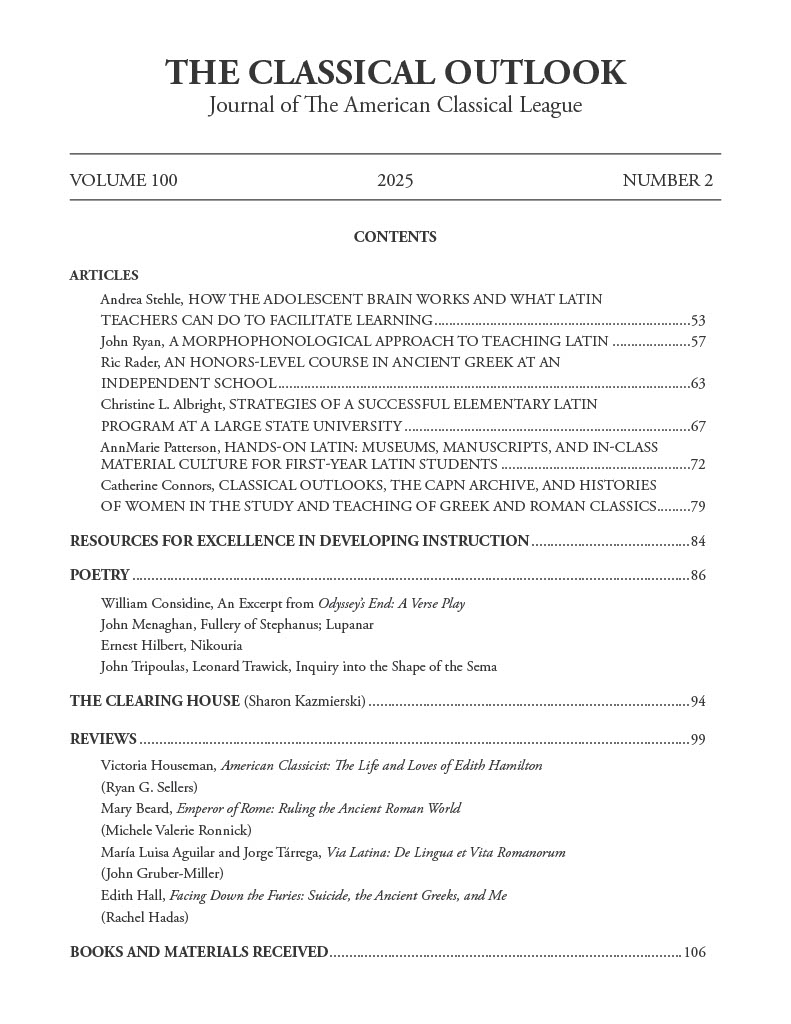
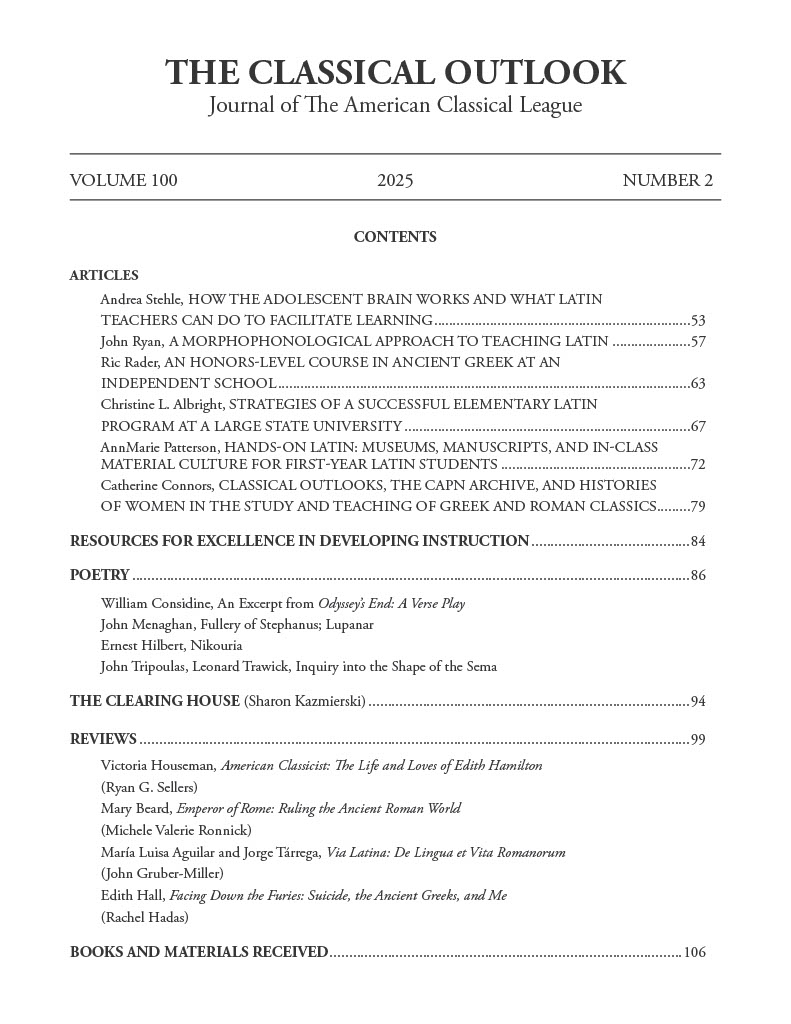
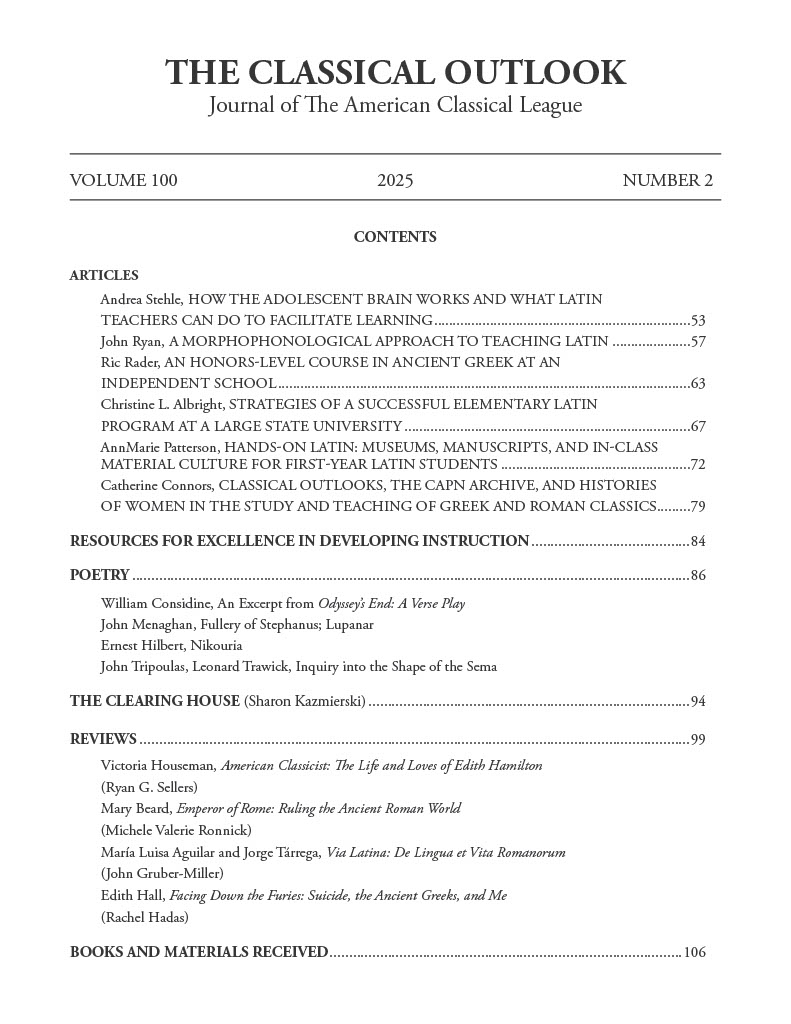
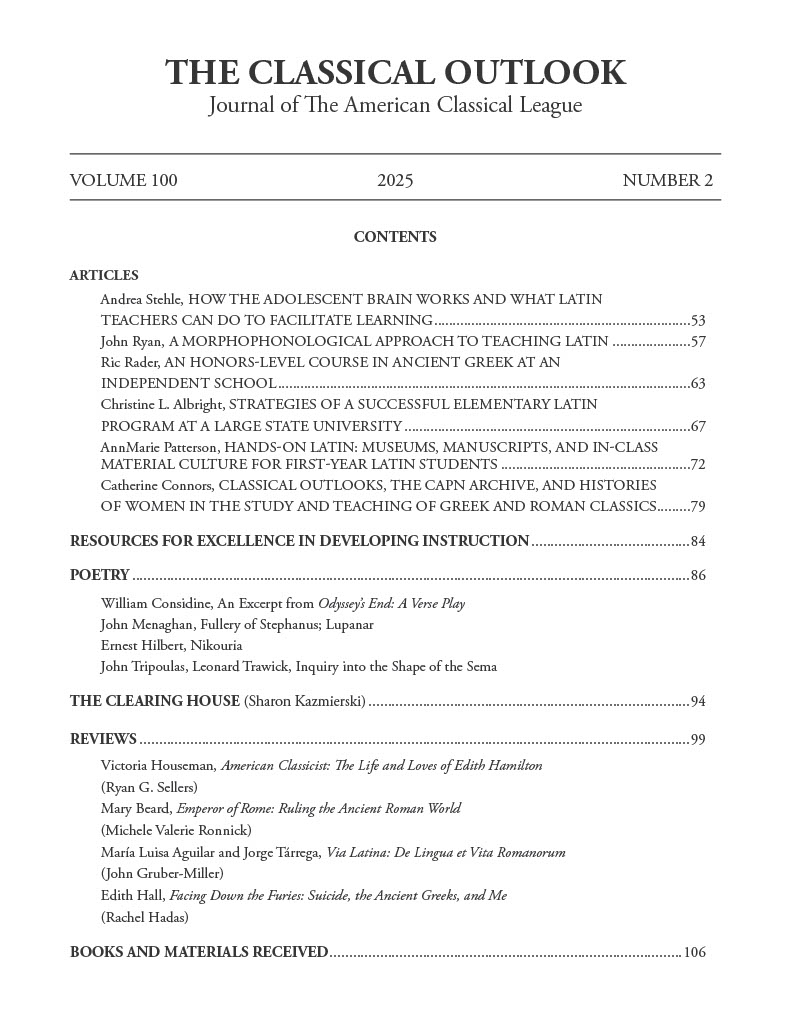
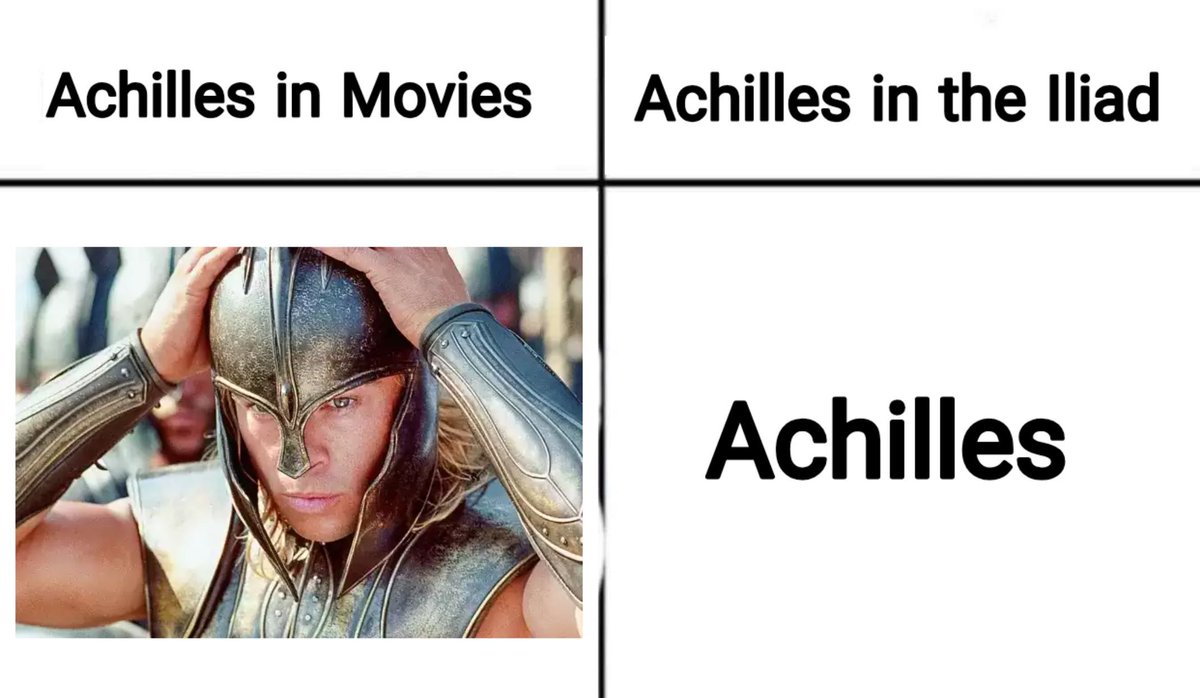
Ric Rader's essay on the difficulties and joys of teaching "An Honors-Level Course in Ancient Greek at an Independent School" features in CO 100.2, sharing successes and challenges of changing "priorities [to] shift away from grammar acquisition."
In The Classical Outlook 100.2, "Strategies of a Successful Elementary Latin Program at a Large State University," Christine Albright shares the victories and challenges in flipping and hybridizing classes to increase enrollment and retention in her university's program.
Interested in bringing your Latin students to material culture, or vice versa? AnnMarie Patterson's "Hands-On Latin: Museums, Manuscripts, and In-Class Material Culture for First-Year Latin Students" in The Classical Outlook 100.2 shares how to make these experiences happen.
John Ryan's essay "A Morphophonological Approach to Teaching Latin" (published in CO 100.2) provides an alternative method of teaching morphology deductively, focused on increasing precision, grammatical literacy, and close reading.
At this year’s National Book Awards, the classicist, poet, and professor Anne Carson shared with us the author she recommends to everyone and the best writing advice she’s given.
Metacognition, schemata, dual encoding, and more in Classical Outlook 100.2! Read about second language acquisition and retention research in Andrea Stehle's essay "How the Adolescent Brain Works and What Latin TeachersCan Do To Facilitate Learning."
To commemorate The Classical Outlook's 100th volume, each issue features short pieces from editorial board members. In issue 100.2, read "Classical Outlooks, the CAPN Archive, and Histories of Women in the Study and Teaching of Greek and Roman Classics" by Catherine Connors.
The second essay in CO 100.1, "Teaching (Classics with) Generosity, Or Making Medeas Medea" (pp.6-17) outlines a Brown University graduate seminar with descriptions of its reading practices, listening strategies, and discussion around the past, present, and future of Classics







![ACLClassics's tweet photo. Ric Rader's essay on the difficulties and joys of teaching "An Honors-Level Course in Ancient Greek at an Independent School" features in CO 100.2, sharing successes and challenges of changing "priorities [to] shift away from grammar acquisition." https://t.co/JyBRVZhP21](https://pbs.twimg.com/media/GwOb24-WcAAPtPL.jpg)