Big Breaking 🚨
US sources claimed The Washington Post was paid 15 million by the Deep State to run an anti-India and anti-Modi campaign.
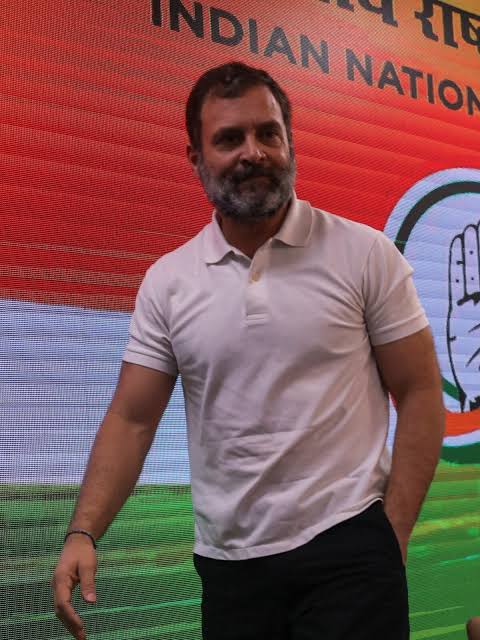
This propaganda was launched from the US so that Congress can push its agenda in India. Their ultimate goal? Regime change to make Rahul Gandhi as Prime Minister.
Big Question is How long will Modiji tolerate this foreign funded narrative war?
This is what happens when someone molest Australia Women's Team 😅
Thank You Indore Police for Quick Action👏🏻, btw, the handicapped person is Aqueel Khan from so-called peaceful community 😆
@NehaSinghratho Ask ur Vadrani
Was she Fcuk with Pakistani n have child with him ?
Ask ur Vadrani
Was Rajiv is Raul Vinci n Biyanka Vinci common dad or both have different daddy
BlackRock US based worlds biggest asset management company holds 750 million dollars worth bonds of Adani
Does it mean US govt is backing Adani ?
No dud it was just a business decision
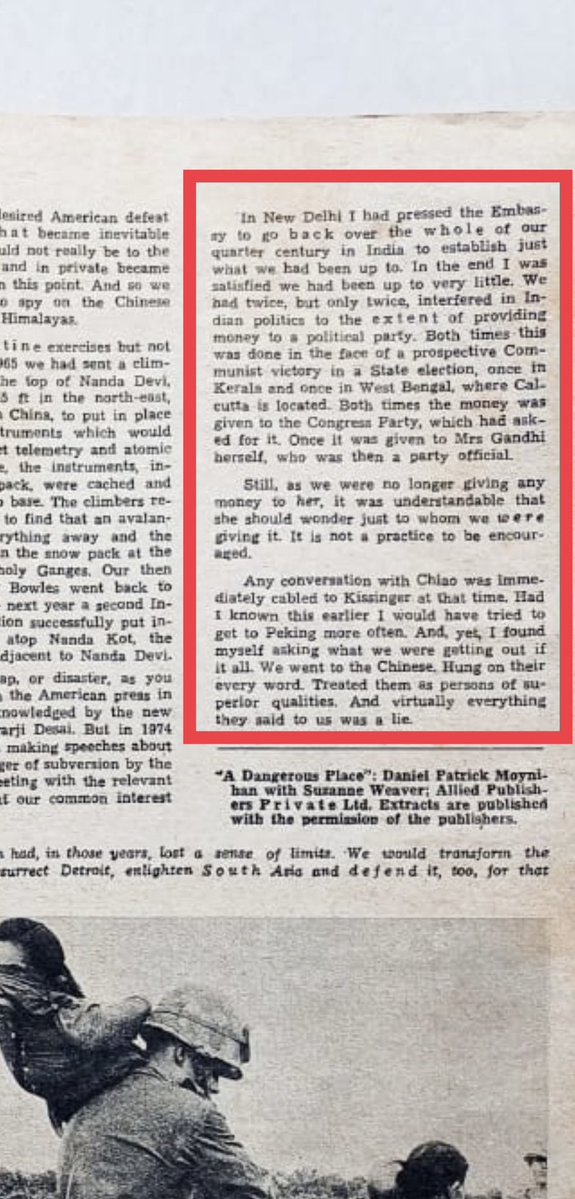
The United States' Central Intelligence Agency (CIA) played a role in supporting India's Congress Party during its rule, including providing funds that helped Prime Minister Indira Gandhi secure electoral victories. This revelation came from Daniel Patrick Moynihan, who served as the U.S. Ambassador to India from 1973 to 1975. In 1978, Moynihan published a bombshell book titled *A Dangerous Place*, where he disclosed that the CIA had secretly funded the Congress Party on two occasions, specifically in the states of Kerala and West Bengal. He also alleged that Indira Gandhi had personally received money from the agency.
These claims emerged against a backdrop of strained U.S.-India relations under Gandhi's leadership. She harbored deep suspicions of the CIA, fearing it might orchestrate a coup against her government, similar to its interventions in other developing nations.
Throughout the 1970s, Gandhi frequently accused the CIA of meddling in India's internal affairs, popularising the notion of a "foreign hand" behind domestic issues—a phrase that became a staple of political satire. These persistent criticisms damaged bilateral ties, leading the U.S. to reduce economic aid and downgrade India's priority in foreign policy.
As ambassador during this turbulent period, Moynihan grew frustrated with Gandhi's attacks and initiated an internal review of CIA operations in India. The inquiry confirmed the agency's financial support to the Congress Party. Moynihan's book ignited a firestorm in Indian politics, proving especially humiliating for Gandhi, who had positioned herself as the CIA's fiercest opponent.
The controversy escalated into one of 1978's biggest scandals. The ruling Janata Party government, including Foreign Minister Atal Bihari Vajpayee, lambasted Gandhi over her alleged CIA connections. The Rashtriya Swayamsevak Sangh (RSS) joined the fray, criticizing the former prime minister. In response, Gandhi's supporters retaliated by branding Moynihan a "racist," "imperialist," and "Zionist," and publicly burned copies of his book. Calls emerged for declassifying government records on CIA funding, but both Congress and Janata politicians, many of whom had their own ties to the agency, resisted a full investigation.
In April 1979, Vajpayee met Moynihan in the U.S., and the following month, the Lok Sabha debated the issue intensely. Congress leader C.M. Stephen accused Moynihan of harboring racist views against Third World nations like India, while others demanded a thorough probe. U.S. officials grew concerned that India might seek classified details. Secretary of State Warren Christopher assured India's ambassador that Gandhi had not personally received CIA funds, though he remained silent on whether the Congress Party had. Moynihan later clarified that Gandhi herself had not directly accepted money but was aware of the CIA's support for her party.
The fallout further tarnished Gandhi's image, already battered by the Emergency period from 1975 to 1977. This was not the end of U.S.-India intelligence scandals; subsequent reports alleged a CIA mole in Gandhi's cabinet during the 1971 Indo-Pak War, which became a flashpoint in the 1980 elections and lingered over bilateral relations for years.
According to former KGB archivist Vasili Mitrokhin, Indira Gandhi also received funds from the Soviet KGB, with suitcases of cash reportedly tossed into cars at traffic lights—though she allegedly never returned the empty cases. When accused of corruption, Gandhi dismissively remarked that it was a global phenomenon occurring everywhere. The late Ram Jethmalani detailed this in an article for *The Sunday Guardian*. While Jawaharlal Nehru laid the groundwork for such issues, they flourished into a destructive force under Indira, who reportedly drew financial support from both the CIA and KGB.
The Gandhi family, it seems, rarely turned down money from any source or for any purpose.
🚨🇯🇵NEW PRIME MINISTER OF JAPAN MAKES MASS DEPORTATIONS FIRST POLICY
Sanae Takaichi was sworn in and IMMEDIATELY created a ministry for mass deportations
How can you not be jealous?
Imagine a country defending its own people
Rahul Gandhi betrayed me, I waited for 3 days in Delhi, sought his appointment but he didn't even meet me - Dalit man Bhagirath Manjhi
Hey @sardesairajdeep, any show on this?