I challenge you to read every single post , please, Thank you much obliged https://t.co/BBZAbENzdR ,
https://t.co/wofYIiBTbZ , https://t.co/hSRqGUGsS6 https://t.co/KWm6W5vu8b
https://t.co/BvXgJYG9c6
https://t.co/7Q9rkY1o3s
https://t.co/5uf0pUy4TX
If you were born between 1992 and 1999, studies show you got the rarest version of childhood.
People born between 1992 and 1999 belong to a unique micro-generation known as Zillennials. They experienced a rare cultural sweet spot because they are the last group to remember a fully analog childhood but the first to navigate a completely digital adolescence.
During their early years, life was fundamentally unplugged. They played outside until the streetlights came on, watched movies on VHS tapes, and used landlines to call friends. Entertainment required physical presence and imagination, creating a childhood detached from constant public scrutiny or online validation.
As they entered middle and high school, the world shifted beneath them. They witnessed the birth of the modern internet, the launch of the first smartphones, and the rise of early social media platforms like Myspace and Facebook. They did not grow up with tablets as toddlers, but they were tech-savvy enough to adopt new devices instantly as teenagers.
This specific timing created a generation that acts as a linguistic and cultural bridge. They understand the slow pace of the pre-internet era, yet they are entirely fluent in modern digital culture. This dual perspective gives them a rare form of adaptability, allowing them to relate equally to older adults and younger digital natives.
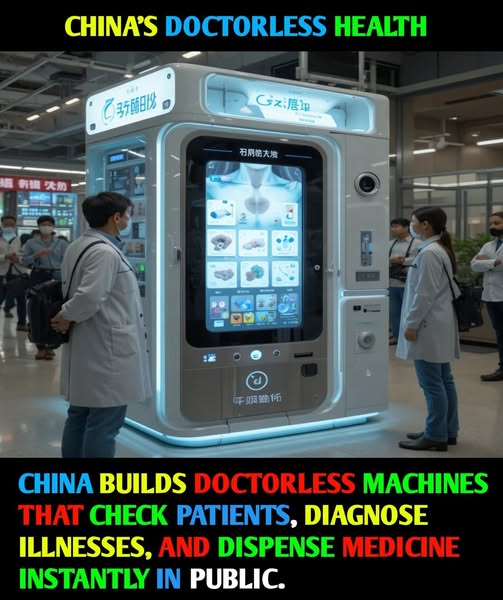
China has introduced AI-powered health kiosks that operate entirely without human doctors. These advanced booths scan vital signs, conduct basic tests, and use AI to diagnose common illnesses within minutes.
Each unit includes sensors, cameras, and automated dispensers for over-the-counter medicines. Patients step inside, input symptoms, and receive instant prescriptions or referrals to hospitals if needed.
Deployed in metro stations, shopping centers, and rural areas, these kiosks offer 24/7 access to healthcare, bridging the medical gap in underserved regions. Experts believe they represent a major leap in automated public health technology.
Please please please help us praise up 1 million dollars to help us save our home & community garden project: Hoping for a Garden: https://t.co/bQWpuNR9Uo
If you think you can help us raise up on end goal of 5 million dollars, please contact us ASAP! Thank you!
Binturong, also known as a Bearcat, not to be mistaken as a relative of a cat or a bear.
These magnificent creatures are carnivores, but often eat fruit. They have a very distinctive smell: popcorn. Bearcats are not often seen by humans because they are usually hanging out in the trees. Something unique about them is they can turn their ankles 180° so their claws can still grip while climbing down headfirst.
Bearcats help to replant rainforests through the spread of fruit seeds through their fecal deposits.
They communicate by snorts and chuckles, and high-pitched screams when bothered.
Pretty nifty creatures!
We trained an AI using process supervision — rewarding the thought process rather than the outcome — to achieve new state-of-art in mathematical reasoning. Encouraging sign for alignment of advanced AIs: …https://t.co/ryaODghohn
@elonmusk@micsolana I agree with @elonmusk on this one. Problem is, you can not just decriminalize, you need measures to decrease consumption by other means, like treatment and proper education on dangers and responsible use. You also need to fight poverty. Not sure how popular that is in the U.S.A.
@AnonOpsUnited I’m told Putin called me a war criminal for helping Ukraine, so he’s not exactly my best friend.
All news is to some degree propaganda. Let people decide for themselves.