🚨This video is terrifying.
And it’s another example of how ICE is making everyone less safe.
At Las Vegas International Airport, two people, in plain clothes, are seen trying to handcuff a man.
The man is screaming for help.
When the person filming asks a TSA agent what is happening, the agent replies, “It’s law enforcement.”
But when the person filming walks over and starts recording the people claiming to be law enforcement, one of them tries to swat the phone away.
Then, as more people begin watching, they get up and leave.
The man is left with a handcuff still attached to one of his wrists. He is visibly shaken and says they stole his belongings.
Think about how dangerous this is.
The government is normalizing armed agents, in plain clothes, grabbing people in public, without immediately identifying themselves in a way bystanders can verify. That creates confusion, panic, and makes it impossible for ordinary people to know whether they’re witnessing a lawful arrest, or a kidnapping.
In this case, people intervened… They started asking questions, and filming.
If no one had stepped in, who knows what would have happened to that man.
A government that expects people to simply accept unidentified agents, taking someone away without question, is making every person in this country less safe.
You have noticed it. ChatGPT feels dumber than it used to. Your prompts that worked six months ago produce worse results now. The writing sounds flatter. The ideas sound safer. The internet itself feels like it is shrinking. Every article reads the same. Every email sounds the same. Every answer sounds like it was written by the same voice.
You thought it was you. It is not you.
Researchers at Oxford and Cambridge published a paper in Nature proving what is happening. They call it Model Collapse.
Here is the mechanism in one sentence. AI trained on AI-generated data gets dumber every generation until it forgets what real human data looked like.
The internet is filling with AI-generated content. Blog posts. Articles. Reviews. Comments. Social media. AI companies scrape the internet to train the next generation of models. Which means the next generation of AI is being trained on the output of the current generation.
Each cycle loses information. Not randomly. It loses the rarest, most unusual, most creative parts first. The researchers call these the "tails of the distribution." The weird ideas. The unexpected perspectives. The things that made the internet feel human. Those disappear first.
What remains is the average. The safe. The expected. The bland.
Then the next generation trains on that. And loses more. And the next generation trains on that. And loses more. The researchers proved this is not a slow decline. Major degradation happens within just a few iterations. Even when some of the original human data is preserved.
They tested it on large language models. On image generators. On statistical models. The pattern was the same every time. The output converges toward a narrow, flattened version of reality that looks nothing like the original data.
The lead researcher put it plainly. "Large language models are like fire. A useful tool. But one that pollutes the environment."
The pollution is invisible. You cannot see which sentence on the internet was written by a human and which was written by AI. Neither can the AI that is about to train on it. And once the tails are gone, they do not come back. The damage is irreversible.
This is not a prediction anymore. It is a diagnosis.
The internet you grew up on was built by humans writing things no algorithm would have written. Strange, personal, imperfect, alive. That internet is being diluted. One generation of AI at a time. And the models trained on what remains are learning a smaller and smaller version of the world.
Model Collapse is not a technical problem. It is a cultural one. The thing that made the internet worth reading is the thing that disappears first.
Reminder: Trump was president during the election he says was rigged, and when Dems were in charge he won — which means either they really suck at rigging elections or he is full of shit. (Hint: it’s the latter)
Hong Kong was long the main place where large-scale, open remembrance of the events of Tiananmen Square in 1989 was possible. It drew hundreds of thousands.
In mainland China, it is snuffed out to a degree that is shocking.
Steadily, this has been eroded by the authorities.
In 2020, under the premise of covid19 restrictions, there was a clamp down. Many defied it; arrests followed for unlawful assembly. This coincided with Beijing imposing the National Security Law (NSL) in June 2020, which broadly targeted secession, subversion.
In 2021, Tiananmen memorials, museums, and statues (like the "Pillar of Shame") were removed from universities.
Arrests and detentions continued throughout the years for the mere crime of bringing flowers, wearing black clothing, or even just social media posts in commemoration of the Tiananmen massacre.
Just a few weeks ago, the trial of the former organizers of the yearly Tiananmen vigil concluded. They await the verdict, which is almost certain to be a jail sentence.
This year, the authorities have banned family and relatives of the victims from visiting their graves in Beijing.
The ruthless efforts of intensifying censorship by the CCP has swallowed the truth in the land where it happened and now, Hong Kong which was the keeper of its memory.
But this role is no longer, even if it still exists in the hearts and minds of Hong Kongers.
To those of us overseas, this is a duty. We are the keepers of a memory the powerful wish to bury. In our living rooms, across time zones, through late-night conversations and quiet tears, we hold the history to which there are no more monuments, to which there are blank pages in the history books.
We remember the students with their hunger strikes and hopeful banners. We remember the ordinary citizens who stood beside them. We remember Tank Man. We remember the mothers who lost children and were told their grief was unpatriotic.
We remember because forgetting would betray not just history, but the very humanity we share. We honor the courage of those who stood in the square and the quiet strength of those who still mourn in private. We keep alive the dream that was crushed but never fully extinguished.
I hope those of us overseas will post the images, share the news and tell the stories. In this act of fidelity, we become a bridge between what was lost and what may yet be reclaimed.
The CCP may control the narrative within its borders, and now increasingly, well beyond them, but we in the West with an open information ecosystem have a duty to not let this memory die.
As long as we remember, they have not won.
June 4th, 2026
37th Anniversary
The addiction to fossil fuels and plastic always bugged me when I lived in Korea. For a country so ahead of the curve on some things, renewable were just an afterthought. Now, its catching up to them.
South Korea braces... https://t.co/vZ6tDNQG4e
A newborn sperm whale can’t swim. It starts sinking the second it’s born. If nobody pushes it to the surface, it drowns in mile-deep water.
On July 8, 2023, a sperm whale named Rounder went into labor off the coast of Dominica. Researchers from Project CETI, a $33 million AI initiative out of MIT, Harvard, and Northeastern that’s trying to decode whale language, happened to be there doing routine fieldwork. They had drones in the air and underwater microphones running. What they captured over the next six hours just got published in two papers, one in Science and one in Scientific Reports.
Eleven whales gathered at the surface before Rounder even started delivering. Her mother, Lady Oracle, was there. So was her daughter Accra. Three generations in the water. But the wild part: half those whales belonged to a completely separate bloodline that normally keeps its distance from Rounder’s family. On a typical day, these two family lines split off to hunt in different areas and rarely cluster together. For the birth, they all converged before labor started. The unrelated family somehow knew it was coming.
The delivery took 34 minutes. Sperm whale calves come out tail-first with their flukes still folded from the womb. They haven’t developed the oil-filled organ in their heads that helps adult whales float, so the moment they’re born, they’re dead weight in the ocean. Every adult whale in the group, related and unrelated, started taking turns pushing the calf up to breathe. They kept this rotation going for three hours. When a pod of pilot whales (known to be aggressive toward sperm whales) and a large group of Fraser’s dolphins showed up during delivery, the adults formed a wall around the newborn until the threat passed.
The underwater audio is where it gets interesting. CETI’s microphones picked up the whales changing their vocal patterns during the birth. The click-based sounds they use to talk to each other shifted at specific moments, and vowel-like structures appeared in the recordings. This builds on what CETI found in 2024 when they ran machine learning on over 8,700 recorded whale calls and discovered sperm whale communication isn’t a basic 21-sound code. It’s a system of about 300 distinct sound combinations, with the whales adjusting rhythm and timing in real time, speeding up and slowing down the way a musician does mid-performance. A 2025 follow-up from UC Berkeley found these clicks also contain vowel patterns, something scientists had assumed only humans could produce.
Sperm whales carry the largest brain of any animal on the planet. About 9 kg. Roughly six times heavier than yours. The evolutionary analysis in the new Science paper suggests this kind of cooperative birthing goes back over 36 million years, to the common ancestor of all toothed whales. The calf was spotted a year later, swimming with its family.
I am tired.
Tired of war.
Tired of anger.
Tired of death.
Tired of lives lost.
Tired of hope destroyed.
Tired of unnecessary grief.
Tired of the destruction of well-being.
Tired of forced migration.
Tired of tears.
Tired of children living in tents, denied the childhood they deserve.
I am tired of the political excuses offered for war.
I am tired of racial hatred.
I am tired of human lust for power wrapped up in theocracy.
I am tired of talk of defence that excuses aggression.
I am tired of biased reporting
I am tired of being told that people who have died on one side of a dispute are lives lost and that on the other, they are just killed.
I am tired of a failure to recognise that any life lost unnecessarily is just that: it is a life lost unnecessarily.
I am tired of the belief that war will ever solve anything.
I am tired of the assumption that after war everything will go back to normal.
I am tired of the cost of conflict always being borne by anyone but those who started it.
I am tired of those who think we don’t have a duty of care to everyone, whoever they are, wherever they come from, whatever they believe, whatever their skin colour, whatever their gender, whatever their age.
I am tired of those who think that others don’t matter.
Most of all, I am tired of those who destroy hope,
I live in hope.
Hope of a better day.
Hope of a better life for everyone.
Hope that I might live to see that.
Hope that everyone might then share hope.
Is that too much to hope for?
The BBC just released a new adaptation of Lord of the Flies, the classic novel by William Golding. It's beautifully made, but it's still telling the wrong story.
A few years ago, I went looking for the *real* Lord of the Flies. I wanted to know: has it ever actually happened? Have kids ever been shipwrecked on a deserted island?
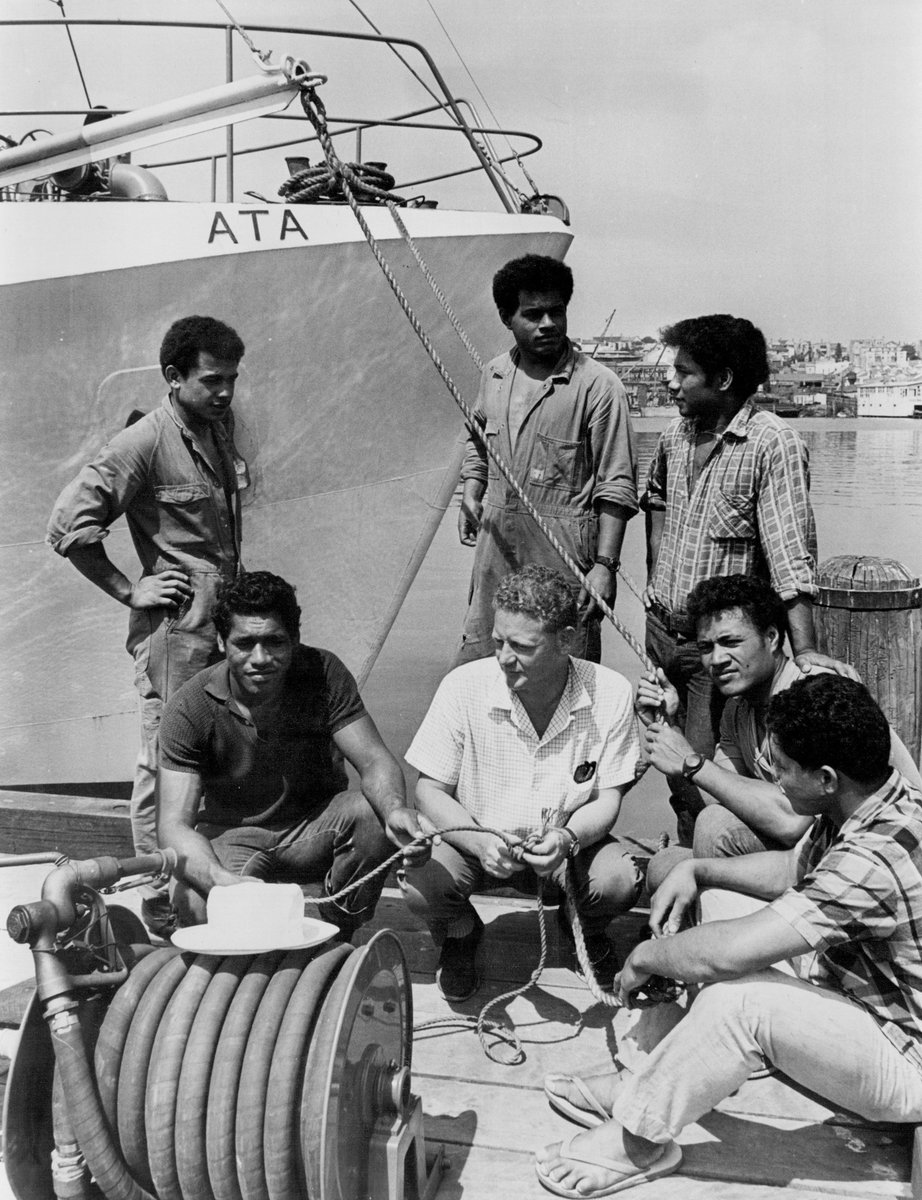
It took me a year of research, but I found it. In 1965, six boys from a boarding school in Tonga stole a boat, got caught in a storm, and drifted for eight days without food or water. They washed up on 'Ata, a remote, uninhabited island in the Pacific. They stayed there for 15 months, and what happened on that island was the exact opposite of William Golding's novel.
These boys set up a small commune. They built a food garden, stored rainwater in hollowed-out tree trunks, created a gym with improvised weights, and built a badminton court. One of them, Stephen (who would later become an engineer) managed to start a fire using two sticks. They kept it burning the entire time.
Of course they fought too. But then they argued, they had a rule: go to opposite ends of the island, cool down, then come back and apologize. As one of them told me: ‘That's how we stayed friends.’
Back home, everyone assumed that the boys – Luke, Stephen, Sione, David, Kolo and Mano — were dead. When they were finally discovered by an Australian captain named Peter Warner, he radioed their names to Tonga. After twenty minutes, a tearful response came back: ‘You found them! These boys have been given up for dead. Funerals have been held. If it's them, this is a miracle!’
Peter commissioned a new ship, hired all six boys as his crew, and named the boat the Ata, after the island where he found them. They remained friends for the rest of their lives – Peter and Mano even became soulmates. I tracked them down, and it became one of the central chapters of my book Humankind.
Here's what struck me most: William Golding (the author of Lord of the Flies) was a troubled man, an alcoholic who once said ‘I have always understood the Nazis, because I am of that sort by nature.’ I think he was projecting his own darkness onto children. And we turned it into a lesson about human nature that we teach to millions of kids around the world.
I think the real lesson is the opposite. When real children found themselves alone on a real island, they didn't descend into savagery. They cooperated, they took care of each other, they survived.
I'm not saying that the Tongan castaways were representative of all kids everywhere. But I am saying that every kid who has to read or watch the fictional Lord of the Flies also deserves to know what actually happened when it played out in real life.
Stories are never just stories. We become the stories that we tell ourselves.
Surely this is not a legal way to impose or alter tariffs. I doubt a president's constitutional powers include 'due to tantrums.'
Trump slaps 10% extra tariff on Canada over Reagan trade ad
https://t.co/Kp0850tiOD
Here’s the original clip of Ronald Reagan from April 25, 1987, where he delivered a complete and total rebuke against tariffs. Trump is calling Reagan’s words in this video “FAKE” and “fraudulent.” They’re 100% real. And the original clip is actually far worse for Trump, as much is left out of the ad. Watch this clip and read the full transcript:
Throughout the world, there's a growing realization that the way to prosperity for all nations is rejecting protectionist legislation and promoting fair and free competition. Now, there are sound historical reasons for this. For those of us who lived through the Great Depression, the memory of the suffering it caused is deep and searing. And today, many economic analysts and historians argue that high tariff legislation passed back in that period, called the Smoot-Hawley tariff, greatly deepened the depression and prevented economic recovery.
You see, at first when someone says, let's impose tariffs on foreign imports, it looks like they're doing the patriotic thing by protecting American products and jobs. And sometimes for a short while, it works, but only for a short time. What eventually occurs is, first, homegrown industries start relying on government protection in the form of high tariffs. They stop competing and stop making the innovative management and technological changes they need to succeed in world markets.
And then, while all this is going on, something even worse occurs. High tariffs inevitably lead to retaliation by foreign countries and the triggering of fierce trade wars. The result is more and more tariffs, higher and higher trade barriers, and less and less competition. So soon, because of the prices made artificially high by tariffs that subsidize inefficiency and poor management, people stop buying.
Then the worst happens. Markets shrink and collapse, businesses and industry shut down, and millions of people lose their jobs. The memory of all this occurring back in the 30s made me determined when I came to Washington to spare the American people the protectionist legislation that destroys prosperity. Now, it hasn't always been easy. There are those in the Congress, just as there were back in the 30s, who want to go for the quick political advantage, who risk America's prosperity for the sake of a short-term appeal to some special interest group, who forget that more than 5 million American jobs are directly tied to the foreign export business, and additional millions are tied to imports.
Well, I've never forgotten those jobs. And on trade issues, by and large, we've done well.