Coding isn't just writing code. It's sitting with problems, questioning every assumption, breaking things, fixing them, and growing through the process. Every bug teaches something a tutorial never will.
#coding#buildinpublic#developer#tech#dev
What if the biggest threat to your lifespan isn't aging — but what you consume every day?
The future of longevity won't be built in hospitals. It starts with every meal, every sip, and every choice we make.
#Longevity#Healthspan#Future#Innovation
What if the biggest threat to your lifespan isn't aging... but what you consume every single day?
The average person eats tens of thousands of meals over a lifetime. Every bite and every sip becomes part of the cells that build, repair, and sustain the human body.
Longevity isn't built by a miracle pill.
It's shaped by daily choices—clean nutrition, quality water, movement, sleep, and a healthy environment.
At Aero Intelli, we're exploring a future where technology and nature work together to support healthier living through sustainable agriculture, clean food systems, and next-generation innovation.
The future won't belong to those who simply live longer.
It will belong to those who live healthier.
The longevity revolution has already begun. Will you be part of it?
#aerointelli #longevity #healthspan #futureofhealth #health #healthyliving #nutrition #cleanfood #cleanwater #bioinnovation #agritech #foodtech #sustainability #innovation #technology #wellness #preventivehealth #startup #future
Act as a world-class market research analyst, venture capitalist, industry consultant, startup founder, and competitive intelligence expert.
I am evaluating the following business/product category:
[INSERT BUSINESS OR PRODUCT CATEGORY]
Create a comprehensive, realistic, data-driven research report.
Structure the report as follows:
1. Executive Summary
- Explain the industry in simple terms.
- Current state of the industry.
- Key growth drivers.
- Major risks.
2. Market Size Analysis
- Global market size.
- Regional market size.
- CAGR and growth forecasts.
- TAM, SAM, and SOM analysis.
- 5-year and 10-year outlook.
3. Customer Analysis
- Primary customer segments.
- Customer pain points.
- Unmet needs.
- Purchasing behavior.
- Customer willingness to pay.
- Geographic demand distribution.
4. Competitor Analysis
- Top 20 competitors worldwide.
- Their business models.
- Pricing strategies.
- Strengths and weaknesses.
- Market positioning.
- Funding history (if applicable).
- Competitive advantages.
5. Industry Structure
- Porter's Five Forces analysis.
- Entry barriers.
- Supplier power.
- Buyer power.
- Threat of substitutes.
- Industry concentration.
6. Technology Analysis
- Emerging technologies affecting the industry.
- Artificial Intelligence impact.
- Automation opportunities.
- Potential disruptions.
- Future technology trends.
7. Financial Analysis
- Typical startup costs.
- Gross margins.
- Operating margins.
- Capital requirements.
- Breakeven timelines.
- Revenue models.
8. Regulatory Analysis
- Relevant regulations.
- Licensing requirements.
- Environmental considerations.
- Compliance risks.
9. SWOT Analysis
- Strengths.
- Weaknesses.
- Opportunities.
- Threats.
10. Risk Assessment
- Operational risks.
- Technology risks.
- Financial risks.
- Regulatory risks.
- Market risks.
- Competitive risks.
11. Opportunity Mapping
- Underserved niches.
- High-growth segments.
- White-space opportunities.
- Potential innovations.
12. Business Model Recommendations
- Recommended business models.
- Subscription opportunities.
- Marketplace opportunities.
- SaaS opportunities.
- Hardware opportunities.
- Licensing opportunities.
13. AI Impact Assessment
- How AI will affect this industry over the next 5 years.
- How AI will affect this industry over the next 10 years.
- Which jobs may be automated.
- New opportunities created by AI.
14. Startup Viability Assessment
Score the following from 1–10:
- Market Potential
- Profitability
- Scalability
- Defensibility
- Capital Efficiency
- Regulatory Complexity
- AI Disruption Risk
15. Founder Recommendation
If you were a venture capitalist investing your own money:
- Would you enter this market?
- Why or why not?
- What specific niche would you pursue?
- What would your first 12 months look like?
- What mistakes would you avoid?
16. Final Verdict
Provide:
- Bull Case
- Bear Case
- Most Likely Scenario
- Probability of Success
- Probability of Failure
- Recommended Go / No-Go Decision
Be brutally realistic.
Avoid hype.
Think like an investor risking their own capital.
Use current global market trends, economics, AI developments, competitive dynamics, and technological shifts.
Before starting a company, most founders ask:
"Can I build it?"
A better question is:
"Should it be built?"
The market may be large.
The technology may exist.
The funding may be available.
But none of that guarantees success.
The best businesses solve important problems, create value for customers, and remain relevant as technology, competition, and consumer behavior evolve.
Today, AI can analyze markets, competitors, business models, regulations, customer demand, and industry trends faster than ever before.
The advantage is no longer access to information.
The advantage is asking better questions and executing better than everyone else.
Before building anything, I try to understand:
• Market size
• Customer pain points
• Competitive landscape
• Technology trends
• Regulatory risks
• Long-term viability
• AI disruption potential
The future belongs to founders who combine curiosity, research, and execution.
What industry do you think is most overdue for disruption?
#artificialintelligence #startups #entrepreneurship #innovation #businessstrategy #business #futureofbusiness #technology #marketresearch #ai #founders
The world is entering a period of extraordinary change.
Over the next few decades, some of humanity's most important challenges will revolve around four areas:
Food, Nature, Intelligence, Exploration.
How we grow food sustainably.
How we protect and restore natural ecosystems.
Organizations such as @FAO and the United Nations @UN have highlighted the importance of food security, biodiversity, climate resilience, and sustainable development for future generations.
How we develop intelligent machines that improve human productivity and quality of life.
How we reconnect people with the natural world through meaningful experiences.
These are not separate challenges.
They are deeply interconnected.
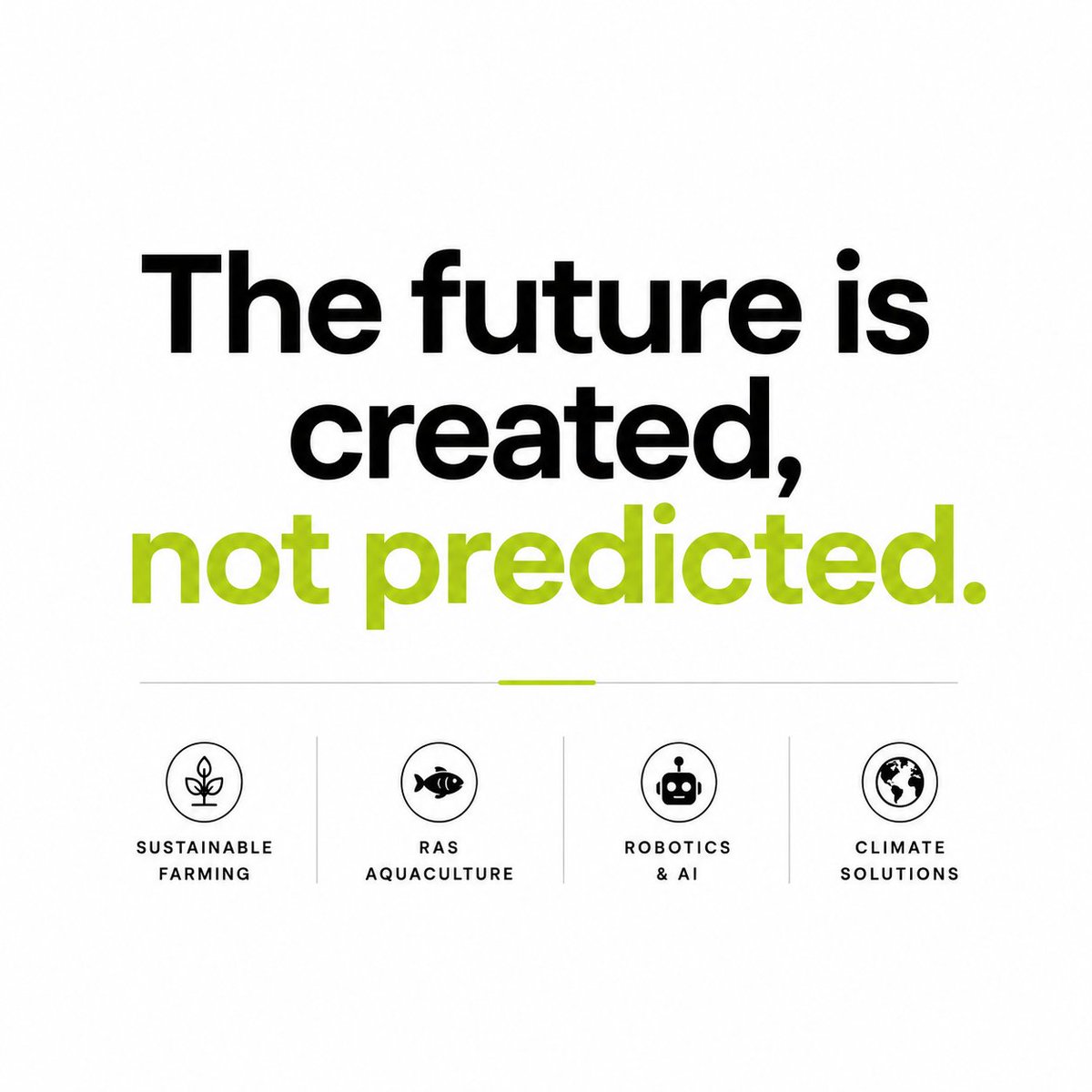
A more sustainable future will require innovation across agriculture, natural capital, artificial intelligence, and human experiences.
There is still an enormous amount to learn.
Many assumptions will be wrong.
Many ideas will fail.
But progress begins with curiosity, experimentation, and a willingness to build.
The future will not be created by waiting for change.
It will be created by people willing to work on difficult problems for a very long time.
Trying to build things that matter for future generations.
#foodsystems #agriculture #naturalcapital #biodiversity #artificialintelligence #innovation #sustainability
Water is the most consumed substance on Earth, yet innovation in water has barely begun.
For decades, we've focused on improving food, medicine, transportation, and computing.
Water has largely remained unchanged.
The next generation of water may not be defined only by purity, but by functionality.
Imagine water designed to support hydration more effectively, deliver essential minerals efficiently, and contribute to long-term health and wellness.
As global populations age and health spans become as important as lifespans, longevity-focused products could become a major category.
I believe water will be part of that future.
Still early. Still learning.
#longevity #healthspan #hydration #futureofhealth #waterinnovation #functionalwater #wellness #foodtech #innovation
What will have the biggest impact on human health over the next 20 years?