Chief Market Strategist. Global macro investing, economics, markets, capitalism. Jersey to Miami, Mother of 5. Opinions are my own. You #makeyourownluck.
Home bias is universal. It is also expensive. The hardest part of global investing is not analytical but emotional. You do not need to predict which part of the world leads next. You only need to own more than one story.
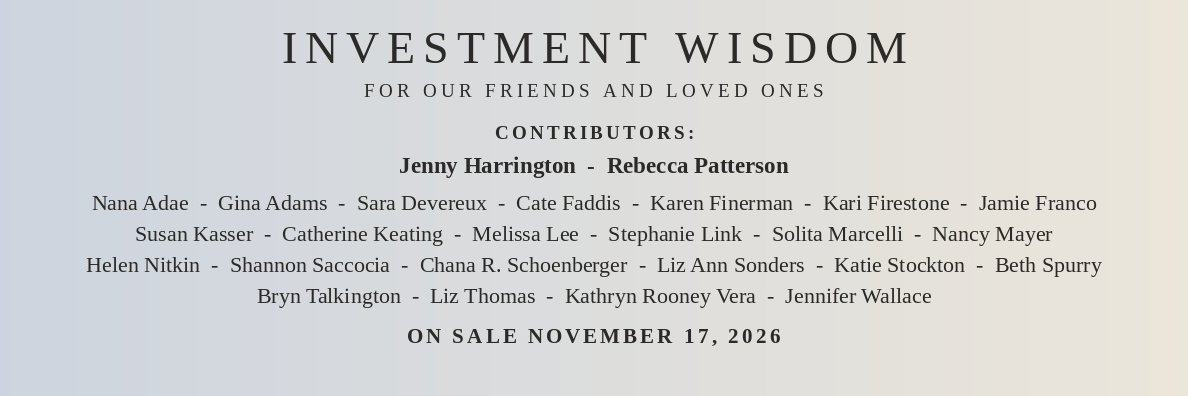
With fall upon us, I’m looking forward to the upcoming launch of Investment Wisdom for our Friends and Loved Ones, which I coauthored with Rebecca Patterson.
Rebecca and I have brought together 25 leading women in finance who share the investing approaches they would recommend to those closest to them over dinner or coffee.
Written in personal and easy-to-understand ways, the book is designed for everyone, with all author proceeds donated to the Council for Economic Education and the Boys and Girls Clubs.
Available November 17, you can pre-order the book now at https://t.co/2UbVW1MAnV. Be on the lookout for more info!
@MelissaLeeCNBC@karenfinerman@Karen_Firestone@BrynTalkington@LizAnnSonders@LizThomasStrat@Stephanie_Link@StocktonKatie@KRooneyVera
I wrote my chapter, "Owning the World", in "Investment Wisdom for Our Friends and Loved Ones," alongside 24 women in finance. All author proceeds go to the Council for Economic Education and the Boys and Girls Clubs. Pre-order: https://t.co/sNwaYZEeYj
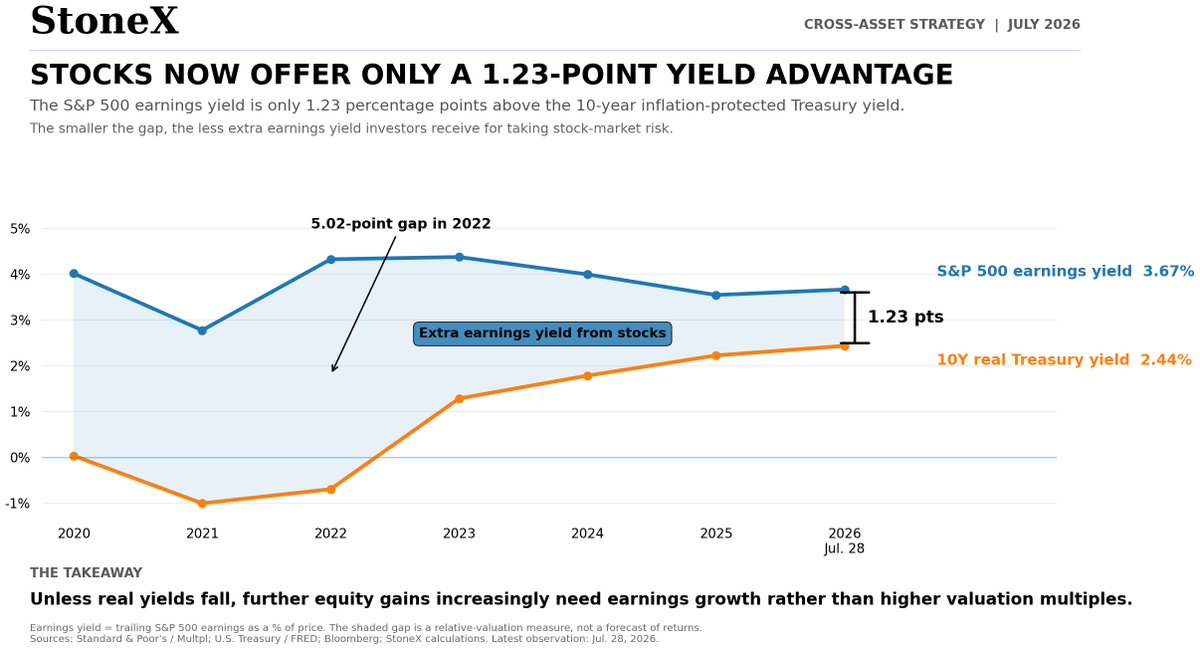
Bond yields are becoming a constraint on equities.
S&P 500 trailing earnings yield: 3.67%
10Y TIPS yield: 2.44%
Spread: 123 bps
Equities vulnerable. Unless real yields fall, further gains will need to come from earnings rather than multiple expansion.
I am going live with @KRooneyVera to break down the Federal Reserve meeting at 3:30pm ET.
Afterward I will be reacting to Microsoft & Meta earnings with @maxwiethe.
https://t.co/T73xg7rDY9
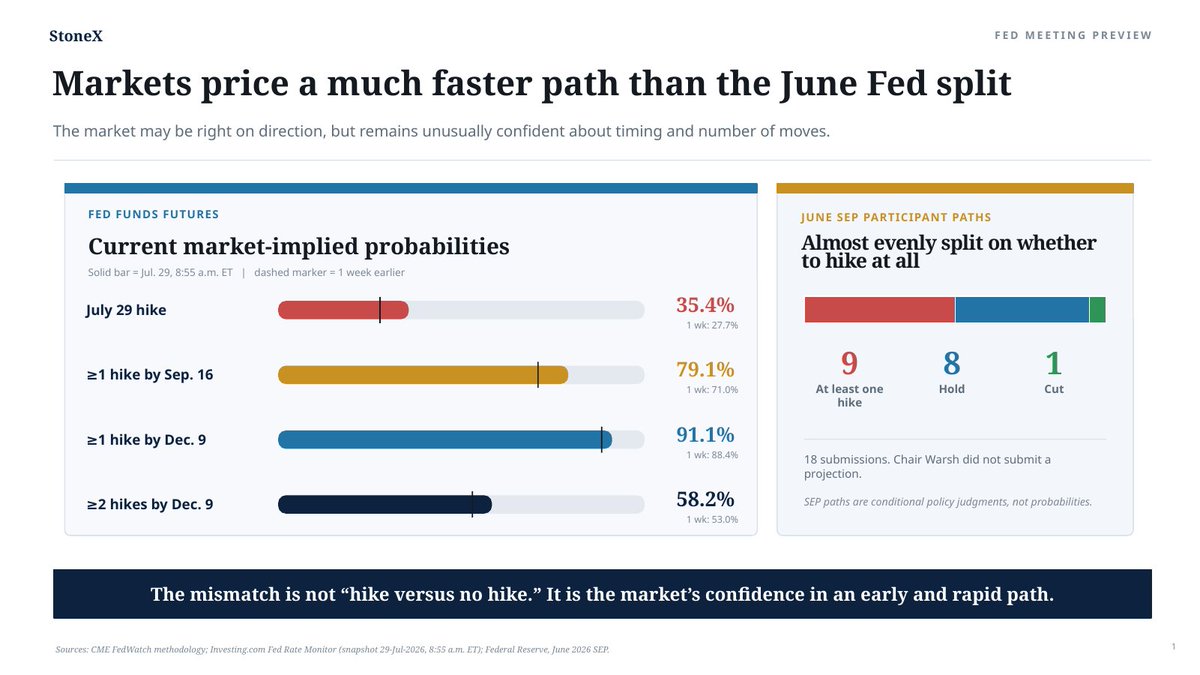
June SEP: 9 for at least one hike, 8 hold, 1 cut.
A hold need not be dovish. Warsh can keep tightening on the table without validating an imminent cycle.
A surprise hike could prompt markets to price a faster sequence and tighten conditions more than intended. 2/2
Markets may be right that the Fed’s next move is a hike. But they are too confident that it comes soon and is followed by another.
Our base case: no move today; one 25 bp hike by December.
Discussing the decision live at 3pm ET with @JackFarley96
South Florida: You can bring stuff straight to Ft. Lauderdale executive airport (FXE / KFXE). Very efficient. You pull up, they unload your truck, and you’re on your way. The survivors need canned food, protein drinks, baby formula, diapers.
Chair Warsh got the job to cut rates. The Fed is talking about hikes. This will get tricky. Watch/listen to my pre and post FED meeting analysis here: https://t.co/8QcrTSBCx7
live-streamed with @JonathanJLevin@opinion@StoneX_Official
It's Fed Day! Will rookie Fed Chair Kevin Warsh change the direction of the world's most powerful central bank?
🎥 Tune in as @JonathanJLevin discusses LIVE with @KRooneyVera and @AllisonSchrager @ 1:55 pm ET https://t.co/3Zjs1DurGe
Tomorrow is Fed Day! Will rookie Fed Chair Kevin Warsh change the direction of the world's most powerful central bank?
🎥 Tune in Wednesday as @JonathanJLevin discusses LIVE with @KRooneyVera and @AllisonSchrager @ 1:55 pm ET https://t.co/3Zjs1DtTQG
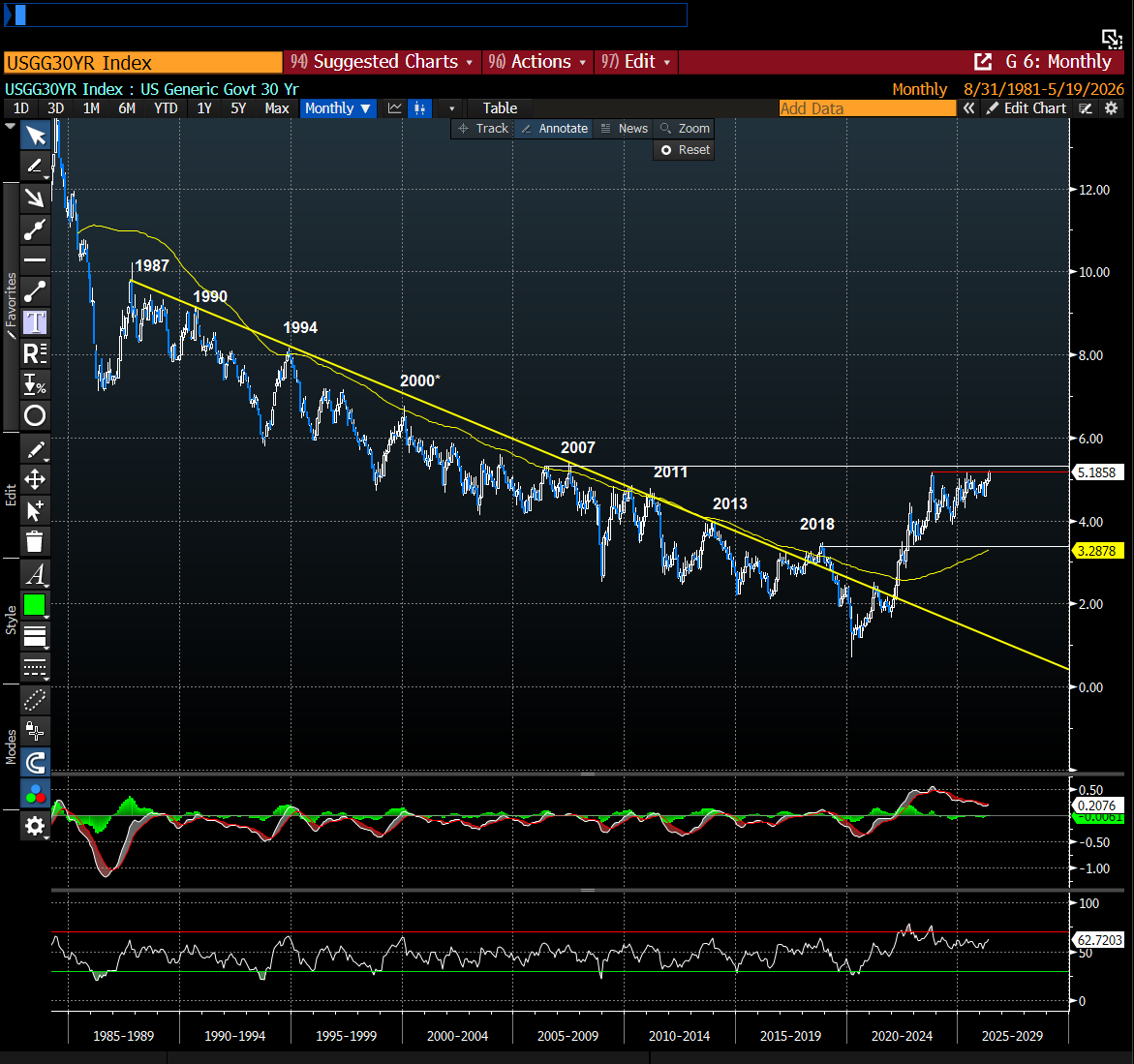
The 30Y Treasury yield is testing the same zone that capped the long end in 2007.
This is not “higher for longer” anymore. It is the market asking for compensation for inflation risk, fiscal supply and term premium.
My base case: no Fed cuts this year. The real risk is hikes next year.
This is no longer just “China buys Treasuries, yields fall.”
Today, surplus capital moves through private balance sheets, state banks, custodial centers, agencies, credit, and Hong Kong.
That may help explain why the long end and spreads have remained relatively contained despite inflation, deficits, and heavy Treasury supply.
RMB strength is not a vote of confidence in China’s reflation story but a balance-of-payments adjustment to excess saving.
In our latest StoneX Strategy piece, “Back in the Glutter,” Jon Hilsenrath and I look at what sits beneath it:
If China produces more than it absorbs, the adjustment has to show up somewhere:
• foreign demand
• capital outflows
• FX pressure
• external asset accumulation
RMB strength may be part of that adjustment.