⚡️Saylor is right.
Bitcoin is where a massive share of global capital ends up once the world fully understands that every other store-of-value rail is compromised by politics, dilution, leverage, seizure risk, or counterparty fragility. That is the real signal. He is saying it in loud TV language, but the core truth is simple: capital wants a final settlement layer, and Bitcoin is the strongest candidate.
“Hundreds of trillions” sounds absurd only if you still think Bitcoin is mainly a trade. It is not. It is a gravity well for savings. It is competing with sovereign debt, cash balances, gold, second homes, offshore wealth parking, reserve assets, corporate treasuries, and every fake safe haven people use because they do not have a better option. Once you see that, the scale no longer sounds crazy.
The real thing he is naming is capital exile. Money is trying to escape from human institutions that cannot stop debasing, overpromising, and weaponizing the systems they control. Bitcoin is the exit. That is why the case keeps getting stronger every time governments panic, every time central banks improvise, every time debt expands faster than trust, every time the banking layer reveals fragility, and every time people realize their “safe” assets are only safe inside a decaying political order.
Bitcoin does not solve human stupidity. It does not solve war. It does not solve bad culture. It does not solve weak productivity. What it solves is the storage problem underneath civilization. And that matters more than most people understand. When people can store value in something that cannot be diluted or politically bent, the whole structure of capital allocation starts to change. Housing stops carrying as much monetary burden. Bonds lose some of their fake sacredness. Corporate treasury behavior changes. Sovereign reserve logic changes. Personal savings behavior changes. The shell around capital gets harder.
Saylor’s deeper insight is that Bitcoin wins before most people intellectually admit it. It wins through repeated institutional failure. It wins because every other system keeps teaching the same lesson. It wins because the modern world keeps producing reasons to leave. That is why he sounds absolute. He sees the destination clearly.
The part people still do not get is that Bitcoin is not climbing toward legitimacy. It is absorbing it. Every cycle, more of the legitimacy layer leaves the old system and settles into Bitcoin. First retail. Then funds. Then ETFs. Then corporates. Then treasuries. Then sovereign-adjacent behavior. That staircase is already happening.
So the deepest read is this:
Saylor is describing the monetary endgame in oversimplified language.
And the endgame is real.
A huge share of the world’s capital is going to end up in Bitcoin because the world no longer has a trustworthy place to store value at scale.
JUST IN: 🇫🇷 Coinbase CEO Brian Armstrong calls out French Central Bank Governor's misunderstanding of Bitcoin.
"Bitcoin is a decentralized protocol...Bitcoin is more independent."
Okay we need every single person who's ever registered a wallet to vote in Catalyst to vote for us!
#CardanoCommunity If passed, we'll be giving back 10% of all revenue earned from Levvy to the Cardano Treasury every month, in perpetuity!
We strongly feel that any successful for profit product should be giving back to the community that funded them. We'd like to see that set as a precedent.
Our upcoming V3 update contains a lot of great tools developed by @saibdev and one of the most complex smart contracts on Cardano. All of this will be open sourced for the community as well.
Voting ends in just 4 days. Load up the Catalyst app, search "Levvy" and vote! It takes just a couple of minutes
Thanks everyone!
We'd like to congratulate @SurgeCardano on their monumental sell out!🤯
It's always inspiring to see projects get that much support from the Cardano ecosystem.
$SURGE is now listed on Levvy!
Happy Lending and Borrowing! 🦥
We want to wish our amazing lead dev @clarkalesna a very Happy Birthday! 🎂 Thank you for all of the remarkable work you do!
Please take a moment to review and vote for their Catalyst proposals. They're always building great software for Cardano and their tech powers Levvy V3!
🦥 Levvy Catalyst Fund 14!
Levvy has been operating on Cardano for nearly 3 years. In that time Levvy has done over 260,000,000 ADA in volume.
We've consistently been in the top 5 apps on Defillama for Cardano.
In just the last year, we've contributed over 470,735 transactions to the Cardano blockchain.
If we're fortunate enough, this would be the first time that Levvy has had a Catalyst proposal passed.
We're reaching out to the #CardanoCommunity to ask you to take a couple of minutes and vote yes to support our current Catalyst proposal.
Simply search "Levvy" on the Catalyst voting app and vote yes!
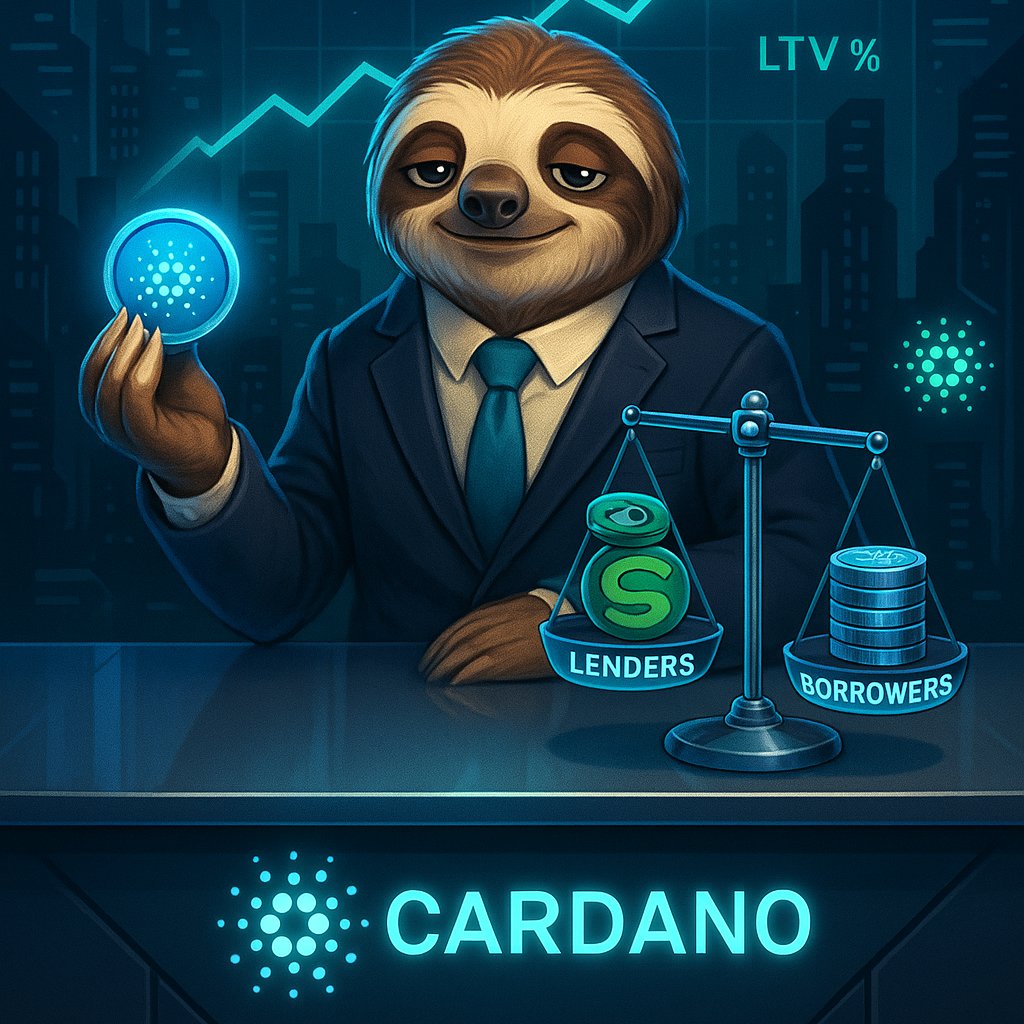
Levvy is a game-changer for both the lenders and borrowers on Cardano:
🔹 For Lenders
Earn steady returns while keeping your ADA staked.
✅ 3–8% interest every 14–28 days with active loans.
✅ Keep Staking Rewards. ADA remains staked to your key until a loan is filled.
✅ Risk control. Set your own Loan-to-Value (LTV).
Higher LTVs = higher chances of filling, but higher risk.
Lower LTVs = safer, steadier returns.
(See the post below for more LTV information)
👉 Pro tip: Patience + reasonable LTV = sustainable, compounding ADA growth.
🔹 For Borrowers
Access the MOST liquidity without selling your tokens.
✅ Leverage your position with the high LTV's.
Currently you can borrow up to 10,000 ADA from 11,500 ADA worth of SNEK at a 86% LTV.
✅ Extend loans. Pay interest only, and keep your position running longer.
✅ Insurance strategy. If prices drop, you can default. If it pumps, repay and profit.♻️
Happy Lending and Borrowing!
Good Morning, Levvy Fam
Understanding Loan-to-Value (LTV) ratios is one of the most important parts of lending safely and getting the most out of your assets. Let’s break it down 👇
What is LTV?
LTV = (Loan Amount ÷ Value of Collateral) × 100
It tells you how much of your collateral is being borrowed against, and how much “buffer” is left to protect the lender.
Example 1:
Loan: 5,000 ADA
Collateral: 10,000 ADA
LTV = 50% ✅
The borrower is overcollateralized, safer for the lender.
Example 2:
Loan: 5,000 ADA
Collateral: 6,000 ADA
LTV = 83.3% ⚠️
The margin of safety is thinner, making it riskier for the lender.
Low vs. High LTV
Low LTV → Safer for lenders, but borrowers must lock up more collateral. This is why Levvy has the highest APY's on Cardano for Lenders.
High LTV → Better for borrowers, but lenders take on more risk due to market volatility. This is why Borrowers like to use Levvy, they get more for less.
Why do LTVs Change?
Collateral values fluctuate as markets move. Meme tokens like $SNEK or $ANGELS may require lower LTVs due to volatility, while assets with steadier price action may support higher LTVs.
Always DYOR
Lending and borrowing in crypto carries risk, and markets can swing wildly in 7–14 days, so setting your LTV at a price you’d be comfortable owning the collateral is one of the smartest ways to protect yourself.
Happy Lending and Borrowing!🦥
Hello Angels,
Join us tomorrow for another Cardano Congregation as we host Melting Moons to discuss their upcoming Moon Girls mint.
You might also get to hear me talk some smack to @CMyndyd.
Link in the comments ⬇️