Launching GateLink = OAuth for your crypto wallet.
Token allowlists ✅
Protocol control ✅
Spending limits ✅
Auto-expire ✅
Deployed on X Layer testnet. AI agent ready via MCP + Onchain OS skills.
The missing permission layer for agentic wallets.
#BuildX@XLayerOfficial
Money moves in batches. Work doesn’t.
Introducing OpenFluid — streaming payments on @CantonNetwork.
Payroll. Subscriptions. Grants. Vesting...
Continuous. Private. On-ledger.
The future of money flow starts here 🌀
Launching GateLink = OAuth for your crypto wallet.
Token allowlists ✅
Protocol control ✅
Spending limits ✅
Auto-expire ✅
Deployed on X Layer testnet. AI agent ready via MCP + Onchain OS skills.
The missing permission layer for agentic wallets.
#BuildX@XLayerOfficial
🧵 10/10 - The Vision
The delegated economy is coming.
$500B+ in assets need protection.
GateLink is the missing permission layer.
We're not building another wallet.
We're building the security layer that makes every other protocol safe to use with delegated access.
Launching GateLink = OAuth for your crypto wallet.
Token allowlists ✅
Protocol control ✅
Spending limits ✅
Auto-expire ✅
Deployed on X Layer testnet. AI agent ready via MCP + Onchain OS skills.
The missing permission layer for agentic wallets.
#BuildX@XLayerOfficial
🧵 9/10 - Use Cases
👤 AI Trader: Give your DeFi agent $10k to work with - nothing more
👨��👩👧 Family: Give mom emergency access with $500/day limit
🏛️ DAO: Operators can execute budgets, not drain treasury
🤖 Contractor: 30-day temp access that auto-expires
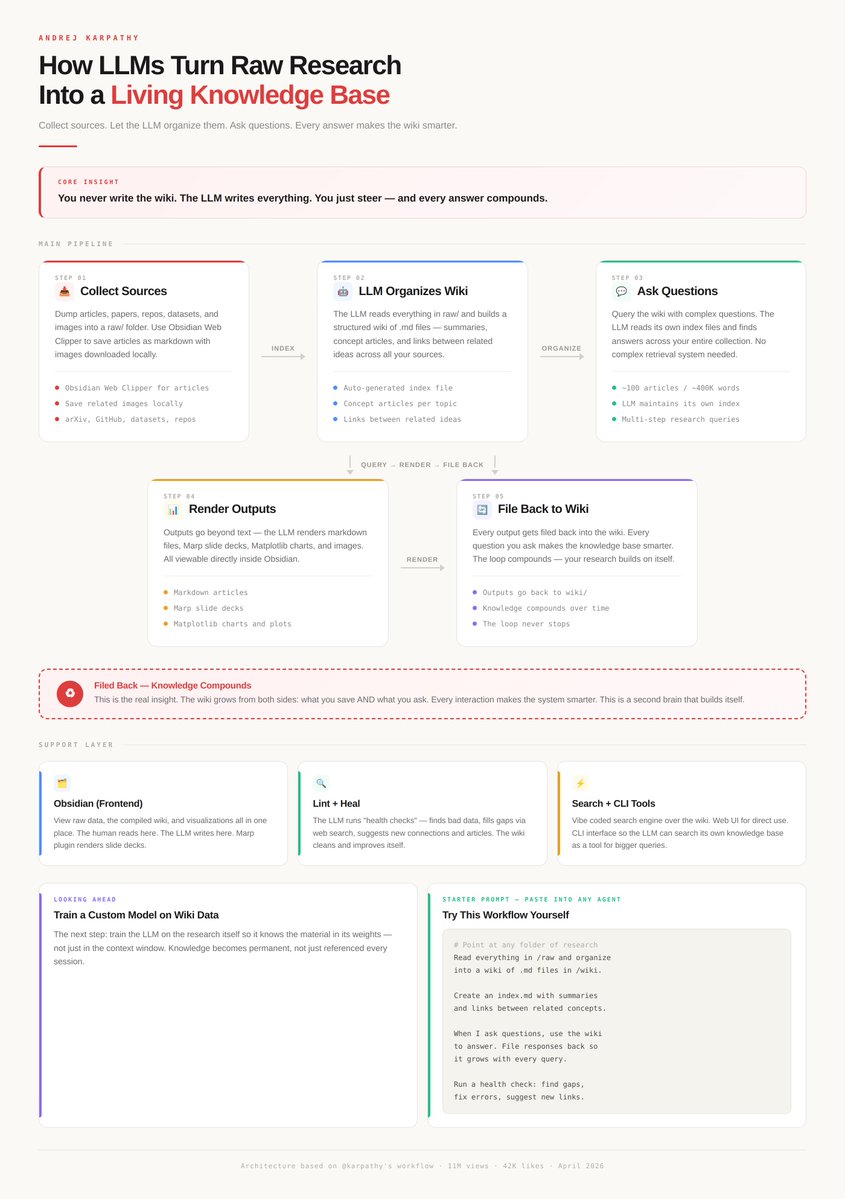
let me explain what Karpathy just shared
he’s spending way less time using AI to write code and more time using it to build personal knowledge bases
the full breakdown:
→ he dumps raw sources (articles, papers, repos, datasets, images) into a folder. then has an LLM organize them into a wiki… a collection of markdown files with summaries, links between related ideas, and concept articles that connect everything together
→ he uses Obsidian as his frontend. he views raw data, the organized wiki, and visualizations all in one place. the LLM writes and maintains the entire wiki. he rarely touches it directly
→ once the wiki gets big enough (~100 articles, ~400K words on one recent research topic)… he just asks the LLM questions against it. no RAG (complex retrieval system) needed. the LLM maintains its own index files and reads what it needs
→ outputs aren’t just text. he has the LLM render markdown files, slide decks, charts, and images… then files the outputs back into the wiki so every question he asks makes the knowledge base smarter
→ he runs “health checks” where the LLM finds inconsistent data, fills gaps using web search, and suggests new connections and articles. the wiki cleans and improves itself over time
→ he even vibe coded a search engine over his wiki that he uses directly in a browser or hands off to an LLM as a tool for bigger questions
→ his next step: training a custom model on his own research so it knows the material in its weights… not just in the context window
most people use AI to get answers.
Karpathy is using AI to build his own ‘Jarvis’ via compounding knowledge systems that get smarter the more he uses them
the difference between asking ChatGPT or Claude a question and having a personal research engine that grows with every session is the gap most people haven’t crossed yet
and this is where it gets really powerful
not replacing your thinking but organizing everything you’ve ever learned into something you can query or create with forever
if you’ve been using CLAUDE .md and context files in Claude Code… this is that same idea at a much bigger scale
if you’re doing any kind of AI work or deep learning on a new topic right now…
this workflow is worth studying closely
you’ll want to adopt it yourself
this is one of AI’s brightest minds after all. we’re all better off listening to him.
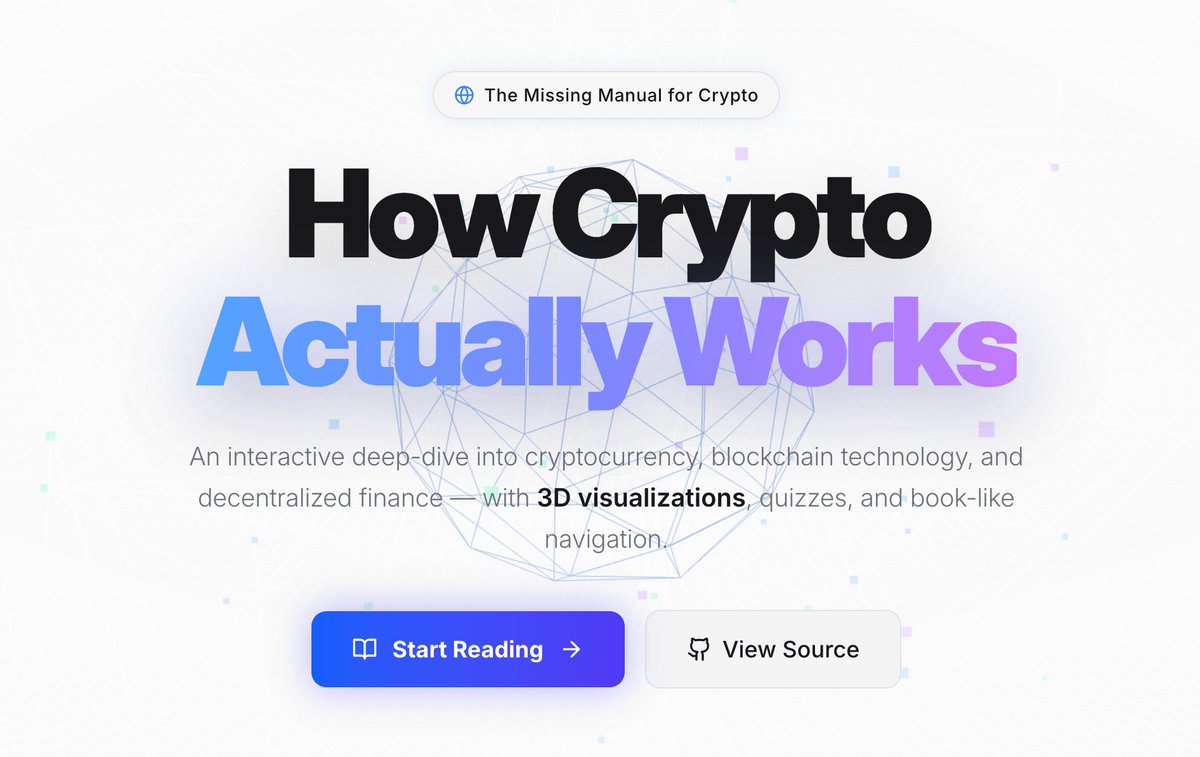
1/ The text version was a massive public good, so I decided to bring it to life. 🌐
turned it into a modern web app that makes crypto fundamentals actually intuitive to learn. 👇