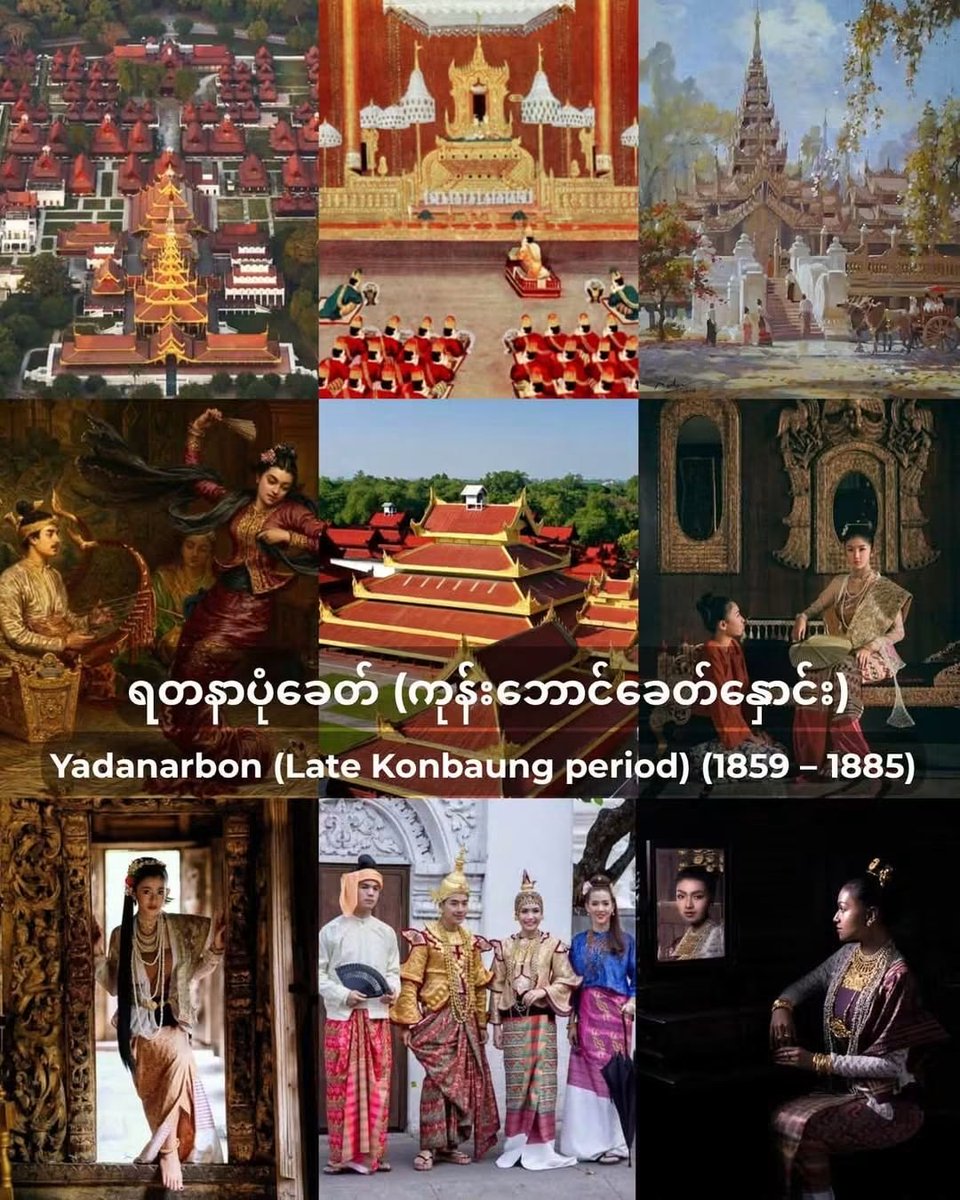
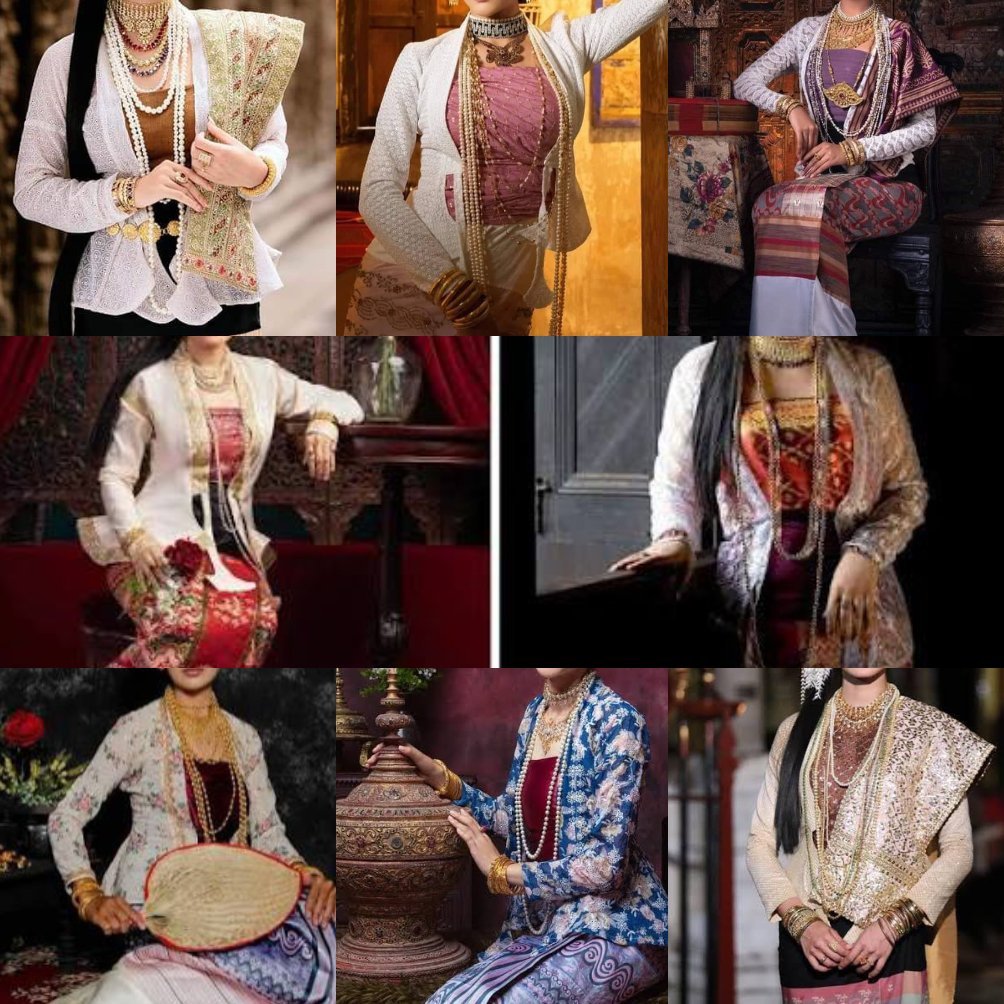
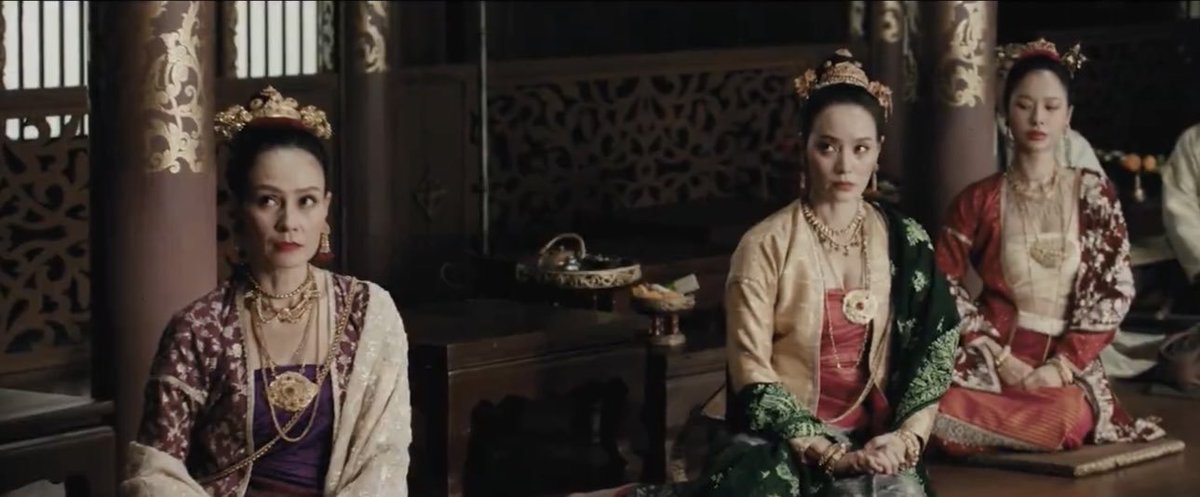
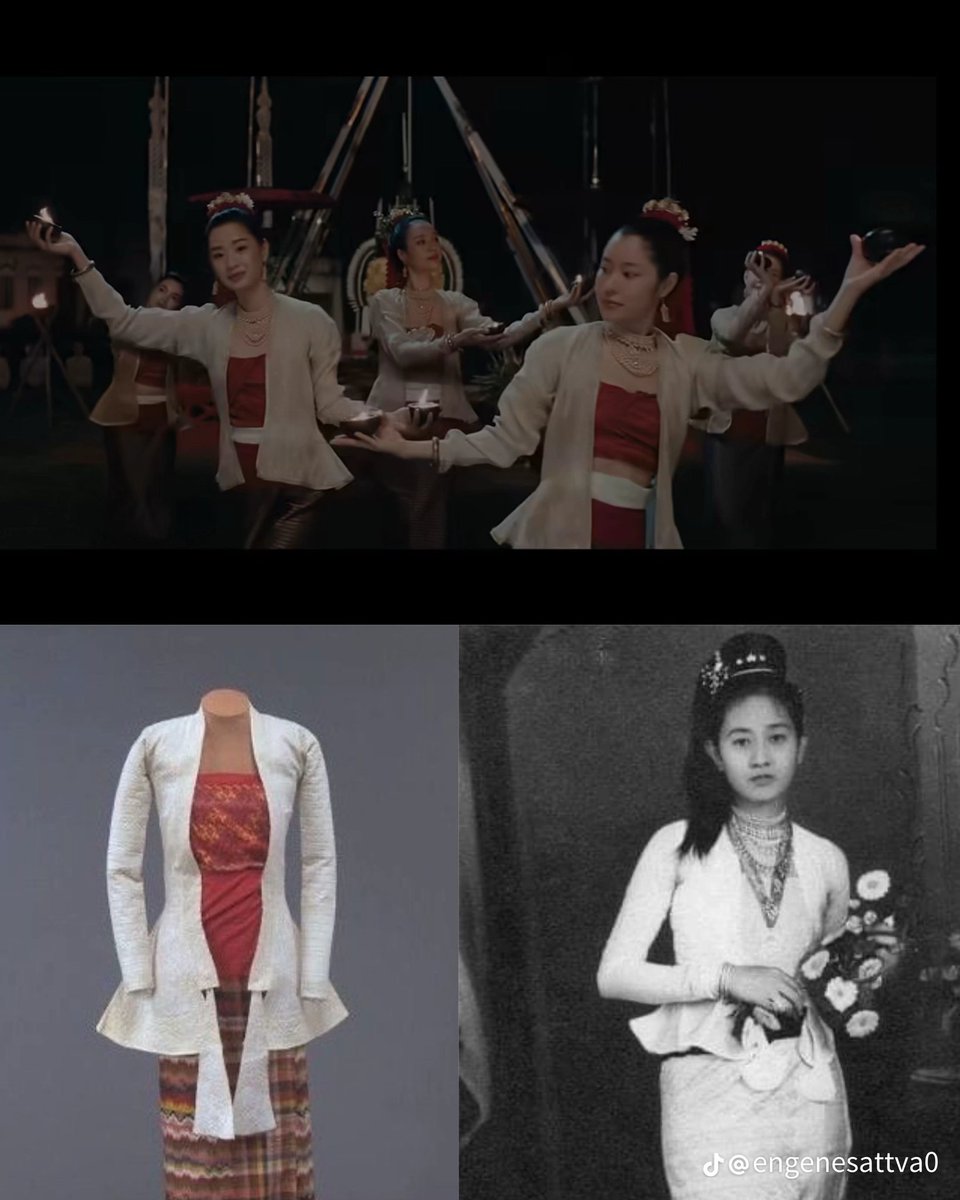
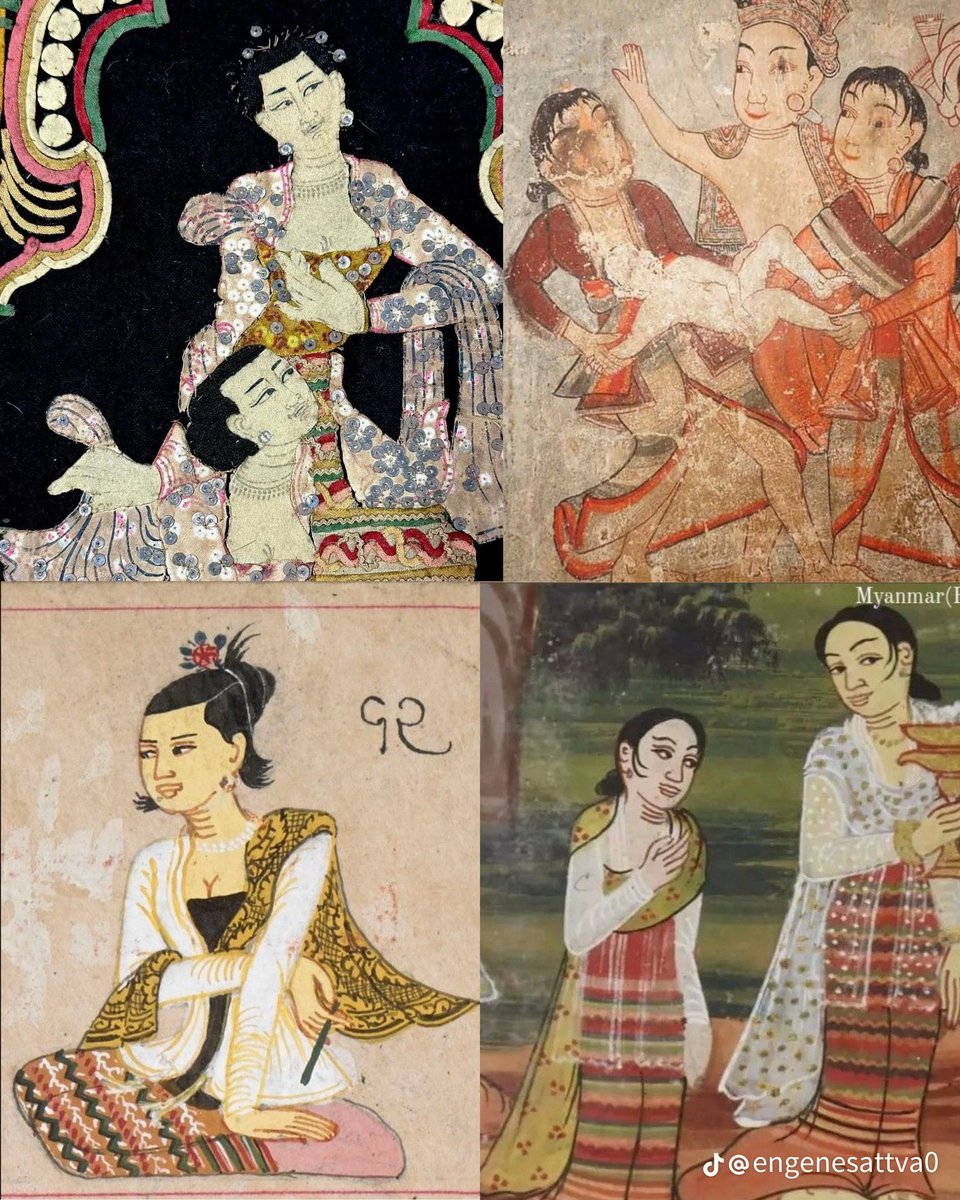
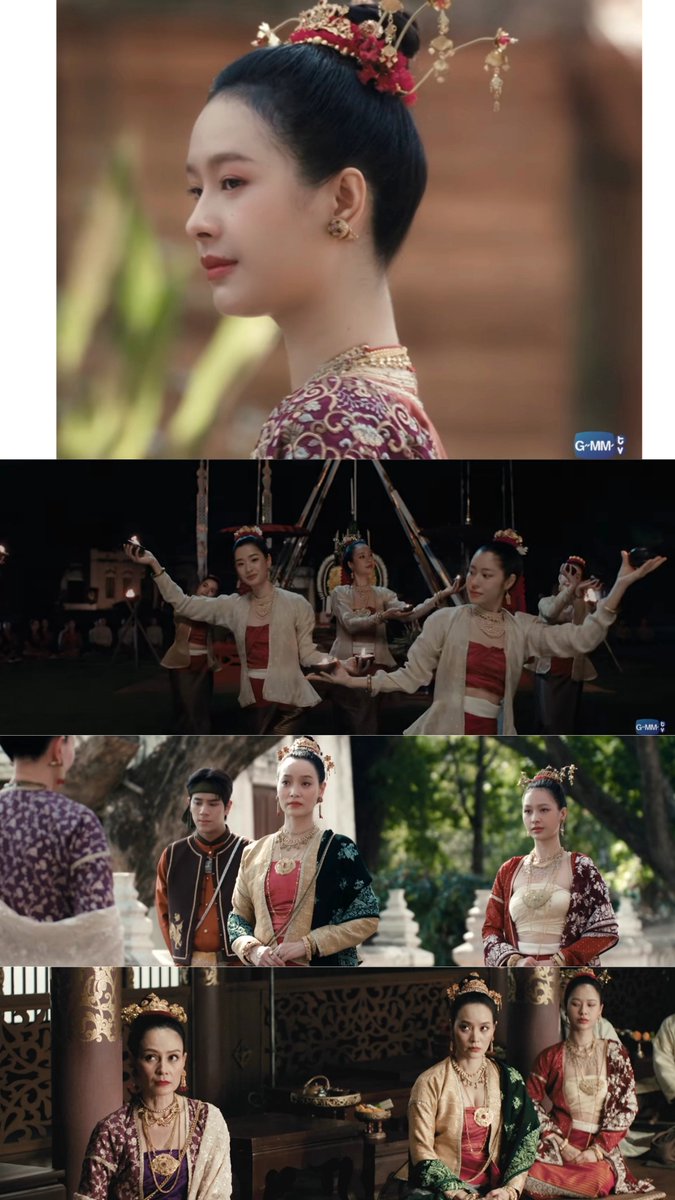
When you borrow a nation's history, acknowledgment is the absolute minimum. @GMMTV, please clarify the Burmese origins of the costumes in Scarlet Heart Thailand and give full credit. 🇲🇲
We Demand Action from GMMTV
#RespectMyanmarCulture#ScarletHeartTH
The peacock symbol on the headpiece in Scarlet Heart Thailand is directly copied from Myanmar’s historical coins, banknotes, and symbols, which is clear evidence of our heritage. We have no intention of harming or attacking the actors; our request is strictly for @GMMTV to respect our culture and give proper credit.
GMMTV ACCOUNTABILITY
#RespectMyanmarCulture
#CreditOurHeritage
Not every Burmese person knows how to perform the 𝐑𝐚𝐤𝐡𝐢𝐧𝐞 𝐨𝐢𝐥-𝐥𝐚𝐦𝐩 𝐝𝐚𝐧𝐜𝐞, and that is precisely why its cultural identity deserves recognition.
Myanmar is home to many ethnic groups, including the Rakhine, Bamar, Shan, Mon, Karen, Kachin, Chin, and others. Each has its own cultural traditions, artistic expressions, and heritage. Being part of the same country does not make every tradition common to every ethnic group.
The Rakhine traditional oil-lamp (Si-mee) dance, also known as Buddha Pujaniya, is a distinctive expression of Rakhine cultural heritage. Its devotional meaning is closely connected to Buddhism and offerings to the Three Jewels: the Buddha, the Dhamma, and the Sangha. The dancers move gracefully while balancing lamps on their palms, accompanied by devotional songs and traditional music.
The Rakhine oil-lamp dance is a distinctive form of Rakhine traditional performing art, associated with Buddhist devotional offerings. Its choreography, music, and cultural significance form part of Rakhine heritage and should not be treated as a generic traditional dance without acknowledging its origins.
When such a culturally specific performance appears in #ScarletHeartThailand, its historical and cultural origins warrant careful research. If Rakhine cultural elements have been incorporated into the series, their origins should be accurately identified and appropriately acknowledged.
We sincerely hope @GMMTV and the @ScarletHeartTH production team will address these concerns, provide proper credit for verified Myanmar cultural influences, and issue an official statement clarifying the historical references behind the relevant scenes.
𝗖𝘂𝗹𝘁𝘂𝗿𝗮𝗹 𝗿𝗲𝗰𝗼𝗴𝗻𝗶𝘁𝗶𝗼𝗻 𝘀𝗵𝗼𝘂𝗹𝗱 𝗮𝗰𝗰𝗼𝗺𝗽𝗮𝗻𝘆 𝗰𝘂𝗹𝘁𝘂𝗿𝗮𝗹 𝗿𝗲𝗽𝗿𝗲𝘀𝗲𝗻𝘁𝗮𝘁𝗶𝗼𝗻.
We Demand Action from GMMTV
#RespectMyanmarCulture
We urge @GMMTV to respect Myanmar and its cultural heritage by addressing this issue seriously and taking appropriate action. Our culture deserves recognition, respect, and a proper response.
We Demand Action from GMMTV
#RespectMyanmarCulture#ScarletHeartTH
🇲🇲 Our Burmese traditional dress is part of our history, identity, and heritage. We demand respect, historical accuracy, and proper recognition from GMMTV. Our culture deserves acknowledgment, never erasure. #RespectMyanmarCulture#ScarletHeartThailand#gmmtv
I want to explain why we are speaking up about the cultural representation in #ScarletHeartTH.
Scarlet Heart is already a globally recognized story, and its Thai adaptation has been highly anticipated, especially because GMMTV has cast some of its most popular and well-known actors. As fans, we have waited for this project for over two years, and we understand how much excitement surrounds it. We want this series to succeed, and we want to see the actors we love shine on an international stage.
But supporting a series and protecting our cultural heritage are two different things. One does not cancel out the other.
This is not just an ordinary fictional story that will be watched and forgotten. It is a major production with the potential to reach audiences around the world. A project of this scale can introduce people to a country's history, traditions, clothing, and cultural identity. That is precisely why cultural research and accurate representation matter so much.
When audiences around the world see a costume presented on screen, many may naturally assume that it belongs to the culture of the country producing the series. If a historically significant Myanmar traditional costume is used without proper research, context, or acknowledgment, there is a real concern that international audiences may mistakenly identify it as Thai traditional attire.
The costume in question is associated with Myanmar's historical heritage, particularly the Yadanabon era. Myanmar's traditional clothing did not simply appear without a history. Its development can be studied through historical records, paintings, photographs, and other cultural documentation from different periods. These are matters that can be researched and examined through evidence, rather than dismissed as mere opinions on social media.
Thai productions can portray other cultures, but cultural exchange requires proper research, respect, and historical accuracy. Concerns about a costume’s origins should be taken seriously, not dismissed as unnecessary criticism.
Myanmar is a country whose people continue to struggle for freedom and a better future. At the same time, preserving our history and cultural identity remains an important responsibility. Our circumstances do not make our heritage less valuable, and the challenges our country faces do not mean we should remain silent when we believe our culture is being misrepresented.
To those asking why we are making an issue out of clothing in a television series, please understand this: we can love the actors without agreeing with every decision made by the production team. We can support the artists while questioning the production's cultural representation. And we can look forward to a series while asking its creators to be responsible.
Our criticism is not an attack on Thai people, Thai culture, or the actors involved. It is a request for accountability from a major production company whose work will be seen by an international audience.
GMMTV has had more than two years to prepare a project of this scale. We believe that researching the historical origins of culturally significant costumes should be part of that preparation. We are asking the production team to review the concerns, consult reliable historical sources and relevant cultural experts, and provide clarification where necessary.
We are not asking anyone to blindly accept our claims. We are asking for the same standard we expect from any major historical production: research the facts, respect the cultures being represented, and take legitimate concerns seriously.
Loving our artists does not require us to stay silent about cultural misrepresentation. Supporting entertainment does not mean abandoning our responsibility to protect our heritage. We can do both.
Our history matters. Our cultural heritage matters. And asking for it to be represented accurately is not causing trouble. It is asking for respect.
@GMMTV
#ScarletHeartTH #MyanmarCulture
#ScarletHeartTH I accept that Shan,TaiYai similarities n this isn't Lanna dress. It's #Myanmar culture, even the candle dance, props. Why does it feature in the drama, there's no mention of Burmese people? Why is it appropriating n stealing other country's culture? @GMMTV
GMMTV should respect Myanmar’s cultural heritage and acknowledge the origins of our traditional clothing and dance. Our culture is our history and identity, not just a costume or performance. 🇲🇲 @GMMTV
Shame On You
#RespectMyanmar#MyanmarCulture
𝐇𝐭𝐚𝐢𝐧𝐠𝐦𝐚𝐭𝐡𝐞𝐢𝐧 (ထိုင်မသိမ်း) is not simply a name for a traditional Burmese outfit. It refers to a specific garment with its own history, construction, and cultural significance.
Myanmar's traditional clothing evolved across different dynasties, and the styles worn during the early Konbaung period, Amarapura era, and later Yadanabon period were not necessarily the same. Even the cut of a garment, its fastening, its decorative details, and the way it was worn could reflect a particular period and social rank.
Htaingmathein is traditionally understood as a woman's upper garment, worn with a byan htamein (ဗြန့်ထဘီ), rather than a term for the entire ensemble. These distinctions may seem minor to some, but when the terminology is repeatedly used incorrectly, an important part of cultural knowledge can gradually be lost.
This is precisely why historical research matters in period dramas. Traditional clothing is not merely an aesthetic choice; it carries information about the people, period, and culture it represents.
When costumes in #ScarletHeartThailand appear to draw on Myanmar court attire, it raises a legitimate question: were the garments researched according to their historical origins, construction, and period, or were different styles combined simply because they looked suitable for a historical setting?
Lanna and Myanmar share a long and complex history, but historical connections do not make their respective clothing traditions interchangeable. Similarities should be examined in context, and identifiable cultural influences deserve accurate recognition.
Historical fiction allows creative freedom, but creative freedom does not make historical research optional. When a production invests years in developing a period drama, understanding the origins of the clothing used to build its world should be part of that preparation. Otherwise, what is presented as historical atmosphere risks becoming a mixture of cultural references without sufficient historical grounding.
𝙊𝙪𝙧 𝙩𝙧𝙖𝙙𝙞𝙩𝙞𝙤𝙣𝙖𝙡 𝙜𝙖𝙧𝙢𝙚𝙣𝙩𝙨 𝙝𝙖𝙫𝙚 𝙣𝙖𝙢𝙚𝙨, 𝙝𝙞𝙨𝙩𝙤𝙧𝙞𝙚𝙨, 𝙖𝙣𝙙 𝙢𝙚𝙖𝙣𝙞𝙣𝙜𝙨. They deserve more than to be treated as interchangeable costumes.
We sincerely hope @GMMTV and the @ScarletHeartTH production team will provide appropriate acknowledgment of Myanmar's cultural heritage wherever it has been incorporated into the series. If these elements are retained, I hope their origins will be clearly credited in the episodes or accompanying production materials.
#ScarletHeartTH
#BurmeseHtaingmathein
This issue is directed solely at GMMTV, not the actors or actresses.
Our Request: We strongly urge @GMMTV to issue an official statement or explicitly credit Burmese cultural elements in the series before its release 🇲🇲
#RespectMyanmar#MyanmarCulture#ScarletHeartThailand
This issue is directed solely at GMMTV, not the actors or actresses.
Our Request: We strongly urge @GMMTV to issue an official statement or explicitly credit Burmese cultural elements in the series before its release 🇲🇲
#RespectMyanmar#MyanmarCulture#ScarletHeartThailand
GMMTV.Respect Myanmar! 🇲🇲 Not only are you stealing our culture, but you’re also claiming it as your own. You should be ashamed of yourselves.
#GMMTV#Respect#respectmyanmar
We're truly honored to win 🏆BEST GROUP, 🏆SONG OF THE YEAR, and 🏆BEST K-POP at the 2026 #VMAs✨
Thank you, ARMY. We couldn't have done any of this without you!💕
#BTS#방탄소년단