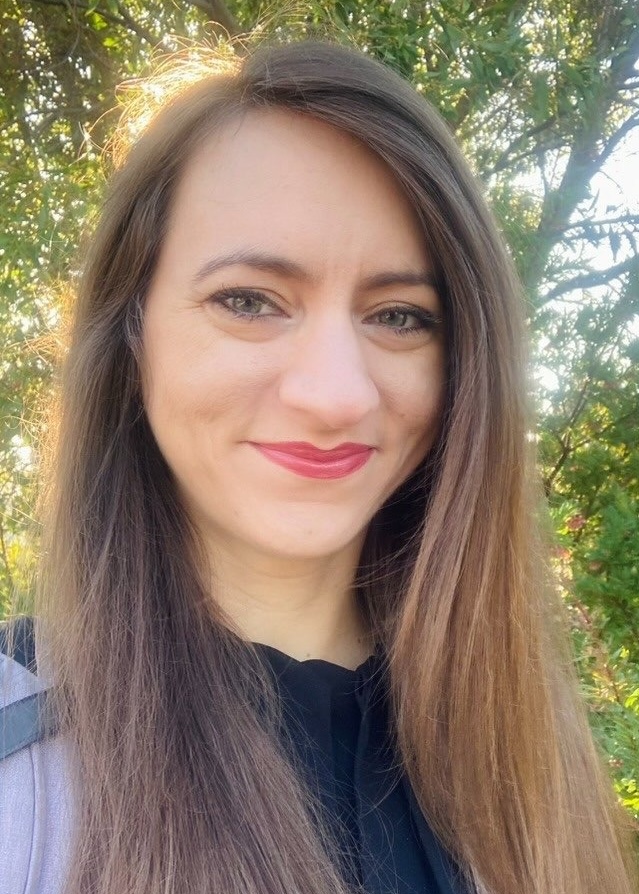
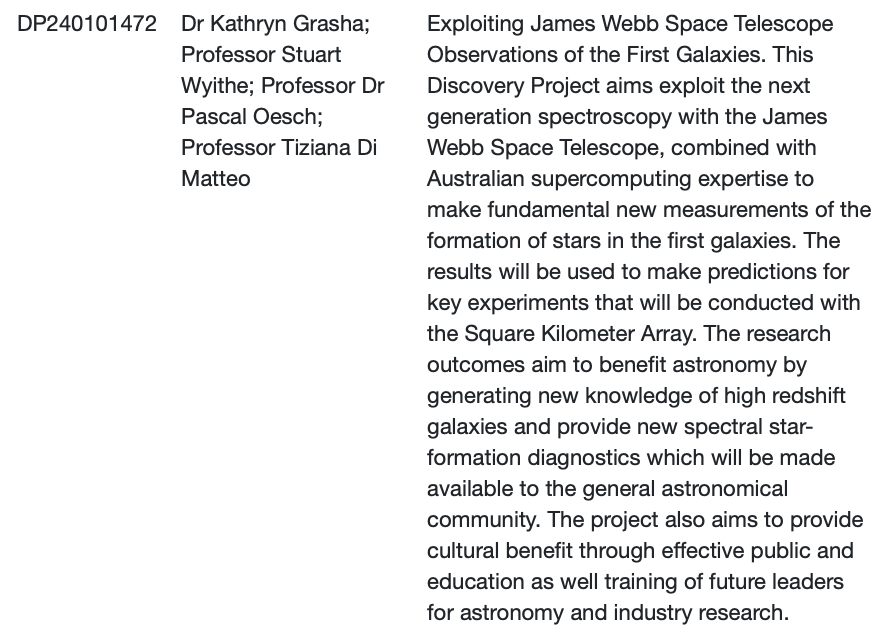
I am unbelievably excited and honored to be awarded an @arc_gov_au DECRA (Discovery Early Career Researcher Award), Australia's most prestigious award for early career researchers! I feel so fortunate to have been recognized as an emerging leader and researcher in Australia.
Local variations of the radial metallicity gradient in a simulated NIHAO-UHD Milky Way analogue and their implications for (extra-)galactic studies: https://t.co/JWVHU8OpVB. My latest paper with @bucktobias6, Qian-Hui Chen, and @ktgrasha. A summary with pictures below:
The future of Australia as a science leader depends on being bold and ambitious. We all belong and deserve the opportunity to contribute #WomenInScience#IWD#InternationalWomensDay
ARC is proud to celebrate #InternationalWomensDay by profiling one of our top early career scientists. As a Research Fellow at @ARC_ASTRO3D, Dr Grasha @ktgrasha shares her inspiration for becoming a scientist and her pathway to success as an astronomer.
More: https://t.co/7V77DoNoma
ARC is proud to celebrate #InternationalWomensDay by profiling one of our top early career scientists. As a Research Fellow at @ARC_ASTRO3D, Dr Grasha @ktgrasha shares her inspiration for becoming a scientist and her pathway to success as an astronomer.
More: https://t.co/7V77DoNoma
Astronomer and ARC DECRA Fellow, Dr Kathryn Grasha (@ktgrasha) is researching how galaxies form and evolve over cosmic time.
Read more here: https://t.co/gVYlJ807av
@ANUmedia#scienceweek@Aus_ScienceWeek
@MikeGrudic @MBKplus I always tell myself I'll only do actual science comments. Oh Holy Jesus until I come across a nested parentheses in a citation. I cannot help it. I am so weak.
@kevinschawinski Don't worry, ya'lls. Your ability to code (or how you go about using code as a tool to get your job done) literally isn't what makes a good scientist. Let alone a good human being, for that matter.
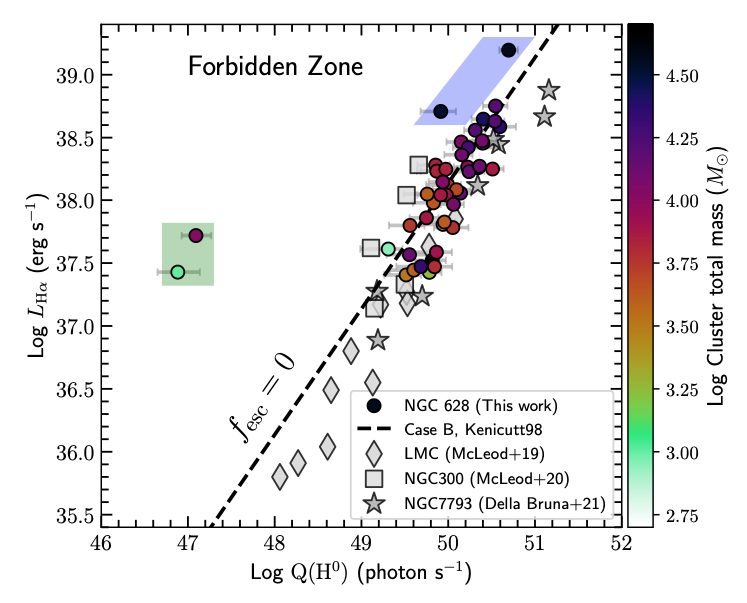
In the first LEGUS-SIGNALS cross-collaboration synergy, during his Honours research here at @StromloANU, Jia Wei constrained the ionizing photons from individual HII regions with only broad band photometry!
10% escape on average, with low-luminosity HII regions the most leaky.
Paper day: Jia Wei Teh, formerly working with @ktgrasha@ANU_Research and now @UniHeidelberg , quantified photon escape fractions from HII regions in the galaxy NGC628. Low-luminosity regions are leakier!
https://t.co/NzZ8ZXuM4Z
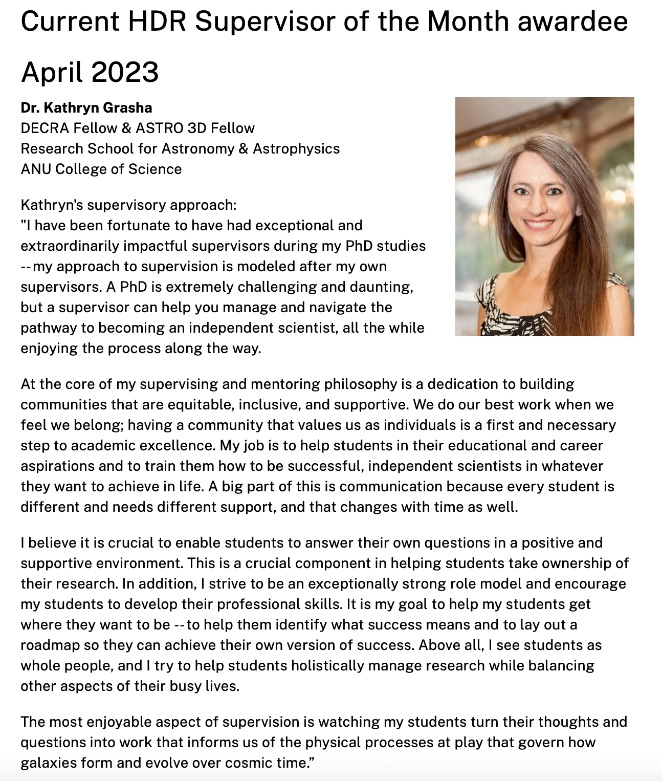
Somehow I won @ourANU's supervisor of the month award?
Excuse me while I casually drop this here and just add to the privilege of working at @StromloANU and @scienceANU
https://t.co/CxZwTrJQg1