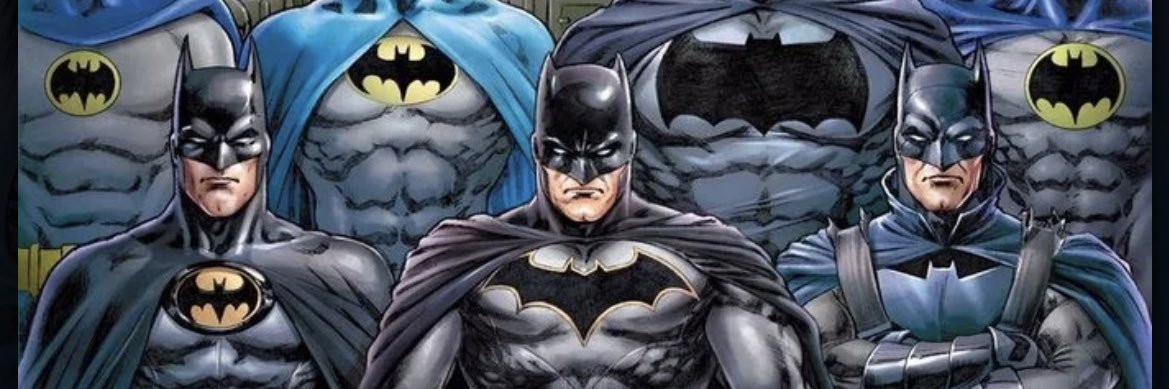
One thing about Thanos in Infinity War that never made sense to me:
He spared people from unnecessary killing, even letting the Guardians escape him twice, but somehow decided to slaughter almost the entire Asgardian population. Why were they an exception?
Fathers rarely get to tell their side of the story. I advised a female friend to do this, and she did the same. She heard her father speak for nearly an hour, and it was a scary event for her. She realised, he wasnt evil and her mum wasnt all that good.
🚨 JUST IN: This American is getting praised nationwide after she PERSONALLY showed up to give FREE FOOD to American families stranded at the airport
"I do NOT work at the airport...I'm like, I'm sure there's moms up there, what about their babies? So I went to Costco and did what I could. That's it. Do what I could."
🙏🏻🙏🏻
Airport food is RIDICULOUSLY expensive so I bet all the families were very grateful
More than 12,500 flights have been CANCELED since Friday's nationwide ground stop, leaving thousands of families stuck in terminals overnight
No one asked her to come, and NO ONE PAID HER to do it 🇺🇸
Sunny Hostin wants to talk about Lincoln, so let's tell the whole story. Yes, he once supported colonisation, but he moved past it. He signed the Emancipation Proclamation, pushed the 13th Amendment through Congress, and in his last speech publicly backed the vote for Black men. John Wilkes Booth heard that speech and took his life days later. And to say the slaves freed themselves erases the roughly 360,000 Union soldiers who died in that war, fighting alongside 180,000 brave Black soldiers. History deserves to be told in its totality, not cherry-picked to fit a narrative.
Se moquer des Blancs → C'est possible.
Se moquer des non-Blancs → Racisme.
Se moquer des hommes → C'est possible.
Se moquer des femmes → Misogynie.
Se moquer des hétéros → C'est possible.
Se moquer des LGBTQ → Homophobie.
Se moquer de la droite → C'est possible.
Se moquer de la gauche → Fascisme.
Se moquer des catholiques → C'est possible.
Se moquer des musulmans → Islamophobie.
Se moquer des Français → C'est possible.
Se moquer des étrangers → Xénophobie.
Se moquer des conservateurs → C'est possible.
Se moquer des progressistes → Intolérance.
La liberté d'expression pour les uns, la censure pour les autres.
New trailer for ‘CHILDREN OF BLOOD & BONE’.
Starring Viola Davis, Idris Elba, Cynthia Erivo, Damson Idris, Thuso Mbedu, Lashana Lynch, Chiwetel Ejiofor and Amandla Stenberg.
In theaters on January 15.
The U.S. Army sniper credited with 33 confirmed enemy kills survived six years serving in one of America's most elite military units. But after leaving the battlefield, Nicholas Irving faced a personal battle that nearly cost him his life.
His enemies knew him as “The Reaper,” while his fellow Rangers recognized him as one of the most effective snipers in their battalion. Yet the battle that nearly destroyed him began after he returned home.
Irving enlisted in the U.S. Army straight out of high school in 2004, determined to earn a place in the elite 75th Ranger Regiment. The journey was brutal. Years later, in an interview, he recalled that his selection class began with 85 candidates, but only seven graduated. He was one of them. Assigned to the 3rd Ranger Battalion, Irving progressed through demanding combat positions, serving as a machine gunner, assaulter, designated marksman, and sniper team leader. He also became the first African American sniper in his battalion.
During six years of military service, he deployed repeatedly to Iraq and Afghanistan, experiencing the realities of warfare that few civilians could fully understand. His defining deployment came in Afghanistan during the summer of 2009. According to his published military memoir, Irving was credited with 33 confirmed enemy kills during that deployment, a figure his publisher describes as a battalion record. His teammates and commanders gave him the nickname that would follow him throughout his life: “The Reaper.” His memoir also recounts a dangerous confrontation with an enemy sniper known as “The Chechnian,” one of the encounters that helped establish his reputation.
From the outside, Irving's military career appeared extraordinary. He had survived dangerous missions, earned the respect of fellow Rangers, and developed skills that made him one of the most recognizable American snipers of his generation. But surviving combat did not mean returning to civilian life would be easy.
When Irving left the Army, the structure that had defined his existence disappeared. There were no more missions to prepare for, no daily routines built around the men beside him, and no simple way to leave his wartime experiences behind. In a deeply personal interview with PBS, Irving revealed the seriousness of his struggles. He battled alcohol dependence and went through two rehabilitation programs. At one of his lowest moments, he recalled sitting with a bottle of whiskey and a pistol containing a single round. He felt like a burden. The man who had survived years of combat was now struggling to find a reason to keep living.
But that night became part of an unexpected turning point. Irving began writing notes on his computer. Those notes eventually developed into a journal, which became the foundation of his bestselling memoir, “The Reaper.” Writing helped him share experiences that had previously remained largely trapped in his memories.
However, Irving later explained that the greatest transformation in his life came from something entirely different. His son was born on November 28, the same date as Irving's birthday. He described his son's arrival as the moment he discovered a new purpose. After years of measuring success through military missions and objectives, he now had someone whose future depended on him. He wanted to provide his child with the kind of fatherhood he felt had been missing from his own upbringing.
His books went on to become bestsellers, he appeared on television, and he established HardShoot, a business focused on precision-shooting instruction. But perhaps his most meaningful achievement had nothing to do with a rifle.
For years, Nicholas Irving had been known by a nickname associated with taking lives. The turning point he described after leaving the Army came when he found a reason to dedicate himself to protecting, loving, and raising one.
The world knew him as “The Reaper.”
His son gave him another identity.
Dad.