It is impossible to review the events of the last decade and conclude that it is anything other than divine providence that Donald J. Trump is the President of the United States on the year of America 250, July 4th, 2026.
Wolski's Tavern says they are serving Schlitz beer from what could be the last keg in Milwaukee during a special celebration on Saturday. Read more: https://t.co/cpdiiqs7MK
@YungGiamatti She’s probably gone by now, but there used to be an old lady that would be at karaoke there on saturday nights. She always sang Copacabana - and the entire place would form a conga line around the bar, with the old lady at the front. It was surreal.
@ZachInMillioke@YungGiamatti This is definitely on my block… I walk my dog past that house every night! (Perhaps I should be more than an MKE Twitter lurker 🤔)
Do I date myself or show off how cool and diverse (/sarcasm) my music tastes are? 🤔
1. Everclear
2. Local H
3. Smashing Pumpkins
4. They Might Be Giants
5. Alkaline Trio
6. The Promise Ring
7. Lorde
8. Sturgill Simpson
9. Willie Nelson
10. The Rolling Stones
Okay fine:
1. 311
2. Goldfinger
3. Hall & Oates
4. Styx
5. Jimmy Eat World
6. Bruce Hornsby
7. Supertramp
8. Incubus
9. Andrew McMahon
10. Story of the Year
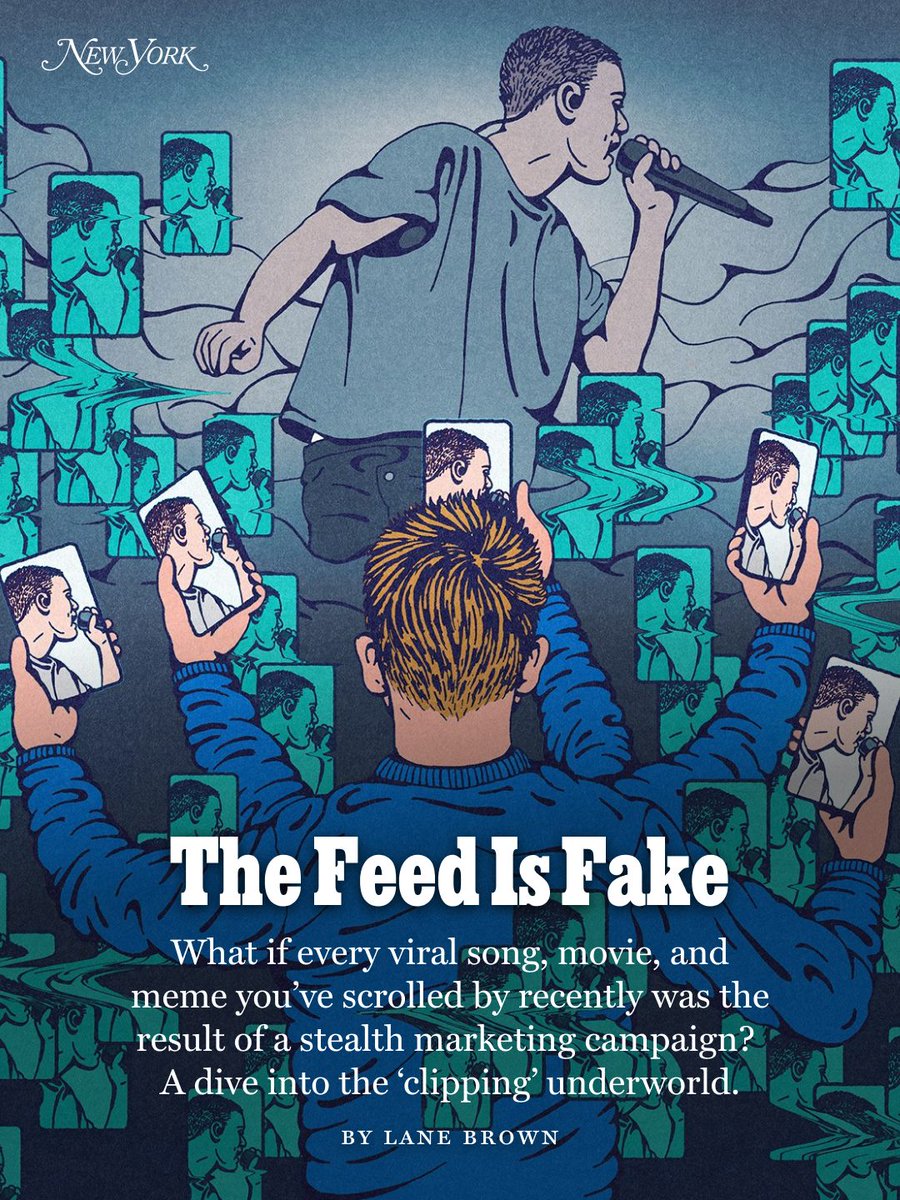
Joe Lim estimates that 90 percent of what you see on the internet is advertising in disguise, and he should know. For three years, Lim ran a company called Floodify, which at its peak operated 65,000 dummy social-media accounts used to drum up attention on behalf of paying clients.
The point of this kind of marketing is that nobody is supposed to notice it. But lately, the machinery has started to show.
In April, Justin Bieber headlined two consecutive weekends at Coachella. Coachella is the biggest stage in pop music save only for the Super Bowl, the kind of event that in theory generates its own attention. And yet on both weekends, a Discord server writer Lane Brown had been monitoring hosted paid campaigns for Bieber’s Coachella performances, offering clippers — people who are hired to turn a song, trailer, interview, stump speech, or whatever into short, social-media-friendly fragments — as much as a dollar per thousand views.
“On social media, popular opinion is being formed, measured, and manipulated all at once, and every signal the platforms produce — a trending song, a backlash, a talking point, the feeling that ‘everybody’ is suddenly talking about the same thing — can now be fabricated by unseen actors with hidden agendas,” writes Brown.
“Everybody is doing this now,” Lim says. “And if you’re not, you’re behind.”
Brown reports on how the same techniques are now being used to fool people on every app they go to in order to find out what other people think, not just in music but across entertainment, politics, consumer products, and celebrity gossip: https://t.co/hlcdfSmzPc
🚨7th grade students in rural Crandon, Wisconsin received a “consent” worksheet from an outside presenter that compared pizza preferences to graphic sexual activity.
The graphic included prompts about sexual activities, boundaries, “what turns me on,” what someone may want to try next, and even “kiss/lick/bite/grab my…”
It only gets worse—parents were left in the dark about this sexually explicit presentation funded by federal and state taxpayers' dollars, which were earmarked for mental health.